Manufacturing · Automotive, aerospace and defence
Your shop can hold the drawing, but the buyer has never heard of you.
Aerospace and defence buyers do not shop. They approve vendors. A sourcing engineer at a larger manufacturer or integrator needs a shop that can hold the drawing, produce the paperwork and survive a vendor audit, and that search happens through existing contacts, vendor lists and referrals long before it happens on Google.
Scope, fee, reporting and term are agreed in writing after we have read your brief and spoken to you.
In one paragraph
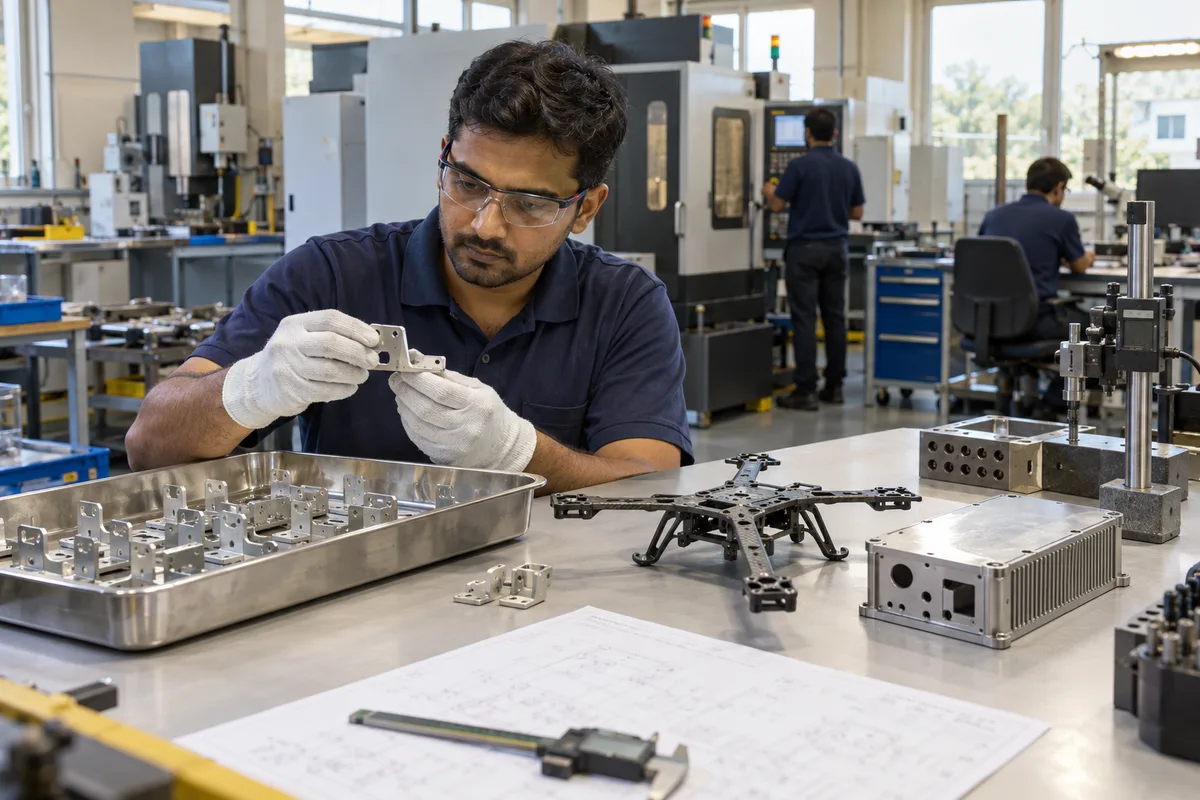
Aerospace and defence components are precision parts, assemblies and tooling made to a buyer's drawing and quality documents for aircraft, drones and defence programmes. GullySales helps the maker be found by the sourcing and quality teams who approve vendors, answer each request for quotation properly and keep the conversation alive through a long approval.
So a small precision shop often sits invisible to the people who would approve it. The capability is real. The website says "CNC machining services" and shows a stock photograph, and the buyer who might have sent a first sample order never learns that the shop runs five-axis work on titanium or that it holds the right documentation.
The sales cycle is long and quiet. A request for quotation arrives, a quotation goes out, then a first-article sample, then an audit, then a trial lot. At any step the thread can go cold because nobody on your side was assigned to chase it.
Last updated 16 Oct 2026. Licence, certification, labelling and advertising rules for aerospace & defence components differ by product and change. We describe them in general terms, so check the current position with your own adviser or the regulator before you publish a claim.
6 types of work
Each kind of aerospace & defence components is bought differently, so each has its own page.
Open the one that matches what you make. It covers who buys it, where the order is lost and what we would do.
- Aerospace CNC PartsWe machine to aerospace drawings, so why do the enquiries come from people who want brackets cheap?
- Aerospace FabricationOur welders are certified, yet buyers still think we only do structural steel.
- Defence ComponentsNobody outside our two customers knows we exist, and we are not allowed to say much.
 Avionics HardwareWe build the boards and harnesses, but buyers want to see how we test them.
- Drone ComponentsEvery drone builder wants parts yesterday, and none of them can find us.
- Aerospace ToolingA jig that has to be right the first time is a hard thing to sell to a stranger.
Who it is for
This is written for you if aerospace & defence components is what you make or sell.
- Precision machine shops with aerospace-grade equipment looking for a first or second aerospace customer
- Fabricators and sheet-metal shops making brackets, panels and assemblies for aircraft and ground equipment
- Tier-two and tier-three suppliers who sell only through one parent buyer and want a second route
- Tool rooms making jigs, fixtures and inspection gauges for aerospace programmes
- Electronics and cable-harness makers moving into avionics and drone work
- Younger drone and unmanned-systems component makers who need to be found by builders
Not for
It is not the right fit if.
- A shop with no documented quality system and no wish to build one. Buyers will ask for the paperwork, and marketing cannot supply it.
- Anyone who expects us to arrange security clearances, approvals or vendor listings. Those come from the buyer and the authority, not from us.
- A shop that already has all its capacity booked by one customer and does not want a second.
How buyers choose
What decides who wins in aerospace & defence components.
Vendor approval before the first order
The buyer's sourcing and quality teams review the shop's equipment list, quality manual and certificates, and often visit. The approval is the real sale, and the order follows it.
The drawing, the material and the certificate
An enquiry arrives with a drawing, a material specification and a demand for material test certificates and inspection reports with every lot. A shop that cannot say how it handles these is dropped early.
First-article inspection
A new vendor makes a first article and sends the inspection report against the drawing. The buyer's quality team decides, and a small error there costs the whole relationship.
Referral and existing vendor lists
Many buyers start from vendors they already know or from a recommendation by a peer. The website matters because the person who was recommended will look you up before they call.
Where orders are lost
What usually goes wrong when you sell aerospace & defence components.
In the words owners use on the first call.
“We have the machines but nobody knows”
The equipment list, the materials handled and the documentation practice sit in a folder or in the owner's head. A buyer looking for a five-axis shop for titanium finds a generic page.
“They asked for a quotation and went silent”
Quotations in this trade take real engineering time, and the answer can take a long time to arrive. If nobody follows up, the buyer's attention moves on to another vendor.
“We cannot talk about our customers”
Defence and aerospace work is often confidential, so the shop has no case studies to show. Without proof, a buyer has little to go on beyond the equipment list.
“One customer is most of our turnover”
The shop works mainly for one parent company and has no route to a second. Any change in that customer's plans hits the shop directly.
The scope
The work we would propose for aerospace & defence components.
Measured on qualified enquiries, quotation requests, follow-up on each quotation, trial orders won and repeat orders. Anything here that needs a platform, directory or tool we have not used with you is confirmed with you before it goes in the scope.
- A capability statement buyers can useA short document listing machines, envelope sizes, materials handled, inspection equipment and the quality documents you hold, written for the sourcing engineer who is building a vendor shortlist.
- A website that answers the vendor questionnairePages for each process and material, with the equipment named and the inspection method stated, so the page answers what a quality team would ask before a first call.
- Search for the process and materialPages that match how a sourcing engineer searches: the process, the material, the part type. Which terms are worth pursuing is worked out in the audit.
- Prospect lists of the right buyersA researched list of integrators, parent manufacturers and programme suppliers that buy the work you do, built from public information and your own contacts.
- Quotation follow-upA record of every quotation, who it went to and when it is due for a call, so a long approval is chased by a named person.
- LinkedIn outreach to sourcing and quality teamsIntroductions to the people who approve vendors, written around one capability at a time and sent from the owner's own profile.
What we do
What you get for aerospace & defence components.
Each deliverable and what it is there to change.
A capability statement by process, material and size envelope
One document a buyer can attach to an internal vendor request. It replaces a long phone call at the start.
A quality and documentation page
States which certificates and inspection reports you issue with a lot and how traceability is kept. It answers the quality team before they ask.
A request-for-quotation form that asks for the drawing
Asks for the drawing, the material, the quantity and the required date, so engineering time is not spent on enquiries with no drawing.
A quotation tracker with a named owner for every open quote
Shows which quotations are waiting, with whom and for how long, so none is forgotten during a long approval.
A buyer list with the reason each name was chosen
Each entry says why that buyer would need your work, so the first message is specific.
How the result is measured
- Qualified enquiries with a drawing attached
- Quotation requests and quotations sent
- Follow-up completed on each open quotation
- First-article samples requested and approved
- Vendor registrations and audits started
- Repeat orders from the same buyer
Recorded as a baseline before work starts, so every later report has an honest comparison.
How it works
From your first message to the first report.
No open-ended retainer. Every step gives you something in writing.
First
Your brief
You tell us what you need in a few short steps: your business, what you want, where enquiries come from and how they are handled.
After the brief
A conversation and a written scope
We read it, then talk with whoever handles your enquiries. If you want our help, the scope, the fee and the reporting come in writing, and nothing starts before you have read them.
Before work starts
Baseline recorded
The numbers this work is meant to move, such as enquiries, quotations, orders, visits or renewals, written down so every later report has an honest comparison.
After the baseline
The first fix goes live
The fix we agreed to start with is put in place and measured against the baseline, whether that is a reply, a follow-up, a page, a listing or the handover between marketing and sales.
As agreed
Report against the baseline
What moved, what did not, and what changes next, in plain words. How often you get it is set in writing before work starts.
At renewal
Renew on the numbers
The term ends and you decide whether to continue from the results. The length is agreed in writing before anything starts.
What the work involves for aerospace & defence components
- 1
Read the capability
We go through your equipment, materials, documents and past work to find what you can honestly offer an aerospace or defence buyer.
- 2
Choose the buyers
We list the kinds of buyer who need that capability: integrators, parent manufacturers, tool buyers, drone builders.
- 3
Build the proof
The capability statement, the process pages and the quality page, written so a vendor-approval team can check them.
- 4
Reach the people who approve vendors
Search, LinkedIn introductions and direct outreach to the named sourcing and quality contacts.
- 5
Follow every quotation
Each request is recorded, answered with the drawing in hand and chased until it becomes a sample, an audit or a no.
What we need from you
What to have ready before we talk.
None of it has to be tidy. We read what you have.
- Your website link and any capability sheet you already send
- The equipment list with machine makes, axes and envelope sizes
- The quality documents and certificates you hold, and your inspection equipment
- The last quotations sent to aerospace or defence buyers, with what happened to each
- A list of current customers you are allowed to describe, even in general terms
Export and new regions
Selling aerospace & defence components beyond your home market.
Where you sell decides standards, documents, payment terms and freight. We work from Bengaluru and have no overseas office, so for a new region we start from your own enquiries, your existing buyers and the directories you already use.
Aerospace buyers outside India
Overseas OEMs and tier-one suppliers look for build-to-print shops in India. The first step is your own enquiry data and any export buyer you already supply, which shows where your work is already trusted.
Documents an overseas buyer will ask for
Quality system certificates, material traceability, inspection reports and export documentation. What applies to your part, and what export control rules cover it, is for your adviser and the buyer to confirm.
Samples, freight and payment terms
A first article crossing a border involves courier, customs paperwork and an agreed payment term. The page should say how you handle each so the buyer does not have to ask.
FAQ
Questions about selling aerospace & defence components.
Not here? More answers, or ask on WhatsApp.
Can marketing help a small shop get into aerospace work?
We cannot name our customers. What do we show instead?
Is LinkedIn useful for reaching aerospace buyers?
How do we handle the long gap between quotation and order?
How much does it cost?
How long is the contract?
How soon will we see results?
Who will actually do the work?
What do you need from us?
What if we are not happy with the work?
Makers of aerospace & defence components also need
Looking for the wider industry page? See aerospace and defence component manufacturers.
This page is part of the manufacturing section. The hub also lists every manufacturing industry we write for.
Why us
Why owners pick GullySales over an agency.
Marketing and sales, as one job
Most agencies stop at the enquiry. We also fix what happens after it: the reply, the follow-up, the quote and the CRM.
The person on the first call does the work
No account managers in between. You are never handed to someone you have not met.
A baseline before anything starts
Your numbers are written down on day one, so every later report compares against something honest.
The fee in writing, split three ways
Our time, your media spend and production on separate lines. You always see what goes to us.
No guarantees we cannot keep
The term is agreed in writing and never a default twelve months. We never promise a ranking or a lead count, because nobody controls those.
One office, and we say so
Nagarbhavi, Bengaluru. We work across India by call and WhatsApp and travel when a session needs to be in person.
#257, 3rd floor, Sri Nanjundeshwara Complex, Nagarbhavi 8th Block, Outer Ring Road. How we work.
Engagement options
Ways to work with us.
Pick the size of commitment that fits. Every option starts with your brief and a conversation.
Option 1
The conversation on its own
A call after you send your brief. It says honestly whether you need outside help, and many fixes are ones your own team can make.
Option 2
One fix, scoped
Start with the fix that matters most, such as reply time or follow-up. The fee is in writing before anything starts.
Option 3
An ongoing programme
We run the work, report against the baseline, and you renew on the numbers. The term and the reporting are agreed in writing first.
Option 4
Guidance for your own team or agency
We plan, brief and check the work of your in-house team or current agency, instead of replacing them.
Your brief
Tell us what you need, and we will read it before we call.
Eight short steps about your business, what you want and who decides. Most questions are a tap, and you can skip any you would rather answer on the call.
Your next practical step
Tell us what you are trying to grow, and we will read it before we call.
Eight short steps, mostly taps. Skip anything you would rather answer on the call.