Manufacturing · Automotive, aerospace and defence
Your parts are good enough, but the buyer who needs them has never heard of your plant.
A component maker usually knows exactly who the customer is: three or four vehicle makers and tier-one suppliers, most of the volume with one of them. That is the comfort and the danger. When that one buyer moves a part to another source, the order book changes in a quarter, and there is no second door to knock on because nobody else knows you exist.
Scope, fee, reporting and term are agreed in writing after we have read your brief and spoken to you.

In one paragraph
Automotive components are the parts that go into vehicles or are sold to keep them running, made to a drawing for a vehicle maker, a tier-one supplier or the aftermarket. GullySales helps component makers get found by purchase teams, answer a request for quotation properly, follow it up and win the repeat order.
The other half of the market is wider. Fleet operators, spare-parts distributors, exporters, workshop chains and new vehicle programmes all send requests for quotation to makers they can find. They find them on a search page, in a directory listing, through a LinkedIn name or on a recommendation. If your plant shows only a logo and a phone number, the request goes to the maker with a capability page.
GullySales does not make parts or supply them, and it does not sell your parts for you. It works on the marketing and the follow-up around them: what a purchase engineer sees when they look you up, how fast and how completely you answer a request for quotation, and whether a quotation that went quiet gets a second call.
Last updated 16 Oct 2026. Licence, certification, labelling and advertising rules for automotive components differ by product and change. We describe them in general terms, so check the current position with your own adviser or the regulator before you publish a claim.
8 types of work
Each kind of automotive components is bought differently, so each has its own page.
Open the one that matches what you make. It covers who buys it, where the order is lost and what we would do.
- Auto PartsEveryone in the trade knows your part number, but nobody new has found you.
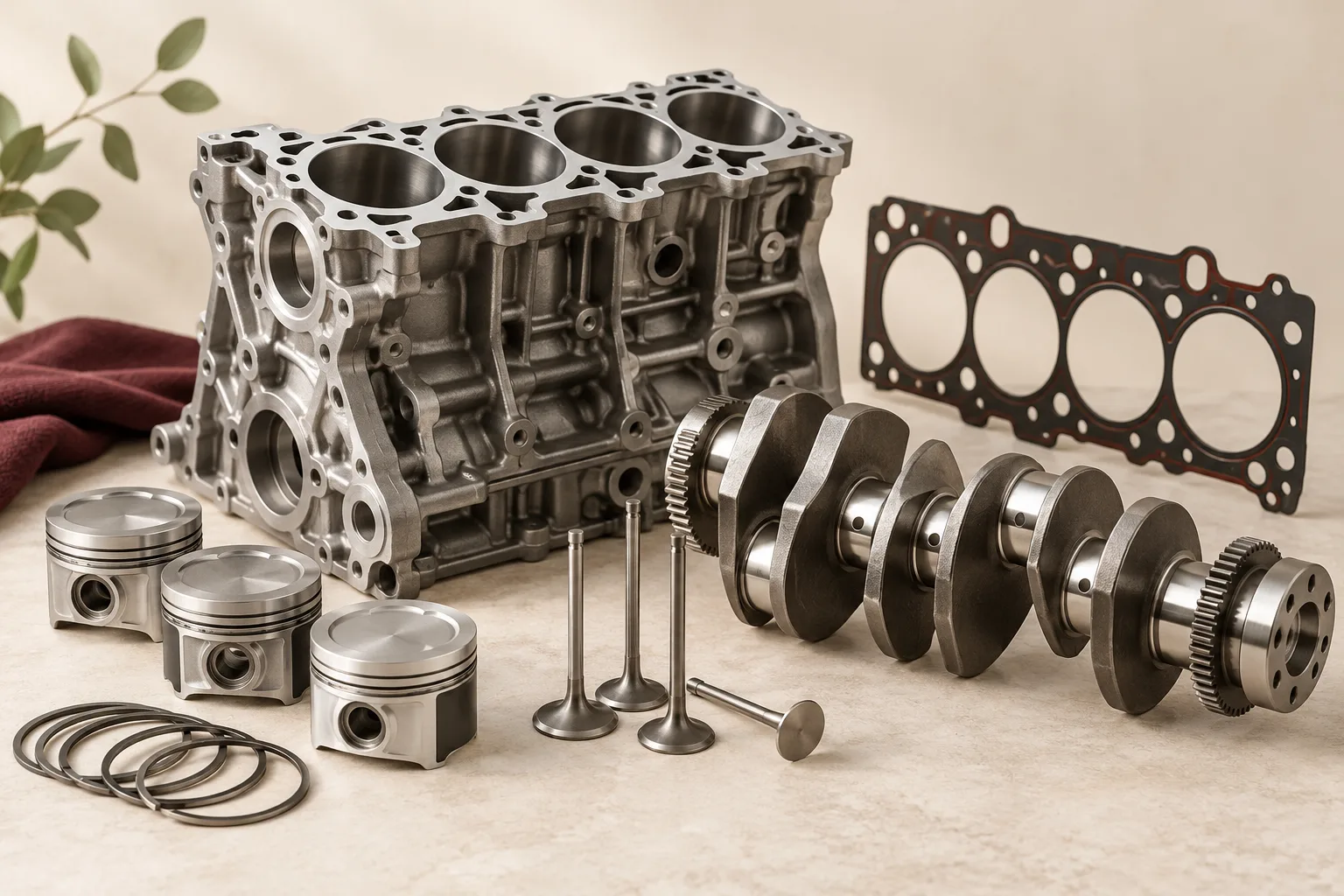 Engine ComponentsThe engine maker has a tolerance in mind and your website does not say whether you can hold it.
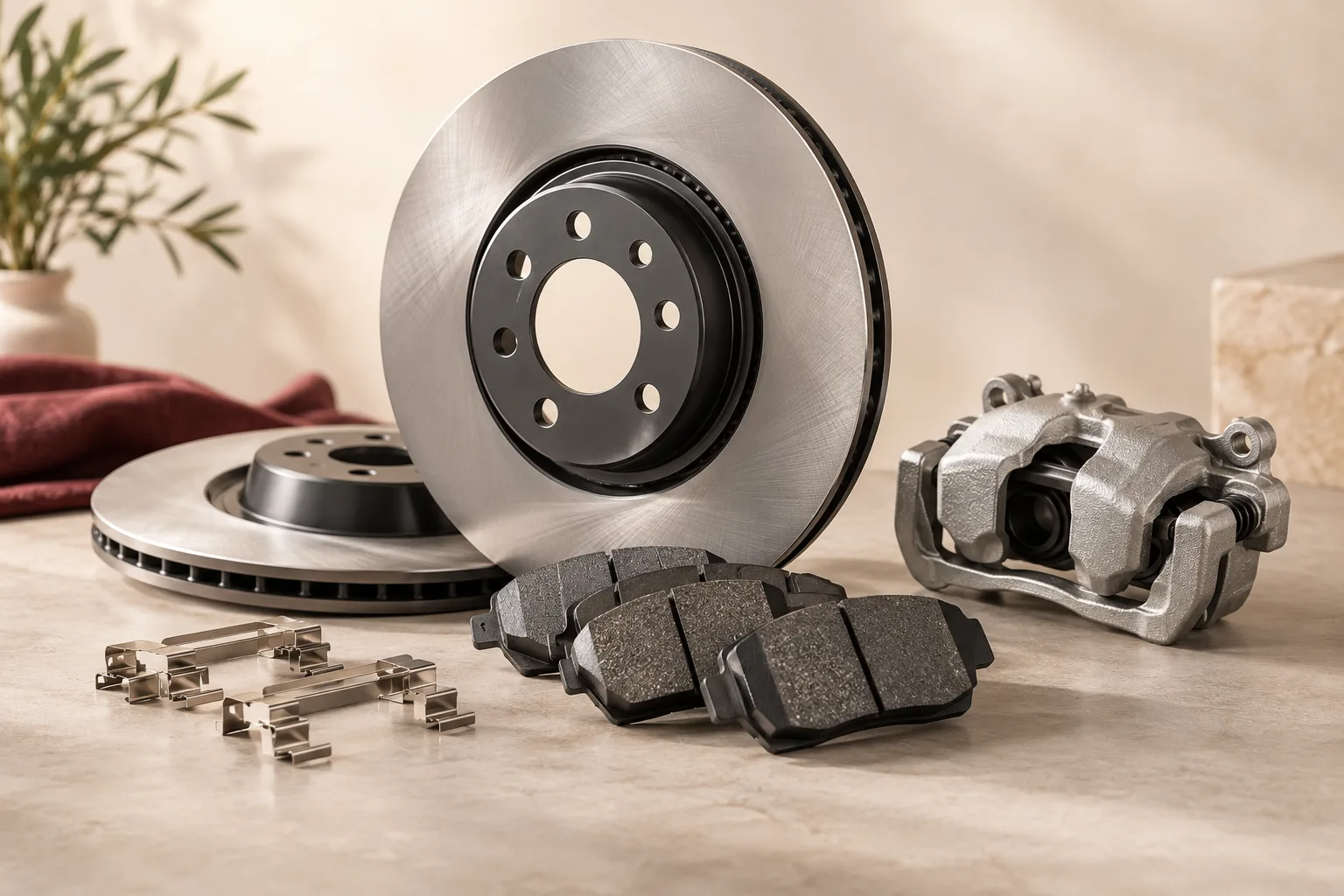 Brake ComponentsA brake part is a safety part, so the buyer wants to see your testing before your price.
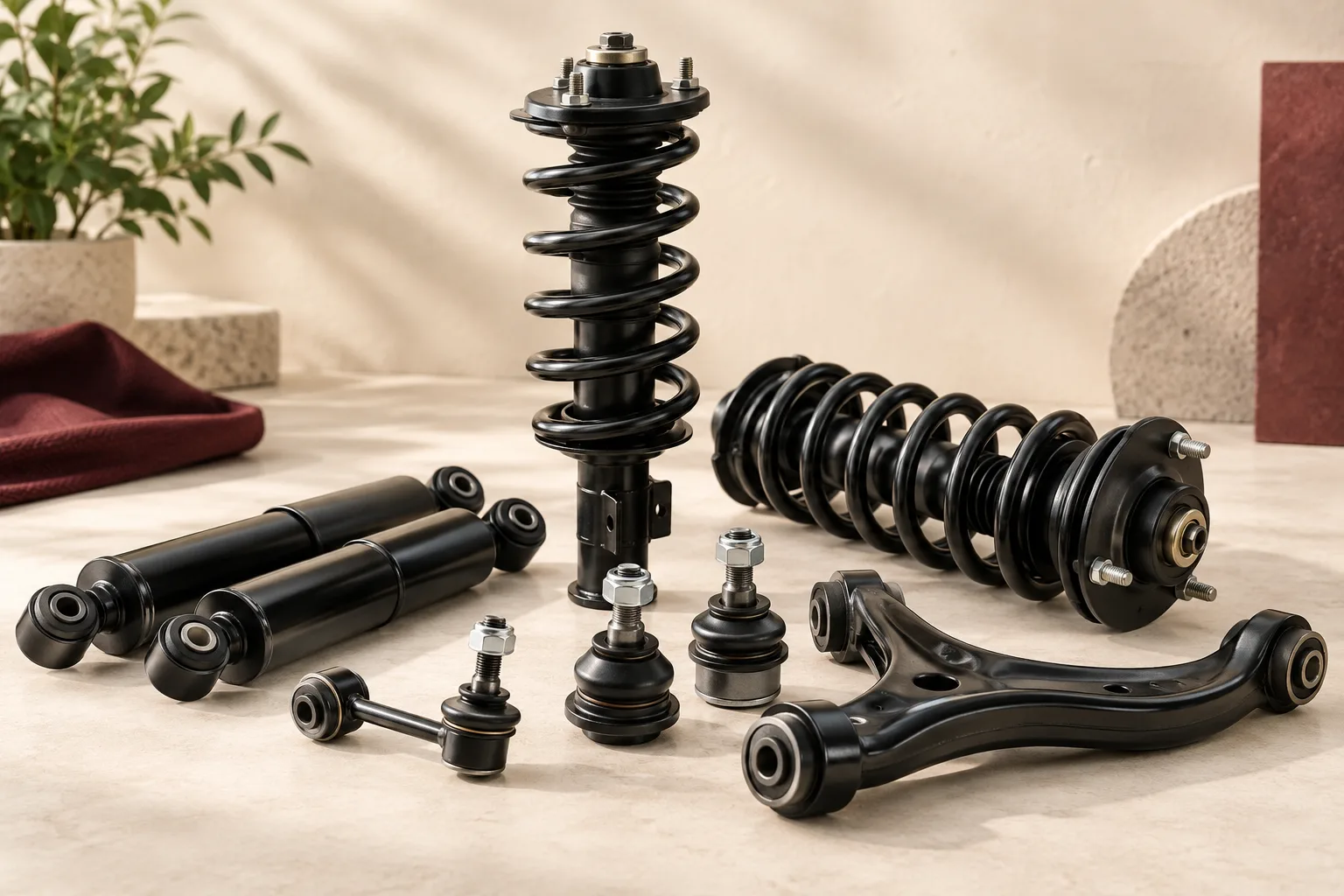 Suspension ComponentsYour bushes and links outlast the competition, and no buyer outside your circle knows it.
 Automotive PlasticsThe tool is yours or theirs, and until that is settled nobody will release a purchase order.
- Wiring HarnessesA harness is thousands of small decisions, and the buyer wants to see that you made them carefully.
- EV ComponentsElectric vehicle makers are looking for new suppliers, and you do not appear when they search.
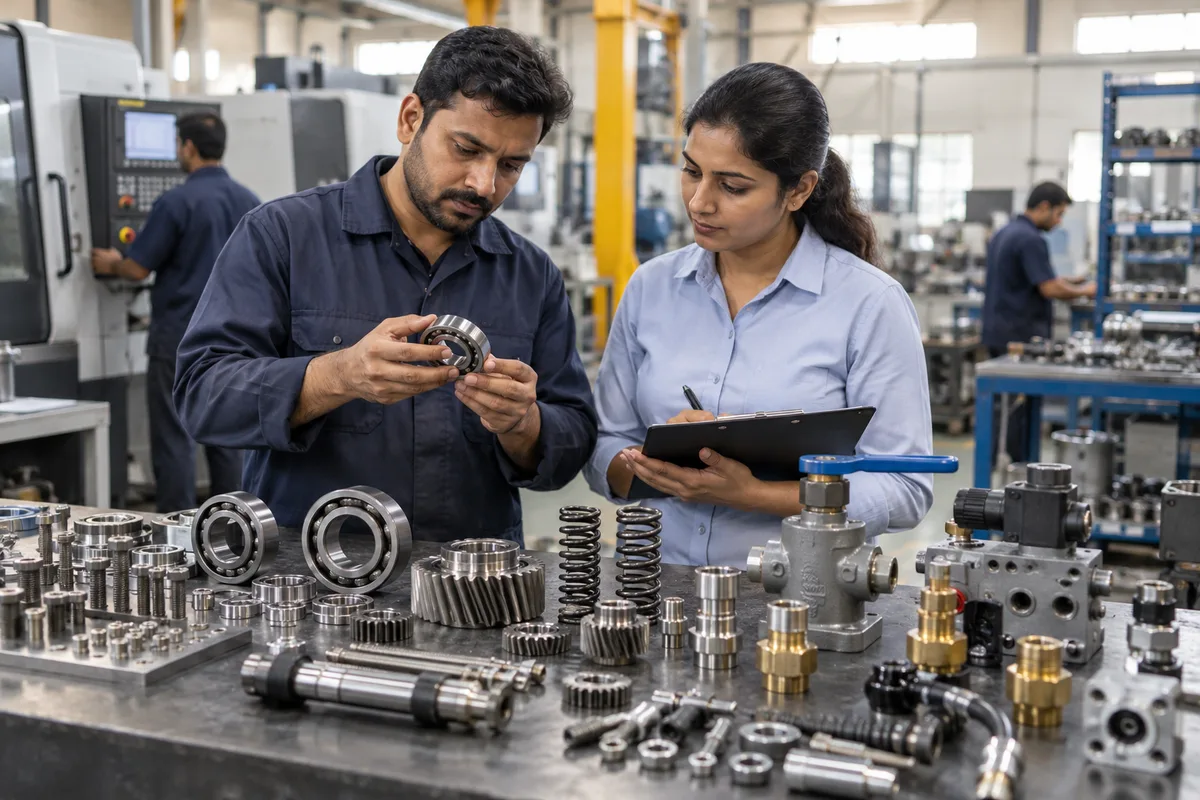 Automotive FastenersA bolt is a commodity until the buyer needs the grade, the coating and the batch record.
Who it is for
This is written for you if automotive components is what you make or sell.
- Tier-two and tier-three suppliers who sell mostly through one or two customers and want a wider base
- Job-work shops making parts to a customer drawing for vehicle makers and larger suppliers
- Aftermarket part makers who sell through distributors, retailers and workshop chains
- Makers moving into electric vehicle parts with a catalogue that does not yet reflect it
- Component exporters who want enquiries from importers and overseas assemblers beyond a trade-show contact list
Not for
It is not the right fit if.
- A plant whose full capacity is already committed to one customer under a long supply arrangement and who does not want other buyers
- A trader who buys finished parts and resells them with no manufacturing or process control of their own
- A maker who wants a vehicle maker to approve them as a supplier. Approval is the buyer's own process, and no marketing agency can start it for you
How buyers choose
What decides who wins in automotive components.
The drawing and the part number first
A purchase engineer rarely searches for a supplier by name. They search for the process and the material, or they send a drawing to a short list. Being on that list depends on a page that says what you make and on what equipment.
Supplier assessment before any order
Before a first order, the customer's quality team asks for a plant visit or an assessment, the certificates you hold, the inspection equipment you own and a sample approval. Your web presence has to survive the question 'is this a real plant' before anyone books that visit.
Quotations compared on three or four lines
The RFQ names the part, the annual volume, the delivery schedule and the material. The comparison is on piece price, tooling cost, and on how complete and fast the reply was. A reply that asks no question about the drawing reads as a maker who has not looked at it.
Aftermarket buyers decide differently
A parts distributor or a workshop chain looks at the vehicle fitment list, the packaging, the minimum order and whether you will print their brand. They compare a catalogue, not a plant, and the dealer's word carries more than the website.
Where orders are lost
What usually goes wrong when you sell automotive components.
In the words owners use on the first call.
“Almost all our supply goes to one customer”
Dependence is a sales problem as much as a production one. Nobody else has seen your capability sheet because you do not have one that a stranger could read in two minutes.
“They asked for a quote and we never heard back”
A quotation for a new part takes engineering time, and then it goes in an email with nobody assigned to call. The buyer's silence is read as a no, when often it is a queue.
“Our price is fine but we lose on the first conversation”
The purchase team has three suppliers on the same drawing. The one whose reply comes with a clear process note, a list of inspection equipment and a sample plan looks like less risk, whatever the piece price says.
“The catalogue is a PDF from years ago”
A distributor or a new-programme engineer cannot tell from it what you make today, in what materials, or whether you are moving into electric vehicle parts.
The scope
The work we would propose for automotive components.
Measured on qualified enquiries, quotation requests, follow-up on each quotation, trial orders won and repeat orders. Anything here that needs a platform, directory or tool we have not used with you is confirmed with you before it goes in the scope.
- A capability page for each process and part familyPages that say what you machine, stamp, mould or assemble, in which materials, with which inspection equipment, written for the purchase engineer who types the process name into a search box.
- Marketplace and directory enquiries handled properlyYour IndiaMART or TradeIndia listing already brings enquiries, many of them irrelevant. We sort them by part, volume and buyer type so that the real ones are answered first.
- A quotation routine for RFQsWho receives the RFQ, who prices it, who calls after it goes, and what is said when the buyer asks for a revised price. Written down, then tracked.
- Named-account outreach to purchase and engineering teamsA short list of vehicle makers and tier-one suppliers whose parts you could make, with a message for the purchase manager and another for the design engineer.
- Distributor and workshop-chain outreach for aftermarket linesA catalogue by vehicle fitment, a minimum-order and packaging note, and a routine for the distributors who ask and never order.
A supplier-profile pack
A short document with plant photographs, equipment, certificates held, sample-approval practice and contact names, built so that a quality team can forward it internally.
What we do
What you get for automotive components.
Each deliverable and what it is there to change.
A capability sheet by process, material and part family
One page a purchase engineer can read in two minutes and forward to a colleague. It replaces the old catalogue as the first thing you send.
A request-for-quotation form that asks for the drawing
It collects the part number, the drawing file, the annual volume and the delivery date, so your engineers stop chasing the missing details by phone.
A follow-up routine for quotations that went quiet
A short script and a tracking sheet with an owner for every open quotation, so a quote does not die because the salesperson was at a plant visit.
An enquiry sort for marketplace listings
A simple rule for which marketplace enquiries get a call the same day and which get a standard reply.
A target list of buyers by programme and part
Names of companies and roles, built from your own customer history and public information, so outreach goes to people who buy what you make.
How the result is measured
- Qualified enquiries by source
- Quotation requests received with a drawing
- Follow-up made on each quotation
- Trial orders and sample approvals won
- Repeat orders from new customers
- Share of supply going to the largest customer
Recorded as a baseline before work starts, so every later report has an honest comparison.
How it works
From your first message to the first report.
No open-ended retainer. Every step gives you something in writing.
First
Your brief
You tell us what you need in a few short steps: your business, what you want, where enquiries come from and how they are handled.
After the brief
A conversation and a written scope
We read it, then talk with whoever handles your enquiries. If you want our help, the scope, the fee and the reporting come in writing, and nothing starts before you have read them.
Before work starts
Baseline recorded
The numbers this work is meant to move, such as enquiries, quotations, orders, visits or renewals, written down so every later report has an honest comparison.
After the baseline
The first fix goes live
The fix we agreed to start with is put in place and measured against the baseline, whether that is a reply, a follow-up, a page, a listing or the handover between marketing and sales.
As agreed
Report against the baseline
What moved, what did not, and what changes next, in plain words. How often you get it is set in writing before work starts.
At renewal
Renew on the numbers
The term ends and you decide whether to continue from the results. The length is agreed in writing before anything starts.
What the work involves for automotive components
- 1
Read your enquiries and quotations
We look at where your last quotations came from, which ones were lost and what the buyer was told.
- 2
Name the buyers you want more of
Vehicle makers, tier-one suppliers, distributors or fleet buyers, by part family, picked from your plant's real capability.
- 3
Build the pages and the profile pack
Capability pages, the supplier profile and the request-for-quotation form go up first, because everything else sends people there.
- 4
Set up the quotation routine
An owner for each quotation, a follow-up script and a tracking sheet your sales team will actually use.
- 5
Reach out and measure against the baseline
Outreach, directory work and distributor calls start, and results are reported against the enquiry baseline recorded before work began.
What we need from you
What to have ready before we talk.
None of it has to be tidy. We read what you have.
- Your website and any catalogue or capability deck in use
- The last ten to twenty quotations sent, with the outcome of each
- A list of current customers and the parts supplied to each, kept confidential if you prefer
- Plant, equipment and inspection-room photographs
- The certificates and customer approvals you hold, as documents
Export and new regions
Selling automotive components beyond your home market.
Where you sell decides standards, documents, payment terms and freight. We work from Bengaluru and have no overseas office, so for a new region we start from your own enquiries, your existing buyers and the directories you already use.
Overseas assemblers and tier suppliers
Buyers abroad look for a drawing-based supplier with proof of process control. The first step is your own export enquiry data and the buyers you already ship to.
Importers and aftermarket distributors
Fitment lists, packaging and brand-label options matter more to them than a plant tour. Language and time zone are practical points: a reply within their working day is part of the pitch.
Samples, freight and documents
Overseas buyers ask for first samples before any order, with test reports and material certificates. Who pays for samples and freight, and the payment terms, are for you to set. We help present them clearly.
FAQ
Questions about selling automotive components.
Not here? More answers, or ask on WhatsApp.
Can marketing help me get approved as a supplier by a vehicle maker?
I only make parts to customer drawings. What is there to market?
Should I put my customer names on my website?
Do you work with aftermarket brands as well as OEM suppliers?
How much does it cost?
How long is the contract?
How soon will we see results?
Who will actually do the work?
What do you need from us?
What if we are not happy with the work?
Makers of automotive components also need
Looking for the wider industry page? See auto parts manufacturers.
This page is part of the manufacturing section. The hub also lists every manufacturing industry we write for.
Why us
Why owners pick GullySales over an agency.
Marketing and sales, as one job
Most agencies stop at the enquiry. We also fix what happens after it: the reply, the follow-up, the quote and the CRM.
The person on the first call does the work
No account managers in between. You are never handed to someone you have not met.
A baseline before anything starts
Your numbers are written down on day one, so every later report compares against something honest.
The fee in writing, split three ways
Our time, your media spend and production on separate lines. You always see what goes to us.
No guarantees we cannot keep
The term is agreed in writing and never a default twelve months. We never promise a ranking or a lead count, because nobody controls those.
One office, and we say so
Nagarbhavi, Bengaluru. We work across India by call and WhatsApp and travel when a session needs to be in person.
#257, 3rd floor, Sri Nanjundeshwara Complex, Nagarbhavi 8th Block, Outer Ring Road. How we work.
Engagement options
Ways to work with us.
Pick the size of commitment that fits. Every option starts with your brief and a conversation.
Option 1
The conversation on its own
A call after you send your brief. It says honestly whether you need outside help, and many fixes are ones your own team can make.
Option 2
One fix, scoped
Start with the fix that matters most, such as reply time or follow-up. The fee is in writing before anything starts.
Option 3
An ongoing programme
We run the work, report against the baseline, and you renew on the numbers. The term and the reporting are agreed in writing first.
Option 4
Guidance for your own team or agency
We plan, brief and check the work of your in-house team or current agency, instead of replacing them.
Your brief
Tell us what you need, and we will read it before we call.
Eight short steps about your business, what you want and who decides. Most questions are a tap, and you can skip any you would rather answer on the call.
Your next practical step
Tell us what you are trying to grow, and we will read it before we call.
Eight short steps, mostly taps. Skip anything you would rather answer on the call.