Manufacturing · Plastics, rubber, packaging and print
Your moulding shop is full of machines, but the orders depend on three customers.
Plastic makers carry a quiet problem. The machines are costly, the tool is the customer's or yours, and the margin depends on keeping the press running. A shop with a few large customers is only one lost contract away from idle machines.
Scope, fee, reporting and term are agreed in writing after we have read your brief and spoken to you.
In one paragraph
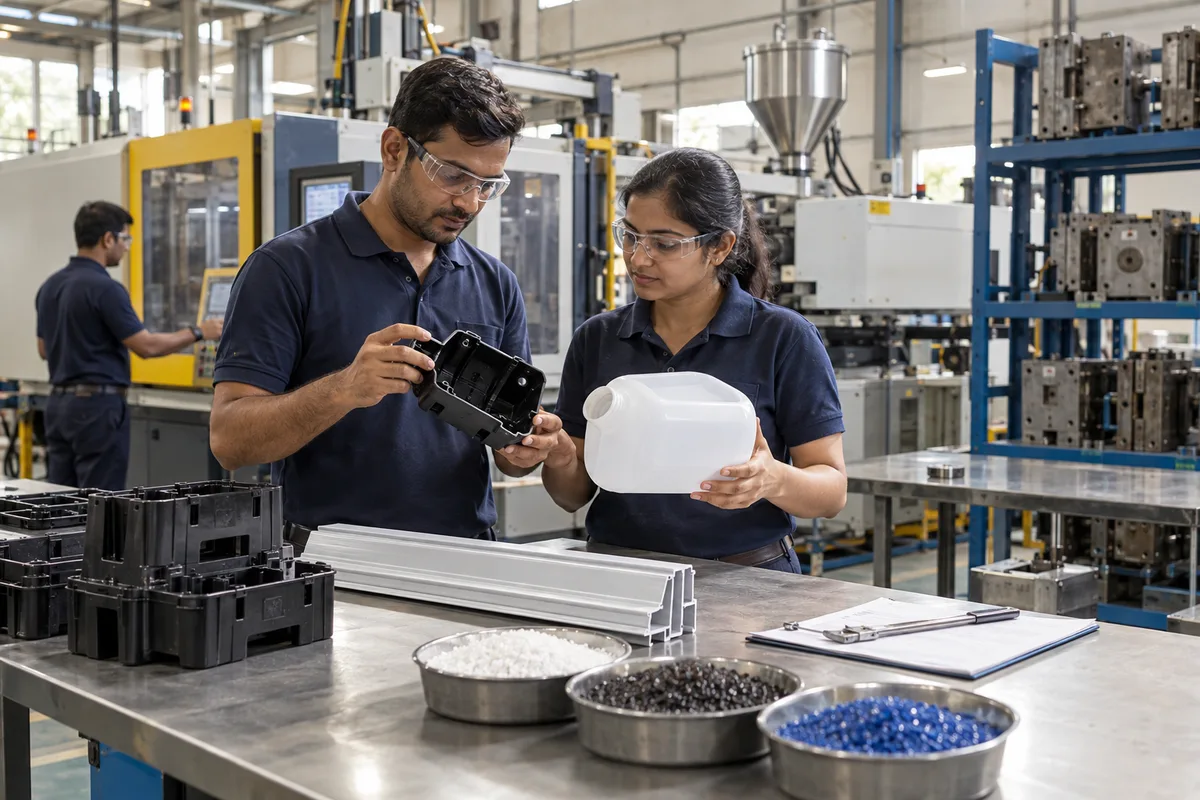
Plastic manufacturing is the making of parts, containers, sheets, pipes and packaging from polymers, by moulding, extrusion and related processes. GullySales builds the enquiry, quotation and repeat-order system for plastic makers, so new buyers find you and the buyers you already have keep ordering.
The usual fix is more customers, and that means being found by buyers who do not yet know you. A purchase engineer needing a new part, a brand owner needing a container, or a contractor needing pipe will search, ask for samples and compare quotations.
Last updated 16 Oct 2026.
7 types of work
Each kind of plastic manufacturing is bought differently, so each has its own page.
Open the one that matches what you make. It covers who buys it, where the order is lost and what we would do.
- Injection MouldingThe purchase engineer sent a drawing to four moulders and wants the quotation back by Friday.
- Blow MouldingA brand owner wants bottles by the launch date and does not know what a neck finish is.
- Plastic ExtrusionYour pipe or sheet is much the same as the next unit's, so the buyer asks about the dealer's margin first.
- Plastic ComponentsA small plastic clip or housing decides whether the buyer's whole assembly ships on time.
- Plastic PackagingThe brand wants a jar that looks premium and costs less, and has asked five makers.
- Engineering PlasticsThe buyer needs a part that replaces metal, and wants to know which grade will survive the heat.
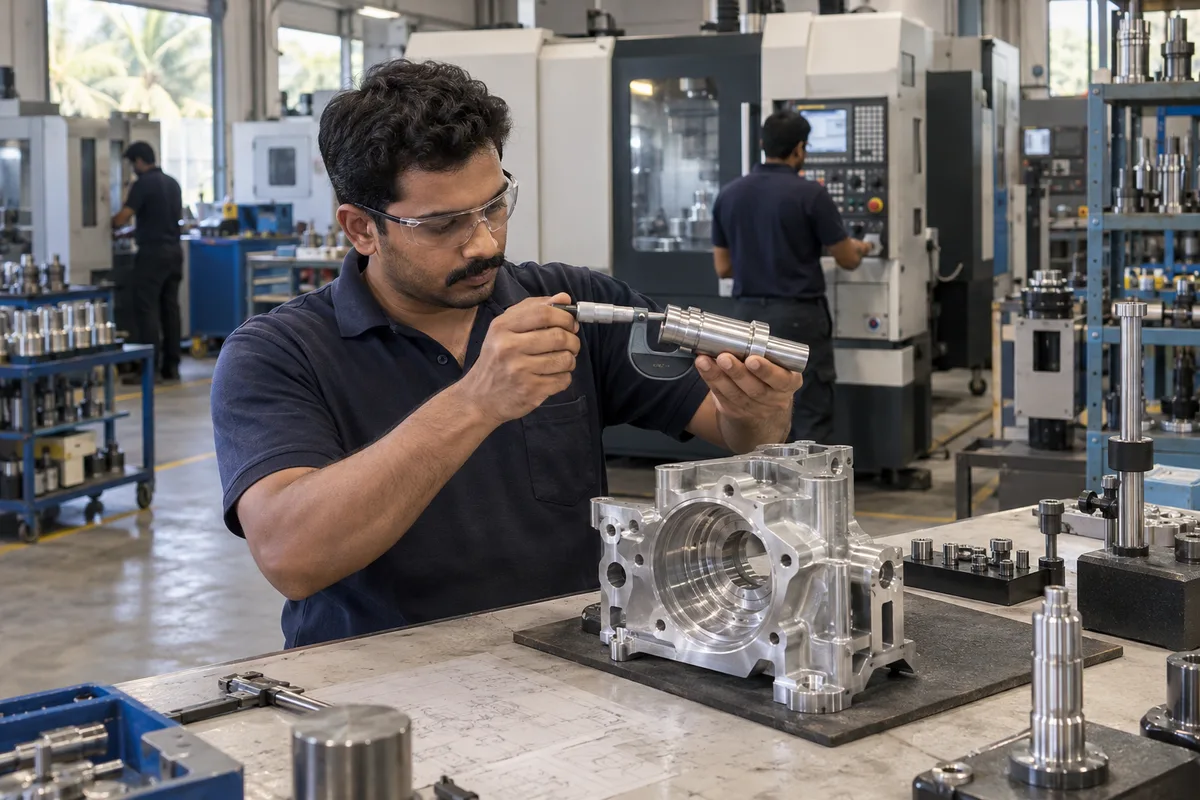 Plastic ToolingThe moulder has a mould that cracked and needs another before Monday, so they call the tool room they trust.
Who it is for
This is written for you if plastic manufacturing is what you make or sell.
- Injection moulders working to a customer's drawing, in one-off and long runs
- Blow moulders, film and pipe extruders and makers of sheet and profile
- Makers of finished plastic goods sold through dealers and shops
- Tool rooms making moulds and dies for other plastic shops
- Compounders and suppliers of engineering plastics
Not for
It is not the right fit if.
- A shop with no spare machine hours. If new orders cannot be scheduled, bringing in enquiries only adds a queue.
- A trader who sources plastic parts from others and has no quality control of their own. Buyers will ask who makes the part, and the page cannot hide it.
How buyers choose
What decides who wins in plastic manufacturing.
The drawing, the resin and the quantity
For industrial parts the buyer sends a drawing or a sample, names the resin and gives an annual quantity. A quotation that covers tooling, piece price and lead time wins the comparison.
The sample and the approval
Before a production order there is a sample from the tool, a dimensional report and an approval. The shop that sends that report neatly and on time looks organised.
Brand owners and the design brief
For packaging and consumer products, the buyer starts with a design or a pack idea. The conversation is about look, feel, weight and cost per piece.
Dealers and the trade
For finished goods such as pipes, crates or household items, buyers are wholesalers and dealers. They compare margin, scheme and supply reliability.
Where orders are lost
What usually goes wrong when you sell plastic manufacturing.
In the words owners use on the first call.
“Three customers give us most of the work”
A single customer's design change or a switch of supplier can empty the shop. New buyers have to come from somewhere other than the usual calls.
“Quotations take too long and buyers move on”
Costing a part for tooling, resin and cycle time is real work. A standard intake and a clear costing sheet shorten the first answer.
“Our website looks like everyone else's and shows nothing about our machines”
A buyer wants machine tonnage, material range and the industries served. A generic page tells them nothing.
“Dealers stock cheaper imitations of our products”
In the finished-goods trade, a brand with a clear product identity and a dealer scheme holds ground better than a price war.
The scope
The work we would propose for plastic manufacturing.
Measured on qualified enquiries, quotation requests, follow-up on each quotation, orders won and, where you sell through dealers or shelves, repeat orders by channel. Anything here that needs a platform, directory or tool we have not used with you is confirmed with you before it goes in the scope.
- Capability pages by process, material and machine rangeA page per process, with the tonnage range, the resins you run and the industries you have served.
- An RFQ form that asks for the drawing, resin and quantityA request-for-quotation form built for plastic parts, with a file upload for drawings and a field for annual quantity.
- Quotation follow-up for sampled and unsampled partsA routine for every quotation and every sample sent, with a call to ask what the buyer found.
- Marketplace enquiries handledListings and replies on IndiaMART and TradeIndia, set up to bring in industrial buyers and not casual queries.
- Dealer and distributor programme for finished goodsFor makers of finished goods: dealer recruitment in new territories, a dealer kit and a rule for sharing leads.
- Repeat-order contact with existing customersA plan to keep in touch with the buyers you already supply so a new part comes to you first.
What we do
What you get for plastic manufacturing.
Each deliverable and what it is there to change.
A capability sheet by process and resin
Machine tonnage, shot size, resins run and industries served. Lets a new buyer decide whether to send a drawing.
An RFQ form with drawing upload
Gets the drawing, the resin and the quantity on the first contact. Removes the first round of questions.
A costing intake sheet
A standard list of what your estimator needs to price a part. Shortens the time to the first quotation.
A sample dispatch and follow-up record
Which samples went to whom, what was said and what happens next.
A dealer pack for finished goods
Product sheets, a scheme sheet and a lead-sharing rule for the dealers and distributors you recruit.
How the result is measured
- Qualified enquiries
- Quotation requests received
- Follow-up on each quotation and sample
- Sample approvals
- Orders won and repeat orders
- Dealer enquiries and dealers recruited
Recorded as a baseline before work starts, so every later report has an honest comparison.
How it works
From your first message to the first report.
No open-ended retainer. Every step gives you something in writing.
First
Your brief
You tell us what you need in a few short steps: your business, what you want, where enquiries come from and how they are handled.
After the brief
A conversation and a written scope
We read it, then talk with whoever handles your enquiries. If you want our help, the scope, the fee and the reporting come in writing, and nothing starts before you have read them.
Before work starts
Baseline recorded
The numbers this work is meant to move, such as enquiries, quotations, orders, visits or renewals, written down so every later report has an honest comparison.
After the baseline
The first fix goes live
The fix we agreed to start with is put in place and measured against the baseline, whether that is a reply, a follow-up, a page, a listing or the handover between marketing and sales.
As agreed
Report against the baseline
What moved, what did not, and what changes next, in plain words. How often you get it is set in writing before work starts.
At renewal
Renew on the numbers
The term ends and you decide whether to continue from the results. The length is agreed in writing before anything starts.
What the work involves for plastic manufacturing
- 1
Read your enquiries and customer list
We look at who your top customers are, how they found you and where the last few quotations went.
- 2
Choose the processes and industries to lead with
Not every process needs a page at once. We start with the ones where you hold capacity and a reference.
- 3
Build the capability pages and the RFQ form
With the machine range, the resins and the sample process described as they are.
- 4
Run the quotation and sample follow-up
Every quotation and every sample gets a follow-up from the routine we agreed, and every outcome is noted.
- 5
Report against the baseline
Results are set against the enquiry and quotation record taken before we started. The reporting rhythm is agreed in writing.
What we need from you
What to have ready before we talk.
None of it has to be tidy. We read what you have.
- Your website, brochure and capability sheet
- The machine list with tonnage or capacity
- The last quotations sent, with the outcomes if known
- Customer names you may mention and ones you may not
- Photographs of machines, parts and your floor
- Your IndiaMART or TradeIndia listing, if any
Export and new regions
Selling plastic manufacturing beyond your home market.
Where you sell decides standards, documents, payment terms and freight. We work from Bengaluru and have no overseas office, so for a new region we start from your own enquiries, your existing buyers and the directories you already use.
Who buys plastic work from India
Importers and brand owners abroad buy moulded parts, packaging and finished goods. The first step is your own export enquiries and any overseas buyers you already supply.
Samples, certificates and freight
An overseas buyer will want a sample, a material certificate and a quotation that states the incoterm. Which certificates or tests apply is for the buyer and your adviser to confirm.
Trade shows and directories you already use
If you exhibit at a plastics show or sit in an international directory, we look at how those leads are answered and followed up.
FAQ
Questions about selling plastic manufacturing.
Not here? More answers, or ask on WhatsApp.
How do I find new customers for my moulding shop?
Should we show the tooling cost to buyers?
We run plastic pipes and household goods. Is the approach the same as for a job-work moulder?
Do buyers care about recycled content?
How long is the contract?
How soon will we see results?
Who will actually do the work?
What do you need from us?
What if we are not happy with the work?
Makers of plastic manufacturing also need
Looking for the wider industry page? See plastic injection moulding units.
This page is part of the manufacturing section. The hub also lists every manufacturing industry we write for.
Why us
Why owners pick GullySales over an agency.
Marketing and sales, as one job
Most agencies stop at the enquiry. We also fix what happens after it: the reply, the follow-up, the quote and the CRM.
The person on the first call does the work
No account managers in between. You are never handed to someone you have not met.
A baseline before anything starts
Your numbers are written down on day one, so every later report compares against something honest.
The fee in writing, split three ways
Our time, your media spend and production on separate lines. You always see what goes to us.
No guarantees we cannot keep
The term is agreed in writing and never a default twelve months. We never promise a ranking or a lead count, because nobody controls those.
One office, and we say so
Nagarbhavi, Bengaluru. We work across India by call and WhatsApp and travel when a session needs to be in person.
#257, 3rd floor, Sri Nanjundeshwara Complex, Nagarbhavi 8th Block, Outer Ring Road. How we work.
Engagement options
Ways to work with us.
Pick the size of commitment that fits. Every option starts with your brief and a conversation.
Option 1
The conversation on its own
A call after you send your brief. It says honestly whether you need outside help, and many fixes are ones your own team can make.
Option 2
One fix, scoped
Start with the fix that matters most, such as reply time or follow-up. The fee is in writing before anything starts.
Option 3
An ongoing programme
We run the work, report against the baseline, and you renew on the numbers. The term and the reporting are agreed in writing first.
Option 4
Guidance for your own team or agency
We plan, brief and check the work of your in-house team or current agency, instead of replacing them.
Your brief
Tell us what you need, and we will read it before we call.
Eight short steps about your business, what you want and who decides. Most questions are a tap, and you can skip any you would rather answer on the call.
Your next practical step
Tell us what you are trying to grow, and we will read it before we call.
Eight short steps, mostly taps. Skip anything you would rather answer on the call.