Manufacturing · Plastic Manufacturing
Your pipe or sheet is much the same as the next unit's, so the buyer asks about the dealer's margin first.
Plastic extrusion makes goods that are bought by the metre, the kilo or the roll, and buyers often treat them as commodities. A contractor needs pipe for a site, a converter needs film, a window maker needs profile. The same order can go to any of several units.
Scope, fee, reporting and term are agreed in writing after we have read your brief and spoken to you.
In one paragraph
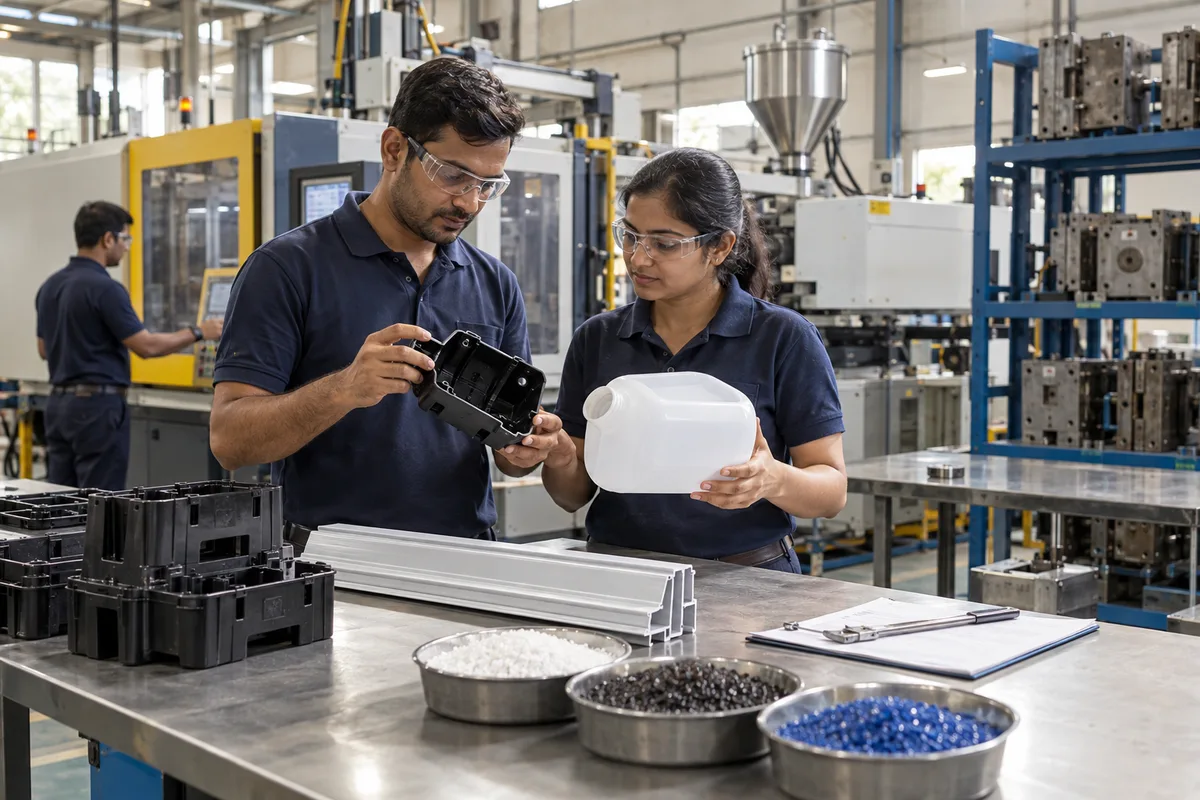
Plastic extrusion pushes melted resin through a die to make a continuous shape, such as pipe, film, sheet, profile or cable sheathing. GullySales helps extruders reach contractors, dealers and converters, and win repeat supply from buyers who compare on grade, consistency and delivery.
What decides it is supply: the right grade, consistent dimensions, a truck on the promised day. A maker that proves it is reliable earns a repeat order. One that quotes only on price is always in a rate war.
Last updated 16 Oct 2026.
Who it is for
This is written for you if plastic extrusion is what you make or sell.
- Pipe extruders making water, conduit and agricultural pipe
- Film and sheet extruders supplying converters and packers
- Profile makers for windows, doors and cable trunking
- Extruders selling through dealers as well as to contractors and projects
Not for
It is not the right fit if.
- A unit that cannot hold a dimension from lot to lot. Buyers measure and reject.
- An extruder with no dealer or contractor network and no appetite to build one. The product reaches the market through them.
How buyers choose
What decides the sale of plastic extrusion.
Grade, size and class
A contractor asks for a diameter and a pressure rating; a converter asks for a film width and thickness. Quoting against the buyer's specification, not a stock list, is what is wanted.
Dealer margin and credit
A dealer decides on the margin, the payment days and the scheme. They also look at how reliably the product reaches them.
Project and tender supply
Government and large private projects want a list of approved makers and a set of test records. Whether you can meet a given project specification is a technical matter for the buyer and your quality head.
Consistency from lot to lot
A converter whose machines run your film wants the same behaviour every roll. Their first complaint decides whether you are asked again.
Where orders are lost
What usually goes wrong when you sell plastic extrusion.
In the words owners use on the first call.
“Dealers buy from whoever gives the best scheme this month”
A scheme-driven dealer has no loyalty. A steady dealer programme with product training and fair territory rules holds the better dealers.
“We lose project tenders to approved makers”
Being on a project's approved list takes paperwork. Someone must find which projects are coming and what each asks of a supplier.
“Our product is accepted but nobody calls us when the contractor needs more”
A site buys pipe in lots. If the contractor does not have your number or your dealer's stock, the order goes to someone else.
The scope
The work we would propose for plastic extrusion.
Measured on qualified enquiries, quotation requests, follow-up on each quotation, orders won and, where you sell through dealers or shelves, repeat orders by channel. Anything here that needs a platform, directory or tool we have not used with you is confirmed with you before it goes in the scope.
- Product pages with size, class and application tablesA page per product: pipe by diameter and class, film by width and thickness, profile by section. Contractors and converters search that way.
- Dealer recruitment and territory planA list of districts where you have no dealer, a dealer kit, and a recruitment sequence for each.
- Project and contractor listA list of contractors and project buyers in your region, and the documents each asks a supplier for. Registration details are confirmed with each buyer.
- Dealer and contractor stock locatorA page and map showing where your product can be bought near a site. Contractors search by town.
- Repeat-order contact for converters and contractorsA call after each major delivery to ask about the next lot.
What we do
What you get for plastic extrusion.
Each deliverable and what it is there to change.
A product range table
Sizes, classes and applications on one page. Replaces a PDF that nobody downloads.
A dealer pack
Product sheets, scheme sheet, territory terms and a price protection note. Makes the first dealer call easier.
A stock locator page
Dealers and stockists by town. Lets a site engineer find your product near them.
A project supply file
A standard bundle of test records and company documents for project buyers. Cuts the time spent on each tender.
A dealer follow-up record
Which dealers ordered, which went quiet and what they said.
How the result is measured
- Qualified enquiries
- Quotation requests and follow-up
- Dealers recruited and dealers who reordered
- Project enquiries
- Orders and repeat orders
- Enquiries by district
Recorded as a baseline before work starts, so every later report has an honest comparison.
How it works
From your first message to the first report.
No open-ended retainer. Every step gives you something in writing.
First
Your brief
You tell us what you need in a few short steps: your business, what you want, where enquiries come from and how they are handled.
After the brief
A conversation and a written scope
We read it, then talk with whoever handles your enquiries. If you want our help, the scope, the fee and the reporting come in writing, and nothing starts before you have read them.
Before work starts
Baseline recorded
The numbers this work is meant to move, such as enquiries, quotations, orders, visits or renewals, written down so every later report has an honest comparison.
After the baseline
The first fix goes live
The fix we agreed to start with is put in place and measured against the baseline, whether that is a reply, a follow-up, a page, a listing or the handover between marketing and sales.
As agreed
Report against the baseline
What moved, what did not, and what changes next, in plain words. How often you get it is set in writing before work starts.
At renewal
Renew on the numbers
The term ends and you decide whether to continue from the results. The length is agreed in writing before anything starts.
What we need from you
What to have ready before we talk.
None of it has to be tidy. We read what you have.
- Your product list with sizes and classes
- A list of dealers with territories and sales by dealer
- Test records and certificates you hold
- Recent project supplies you can describe
- Districts where you have no dealer
Export and new regions
Selling plastic extrusion beyond your home market.
Where you sell decides standards, documents, payment terms and freight. We work from Bengaluru and have no overseas office, so for a new region we start from your own enquiries, your existing buyers and the directories you already use.
Export of extruded products
Pipe and sheet are bulky, so export suits neighbouring markets and higher-value profile and film. Your existing exports show which products work.
Importers and specifications
An importer will want your product to meet the specification of their market. Which standard applies is for the buyer and your quality head to confirm.
FAQ
Questions about selling plastic extrusion.
Not here? More answers, or ask on WhatsApp.
How can I win dealers when everyone offers the same scheme?
Do contractors search online for pipes?
Can we sell film to converters directly?
How much does it cost?
How soon will we see results?
Who will actually do the work?
What do you need from us?
What if we are not happy with the work?
More in Plastic Manufacturing
Makers of plastic extrusion also need
Looking for the wider industry page? See plastic injection moulding units.
This page is part of the manufacturing section. The hub also lists every manufacturing industry we write for.
Why us
Why owners pick GullySales over an agency.
Marketing and sales, as one job
Most agencies stop at the enquiry. We also fix what happens after it: the reply, the follow-up, the quote and the CRM.
The person on the first call does the work
No account managers in between. You are never handed to someone you have not met.
A baseline before anything starts
Your numbers are written down on day one, so every later report compares against something honest.
The fee in writing, split three ways
Our time, your media spend and production on separate lines. You always see what goes to us.
No guarantees we cannot keep
The term is agreed in writing and never a default twelve months. We never promise a ranking or a lead count, because nobody controls those.
One office, and we say so
Nagarbhavi, Bengaluru. We work across India by call and WhatsApp and travel when a session needs to be in person.
#257, 3rd floor, Sri Nanjundeshwara Complex, Nagarbhavi 8th Block, Outer Ring Road. How we work.
Engagement options
Ways to work with us.
Pick the size of commitment that fits. Every option starts with your brief and a conversation.
Option 1
The conversation on its own
A call after you send your brief. It says honestly whether you need outside help, and many fixes are ones your own team can make.
Option 2
One fix, scoped
Start with the fix that matters most, such as reply time or follow-up. The fee is in writing before anything starts.
Option 3
An ongoing programme
We run the work, report against the baseline, and you renew on the numbers. The term and the reporting are agreed in writing first.
Option 4
Guidance for your own team or agency
We plan, brief and check the work of your in-house team or current agency, instead of replacing them.
Your brief
Tell us what you need, and we will read it before we call.
Eight short steps about your business, what you want and who decides. Most questions are a tap, and you can skip any you would rather answer on the call.
Your next practical step
Tell us what you are trying to grow, and we will read it before we call.
Eight short steps, mostly taps. Skip anything you would rather answer on the call.