Manufacturing · Textiles, furniture, construction and consumer goods
Buyers ask for a swatch and a sample, and most mills and factories are slow to send either.
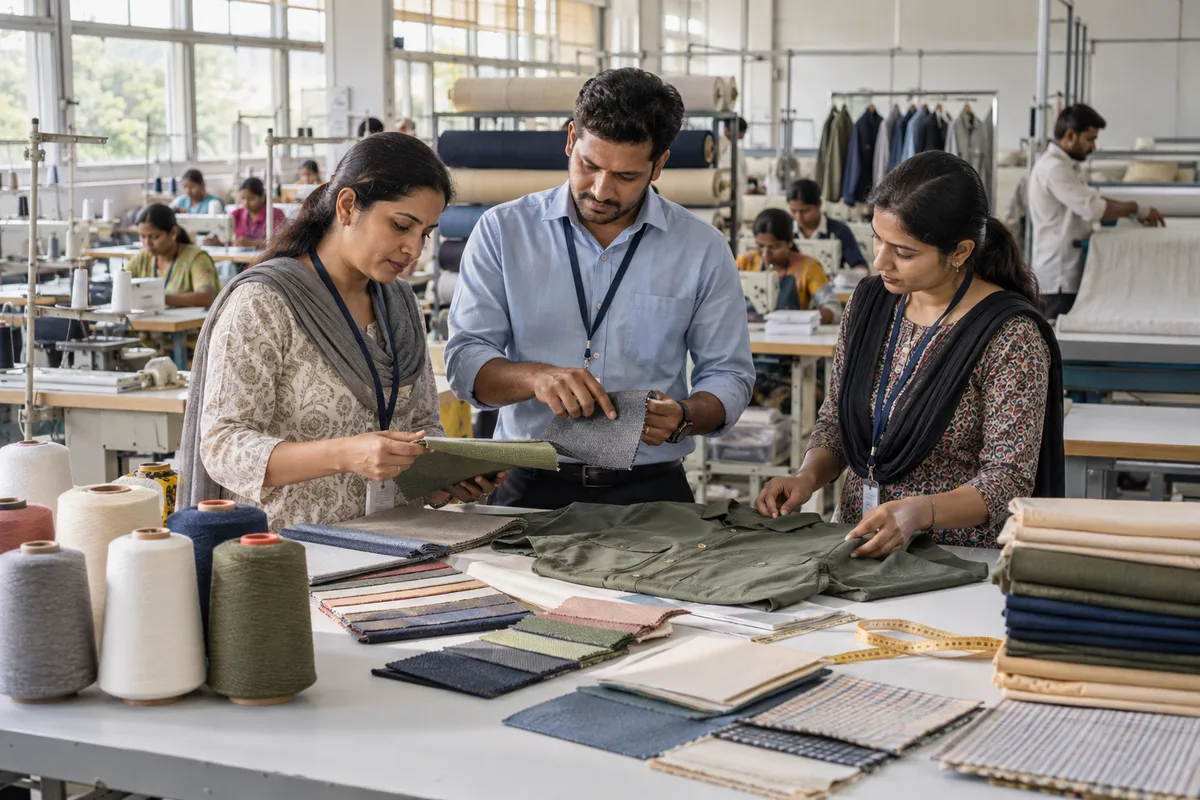
Textile and garment manufacturing is sold by touch. A buyer will not place an order on a photograph, so every sale in this segment passes through a swatch, a sample or a trial lot. The unit that sends a good sample quickly, and calls to ask what the buyer thought, tends to be the one that gets the order.
Scope, fee, reporting and term are agreed in writing after we have read your brief and spoken to you.
In one paragraph
Textile and garment manufacturing covers spinning, weaving, knitting, processing and stitching, from yarn and fabric to finished garments, uniforms, technical cloth and home textiles. GullySales builds the enquiry, sample follow-up and buyer outreach work that brings orders to a mill, a processor or a garment unit, whether they come from brands, traders, institutions or retail.
The segment is long and layered. A spinner sells to a weaver or a knitter, the fabric goes to a processor, the processed fabric goes to a garment unit, and the garment goes to a brand, a buying house, an institution or a retailer. Each link has different buyers and a different way of choosing.
GullySales does not make or trade cloth or garments. It works on the commercial side: being found by the right buyer, answering a request for quotation with the details that matter, following up on samples, and winning the repeat order.
Last updated 16 Oct 2026.
7 types of work
Each kind of textile & garment manufacturing is bought differently, so each has its own page.
Open the one that matches what you make. It covers who buys it, where the order is lost and what we would do.
- Garment ManufacturingThe buyer wanted a price per piece by tonight, and we replied with a catalogue.
- Fabric ManufacturingThe garment maker called three mills for the same cloth, and the swatch from the nearest arrived first.
- Yarn ManufacturingWe sell our yarn to the same three weavers because nobody else has heard of our counts.
- Uniform ManufacturingThe school asked for a sample set, and by the time we sent it the contract was gone.
- Technical TextilesThe engineer needs a fabric that does a job, and our website talks about cloth.
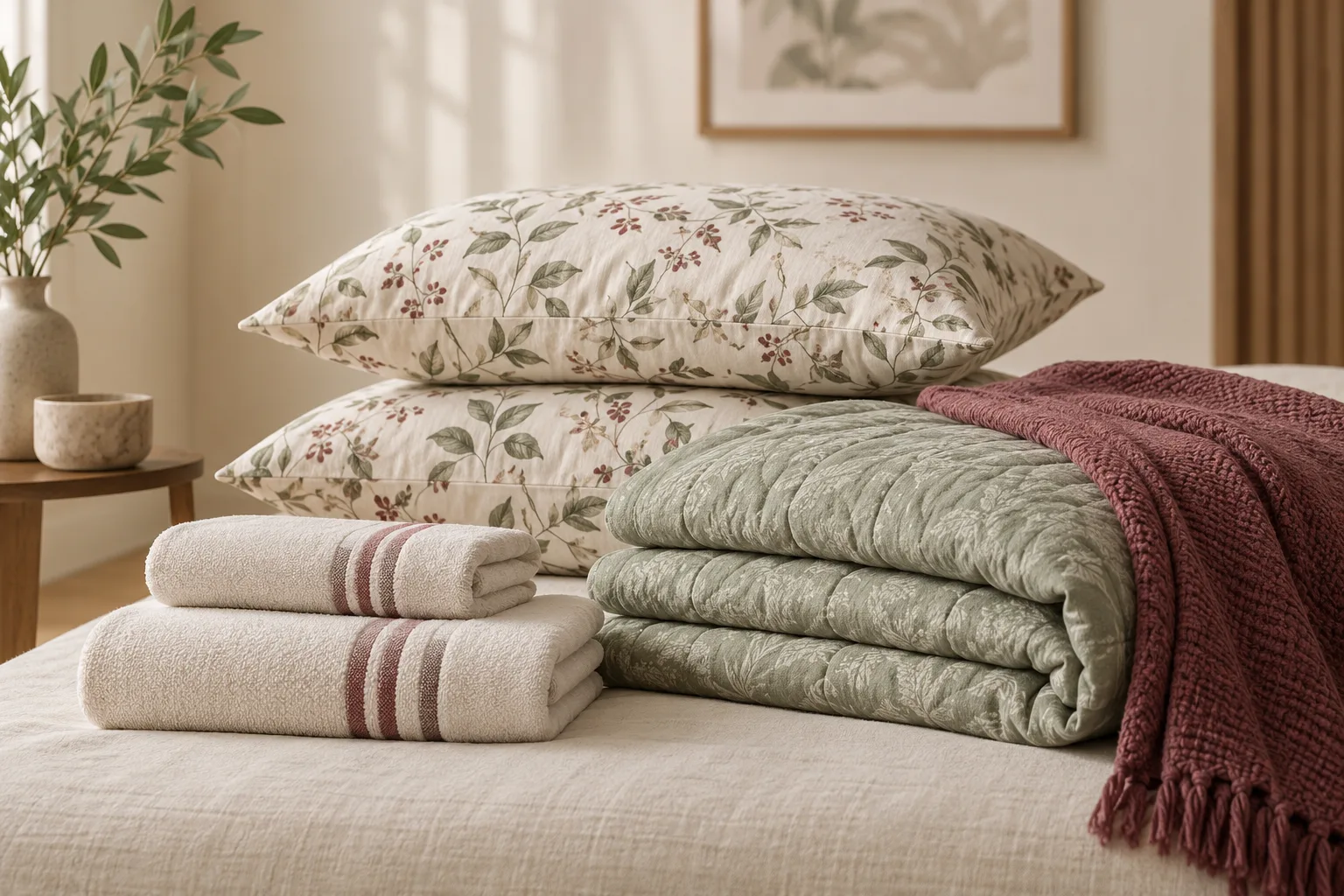 Home TextilesOur bedsheets sit in a shop under someone else's name, and the shopper never learns who made them.
- Textile ProcessingMerchants send us cloth only when their usual processor is full, and we want them to send it first.
Who it is for
This is written for you if textile & garment manufacturing is what you make or sell.
- Garment units making for brands, buying houses, retailers or institutions
- Weavers and knitters selling fabric to garment makers and traders
- Spinners looking for buyers beyond the two or three they already supply
- Processors, dyers and finishers who work on job-work for mills and merchants
- Makers of uniforms, technical textiles and home textiles who sell by tender or through dealers
Not for
It is not the right fit if.
- Units that sell all their output to one buyer under a standing arrangement and have no wish to widen
- Makers who compete only on the lowest rate and will not change how they quote
- Anyone expecting us to take on compliance audits or buyer certification. That belongs to your own team and the buyer's auditors.
How buyers choose
What decides who wins in textile & garment manufacturing.
Swatch, sample and then a trial lot
The buyer asks for a swatch card or a sample piece, checks hand-feel, shade and construction, and orders a small lot before committing to a bulk order.
Technical detail on a spec sheet
Count, construction, width, weight, shade fastness and finish for fabric. Fit, measurement chart and stitching details for garments. Without these on paper the enquiry stays a conversation.
Minimum order and lead time
Buyers ask for the minimum quantity per colour or style and for the production time. A vague answer sends them to the next unit.
A buying agent or a trader in between
A buying house, an agent or a trader in a textile market often sits between the maker and the brand. They choose on price, sample speed and reliability.
Where orders are lost
What usually goes wrong when you sell textile & garment manufacturing.
In the words owners use on the first call.
“We send samples and never hear back”
A parcel goes out and nobody asks about it. By the time the buyer remembers, they have approved another unit's swatch.
“Everything depends on one or two buyers”
A change in their sourcing, or a move to another country's mill, leaves capacity empty and no list of other buyers to call.
“Agents and traders hold the customer”
The brand's name is known to the trader and not to you, so the price is set in the middle and repeat orders are not yours.
“Our enquiries are unclear”
A message that says "need fabric" or "need T-shirts" with no GSM, quantity or design takes several calls to understand, and many are dropped.
The scope
The work we would propose for textile & garment manufacturing.
Measured on qualified enquiries, quotation requests, follow-up on each quotation, orders won and, where you sell through dealers or shelves, repeat orders by channel. Anything here that needs a platform, directory or tool we have not used with you is confirmed with you before it goes in the scope.
- Capability pages by product, count and constructionFor a mill, pages by fabric type and weight range. For a garment unit, pages by product category, fabric used and order size. Each ends in a request form that asks for the specification.
- Searches by fabric, garment and cityBuyers search for a fabric by name or a garment by category and place. We find the phrases for your range and build pages and listings that match.
- Marketplace and directory enquiry handlingEnquiries from IndiaMART, TradeIndia and Alibaba sorted into brand, trader, agent and small-order buyers, and answered in that order of fit.
- Sample and swatch follow-upEach sample logged with the buyer, the style or quality, the date and a call date. A sample without a follow-up call is treated as unfinished.
- Buyer research and outreachA researched list of garment brands, buying houses, uniform contractors or fabric buyers that match your product, and a measured approach to them.
- Dealer and agent developmentWhere your product moves through agents or dealers, a pack, a margin sheet and a follow-up routine for the ones who ask for a sample.
What we do
What you get for textile & garment manufacturing.
Each deliverable and what it is there to change.
A swatch card and spec sheet by quality
A printed card and a PDF with count, construction, weight, width, finish and minimum order, so a buyer can compare you with two others.
A sample request and dispatch log
Who asked, what was sent, when, and the date to call, owned by a named person.
A quotation template with order terms
Price, minimum per colour or style, production time as your floor can honestly state it, payment terms and sampling charge.
A buyer list by type
Brands, agents, traders and institutions kept in one place, with the last contact and the next step.
A repeat-order reminder by customer
The date each buyer usually reorders, so you call before the buyer looks around.
How the result is measured
- Qualified enquiries by source and by buyer type
- Samples sent and followed up
- Quotations sent and answered
- Trial lots and bulk orders won
- Repeat orders by buyer
- Agents and dealers added and active
Recorded as a baseline before work starts, so every later report has an honest comparison.
How it works
From your first message to the first report.
No open-ended retainer. Every step gives you something in writing.
First
Your brief
You tell us what you need in a few short steps: your business, what you want, where enquiries come from and how they are handled.
After the brief
A conversation and a written scope
We read it, then talk with whoever handles your enquiries. If you want our help, the scope, the fee and the reporting come in writing, and nothing starts before you have read them.
Before work starts
Baseline recorded
The numbers this work is meant to move, such as enquiries, quotations, orders, visits or renewals, written down so every later report has an honest comparison.
After the baseline
The first fix goes live
The fix we agreed to start with is put in place and measured against the baseline, whether that is a reply, a follow-up, a page, a listing or the handover between marketing and sales.
As agreed
Report against the baseline
What moved, what did not, and what changes next, in plain words. How often you get it is set in writing before work starts.
At renewal
Renew on the numbers
The term ends and you decide whether to continue from the results. The length is agreed in writing before anything starts.
What the work involves for textile & garment manufacturing
- 1
Read your range and your enquiry history
We study your products, swatches, past quotations and where each customer came from, and record a baseline of enquiries and orders by source.
- 2
Name the buyers for each product
For every product line we decide who the actual buyer is: a brand, a buying house, a trader, a processor or an institution.
- 3
Build the pages, cards and listings
Capability pages, spec sheets, swatch cards and corrected marketplace listings go live, with every claim checked against your own records.
- 4
Start sample and quotation follow-up
Sample logging, calls and the reorder reminder begin, with an owner on your side named for each.
- 5
Report against the baseline
Enquiries, samples followed up, trial lots and repeat orders are compared with where you began. How often we report is agreed in writing.
What we need from you
What to have ready before we talk.
None of it has to be tidy. We read what you have.
- Website link, marketplace listings and catalogue if you have them
- Swatch cards, garment samples and spec sheets as they are now
- A list of current buyers, agents and traders, with what each buys
- The last twenty enquiries and what became of each
- Photographs of the unit, the machines and the finished goods
- Certificates and buyer approvals you hold and may mention
Export and new regions
Selling textile & garment manufacturing beyond your home market.
Where you sell decides standards, documents, payment terms and freight. We work from Bengaluru and have no overseas office, so for a new region we start from your own enquiries, your existing buyers and the directories you already use.
Brands, importers and buying offices
Overseas buyers include brands, importers, wholesalers and buying offices located in India. The first step is your own export enquiry data and the buyers you already supply.
Documents and approvals buyers ask for
Buyers ask for test reports, social compliance status and product certificates. We do not advise on them. We help show what you hold in one place.
Samples, freight and payment terms
Sample cost, courier, advance terms, letters of credit and shipment arrangement decide whether a first order happens. They belong in the reply template.
FAQ
Questions about selling textile & garment manufacturing.
Not here? More answers, or ask on WhatsApp.
How do I get garment brands to find my unit?
Does a mill or a processor need a website?
Is IndiaMART good for fabric and garments?
How do I stop depending on one buyer?
How much does it cost?
How long is the contract?
How soon will we see results?
Who will actually do the work?
What do you need from us?
Makers of textile & garment manufacturing also need
Looking for the wider industry page? See textile manufacturers and garment manufacturers.
This page is part of the manufacturing section. The hub also lists every manufacturing industry we write for.
Why us
Why owners pick GullySales over an agency.
Marketing and sales, as one job
Most agencies stop at the enquiry. We also fix what happens after it: the reply, the follow-up, the quote and the CRM.
The person on the first call does the work
No account managers in between. You are never handed to someone you have not met.
A baseline before anything starts
Your numbers are written down on day one, so every later report compares against something honest.
The fee in writing, split three ways
Our time, your media spend and production on separate lines. You always see what goes to us.
No guarantees we cannot keep
The term is agreed in writing and never a default twelve months. We never promise a ranking or a lead count, because nobody controls those.
One office, and we say so
Nagarbhavi, Bengaluru. We work across India by call and WhatsApp and travel when a session needs to be in person.
#257, 3rd floor, Sri Nanjundeshwara Complex, Nagarbhavi 8th Block, Outer Ring Road. How we work.
Engagement options
Ways to work with us.
Pick the size of commitment that fits. Every option starts with your brief and a conversation.
Option 1
The conversation on its own
A call after you send your brief. It says honestly whether you need outside help, and many fixes are ones your own team can make.
Option 2
One fix, scoped
Start with the fix that matters most, such as reply time or follow-up. The fee is in writing before anything starts.
Option 3
An ongoing programme
We run the work, report against the baseline, and you renew on the numbers. The term and the reporting are agreed in writing first.
Option 4
Guidance for your own team or agency
We plan, brief and check the work of your in-house team or current agency, instead of replacing them.
Your brief
Tell us what you need, and we will read it before we call.
Eight short steps about your business, what you want and who decides. Most questions are a tap, and you can skip any you would rather answer on the call.
Your next practical step
Tell us what you are trying to grow, and we will read it before we call.
Eight short steps, mostly taps. Skip anything you would rather answer on the call.