Industries · NGOs & Associations
People give, visit, book and enrol where they feel they can trust the people running the place.
A family in Pune plans a visit to a temple in Kashi and searches for the darshan timings, the seva list and a way to donate from home. The notice board that serves local devotees every day tells them nothing. They find a Maps listing with old hours, a donation link on a forwarded WhatsApp message and a video from a festival three years ago. Some will give anyway, and some will quietly choose another place that answers clearly.
Scope, fee, reporting and term are agreed in writing after we have read your brief and spoken to you.
In one paragraph
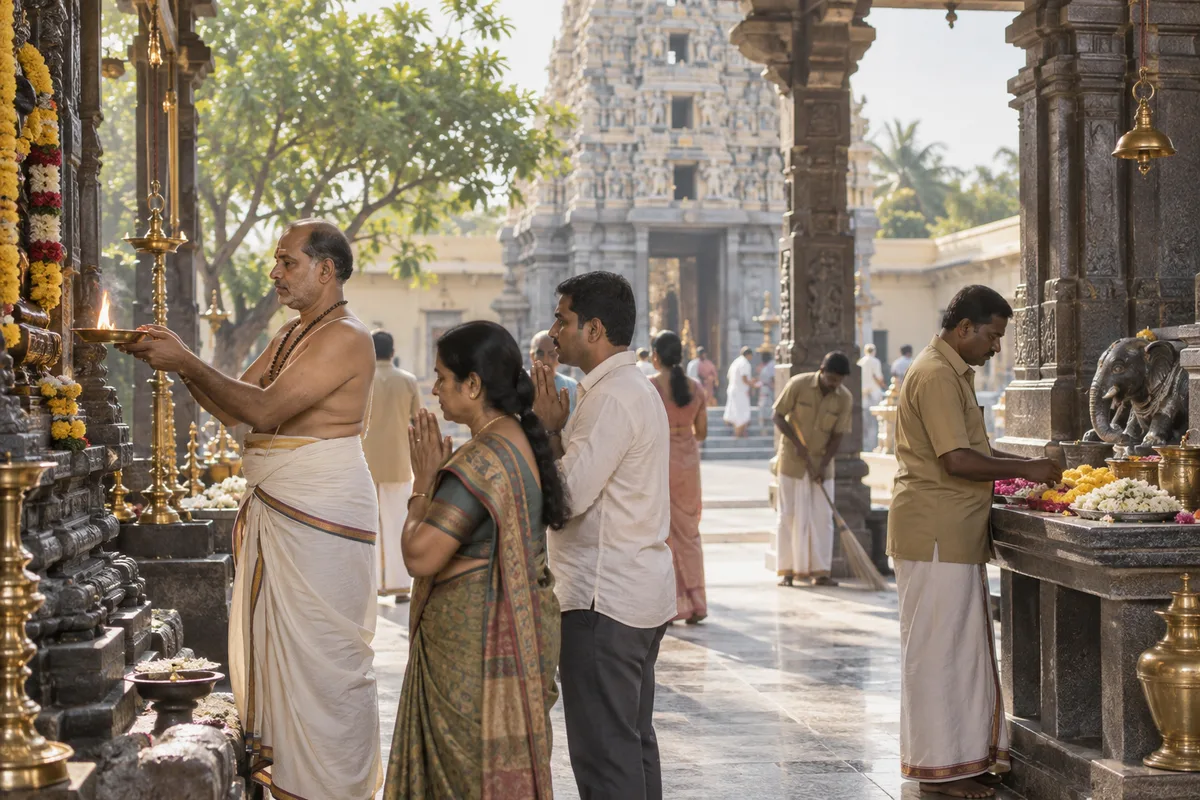
Religious, spiritual and cultural institutions are temples, trusts, ashrams, meditation bodies, pilgrimage and event organisers, cultural foundations, halls and schools of tradition that serve a community and depend on its gifts, visits and bookings. GullySales looks at how a stranger finds you, what they can verify about your work and accounts, and whether a question gets a courteous answer.
These twelve kinds of institution differ a great deal. A temple serves a steady stream of devotees and some big festival days, an ashram sells a stay, an event organiser sells a date, and a heritage body sells a cause to funders. What they share is a community built on trust, income that comes as gifts, fees and bookings, a small team, and visitors who judge them by how openly and warmly they respond.
Last updated 18 Oct 2026. Rules on what you may advertise differ by trade and change. This page describes them in general terms only, so check the current position with your own adviser or regulator.
12 kinds of business
Each kind of business in religious, spiritual & cultural institutions sells a little differently.
Open the page closest to yours for how its buyers choose and what we would fix first.
Temples
A devotee in another city should be able to book a seva and give without phoning the office, and the Maps timings should match the festival calendar.
Read the page for templesReligious trusts
Donors ask where last year's money went. One trust may run a temple, a school and a goshala, so each needs its own account of the work and the accounts.
Read the page for religious trustsSpiritual centres
Built around a teacher or lineage. A stranger needs an easy first visit, and the WhatsApp questions that follow it need someone assigned to answer them.
Read the page for spiritual centresMeditation organizations
Each chapter teaches one method yet posts its own dates. A shared course page and calendar format across chapters is the first fix.
Read the page for meditation organizationsYoga ashrams
A guest books a residential stay from far away. The course, the daily routine and the booking steps should read clearly, in a quiet tone, before any deposit.
Read the page for yoga ashramsPilgrimage organizers
The traveller may be an older parent while the son or daughter booking reads for health, food and darshan arrangements, stated plainly and without guarantees.
Read the page for pilgrimage tour operatorsReligious event organizers
A host arrives with a date and a headcount for a katha or utsav. A list of what the quote includes, and photographs of past events, answer the first call.
Read the page for religious event organizersCultural foundations
Audience, students and sponsors are three different buyers. The season announcement speaks to each, and the sponsor pack is rewritten for the current season.
Read the page for cultural foundationsHeritage conservation organizations
A funder wants to walk the monument, on paper at least, before signing: documentation of the site, a plan for the repair and a plain ask.
Read the page for heritage conservation organizationsCommunity halls
Families want to check the date, rate and house rules without visiting twice, so a calendar and a rate page with the house rules answer the first questions.
Read the page for community hallsReligious education centres
Parents weigh their child's values against convenience. Class timings, fees and admission steps are unwritten, so families outside the circle cannot find them.
Read the page for religious education centresCharitable religious institutions
Free meals, clinics or hostels run on steady giving. Donors who hear what their gift paid for are the ones who give again.
Read the page for charitable religious institutionsWhat they share
What usually goes wrong across religious, spiritual & cultural institutions.
Whichever of these you run, you will probably recognise most of them.
“Newcomers cannot find the basics online”
What is offered, when, on what terms and how to take part or give lives in people's memory. A first-time visitor who cannot confirm it from a phone either arrives confused or does not come.
“Newcomers cannot check who runs us or what we have done”
A stranger weighing a gift, a booking, an enrolment or a hire looks for a name, a record of past work and a contact. Where there is only a phone number, the careful ones hesitate.
“Requests from outside reach one person's phone or notebook”
A question, an offer to help or a request to take part goes to one personal phone or a register that nobody else sees. When that person is away or busy, the request waits and the person asking moves on.
“Those who run the place are busy with the work, so outreach has no owner”
The people who run the place are busy with its work. Photographs, announcements and replies to strangers are done when someone finds a spare hour, or not at all.
“Our work is respected locally and unknown beyond the neighbourhood”
The community knows us, while people beyond it, such as patrons, funders, overseas families and younger people searching online, do not. The listing, the website and the photographs are what they judge.
“People who came once are never thanked or asked again”
Whoever gave, attended, booked, hired or volunteered leaves a name and a number in a register. With no simple record and no courteous message, the likeliest supporters drift away.
Where to start
What to fix first in religious, spiritual & cultural institutions.
In the order we would look at them. Your own enquiry records may change the order, and we would say so.
- Put what you offer, the steps to take part, give or book, and a working contact number on one clear page, and make any public listing say the same thing.
- Write a plain account of what the institution did last year, with real photographs and, where gifts are taken, what they paid for, and link to it wherever you ask for support.
- Give enquiries one shared WhatsApp number or inbox that more than one person watches, with a short saved reply for the questions that come up repeatedly.
- Name one person who owns outreach, and give that person the calendar of the next festival, course, season or appeal, so announcements and rotas are prepared before the date and not in its final days.
- Keep a simple list of everyone who has given, attended, booked, hired or helped, with the occasion they came for, so a thank-you and the next invitation go to the right people.
Related services
The work that usually comes up.
Which of these you need is decided after we have read your brief.
- Local SEOShow up on the map when someone searches near your shop.
- Google Business Profile managementBe the pin on the map that shows correct hours and actually answers reviews.
- WhatsApp marketing and automationAnswer the WhatsApp enquiry in a minute, not when someone checks the phone at 7 pm.
- Website design and developmentBuild the site that turns a visit into an enquiry.
- Event and trade show marketingMake sure a trade show actually produces enquiries after the stall comes down.
- Online review generation and managementYour customers are happy, and your Google page still shows only a few reviews.
- Brand story developmentYour founder's story is told at every meeting and written down nowhere.
- Lead response and follow-upMore enquiries turned into orders, for teams that reply late and follow up once.
FAQ
Questions about religious, spiritual & cultural institutions.
Not here? More answers, or ask on WhatsApp.
How can an institution take online gifts or bookings without losing people's trust?
Is it right to market a religious or spiritual place at all?
What should a first-time visitor see first?
How do we reach people outside our own circle, such as younger people and families abroad?
Which matters more, a website or a Maps listing?
How much does it cost?
How long is the contract?
How soon will we see results?
Who will actually do the work?
What do you need from us?
More in NGOs & Associations
Looking for a single trade? See every industry.
Your brief
Tell us what you need, and we will read it before we call.
Eight short steps about your business, what you want and who decides. Most questions are a tap, and you can skip any you would rather answer on the call.
Your next practical step
Tell us what you are trying to grow, and we will read it before we call.
Eight short steps, mostly taps. Skip anything you would rather answer on the call.