Temples · Local SEO
Make the temple the first result when someone nearby searches for darshan timings.
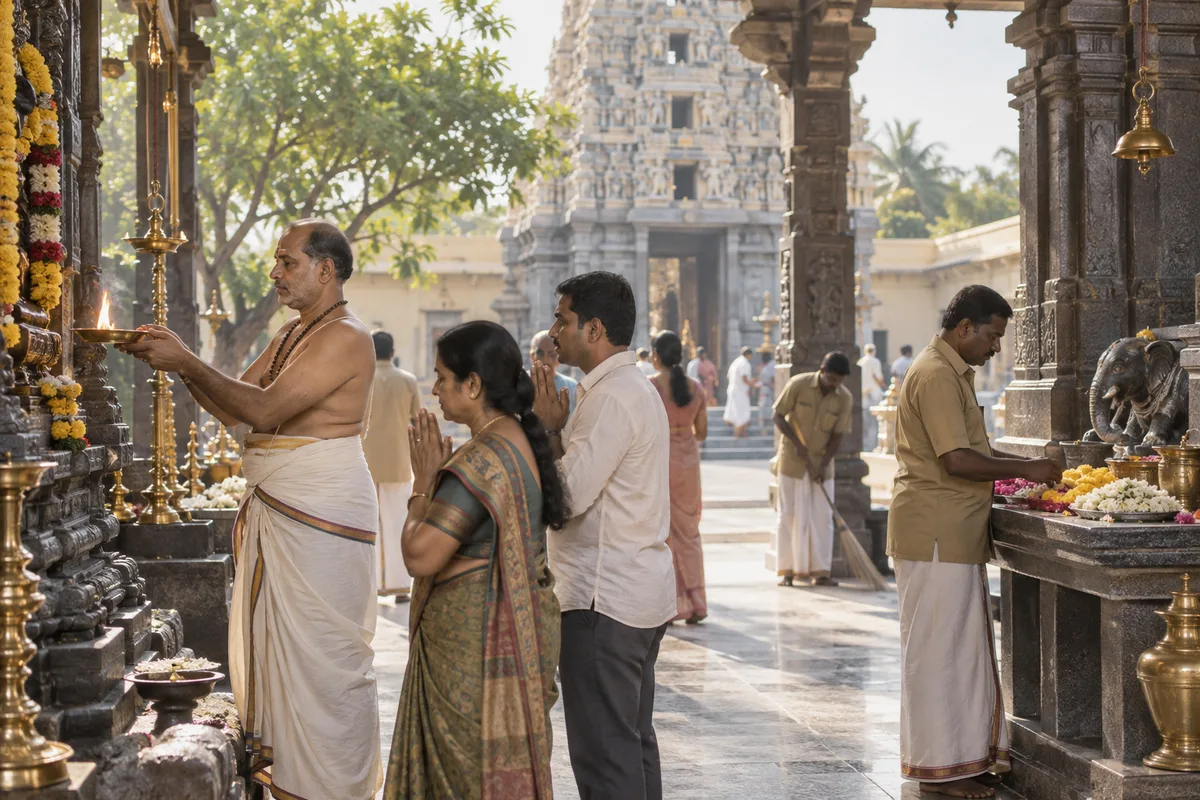
Local SEO for a temple is the work of making the Maps profile, the address and the nearby search results show the right timings, the right entrance and the right festival notice. A devotee standing outside the town checks that profile before leaving home. GullySales works on keeping that listing accurate and on the pages that support it.
Scope, fee, reporting and term are agreed in writing after we have read your brief and spoken to you.
What local SEO means
Local SEO is the work of making your business show up for searches that name your town or locality, such as a service plus an area name. GullySales sets up locality pages, local citations and map listings so nearby customers find you before a competitor across town.
Last updated 14 Nov 2026.
For temples
Where it usually goes wrong, and what we would do.
“The Maps profile is the real noticeboard”
A devotee on the road opens the map, not the website. If the profile still shows the old darshan window, a family reaches the gate after the sanctum has closed. Timings, the closed-day notice and the entrance name must match what the office has fixed.
“Festival days change everything at the gate”
On a brahmotsavam or car festival day, the usual entrance, parking and queue arrangements shift. A profile that does not carry a festival update sends devotees to a closed lane, and the first review they leave is about the confusion.
“Searches mention the deity and the neighbourhood”
Local devotees search by the deity's name, the street or the nearest bus stop, and in the regional language. A listing written only in English and under the trust's legal name will not match those words.
“Reviews from visitors set the first impression”
A newcomer reads the reviews before the timings. Replies in a courteous, factual tone from the trust show that the office is attentive. Never ask devotees for praise; invite them to share their experience and reply to every comment.
What we do
What we deliver for temples.
The work available for this need. We agree the deliverables and responsibilities for your engagement in writing.
A verified Maps profile
The profile claimed by the trust, with the deity or shrine name, the correct address, a usable phone contact for the office and the right place type.
Result: The profile shows the temple under the name devotees search.
Timings and special-day notices
Regular darshan hours, the closed intervals and a short notice for each festival, entered in the profile and kept in line with the website.
Result: The timings on the map match the board at the gate.
Regional-language entries
The profile description and the website's address block written in the local language as well as English, using the spellings devotees type.
Result: A search in the local script finds the temple.
Photos of the gate and the route
Pictures of the entrance, the footwear stand, the queue path and the parking, chosen with the trust's consent and without showing devotees' faces.
Result: A first-time visitor recognises the entrance on arrival.
A reply routine for reviews
A short guide for the office on answering each review respectfully, plus a note on what to do when a complaint is about the queue.
Result: Every review has a courteous reply from the temple.
How the result is measured
- Map pack ranking
- Local search visibility
- Enquiries by locality
Recorded as a baseline before work starts, so every later report has an honest comparison.
Searches your buyers type
Devotees nearby search for the deity and the neighbourhood, and the listing should answer each search.
- temple near me open now
- Set the listing's hours to the current darshan timings, with any festival-day change added. A devotee standing outside wants to know whether the gate is open.
- deity name temple in the town name
- Use the deity's name and the town exactly as the trust spells them, in English and the local script. A search with the deity's name finds the right temple.
- how to reach the temple by bus or auto
- Add a short line on the nearest stop and the route to the gate. A visitor from another town needs a practical direction before the first line of history.
- temple parking and footwear stand
- Say where to park and where to leave footwear, as the temple arranges it. On a festival day, this detail saves the gate staff repeated questions.
- temple festival dates this year
- Add the utsavam dates to the listing as a post, and take it down when the festival ends. A visitor searching for the festival sees a current notice.
Who it is for
This is written for these temples.
- Ancient and heritage temples with high pilgrim footfall
- Neighbourhood and community temples
- Temple trusts managing more than one shrine
- Shrines with a strong NRI devotee base overseas
- A temple known for one festival or utsavam
- Temples running annadanam and community welfare programmes
Before you decide
When this may not be the right fit.
- The listing is controlled by someone who has left, and the trust cannot yet sign in to correct it.
- The timings change on a whim and no one tells the office, so the listing would be wrong at the gate.
- You want to add the temple to maps of other towns to attract visitors, which misleads those who search.
Before you decide
Agree the work. Know how to judge it.
Local SEO for temples: use these checks to prepare, choose the scope, and review what changes.
Bring the right evidence
Confirm the real business address, service area, contact details, and who controls the business listings. Keep examples of calls that came from the wrong location or asked for a service you do not provide.
Make the scope clear
Choose the locations you actually serve and the information each needs. Agree who approves listing changes, responds to enquiries, and keeps opening hours accurate.
Check the work in use
Check the journey from a local search to a call or enquiry on a phone. The address, service area, and description should agree across your website and listings.
Know when to change course
Do not create an office claim for a place where you only serve customers remotely. Clear service coverage is more useful than a misleading local presence.
These are discussion points, not a fixed package. GullySales confirms the deliverables, responsibilities, fee, and term in writing after reading your brief and speaking with you.
Before we start
What to have ready before the work starts.
The records, access and decisions this work needs from temples. Anything missing is noted in the written scope, with who will supply it.
- A trustee who can verify the listing
- The platform asks for proof of control, such as a code to the registered phone or a visit. A trustee must receive it. Without this person the listing stays with whoever opened it.
- Current timings for ordinary and festival days
- Two sets of hours, written clearly. The listing shows both. If the festival hours are not fixed, we set normal hours and add festival hours when announced.
- The right address and gate information
- Some temples have several entrances. Tell us which gate pilgrims should use and where the parking is. Without it, the map pin may point to a locked side gate.
- Photographs of the entrance and surroundings
- Exterior images the trust approves, taken in daylight. The listing uses them to help pilgrims recognise the place. Without them the listing carries those uploaded by strangers.
How it works
How the local SEO work runs
The work itself, in order. How an engagement starts, from your brief to a written scope, is set out on our method page.
- 1
Check the Maps listing against the gate
We compare the Maps listing with the board at the temple: the name, the address, the opening hours, the phone number and the photographs. You tell us which details are right. Where the listing is wrong, such as a closing time that no longer applies, it goes to the top of the list because pilgrims plan by it.
- 2
Prove who owns the listing
Ownership must sit with the trust. We help a trustee claim or recover the listing, following the platform's current rules. If a volunteer opened it years ago, we trace who holds it. The result is a listing the trust controls, with two named managers.
- 3
Add the seva and festival details
We write the description, the options the platform offers and the posts for upcoming festivals, using the trust's spellings. A priest reads the wording. We add special hours for festival days and the days the sanctum is closed. The listing then tells a pilgrim what is true today, including the days when the main sanctum stays closed for cleaning or a ritual.
- 4
Check the nearby places that point to you
Hotels, tourism pages and pilgrim guides in the town describe the temple, sometimes wrongly. We list those that matter and note the errors. You decide whom the trust contacts to fix them. Only the corrections the trust asks for are pursued.
- 5
Put listing calls beside the earlier count
Before changes, we recorded the listing's views, direction requests and calls, and the office's count of phone queries about timings. Afterwards we set the new figures beside them and report which details moved. We also check whether visitors still arrive at the wrong gate or time.
Where this fits
Three pieces of sales work, in this order.
This work sits inside sales process design, at stage 1, prospecting and lead generation. The audit comes before it, and sales management keeps it running.
Step 1
Sales audit
Find where deals are being lost and what to fix first.
Start here if you cannot say where orders are lost.
Step 2 · you are here
Sales process design
One written way to sell, from first enquiry to repeat order.
Start here if every salesperson sells differently.
Step 3
Sales management
A target, a review routine and someone who owns the number.
Start here if the team has targets and no routine.
FAQ
Questions owners ask before they call.
Not here? More answers, or ask on WhatsApp.
Who should own the Maps profile?
Can we add the festival calendar to the listing?
A devotee left a harsh review about the queue. How should we respond?
Can the temple edit a wrong listing made by someone else?
Who is responsible if the Maps timings are wrong?
Can we show the seva rates on the listing?
How much does it cost?
How long is the contract?
How soon will we see results?
What do you need from us?
From the blog
Further reading for temples.
 5 min read · 12 Oct 2026Tax receipts, FCRA and registrations: how an NGO should present credentials without overclaimingDonors look for registrations before they give. State what you hold in plain words, avoid implying more, and have your adviser confirm the wording.
- 5 min read · 14 Sept 2026Website for an NGO: the pages donors look for before they giveA first-time donor checks your website before paying. The pages and details they look for, in the order they look, and what a small NGO can leave out.
- 6 min read · 2 Jul 2026How an NGO builds a donor database it can actually useA donor database starts as one row per donor, a few columns and a named owner. The layout, the rules that keep it clean and when to move to a CRM.
More for temples
Related work to consider.
Closest to this: search and visibility
Also for temples
Or start from the overview: sales and marketing for temples.
Your next practical step
Tell us what you are trying to grow, and we will read it before we call.
Eight short steps, mostly taps. Skip anything you would rather answer on the call.