Temples · Campaign microsite development
A festival microsite that gives devotees one place for dates, sevas and directions.
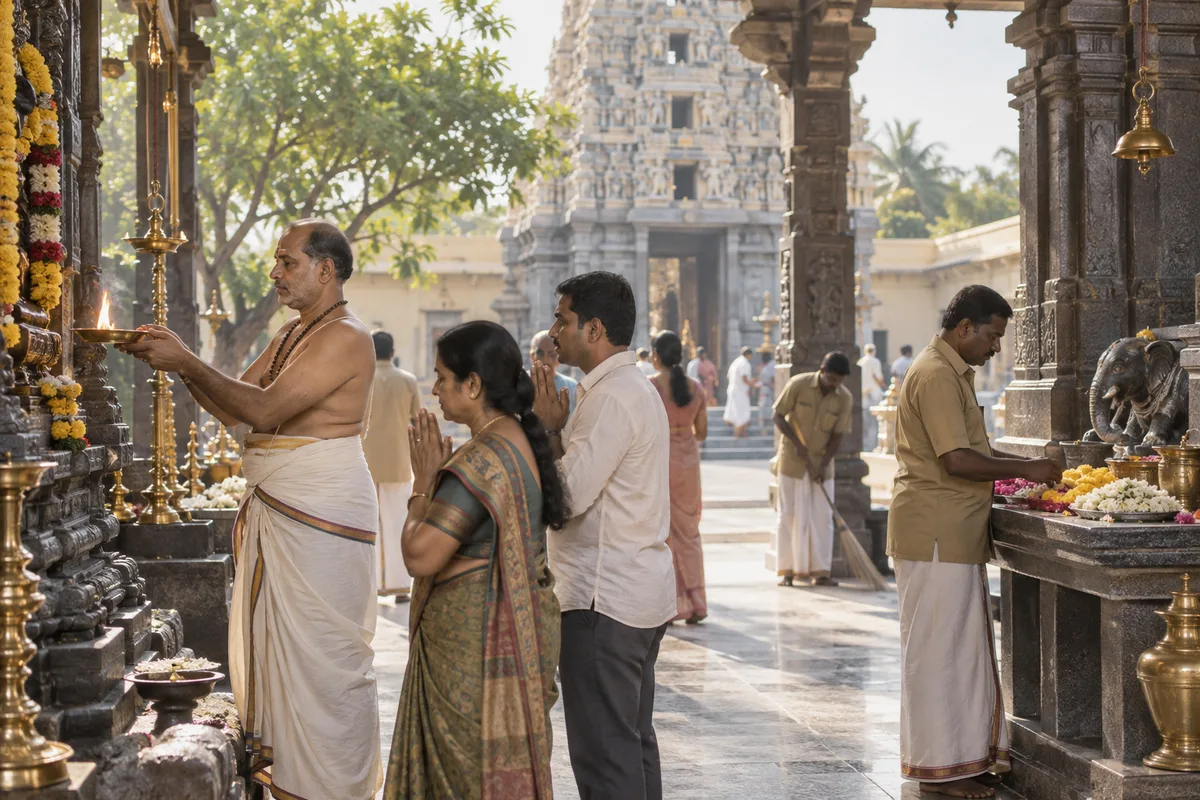
Campaign microsite development for a temple means building a small, separate set of pages for one utsavam, brahmotsavam or appeal, where a devotee finds the schedule, books a seva and reads how to reach the shrine. GullySales plans the pages, builds them in the trust's name and decides with the trustees what happens to them when the festival is over.
Scope, fee, reporting and term are agreed in writing after we have read your brief and spoken to you.
What campaign microsite development means
Campaign microsite development is the creation of a small, self-contained set of pages for a launch, event, or seasonal offer that needs more space than a landing page. GullySales plans the address, builds the campaign pages, connects registration or enquiry capture, and agrees what happens to the site when the campaign ends.
Last updated 14 Nov 2026.
For temples
Where it usually goes wrong, and what we would do.
“The festival has a date and the noticeboard has no reach”
A brahmotsavam or a special pooja held every lunar month is announced on a board at the gate, in a flex banner and by word of mouth. A devotee living in another city, or a family planning travel from overseas, sees none of it. A festival microsite puts the day-wise programme, the main ritual timings and the seva list on one address that can be printed on the banner, sent over WhatsApp and found in a search.
“One page cannot answer a pilgrim, a donor and a volunteer”
A family wants to know where to park and which day is least crowded. A donor wants to know which offering is open and how a receipt is issued. A volunteer wants to know who to contact for annadanam duty. Cramming all three onto the main temple website buries each answer. A microsite gives each visitor a short route, with a clear page for the question they came with.
“Rituals and sacred content need trustee approval before publication”
Names of deities, ritual sequences, procession routes and the wording of an invitation are matters for the trustees, the priests or the temple office, not for a web builder. Pages built without a written approval step end up corrected in public after the first complaint. The work therefore includes a review sheet in which each page is read and signed off by the person responsible for temple tradition before it goes live.
“After the festival the pages need a decision”
A microsite left untouched shows the previous season's dates to a devotee who arrives from a search. Some pages belong in an archive, such as the photographs from an utsavam, and some should point visitors to the main temple website. Before the build starts, the trust decides what happens to the address and the content after closure, so no devotee reads an expired timetable as if it were current.
What we do
What we deliver for temples.
The work available for this need. We agree the deliverables and responsibilities for your engagement in writing.
Address and hosting decision
A written choice between a separate domain, a subdomain of the temple website and a folder on it. The note explains who owns the registration, how search visits to the main site are affected and where the address points after the festival. You review it with the trustees before approving.
Result: A one-page decision names the address, the registered owner and the planned destination after closure.
Festival page plan
A page list that covers the day-wise programme, ritual timings, seva booking, donation route, how to reach the shrine, stay and food arrangements, and volunteer registration. Each page has one purpose, so you can check that every question a devotee asks has a home.
Result: You can point to the page that answers each question on your own list of devotee queries.
Designed and built pages
Pages designed in the temple's own colours and lettering and built for a phone first, since devotees will open them from a message. Text, deity names and images are those you supply and approve. The pages are tested on common phones and browsers before they are published.
Result: You review each page on a phone, and the trustees' sign-off is recorded before publication.
Booking and donation links
The seva booking and donation routes connect to the payment provider and receipt arrangement the trust already holds, in the trust's name. Where none exists, we prepare the details for the trust to apply. The trust signs, submits and holds every account login; we never receive funds.
Result: A test booking and a test offering both reach the trust's own account and produce the receipt format you approved.
Shareable address and printed code
A short address suitable for a flex banner, a printed invitation and a WhatsApp forward, with a scannable code that opens the same page. Where a new domain is needed, it is registered in the trust's name, and renewal reminders go to a person you name.
Result: The printed code opens the right page on a phone, and the address is registered to the trust.
Closure plan and archive
A written plan for the day the festival ends: which pages are taken down, which move to an archive, where the address points, and who updates the main temple website with the next festival date. Photographs of devotees are archived only with written consent.
Result: A named person holds the closure checklist, and visitors after the festival land on a current page.
How the result is measured
- Campaign visits by channel, separate from enquiries
- Registrations or enquiries captured by source
- Reply time and follow-up status
Recorded as a baseline before work starts, so every later report has an honest comparison.
Who it is for
This is written for these temples.
- Ancient and heritage temples with high pilgrim footfall
- Neighbourhood and community temples
- Temple trusts managing more than one shrine
- Shrines with a strong NRI devotee base overseas
- A temple known for one festival or utsavam
- Temples running annadanam and community welfare programmes
Before you decide
Agree the work. Know how to judge it.
Campaign microsite development for temples: use these checks to prepare, choose the scope, and review what changes.
Bring the right evidence
List the pages that support a buying decision and the actions visitors must complete. Keep examples of failed forms, unclear product information, and questions your team answers repeatedly.
Make the scope clear
Agree the page list, content ownership, integrations, and who controls the domain and hosting. Include redirects and existing search traffic in a redesign brief, before changing addresses.
Check the work in use
Complete a real enquiry journey on a phone and a laptop. Check that the confirmation appears, the enquiry reaches the right person, and tracking records the action once.
Know when to change course
If visitors can enquire but the team does not follow up, start with the sales handover. A larger website will not resolve that delay.
These are discussion points, not a fixed package. GullySales confirms the deliverables, responsibilities, fee, and term in writing after reading your brief and speaking with you.
Before we start
What to have ready before the work starts.
The records, access and decisions this work needs from temples. Anything missing is noted in the written scope, with who will supply it.
- Festival programme in writing
- We need the day-wise schedule, ritual timings and seva names exactly as the temple office would announce them. Without a written programme the page would repeat a rumour or an old date, and a devotee who plans a journey around it would be misled. Doubtful items are marked for confirmation before anything is published.
- Trustee approval contact
- One trustee, priest or temple officer must read and approve each page of content. We need that name and a way to reach them during the build. When approval is missing or comes from several people with different views, pages stall or are altered after publication, which is the worse outcome for a devotee.
- Payment and receipt arrangement
- If seva booking or donation is part of the page, we need the trust's existing account arrangement and the receipt format it uses. The trust applies for any provider account and holds the login. Without this the booking route stays switched off, and the pages show only the programme and the temple office contact.
- Photographs and permissions
- Temple photographs, procession images and any pictures that show devotees need the right to use them. Written consent is needed before any identifiable devotee, child or family is shown. When consent is missing, we use views of the premises and ritual objects instead, and leave people out.
- Post-festival decision
- The trust should decide what happens to the address and the pages after closure, and who will update the next festival dates. Without this, the pages stay online with old timings. We record the decision before the build, so the closure plan is part of the work rather than something remembered later.
How it works
How the campaign microsite development work runs
The work itself, in order. How an engagement starts, from your brief to a written scope, is set out on our method page.
- 1
Settle the festival and the audience
We start by asking which utsavam, appeal or special pooja the microsite is for, and who must be served: local families, pilgrims from other cities, overseas devotees or volunteers. The trustees name the single main action for a visitor, whether that is booking a seva, planning a visit or registering for service. Everything else on the plan is judged against that one action.
- 2
Collect the programme from the temple office
The temple office gives us the day-wise schedule, ritual timings, seva names and the instructions for entry, dress and queues. We write each item as the office gives it and mark every doubtful point for the priests or trustees to confirm. Dates and rituals are never filled in from another temple's page or from memory.
- 3
Decide the address and who owns it
We present the options for the address with plain reasons, then record the trust's choice. Registrations, hosting accounts and payment links are opened in the trust's name by an authorised trustee or officer. GullySales prepares the details and the trust signs and submits them, so that control of the festival address never rests with an outside party.
- 4
Draft, design and review each page
We write and design the pages one by one, starting with the programme and the booking route. Each page goes to the person responsible for tradition for a read-through before the next is started. Corrections are recorded on the review sheet, so the trustees can see what was changed and why, and we do not publish anything that has not been approved.
- 5
Test the booking route and publish
Before publication we try a test seva booking and a test offering from a phone, check the receipt, and open every page on common phones. We confirm that the printed code and the short address lead to the correct page. Only then do we publish, and we send the trust a checklist of what to check on the first morning of the festival.
- 6
Read the result and close the pages
Before the work began we recorded how many bookings, calls and queries the temple office handled for the previous festival. After the festival we read the booking records, the enquiries and the questions staff were asked against that note, then carry out the closure plan. What we report is only what the records show.
Where this fits
Three pieces of sales work, in this order.
This work sits inside sales process design, at stage 1, prospecting and lead generation. The audit comes before it, and sales management keeps it running.
Step 1
Sales audit
Find where deals are being lost and what to fix first.
Start here if you cannot say where orders are lost.
Step 2 · you are here
Sales process design
One written way to sell, from first enquiry to repeat order.
Start here if every salesperson sells differently.
Step 3
Sales management
A target, a review routine and someone who owns the number.
Start here if the team has targets and no routine.
FAQ
Questions owners ask before they call.
Not here? More answers, or ask on WhatsApp.
Why does a temple festival need a microsite and not a page on the main website?
Who owns the microsite and its address?
Can devotees book sevas and make offerings on it?
Do you decide what is written about rituals and the deity?
What happens to the microsite after the festival ends?
Can we show photographs of devotees and the crowd?
How much does it cost?
How long is the contract?
How soon will we see results?
Who will actually do the work?
From the blog
Further reading for temples.
 5 min read · 12 Oct 2026Tax receipts, FCRA and registrations: how an NGO should present credentials without overclaimingDonors look for registrations before they give. State what you hold in plain words, avoid implying more, and have your adviser confirm the wording.
- 5 min read · 14 Sept 2026Website for an NGO: the pages donors look for before they giveA first-time donor checks your website before paying. The pages and details they look for, in the order they look, and what a small NGO can leave out.
- 6 min read · 2 Jul 2026How an NGO builds a donor database it can actually useA donor database starts as one row per donor, a few columns and a named owner. The layout, the rules that keep it clean and when to move to a CRM.
More for temples
Related work to consider.
Closest to this: search and visibility
Also for temples
Or start from the overview: sales and marketing for temples.
Your next practical step
Tell us what you are trying to grow, and we will read it before we call.
Eight short steps, mostly taps. Skip anything you would rather answer on the call.