Borewell and drilling contractors · Buyer persona
Know the farmer, the household and the secretary before the phone rings.
A buyer persona for a borewell contractor is a written profile of each kind of customer who calls the rig: what they worry about, how they choose and who else decides. GullySales builds the profiles from your own enquiry notes and job sheets, so each message and quote speaks to a real buyer.
Scope, fee, reporting and term are agreed in writing after we have read your brief and spoken to you.
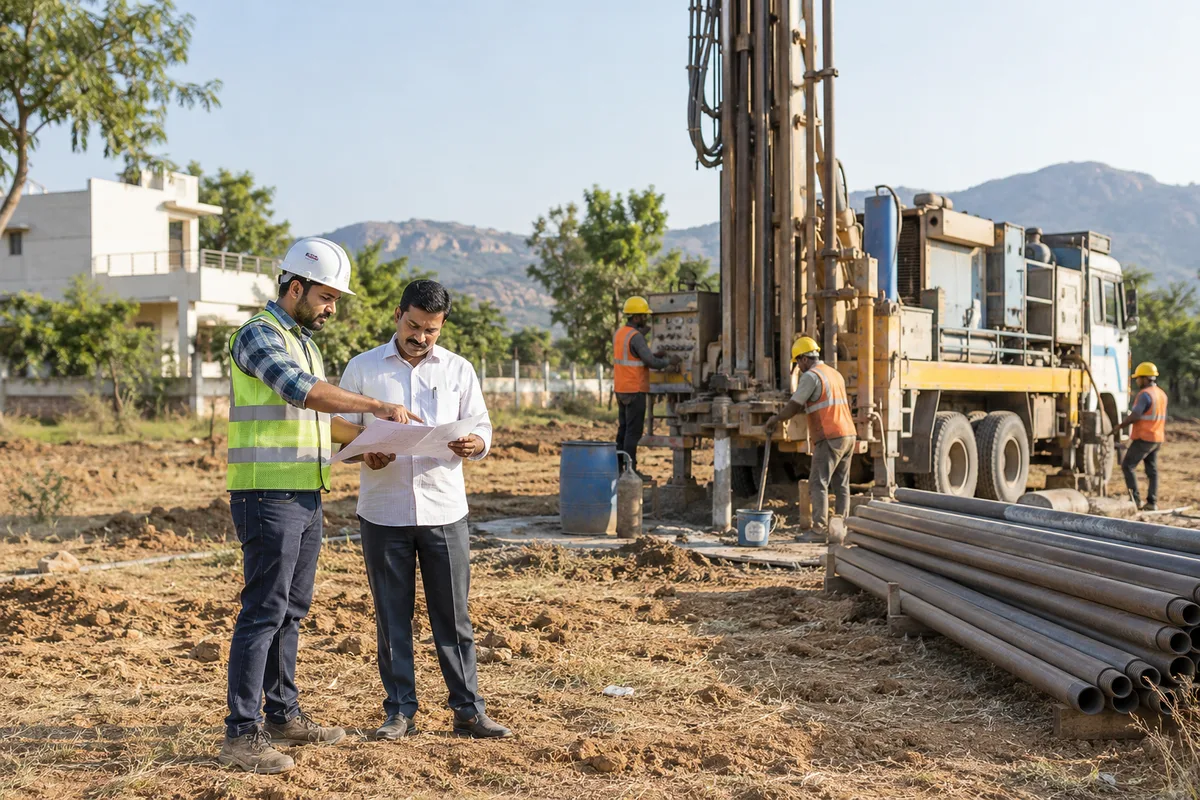
What buyer persona means
A buyer persona is a plain description of the kind of customer who actually buys from you. It includes what they search, what worries them and who else they ask before deciding. GullySales builds this from real enquiries and past sales rather than a generic template, then uses it to write every page and advert.
Also for borewell and drilling contractors
- Digital marketing for borewell and drilling contractors
- SEO for borewell and drilling contractors
- Local SEO for borewell and drilling contractors
- Lead generation for borewell and drilling contractors
- WhatsApp marketing for borewell and drilling contractors
- CRM for borewell and drilling contractors
- Sales process for borewell and drilling contractors
- Referral marketing for borewell and drilling contractors
Sales and marketing for borewell and drilling contractors, the overview.
Last updated 11 Oct 2026.
For borewell and drilling contractors
Where it usually goes wrong, and what we would do.
“The farmer weighs the risk of paying for nothing”
A farmer who has already seen a neighbour's dry bore asks first about the failure terms and the contractor's record in the village. The rate comes after, and the farmer decides alone or with the family.
“The household wants the tap to run again”
A homeowner in a layout is under pressure from a tanker bill and a family waiting. The first contractor to answer and explain the visit gets the second call.
“The society secretary needs paper for the committee”
The secretary cannot sign alone. The buyer needs a written proposal, a site record, a reference to visit and a clear statement of who pays when the bore fails.
“The builder buys for a schedule”
A project engineer needs the bore to be ready when the structure is, and cares about the rig's availability and how clearly the terms are written. A late rig costs the project more than a higher rate.
What we do
What we deliver for borewell and drilling contractors.
Every deliverable, what it covers for you, and the result it is there to produce. Nothing here is an extra.
Profiles of each buyer
One page each for the farmer, the household, the society secretary, the builder and the industrial unit, with what they ask and who decides.
Result: Everyone on the team describes the buyer the same way.
Questions the buyer asks at each step
The doubts raised at the first call, the visit, the quote and the payment, taken from your own notes.
Result: Replies answer the real worry.
Messages matched to each buyer
A reply, a quote and a follow-up for each profile, in the buyer's language and tone.
Result: A farmer and a secretary do not receive the same message.
Decision-maker map
Who in a family, a society or a builder's office suggests, who approves and who pays, noted on each lead.
Result: You ring the person who decides.
Reasons buyers chose another contractor
A short list from lost enquiries: the rate, a neighbour's word, timing or a failed-bore fear.
Result: You see what actually costs you jobs.
Persona check against your records
The profiles compared with signed jobs in the register, and corrected where the facts differ.
Result: The profiles describe your customers, not an assumption.
How the result is measured
- Enquiry match to persona
- Conversion rate by persona
- Content aligned to persona
Recorded as a baseline before work starts, so every later report has an honest comparison.
Who is asking
The farmer, the household and the secretary, and what each asks first.
- A farmer whose bore has stopped giving water
- Wants to know the cost if the bore is dry and whether the existing one can be flushed first. Weighs the risk of paying for nothing.
- A household owner with a dry tap
- Wants water running again and a clear price. Asks whether a pump change would be enough.
- A housing society secretary
- Needs a written quotation and terms to put before the committee. Asks about the power load and the contractor's past society work.
- A builder buying for a schedule
- Wants a rig on a date for a layout and a fixed rate basis. Asks who handles permission where it is needed.
- A farmer planning a drip line
- Wants the bore and the pipework from one source. Asks who is responsible if the yield is low.
Who it is for
This is written for these borewell and drilling contractors.
- Domestic borewell contractors
- Agricultural borewell and drip-line contractors
- Rotary and DTH rig operators
- Housing society and apartment borewell contractors
- Industrial and commercial borewell contractors
- Borewell flushing, cleaning and repair contractors
- Pump installation and motor repair firms
- Rainwater harvesting and recharge pit contractors
Not for
It is not the right fit if.
- You have not spoken to enough owners to see how they differ, so profiles would repeat the same questions.
- All your work is in one village and one kind of customer, where a separate profile adds nothing.
- The persona would be used to change what you quote, which it should not.
How it works
How the buyer persona work runs
The work itself, in order. How an engagement starts, from your brief to a written scope, is set out on our method page.
- 1
Understand the current view
We start with how your team currently describes the customer, since the gap between belief and reality is the finding itself.
- 2
Audit past enquiries and sales
We look at recent enquiries and closed deals to see who actually bought, not who was assumed to buy.
- 3
Interview customers and staff
Structured conversations with recent buyers, held as talk about the last purchase and not a questionnaire. We ask what happened before they called, who else was involved and what they compared. Customers agree before we contact them, and their answers are reported without names.
- 4
Build the personas
Findings are written into short, usable persona documents rather than a long report.
- 5
Apply to your marketing
We show where each persona should change a page, an ad or a script you already have. The sales team reads the drafts and says which ring true. A persona they do not recognise is rewritten.
Where this fits
Three pieces of sales work, in this order.
This work sits inside sales process design, at stage 0, foundation. The audit comes before it, and sales management keeps it running.
Step 1
Sales audit
Find where deals are being lost and what to fix first.
Start here if you cannot say where orders are lost.
Step 2 · you are here
Sales process design
One written way to sell, from first enquiry to repeat order.
Start here if every salesperson sells differently.
Step 3
Sales management
A target, a review routine and someone who owns the number.
Start here if the team has targets and no routine.
FAQ
Questions owners ask before they call.
Not here? More answers, or ask on WhatsApp.
How many profiles does a small contractor need?
Where does the information come from?
Does the persona change the rate we quote?
Does the farmer's crop affect what we say?
How much does it cost?
How soon will we see results?
Who will actually do the work?
What do you need from us?
What if we are not happy with the work?
From the blog
Further reading for borewell and drilling contractors.
 6 min read · 23 Jul 2026Local search for niche trades: what to put on the profile and websiteA niche trade is found when its Google profile and website name the exact service, the area served and show photos of real work. This post lists what to write, what to upload and what to leave out.
 6 min read · 2 Jun 2026Why specialist trades lose the enquiry in the first hourAn urgent buyer calls two installers and books whoever picks up first. This post shows how a specialist trade can design the first response, and who answers, before spending on any ad.
 6 min read · 17 Mar 2026Handling price haggling in a trade where every job differsWhen no two jobs are alike, a price cut without a scope change teaches buyers to haggle. How to anchor on scope, what to offer instead of a discount, and exact words for the call.
More for borewell and drilling contractors
Everything else we would do for you.
Closest to this: strategy and research
Also for borewell and drilling contractors
Or start from the overview: sales and marketing for borewell and drilling contractors.
Your next practical step
Tell us what you are trying to grow, and we will read it before we call.
Eight short steps, mostly taps. Skip anything you would rather answer on the call.