Electrical and lighting dealers · Pay per click advertising
Advertise the showroom and the project desk, never the wire counter.
Paid advertising pays for only part of an electrical business, because the wire and switchgear counter runs on relationships rather than searches. GullySales puts the budget behind showroom visits and project enquiries, sets the radius around your delivery area, and counts visits instead of clicks.
Scope, fee, reporting and term are agreed in writing after we have read your brief and spoken to you.
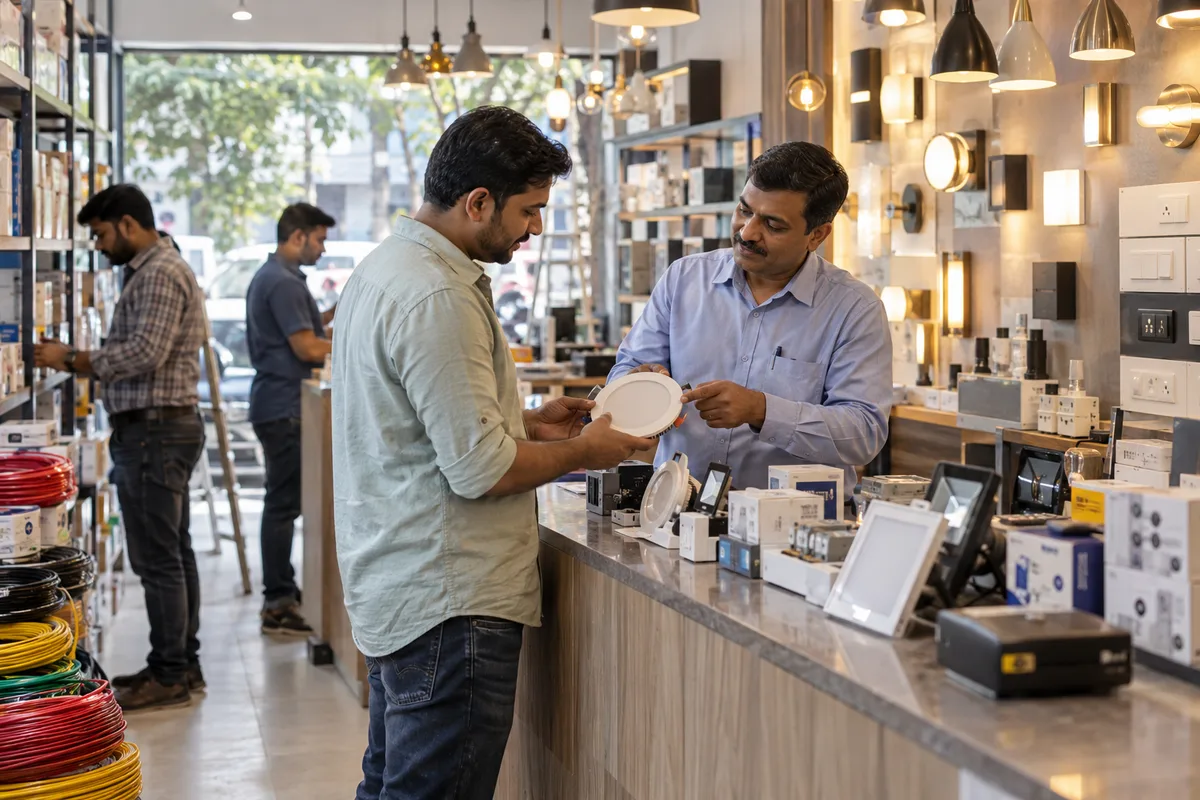
What pay per click advertising means
Pay per click advertising (PPC) is paying a fee each time someone clicks your advert on Google or another platform. It puts you at the top of a search page immediately, instead of waiting for ranking to build. GullySales sets the targeting, writes the ad text and checks spend against enquiries received.
Also for electrical and lighting dealers
- SEO for electrical and lighting dealers
- Lead generation for electrical and lighting dealers
- Digital marketing for electrical and lighting dealers
- Reputation management for electrical and lighting dealers
- Local SEO for electrical and lighting dealers
- Branding and identity for electrical and lighting dealers
- Social media marketing for electrical and lighting dealers
- Content marketing for electrical and lighting dealers
Sales and marketing for electrical and lighting dealers, the overview.
Last updated 5 Oct 2026.
For electrical and lighting dealers
Where it usually goes wrong, and what we would do.
“You are bidding against the brands' own shops”
Type a switch or a light model and the manufacturer's site and the marketplaces are already sitting there. Bidding on model numbers buys second place; bidding on a showroom in your area does not.
“Lighting demand has a season and a fortnight”
Enquiries climb in the weeks before Diwali and again while nearby flats are being finished. Spreading the budget evenly puts most of it into months when nobody is fitting out.
“Retrofit clicks are cheap and slow”
An office manager reading about LED tube replacement is worth a site visit rather than an instant order. Judge that campaign on site visits made and quotations issued.
“A lighting advertisement has to show the light on”
A model code and a rate bring nobody in. A fitting photographed switched on in a real room, with your area named, brings the weekend visit.
What we do
What we deliver for electrical and lighting dealers.
Every deliverable, what it covers for you, and the result it is there to produce. Nothing here is an extra.
Campaigns kept to the lighting and project sides
Search and social campaigns for the showroom and for commercial retrofit work, with the trade counter left out of the account entirely.
Result: The budget goes where advertising can do something.
Radius set by travel and delivery
Targeting drawn around the localities that will drive to your showroom and the areas your delivery vehicle already serves.
Result: Clicks come from people who can reach you.
Advertisements built on lit photographs
Fittings shot switched on in finished rooms, with the range, the finish and the showroom's location carried in the advertisement.
Result: The weekend visit is what the advertisement asks for.
A seasonal spending plan
Heavier spending before Diwali, before summer for fans, and while nearby projects are being finished, with the quiet months held back.
Result: The money follows the fitting-out season.
A retrofit campaign for offices and shops
Search and direct outreach for LED replacement in tube-lit offices, clinics and shops, leading to a site visit and a written quotation.
Result: Commercial quotations arrive in a slow month.
Visits and quotations counted, not clicks
Showroom visits booked and kept, site visits made and quotations issued, all recorded against the baseline taken at the start.
Result: The account is judged on people through the door.
How the result is measured
- Cost per click
- Cost per enquiry
- Enquiries from paid search
Recorded as a baseline before work starts, so every later report has an honest comparison.
Searches to bid on and block
The searches worth paying for at a lighting showroom, and the ones to keep out.
- Decorative, chandelier and designer lighting near me
- Bid. The searcher wants to see a light on. Lead with lit photographs and the showroom's address, and set the radius to the areas your delivery vehicle reaches.
- Project lighting for homes, offices and shops
- Bid, as its own campaign. These buyers have a plan from an interior designer or an architect. Offer a quotation from a layout and ask for the area and the number of fittings.
- Wire, switchgear, MCB and cable rate searches
- Block, or keep to a small campaign. These are the electrician's search and they buy at the counter on trust. Rate searches mostly bring price comparison.
- Jobs, courses and repair searches
- Block. Electrician job, fan repair near me, light repair and wiring course are not showroom buyers. Add them as negatives and check the search terms.
- Where the click lands
- A page with the lit photographs, the brands you hold, the showroom address and a WhatsApp button for sharing a plan or a room photograph. Not the full catalogue.
- Counting a real enquiry
- Count a showroom visit, a WhatsApp message with a room photograph or a plan, or a call about a project. Log each with the product asked about, and mark the quotations that became bills.
Who it is for
This is written for these electrical and lighting dealers.
- Electrical trade counters serving electricians and contractors
- Decorative and architectural lighting showrooms
- Switchgear, cable and wire distributors
- Fan, light and home electrical retail stores
- Electrical equipment suppliers for industrial and project buyers
- Solar and LED lighting dealers
- Smart home switches and automation dealers
- Multi-brand electrical dealers with a project sales team
How it works
From your first message to the first report.
No open-ended retainer. Every step gives you something in writing.
First
Your brief
You tell us what you need in a few short steps: your business, what you want, where enquiries come from and how they are handled.
After the brief
A conversation and a written scope
We read it, then talk with whoever handles your enquiries. If you want our help, the scope, the fee and the reporting come in writing, and nothing starts before you have read them.
Before work starts
Baseline recorded
The numbers this work is meant to move, such as enquiries, quotations, orders, visits or renewals, written down so every later report has an honest comparison.
After the baseline
The first fix goes live
The fix we agreed to start with is put in place and measured against the baseline, whether that is a reply, a follow-up, a page, a listing or the handover between marketing and sales.
As agreed
Report against the baseline
What moved, what did not, and what changes next, in plain words. How often you get it is set in writing before work starts.
At renewal
Renew on the numbers
The term ends and you decide whether to continue from the results. The length is agreed in writing before anything starts.
How the pay per click advertising work runs
- 1
Understand the total budget
We agree the full paid advertising budget available across all platforms, rather than planning each one separately.
- 2
Audit current platform performance
We compare existing campaigns on a shared basis to see where the budget currently performs best and worst.
- 3
Build the cross-platform plan
Campaigns are structured across platforms with a shared measurement standard from the outset.
- 4
Implement and monitor
Campaigns run with budget allocated dynamically based on real-time performance.
- 5
Measure and reallocate
We report performance and shift budget toward what is working, within agreed limits.
Why us
Why owners pick GullySales over an agency.
Marketing and sales, as one job
Most agencies stop at the enquiry. We also fix what happens after it: the reply, the follow-up, the quote and the CRM.
The person on the first call does the work
No account managers in between. You are never handed to someone you have not met.
A baseline before anything starts
Your numbers are written down on day one, so every later report compares against something honest.
The fee in writing, split three ways
Our time, your media spend and production on separate lines. You always see what goes to us.
No guarantees we cannot keep
The term is agreed in writing and never a default twelve months. We never promise a ranking or a lead count, because nobody controls those.
One office, and we say so
Nagarbhavi, Bengaluru. We work across India by call and WhatsApp and travel when a session needs to be in person.
#257, 3rd floor, Sri Nanjundeshwara Complex, Nagarbhavi 8th Block, Outer Ring Road. How we work.
Your brief
Tell us what you need, and we will read it before we call.
Eight short steps about your business, what you want and who decides. Most questions are a tap, and you can skip any you would rather answer on the call.
FAQ
Questions owners ask before they call.
Not here? More answers, or ask on WhatsApp.
Should we advertise our wire and switchgear rates?
What should a lighting advertisement ask people to do?
Should we bid against the lighting brands' own names?
When should the lighting campaign run hardest?
How much does it cost?
How long is the contract?
How soon will we see results?
Who will actually do the work?
What do you need from us?
What if we are not happy with the work?
From the blog
Further reading for electrical and lighting dealers.
 6 min read · 6 Oct 2026How trade buyers pick a dealer when the brands matchWhen every counter in town carries the same brands, trade buyers choose on stock, delivery, paperwork and returns. This post sets out how contractors, electricians, plumbers and purchase managers compare dealers.
 8 min read · 21 Sept 2026How to advertise to dealersA dealer is buying an investment, not a product. The advertisement has to answer margin, credit, stock rotation and territory, or the enquiries will all be from people with no shop.
 7 min read · 21 Sept 2026How to advertise to channel partners who already sell somebody elseA partner is not buying your product. They are buying margin, territory, credit and stock they can return, and they will ask your existing dealers before they sign.
More for electrical and lighting dealers
Everything else we would do for you.
- SEO for electrical and lighting dealers
- Lead generation for electrical and lighting dealers
- Digital marketing for electrical and lighting dealers
- Reputation management for electrical and lighting dealers
- Local SEO for electrical and lighting dealers
- Branding and identity for electrical and lighting dealers
Or start from the overview: sales and marketing for electrical and lighting dealers.
Your next practical step
Tell us what you are trying to grow, and we will read it before we call.
Eight short steps, mostly taps. Skip anything you would rather answer on the call.