Spas · Community building
Give your regulars a place to swap self-care questions, with your therapists in the room.
For a spa, community marketing is a group of guests and neighbours who share an interest in rest, movement and self-care, exchange advice and come to know your therapists before they book. GullySales plans the group's purpose, invites founding members you approve and runs agreed discussions, with a clear route to your desk for anyone who wants to book.
Scope, fee, reporting and term are agreed in writing after we have read your brief and spoken to you.
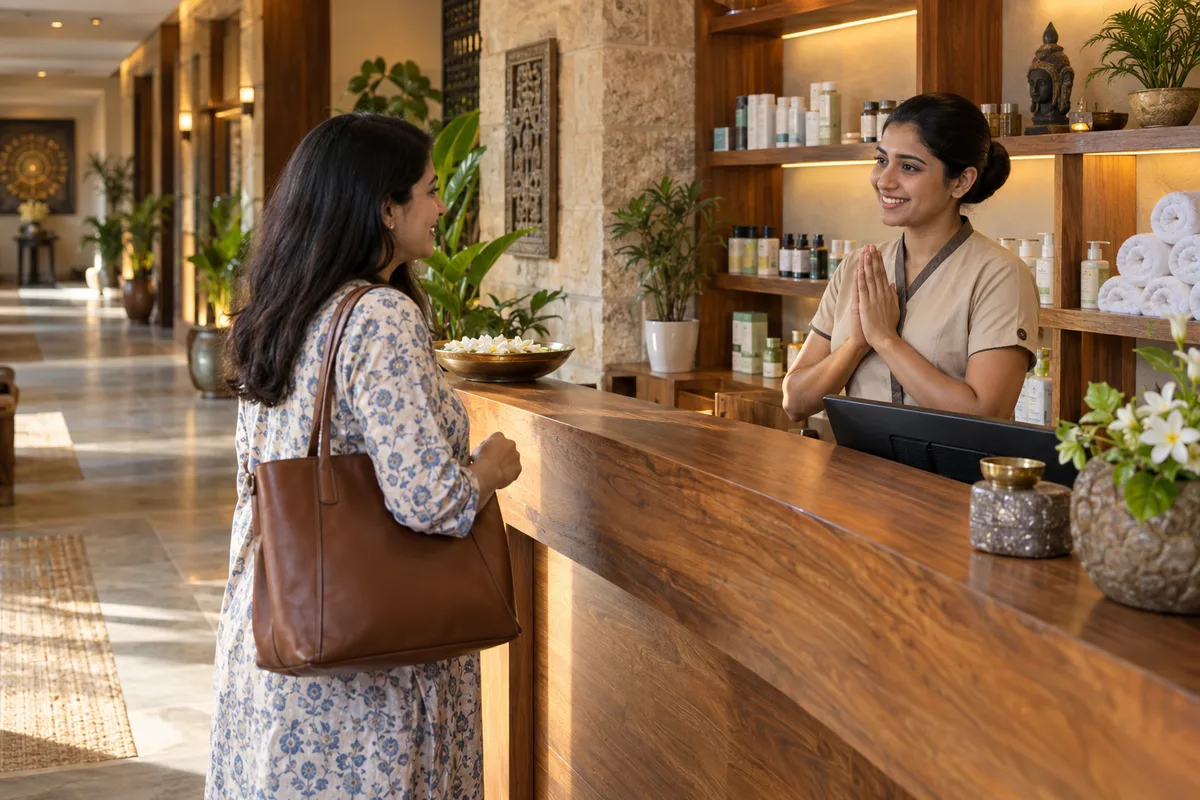
What community building means
Community building is creating a group, such as a WhatsApp group or a customer forum, where your customers interact with each other and your business. This builds loyalty that outlasts a single purchase. GullySales sets up and moderates this space so it stays useful rather than going quiet.
Last updated 14 Nov 2026.
For spas
Where it usually goes wrong, and what we would do.
“A group that only sells will be left”
A spa group filled with offers and slot announcements becomes a notice board that guests mute. People stay in a group when it answers something they care about: how to unwind after a long week at a desk, what to ask a therapist before a first visit, how to look after tired feet. The group has to give before it asks, and the ratio is set in the charter.
“Health advice is not yours to give”
A group about wellness draws questions about pain, pregnancy, skin conditions and medicines. A spa team is not a clinic, and an answer from a therapist can be taken as medical advice. The charter must say what the group does and does not discuss, and who a member is pointed to for health questions. For medi-spa services, your own adviser sets the limits.
“Guests value privacy more than shoppers do”
A guest may not want others to know they visit a spa, what treatment they chose or who they came with. A group that names members, shares photographs or reveals attendance can drive people out. Joining must be a choice, nothing about a member's visits appears without consent, and administrators know exactly who can see the member list.
“Somebody has to be present, with permission to speak”
A group needs a host who answers within the working day's rhythm and knows when to stop and ask the owner. A therapist who can speak about the craft, a front-desk host who knows the diary and an administrator who removes unwelcome posts are three different roles. Naming them, and what each may say, matters more than the platform chosen.
What we do
What we deliver for spas.
The work available for this need. We agree the deliverables and responsibilities for your engagement in writing.
Community purpose and platform brief
A written statement of what the group is for, who it is for and why a guest would join, with the platform chosen: a WhatsApp community, a social group or a mailing circle. You approve the reason to join before a single invitation goes out.
Result: An approved purpose line and platform decision you can show a new member.
Member charter and joining questions
The rules every member sees on joining: what may be posted, what stays out, how health questions are handled, how photographs are treated and what happens after a warning. It also holds the joining questions and the welcome message.
Result: A one-page charter and a welcome message your team has read and approved.
Founding member invitation plan
A short list of guests, neighbours and partner businesses you approve, with a personal invitation for each type. The message states what the group is and that joining is optional. No one is added to a group without being asked.
Result: A list of invited names that you have signed off, and the invitation wording.
Discussion and contribution calendar
A plan of prompts, introductions, therapist notes and simple how-to material tied to what members said they wanted. Your qualified practitioner checks any wellness content, and subjects the group will not cover are listed in advance.
Result: A set of planned discussions, each with a named contributor and a checker.
Moderation and escalation guide
A guide for the host on what to remove, what to reply to and what to pass to the owner, including complaints about a treatment, sensitive health posts and a member who sells their own services. It names the person to reach when a post is unclear.
Result: A guide the host can follow, with named people for each kind of post.
Enquiry route to the front desk
A route for members who want to book, ask a price or complain: a link or a message to the desk, never a booking taken in the group itself. The desk records where each enquiry came from, so the group can be read against real bookings.
Result: Enquiries from the group appear in the desk's own record with a source mark.
How the result is measured
- Active members
- Engagement rate
- Referrals or repeat business from the community
Recorded as a baseline before work starts, so every later report has an honest comparison.
Who it is for
This is written for these spas.
- Day spas
- Ayurveda and wellness centres
- Salon-spa combo outlets
- Medi-spas and skin clinics with spa services
- Massage-only therapy centres
- Resort and hotel spas
- Corporate and mobile wellness services
Before you decide
Agree the work. Know how to judge it.
Community marketing for spas: use these checks to prepare, choose the scope, and review what changes.
Bring the right evidence
Review the posts that produced useful conversations, not only the ones with the most views. Gather buyer questions and decide which team member can contribute credible material.
Make the scope clear
Choose the audience and channel before setting a posting volume. Agree who supplies material, approves posts, and handles messages, including complaints or questions the agency cannot answer.
Check the work in use
Follow a post through to the profile, website, and response. A useful report explains the quality of conversations and enquiries, alongside reach and engagement.
Know when to change course
If publishing takes time away from unanswered buyer messages, fix the response routine first. Do not expand to another channel without a clear reason for being there.
These are discussion points, not a fixed package. GullySales confirms the deliverables, responsibilities, fee, and term in writing after reading your brief and speaking with you.
Before we start
What to have ready before the work starts.
The records, access and decisions this work needs from spas. Anything missing is noted in the written scope, with who will supply it.
- A list of guests you would invite
- Choose people who have enjoyed a visit and would be glad to hear from you, such as regulars, package holders and neighbours. Leave out anyone who complained or asked not to be contacted. Without a list you approve, we cannot invite anybody, and a group started empty rarely gathers.
- A named host with authority to reply
- The host answers members and sets the tone, so choose someone with time, warmth and your trust. They need to know the diary, the treatment menu and when to ask the owner. If the host is also the busiest therapist, agree protected time, or the group will go quiet.
- A qualified person to check wellness content
- A group about self-care draws advice requests. Name the practitioner, or the adviser, who checks anything about the body, skin or health before it is posted. If nobody can fill this role, the group keeps to non-health subjects such as rest, routines and what to expect at a visit.
- Photographs and permissions you already hold
- Treatment rooms, products and the team make good material, but a photograph of a guest needs that guest's written consent. Bring what you hold and say what each was taken for. Without clear permission, we use no guest images, and the group relies on room and product pictures.
- A decision on what the group is not for
- Say now whether bookings, price negotiation and complaints are taken in the group or sent to the desk. Owners who skip this decision find the group turning into a booking line or a complaints board. We recommend the desk, but the choice is yours.
How it works
How the community building work runs
The work itself, in order. How an engagement starts, from your brief to a written scope, is set out on our method page.
- 1
Looking at the groups you already have
Plenty of spas already have a WhatsApp list of regulars or a staff-run group that grew by accident. We look at what exists, who administers it and how guests were added. You decide whether to improve it or to start a separate group, so that no existing member feels moved without being asked.
- 2
Agreeing the purpose and the host
We settle who the group is for, for example office-park regulars, expectant guests, or people who attend yoga nearby. You name the host and the person who approves any wellness content. A group without both starts with answers that nobody checked, and spreads them.
- 3
Writing the charter and the setup
We prepare the group structure, the joining questions, the welcome message and the charter for your review. Rules on photographs, health questions and self-promotion are written plainly. Your own adviser reviews the wording where the spa offers clinic-style or medi-spa services.
- 4
Inviting founding members personally
Invitations go only to people on the list you approved, one at a time and in your spa's voice. We record who accepted and who declined, and leave decliners alone. A small group of willing people is a better start than a large group of people who were added.
- 5
Running the first discussions
The host opens with prompts from the calendar, and a therapist or the practitioner answers within the agreed limits. Booking questions are passed to the desk through the enquiry route. We watch which prompts were answered and which were ignored, and adjust the calendar to what members actually respond to.
- 6
Reading the group against your records
We read membership, replies and desk enquiries against the notes taken before the group began. Enquiries with a group source mark are compared with your booking diary. Where the group produced conversation but no bookings, we say so, and decide with you whether to adjust, pause or end it.
Where this fits
Three pieces of sales work, in this order.
This work sits inside sales process design, at stage 0, foundation. The audit comes before it, and sales management keeps it running.
Step 1
Sales audit
Find where deals are being lost and what to fix first.
Start here if you cannot say where orders are lost.
Step 2 · you are here
Sales process design
One written way to sell, from first enquiry to repeat order.
Start here if every salesperson sells differently.
Step 3
Sales management
A target, a review routine and someone who owns the number.
Start here if the team has targets and no routine.
FAQ
Questions owners ask before they call.
Not here? More answers, or ask on WhatsApp.
Which platform suits a spa community?
Can members book treatments inside the group?
How do we deal with health questions?
Do we pay members to bring friends?
What if the group goes quiet?
Can guests stay anonymous?
How much does it cost?
How long is the contract?
How soon will we see results?
Who will actually do the work?
From the blog
Further reading for spas.
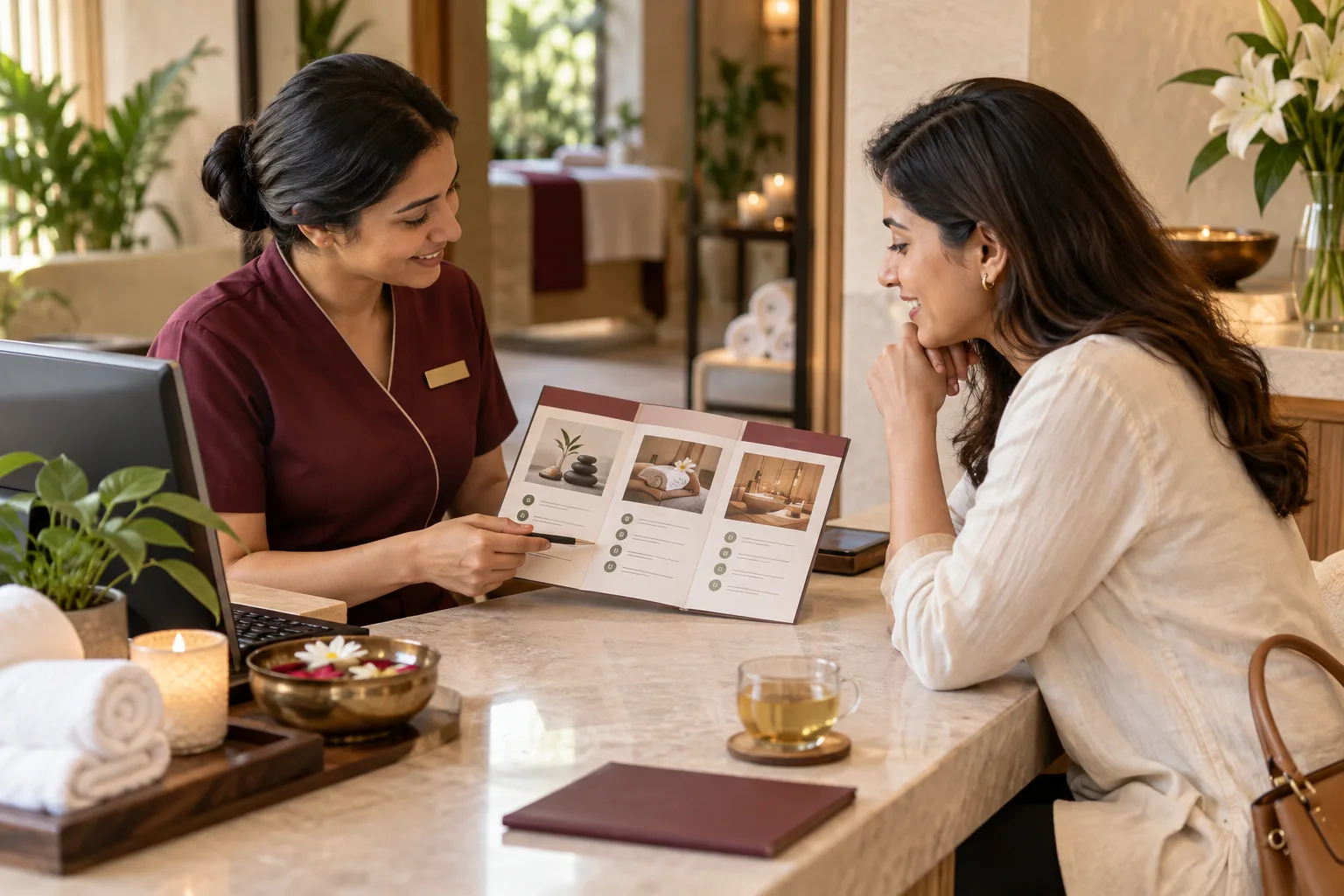 6 min read · 19 Aug 2026How to sell spa membership packages that customers renewBuild spa membership packages around how often customers already visit, with a saving they can see. Offer them after a session; follow up before renewal.
 7 min read · 3 Jun 2025How to reactivate dormant customersDefine dormant against your own purchase interval, then call your highest-value lapsed customers to ask why they stopped before offering any discount.
More for spas
Related work to consider.
Closest to this: content and social
Also for spas
Or start from the overview: sales and marketing for spas.
Your next practical step
Tell us what you are trying to grow, and we will read it before we call.
Eight short steps, mostly taps. Skip anything you would rather answer on the call.