Spas · User-generated content programmes
Let guests show the treatment room and the towels before the next guest books.
A user-generated content programme for a spa collects reviews, photographs and comments that guests choose to share, with permission recorded before anything is reused. GullySales sets up when guests are asked, where they respond and how consent is kept, without writing a word on a guest's behalf.
Scope, fee, reporting and term are agreed in writing after we have read your brief and spoken to you.
What user-generated content programmes means
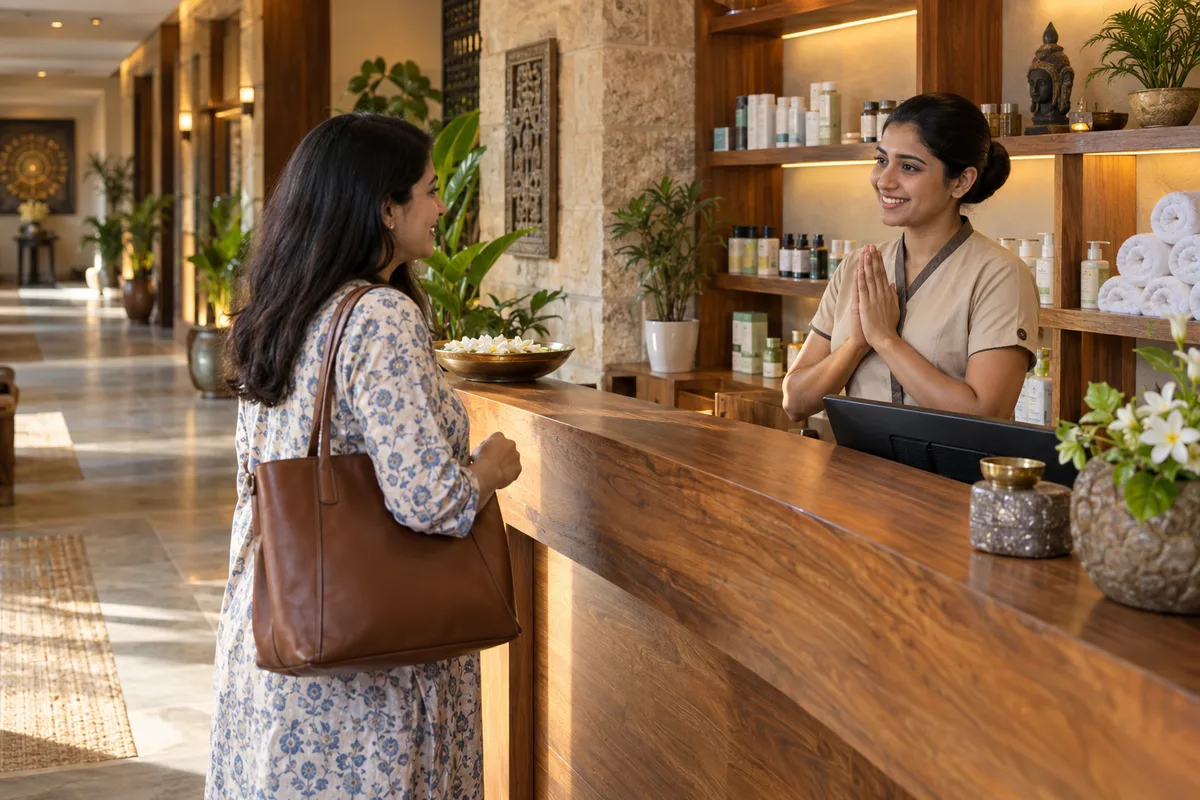
User-generated content programmes collect genuine customer reviews, photos, and testimonials, with permission to reuse them in marketing and sales. GullySales sets up the requests, consent records, and placement plan so your team has customer evidence for a service page or proposal without writing words on a customer's behalf.
Last updated 14 Nov 2026.
For spas
Where it usually goes wrong, and what we would do.
“Guests judge cleanliness through other guests”
A first-time guest cannot see your linen cupboard or your steriliser, so they read what earlier guests wrote about the towels, the room and the therapist's manner. A comment from a stranger carries weight that your own page cannot. For a spa, the aim is a steady supply of specific guest comments about the room, the staff and the booking, collected honestly and asked for at a calm moment, not a burst of praise gathered when the manager remembers.
“A treatment room is a private place”
Few guests will photograph themselves on a massage table, and a spa must never publish an image that shows a guest's body or face without clear written consent. The useful guest content is the product, the room before the session, a hand holding a cup of herbal tea or a message of thanks. The programme defines what guests may be invited to share and what the spa will never ask for, so privacy stays ahead of marketing.
“A kind message on WhatsApp is not permission”
A guest writes that the therapist was wonderful, and the owner wants to post it. Until the guest agrees to its reuse, it remains a private message. Spas also hold health details, and a comment that mentions a back injury or pregnancy is sensitive. The programme keeps a plain record of what each guest agreed to, where it may appear and how to withdraw it, and your adviser reviews the wording.
“Asking only the happy guests misleads the reader”
If the receptionist asks only guests who looked delighted, the page shows a one-sided picture and the spa loses the chance to learn from a guest who was not. Platforms also have rules on how reviews may be requested, and those rules change. The programme sets one routine for every guest after every visit, the wording is neutral, and nothing is offered in return for a review.
What we do
What we deliver for spas.
The work available for this need. We agree the deliverables and responsibilities for your engagement in writing.
Guest feedback moments
A short written map of when a guest is asked, such as after checkout, after the second visit or after a package ends. Each moment has a named person who sends the request. You check it against how your front desk actually works.
Result: Every visit has a named person and a set moment for the feedback request.
Request wording for WhatsApp and SMS
Brief messages that invite a comment or a review without hinting at the answer wanted. Your owner approves the wording and the link before anyone sends it from the spa's number.
Result: Your team sends approved requests that never suggest what the guest should say.
Review link and counter QR card
A direct link to your Google Business Profile review box and a printed card for the desk and the waiting area. Your team tests the link on a phone before the card is printed.
Result: A guest can reach your review box with one scan or one tap.
Consent and permission wording
Plain wording that records what a guest agreed to share, where it may appear and how to ask for removal. Your own adviser reviews it, since rules on guest images and health details differ by place.
Result: A saved record shows what each guest allowed before anything is reused.
Guest content guide
A list of what guests may be invited to share, such as the product, the lobby or a thank-you note, and what the spa will never request, such as photographs during or after a treatment.
Result: Your team knows which guest content is welcome and which is never requested.
Content register and placement plan
A sheet listing each saved review or photo, the permission held and the page, proposal or post where it may appear. Content without recorded permission stays off the register.
Result: You can find any reused guest comment and the permission behind it.
How the result is measured
- Eligible customers asked compared with completed deliveries
- Reviews, photos, and comments received against requests sent
- Submissions with recorded permission and approved placements
Recorded as a baseline before work starts, so every later report has an honest comparison.
Who it is for
This is written for these spas.
- Day spas
- Ayurveda and wellness centres
- Salon-spa combo outlets
- Medi-spas and skin clinics with spa services
- Massage-only therapy centres
- Resort and hotel spas
- Corporate and mobile wellness services
Before you decide
Agree the work. Know how to judge it.
User-generated content programmes for spas: use these checks to prepare, choose the scope, and review what changes.
Bring the right evidence
Bring questions from sales calls and examples of objections that delay a decision. Choose a subject expert who can check the substance, and identify evidence that can be published.
Make the scope clear
Agree the reader, buying question, format, and distribution route for each piece. Set the approval process and distinguish new research from rewriting material you already have.
Check the work in use
Ask a colleague to use the draft in a real buyer conversation. It should answer the question, support its claims, and make the next step clear without requiring a sales pitch to explain it.
Know when to change course
If the same unanswered question appears in several articles, improve the strongest page before commissioning another. More words are not a substitute for missing evidence.
These are discussion points, not a fixed package. GullySales confirms the deliverables, responsibilities, fee, and term in writing after reading your brief and speaking with you.
Before we start
What to have ready before the work starts.
The records, access and decisions this work needs from spas. Anything missing is noted in the written scope, with who will supply it.
- Access to your Google Business Profile
- We need someone from the spa to add GullySales as a manager or to share the review link, since the owner holds the login. Without it we cannot test the review route or see which replies are waiting for you.
- A list of recent guests and contact channels
- A simple list of guests who have given consent to be contacted, with the channel they use. Requests may only go to people the spa is allowed to message, so a list without that permission means the routine has to start from the next booking.
- Existing reviews, messages and posts
- Collect the comments already received, including those sitting on staff phones. They show what guests care about and which wording to avoid. If they are scattered, the baseline is incomplete and the register starts empty.
- Your privacy and consent practice
- Tell us what the spa already tells guests about photographs, records and health details, and who your adviser is. The wording we draft must match the spa's real practice, or the consent record will promise something the front desk cannot keep.
- One person to own the routine
- Name the receptionist or manager who sends the requests and keeps the register. A routine that belongs to everyone belongs to no one, and the first busy weekend will push it aside, leaving willing guests unasked.
How it works
How the user-generated content programmes work runs
The work itself, in order. How an engagement starts, from your brief to a written scope, is set out on our method page.
- 1
Reading what guests already say
We begin with the reviews, messages and posts your spa already has. We note which topics guests raise, such as the room, the therapist or booking, and where the record is thin. The count of reviews and the date of the latest one are written down as the baseline, which we read the result against at the end.
- 2
Mapping when a guest is ready to comment
We follow a guest from booking to checkout and mark the moments when a request fits: after a pleasant exit, after a return visit, after a package ends. We also mark the moments when asking would be wrong, such as after a complaint or a late start. The front desk reviews the map.
- 3
Writing the request and the consent
We draft the request messages and the permission wording together, so a guest who offers a photograph is asked for consent in the same breath. Your owner approves both, and your adviser reviews the consent wording for guest images and any mention of health. Nothing is sent until both are signed off.
- 4
Setting up the review route
We prepare your review link, the counter card and the place in your booking process where the link is sent. Your team tests each on a phone. If your profile has unanswered reviews, we draft replies for the owner to read, edit and post, because a reply is public and speaks for the spa.
- 5
Running the routine on real guests
Your front desk sends the request after every visit for the agreed period, not only after the happy ones. We watch whether the request goes out, which wording gets a response and whether consent is recorded. Where the desk skips a step because it is awkward, we change the step rather than the people.
- 6
Placing the content and reading the result
Permitted comments are placed on the service pages, the proposal for a corporate wellness client and the social profile. We then compare the review count and the register against the baseline set at the start. You decide which placements continue and which guest comments remain on the register.
Where this fits
Three pieces of sales work, in this order.
This work sits inside sales process design, at stage 1, prospecting and lead generation. The audit comes before it, and sales management keeps it running.
Step 1
Sales audit
Find where deals are being lost and what to fix first.
Start here if you cannot say where orders are lost.
Step 2 · you are here
Sales process design
One written way to sell, from first enquiry to repeat order.
Start here if every salesperson sells differently.
Step 3
Sales management
A target, a review routine and someone who owns the number.
Start here if the team has targets and no routine.
FAQ
Questions owners ask before they call.
Not here? More answers, or ask on WhatsApp.
Can we offer a discount or a free treatment for a review?
Can we post a guest's photograph on Instagram?
What should we do with a negative review?
Can a guest's WhatsApp message be used as a testimonial?
How many reviews will we get?
Does a spa inside a hotel use the same routine?
How much does it cost?
How long is the contract?
How soon will we see results?
Who will actually do the work?
From the blog
Further reading for spas.
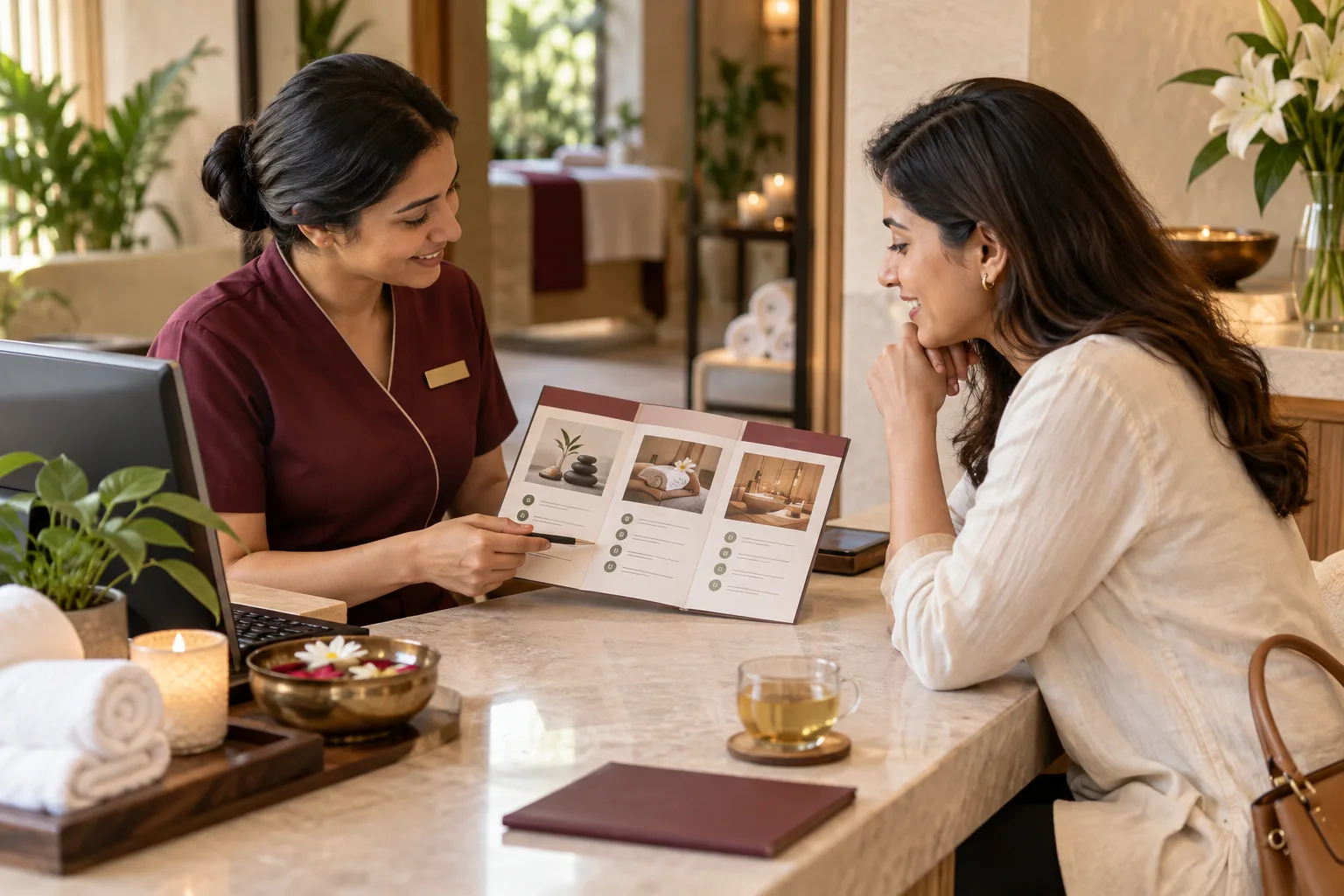 6 min read · 19 Aug 2026How to sell spa membership packages that customers renewBuild spa membership packages around how often customers already visit, with a saving they can see. Offer them after a session; follow up before renewal.
 7 min read · 3 Jun 2025How to reactivate dormant customersDefine dormant against your own purchase interval, then call your highest-value lapsed customers to ask why they stopped before offering any discount.
More for spas
Related work to consider.
Closest to this: content and social
Also for spas
Or start from the overview: sales and marketing for spas.
Your next practical step
Tell us what you are trying to grow, and we will read it before we call.
Eight short steps, mostly taps. Skip anything you would rather answer on the call.