Spas · Performance advertising creatives
Make spa adverts that show the room and the therapist, then read what they bring.
Performance advertising creatives for a spa are the images, short videos and wording used in paid adverts on Meta and Google, built around a specific treatment, package or slow slot and then compared with the bookings that followed. GullySales produces the creative, checks the claims with the owner and matches each version to the enquiries the front desk records.
Scope, fee, reporting and term are agreed in writing after we have read your brief and spoken to you.
What performance advertising creatives means
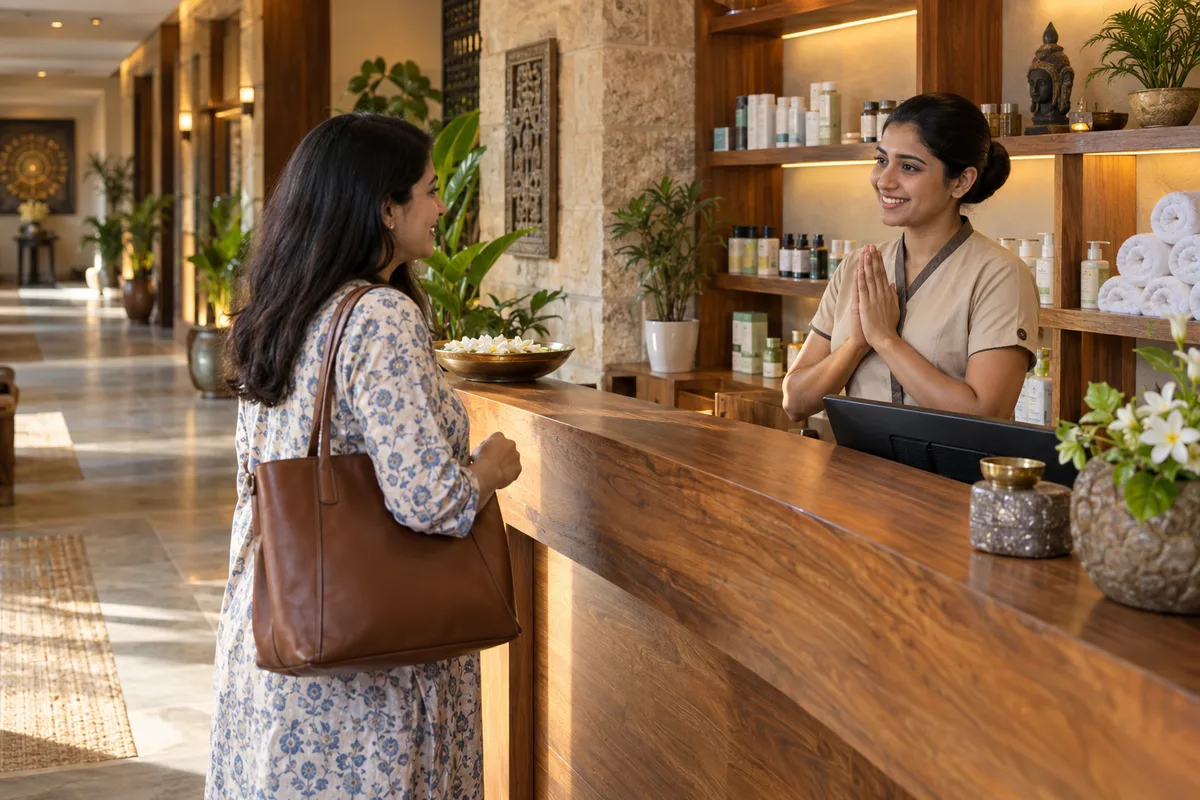
Performance advertising creatives are the images, videos, and words produced for paid advertisements and compared against their results. GullySales develops distinct creative directions, produces assets for agreed placements, and works with whoever manages your advertising to connect each version with enquiry quality and orders where your records support that link.
Last updated 14 Nov 2026.
For spas
Where it usually goes wrong, and what we would do.
“A candle and a stone are not a reason to book”
Stock pictures of lit candles, orchids and smooth stones make every spa look the same in a feed, and a guest scrolling past has no way to tell the adverts apart. What separates one spa from another is the actual treatment room, the therapist who does the work, the towels and the entrance. The creative starts from photographs and video taken at the spa, because guests judge cleanliness and comfort from what they can see.
“The advert must match what the desk can book”
An advert for a couple's package that leads to a page showing only single massages loses the guest at once. An offer for Tuesday afternoons falls flat if the receptionist replies that nothing is free. Each creative is written beside the exact booking page, WhatsApp opening message and price list it leads to, so the guest finds what the advert said when they arrive.
“Health wording in adverts is the owner's call”
Phrases such as relieves back pain, cures stress or improves sleep are claims about health. Platforms apply their own restrictions to health-related wording, and professional and state rules on advertising such services differ. The owner checks anything of this kind with their own council or adviser. Our copy describes the treatment, the setting and the booking, and it avoids any promise about how a guest will feel or recover.
“People in the picture need to have agreed”
A therapist's hands on a back make a strong image, and a guest's relaxed face makes a stronger one, but the person shown must have agreed in writing, and a guest's image must never come from a treatment without permission. Plenty of spas hold staff photographs and no release. The work records who appears in each asset and removes any picture whose permission the owner cannot find.
What we do
What we deliver for spas.
The work available for this need. We agree the deliverables and responsibilities for your engagement in writing.
Creative brief for the spa advert
A one-page document naming the guest being addressed, the treatment or package being advertised, the slot or day to fill and the action wanted, such as a WhatsApp message or a booking. The owner checks that the offer exists and that the front desk can honour it before any image is produced.
Result: The brief states one offer, one guest and one action, and you have signed it off.
Distinct advert concepts
Several ideas, each testing a different reason to book: the treatment room tour, the therapist introduction, a package with plain terms, an afternoon slot offer. Each concept says why it is worth testing, so a change of colour is not passed off as a new idea.
Result: Each concept has a stated reason for testing and a different message from the others.
Photographs and short video from the spa
Directions and edits for images and clips of the rooms, the reception, the products and the therapists at work, using material the owner has the right to use. Edits are cut for the agreed placements, such as a feed post, a story or a Reel, and for search and display on Google.
Result: Every picture and clip is yours to use, and each shows a person only where permission is recorded.
Copy variations for each placement
Headlines, descriptions and opening lines for the platforms and formats chosen, written in plain words about the treatment, its length and the booking route. The owner checks every product fact and every sentence for health wording. Text that Google assembles from assets is reviewed in its likely combinations.
Result: You have read every line that could appear and cleared it with yourself or your adviser.
Naming and tracking sheet
Each version is given a recognisable name, and the booking link or WhatsApp message carries an agreed tag where the platform allows it. The media manager can match a result to a creative, and the front desk has a field to write down which advert the guest mentioned.
Result: A booking in your records can be traced to the advert version that produced it, where the guest said so.
Claims and permissions record
A list of every statement and every person appearing in the creative, with the document or permission behind each. Items without support are removed rather than reworded. Health-related statements are marked for the owner's own adviser, and the record is kept so a platform query can be answered.
Result: You can show the basis for each claim and the permission for each person pictured.
How the result is measured
- Creative versions delivered and tested, recorded as production activity
- Click-through rate and frequency by identifiable creative
- Enquiries and cost per enquiry by creative where tracking supports attribution
Recorded as a baseline before work starts, so every later report has an honest comparison.
Who it is for
This is written for these spas.
- Day spas
- Ayurveda and wellness centres
- Salon-spa combo outlets
- Medi-spas and skin clinics with spa services
- Massage-only therapy centres
- Resort and hotel spas
- Corporate and mobile wellness services
Before you decide
Agree the work. Know how to judge it.
Performance advertising creatives for spas: use these checks to prepare, choose the scope, and review what changes.
Bring the right evidence
Identify the product, process, or buyer question the images or film must explain. Gather reference material and confirm permission for people, premises, and client work that may appear.
Make the scope clear
Agree the shot list, formats, usage rights, and approval stages before production. Separate filming or photography from editing, animation, and later adaptations.
Check the work in use
Check the finished asset in the place it will be used: a mobile page, presentation, advert, or product listing. Look at crop, captions, sound, and whether the important detail remains clear.
Know when to change course
Do not present an illustration or generated scene as evidence of client work. If a claim needs a real product demonstration, obtain that evidence before using the asset to support it.
These are discussion points, not a fixed package. GullySales confirms the deliverables, responsibilities, fee, and term in writing after reading your brief and speaking with you.
Before we start
What to have ready before the work starts.
The records, access and decisions this work needs from spas. Anything missing is noted in the written scope, with who will supply it.
- Access to the advertising accounts
- Without viewing the account, we cannot tie an advert to its result. Provide viewer access or name the person who manages the advertising so figures reach us through them. If neither is possible, creative is made but the comparison stays uncertain and the next advert is a guess.
- Brand files and your wording rules
- Send the current logo, colours, fonts and any phrases the spa never uses, for example words the owner considers too clinical or too promotional. Rough files are fine if they are current. If they are missing, concepts are drawn to a guess and each correction costs another round.
- Photographs and footage you can reuse
- Supply pictures of rooms, reception, treatments and products that the spa owns or can use, and say who appears. Anything with unclear rights is left out. A spa with no usable material can arrange a shoot first, which changes the plan and moves the first advert later.
- Written permission from staff and guests
- Each therapist shown needs to have agreed in writing, and a guest should never appear without a signed release. Bring any forms you already hold. When permission cannot be found, the picture is dropped, which can narrow the concepts to rooms, products and hands without faces.
- A named person who approves versions
- An advert goes live only when someone with authority agrees it. Name that person and what they check, such as treatment facts, prices and wording. If several people approve without an owner, versions circulate for correction and the test never starts.
How it works
How the performance advertising creatives work runs
The work itself, in order. How an engagement starts, from your brief to a written scope, is set out on our method page.
- 1
Agreeing access and responsibilities
We settle in writing which advertising accounts we can view, who manages budgets and audiences, and who approves creative. GullySales makes the creative and reads results; the spa or its media manager keeps control of spend and settings. If no account exists yet, the first work is limited to concepts, because nothing can be compared without data.
- 2
Recording what the spa is advertising now
We collect the spa's current adverts, whatever bookings are traced to them and the front desk's own notes on which enquiries arrived by phone, WhatsApp or the Google listing. This is the starting record. The owner confirms which treatments or slots matter more to fill, since an advert for a full weekend gains little.
- 3
Choosing the offer and the concept
The owner picks the treatment, package or afternoon slot to advertise, and we draft concepts against it. We read each concept beside the destination page and the opening WhatsApp message, and anything that does not match goes back to the person responsible for the page or the desk script, not into the advert.
- 4
Producing assets and checking permissions
Photographs and clips are made or selected, edited for each placement and checked against the permissions record. The owner reads every claim and every treatment fact. Health-related wording goes to the owner's adviser before approval. Assets that fail either check are changed or removed, and nothing goes live until the approver signs.
- 5
Handing over to the media manager
Approved versions are passed to whoever runs the account, with placement notes, names and tracking tags. We agree with them which versions are tested against which, and we record any change to audience or budget during the test, since a result can come from the audience as easily as from the picture.
- 6
Reading bookings against the adverts
The front desk's source notes and the account figures are read together. We report which creative brought enquiries that became bookings, and which brought only clicks. The owner's own figures decide what counts as a good result. We then recommend one replacement, and it goes through the same approval route.
Where this fits
Three pieces of sales work, in this order.
This work sits inside sales process design, at stage 1, prospecting and lead generation. The audit comes before it, and sales management keeps it running.
Step 1
Sales audit
Find where deals are being lost and what to fix first.
Start here if you cannot say where orders are lost.
Step 2 · you are here
Sales process design
One written way to sell, from first enquiry to repeat order.
Start here if every salesperson sells differently.
Step 3
Sales management
A target, a review routine and someone who owns the number.
Start here if the team has targets and no routine.
FAQ
Questions owners ask before they call.
Not here? More answers, or ask on WhatsApp.
What kind of advert works best for a spa?
Do you run the advertising campaigns as well?
Can the advert say a massage relieves pain or stress?
Do we need new photographs for adverts?
How do you know which advert brought a booking?
Can the same creative be used for a corporate wellness day?
How much does it cost?
How long is the contract?
How soon will we see results?
Who will actually do the work?
From the blog
Further reading for spas.
 6 min read · 19 Aug 2026How to sell spa membership packages that customers renewBuild spa membership packages around how often customers already visit, with a saving they can see. Offer them after a session; follow up before renewal.
 7 min read · 3 Jun 2025How to reactivate dormant customersDefine dormant against your own purchase interval, then call your highest-value lapsed customers to ask why they stopped before offering any discount.
More for spas
Related work to consider.
Closest to this: content and social
Also for spas
Or start from the overview: sales and marketing for spas.
Your next practical step
Tell us what you are trying to grow, and we will read it before we call.
Eight short steps, mostly taps. Skip anything you would rather answer on the call.