Experiential marketing · Marketing
People who try it at your pop-up should leave with a reason to buy.
A queue at your stand looks like success until you ask what happened next. Nobody noted who tried the product, who wanted a quote, or who only came for the free gift. The experience was memorable and the sales team still starts from nothing.
Scope, fee, reporting and term are agreed in writing after we have read your brief and spoken to you.
In one paragraph
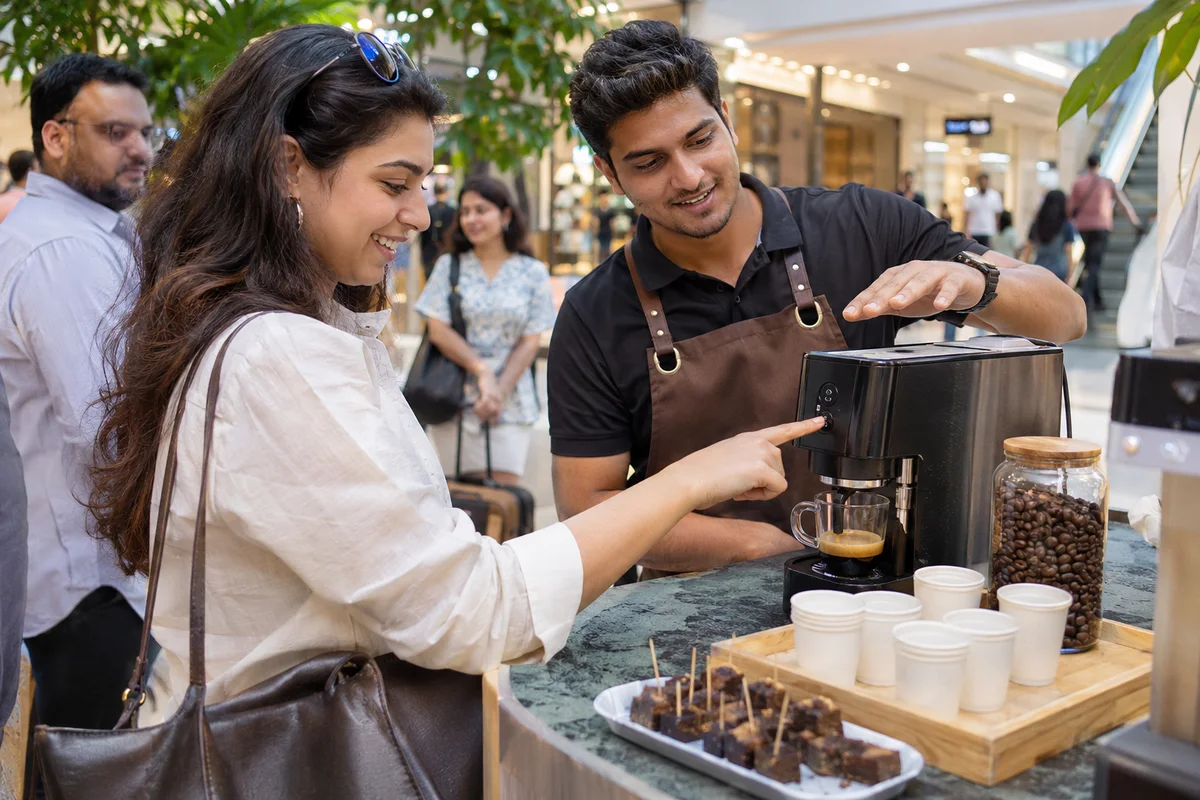
Experiential marketing puts your product in people's hands at a pop-up, demo corner, test drive or interactive stand, so they decide after taking part. GullySales plans the experience, the permissions in general terms, the staff brief, lead capture and the follow-up that turns visitors into conversations.
GullySales designs the experience from the follow-up backwards. We decide what a visitor must do at the stand, what your staff must ask, and what gets written down before the visitor walks away.
The line between this and its neighbours is simple. Sampling hands out stock, brand activation campaigns cover the wider programme, and roadshows travel between places. Experiential marketing is the single hands-on set-up you stage in one place, such as a mall floor, an apartment clubhouse or a showroom forecourt.
Who it is for
This is written for you if these sound familiar.
- Car and two-wheeler dealers who want test drives booked, not just brochures taken
- Appliance, water purifier and furniture sellers whose buyers must see the product working
- Beauty, beverage and food brands launching a product where shoppers can try it
- Developers and fitness brands opening a sales corner near the residents they want
- Software and service firms putting an interactive demo in front of visitors at a venue
Not for
It is not the right fit if.
- You want only a stand built to a design, with no staff brief or follow-up.
- The product gives a buyer nothing to try, touch or take part in.
- Nobody in your team will call the people who leave their details.
The problem
Does this sound like your business?
Common situations this work addresses.
“Lots of footfall, no enquiries”
Visitors enjoyed the stand but nobody asked their name or need. Without a short conversation script and a place to record it, attention is lost when they leave.
“The promoters did not know the product”
Hired staff gave vague answers and pushed visitors to the website. The brief, a product sheet and a rehearsal are what let them answer on the spot.
“We were asked to pack up on day one”
The mall, society or landlord had not approved the set-up in writing. Power, space, noise, safety and branding rules differ by venue, and the venue decides.
“We collected numbers and never called”
A sheet of names sat in a bag for a week. By the time someone rang, the visitor had forgotten the stand.
What we do
The work we can include.
Each deliverable and the purpose it serves. Your written scope confirms what is included, who is responsible, and what it costs.
Experience brief
One page stating who the stand is for, what they will try or do, and what you want them to do next. Every later decision is checked against it.
Venue shortlist and permission record
A shortlist of malls, societies, showrooms or event spaces, with the approving person named. The written approval records space, dates, power, branding and any fee before anything is built.
Layout and kit list
A floor plan showing queue, trial area, counter and storage, with a list of products, demo units, signage, tables and spares. A walk-through of the venue comes before fabrication.
Staffing brief and script
A role sheet for each person on the stand, an opening question, approved answers on features and price, and a rule for what staff must not promise. We rehearse it with them before day one.
Lead capture form with consent wording
A short form or tablet screen recording name, need, product tried and agreed next step. The wording says why details are taken, and your own adviser reviews it.
Follow-up list and message drafts
Visitors sorted by interest, with a draft call script and message for each group. Your sales team gets a named owner per lead.
Daily stand log
A record of opening and closing times, units used, issues and visitor numbers against leads captured. It shows what changed from one day to the next.
How the result is measured
- Visitors who took part against visitors who passed
- Consented leads, with the stated need
- Test drives, demos or trials booked
- Follow-up calls made and outcomes recorded
- Orders or visits traced to the stand
- Cost of the stand against recorded orders
Recorded as a baseline before work starts, so every later report has an honest comparison.
Before you decide
Agree the work. Know how to judge it.
Experiential marketing: use these checks to prepare, choose the scope, and review what changes.
Bring the right evidence
State the buyer group, catchment, and dates that matter to the offer. Ask for the proposed inventory and available evidence about its audience, with the source and date shown.
Make the scope clear
Agree the exact placements, formats, booking period, and proof of delivery. Separate media charges from design, production, permissions, and installation where these apply.
Check the work in use
Compare delivery evidence with the agreed booking and record enquiries through a distinct response route where practical. Treat audience estimates separately from measured responses.
Know when to change course
Do not buy a placement only because it is discounted. If the location or audience does not fit the buyer, revisit the plan before committing production costs.
These are discussion points, not a fixed package. GullySales confirms the deliverables, responsibilities, fee, and term in writing after reading your brief and speaking with you.
How it works
How the experiential marketing work runs
The work itself, in order. How an engagement starts, from your brief to a written scope, is set out on our method page.
- 1
Requirements brief
We agree the buyer, the product, the action wanted and the budget you will approve. Scope, fee and term are set in writing after this and a first conversation.
- 2
Experience and venue plan
We draft the experience and approach venues. You approve the plan and the venue cost before any booking.
- 3
Permissions and set-up
You hold the booking and sign any agreement with the venue. We prepare the requests, the layout and the kit list, and check the set-up against the venue's conditions.
- 4
Staff briefing and rehearsal
We brief and rehearse your staff or the hired promoters. Product, script, consent wording and the lead form are tested before opening.
- 5
Running the stand
A supervisor checks set-up, script and records through each day. Problems are fixed on the day, not noted for later.
- 6
Handover and review
Leads go to your sales team with the need and product tried. We review the log with you, and you decide whether to repeat, move or stop.
Before you hire anyone
Do this first yourself.
Settle what a visitor should do and what you will do with the details before you book any space.
- Write one sentence naming who the stand is for and the action you want from them.
- Ask the mall, society or showroom manager for written approval covering space, dates, power and branding.
- Name the person in your team who will call every lead, and the day they will start.
- Draft the three questions your staff will ask each visitor, then record the answers on one sheet.
- Try the demo or trial yourself and note every point where it fails or confuses.
Judge any provider
What to ask any provider of this service.
Useful whoever you choose, including us.
- Who approves the venue, and will the written permission be in my name?
- How will staff be briefed on my product, and can I watch the rehearsal?
- What exactly is recorded for each visitor, and what consent wording is used?
- Who owns the lead list, and how does it reach my sales team?
- What is separate in your quote: your time, venue fees, fabrication and promoters?
Where this fits
Three pieces of sales work, in this order.
This work sits inside sales process design, at stage 1, prospecting and lead generation. The audit comes before it, and sales management keeps it running.
Step 1
Sales audit
Find where deals are being lost and what to fix first.
Start here if you cannot say where orders are lost.
Step 2 · you are here
Sales process design
One written way to sell, from first enquiry to repeat order.
Start here if every salesperson sells differently.
Step 3
Sales management
A target, a review routine and someone who owns the number.
Start here if the team has targets and no routine.
FAQ
Questions owners ask before they call.
Not here? More answers, or ask on WhatsApp.
What does an experiential marketing set-up cost?
Do I need permission from the venue?
How is this different from sampling or a roadshow?
Can you collect visitors' phone numbers?
Will the stand produce sales?
How long is the contract?
How soon will we see results?
Who will actually do the work?
What do you need from us?
What if we are not happy with the work?
By industry
Experiential marketing, written for your industry.
Related services
Often bought with this, or instead of it.
Your next practical step
Tell us what you are trying to grow, and we will read it before we call.
Eight short steps, mostly taps. Skip anything you would rather answer on the call.