Two-wheeler dealers · Automotive
A test ride sells the bike, so get the walk-in onto one before they leave.
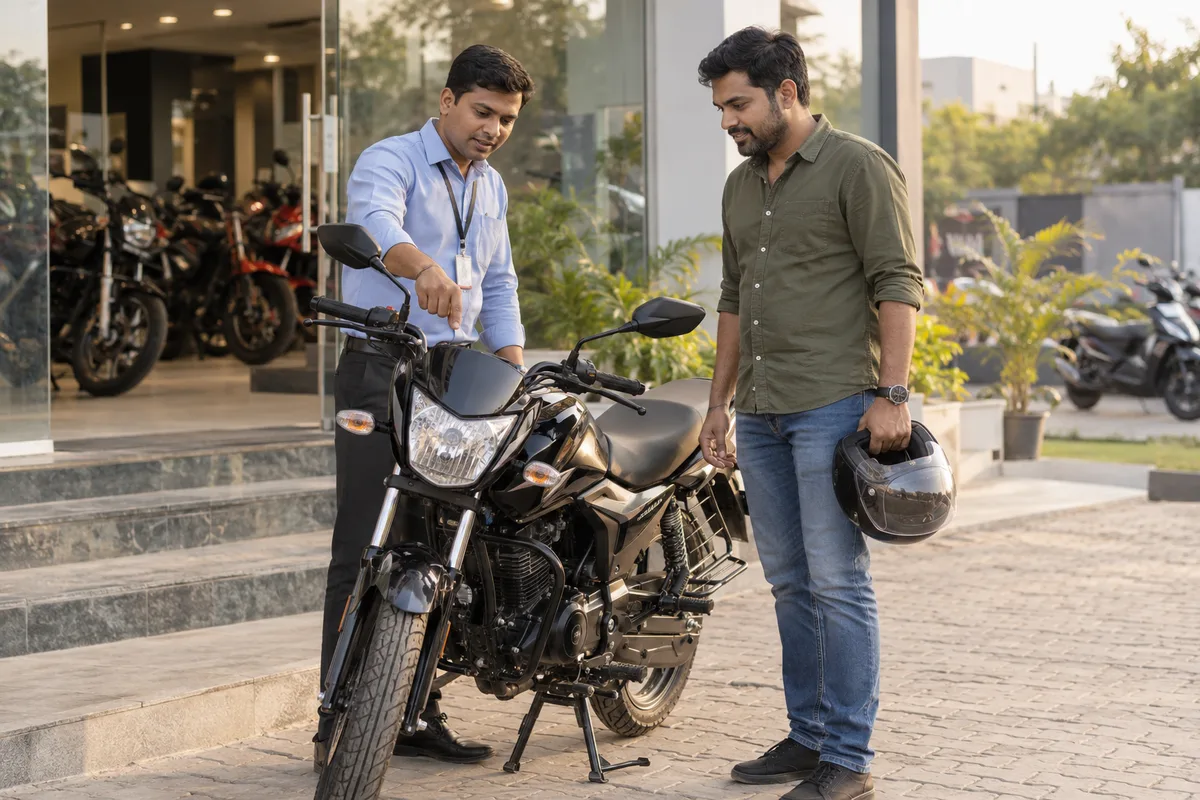
A young man visits a showroom on Saturday to look at a commuter bike. The young man sits on two, asks about the down payment, and says the family will come back with the father. Nobody takes the number properly, and the following weekend the buyer buys from the dealer who called on Wednesday.
Scope, fee, reporting and term are agreed in writing after we have read your brief and spoken to you.
In one paragraph
Two-wheeler dealers sell on finance, delivery date and the test ride, and then earn for years on service. Marketing brings walk-ins and enquiries. Sales is the test ride, the finance conversation and the follow-up on everyone who did not buy today. GullySales handles that follow-up and the service customers who should be buying their next bike from you.
Two-wheeler dealerships run on volume, finance and the service bay. The margin on the vehicle is thin and the money is in finance, insurance, accessories and years of servicing. Dealers lose buyers to a test ride that never happened, a finance answer that took two days, and a service customer who was never told it was time to upgrade.
Last updated 6 Oct 2026.
How buyers decide
How two-wheeler dealers are chosen.
Buyers decide on monthly instalment more than price. They compare models online, read reviews and mileage claims, then visit showrooms to sit on the bike and ask about the down payment and the waiting period. The finance answer often decides the sale.
Family and friends weigh in heavily. A first bike is frequently bought with a parent present, and the salesperson who respects that conversation wins. Delivery date matters for festivals and auspicious days, when a large share of the year's sales happen.
Service brings them back. A dealer who keeps service customers close has the first chance at their next bike and at the family's second one. Most dealers never make that connection.
The problem
What usually goes wrong for two-wheeler dealers.
What owners tell us on the first call, in their words.
“Walk-ins leave without a test ride”
The showroom is busy, the demo bike is out, and the visitor leaves having only sat on one.
“Enquiry numbers are written and never called”
A visitor's number goes on a pad. Nobody rings on Wednesday.
“Finance answers take two days”
The buyer wants to know the monthly figure now. By the time it arrives the buyer has bought elsewhere.
“Delivery dates are vague before festivals”
Buyers want a date for an auspicious day. A vague answer sends them to a dealer who committed.
“Service customers are never approached for an upgrade”
A customer servicing a five-year-old bike is the easiest sale in the building and nobody asks.
“Online enquiries are answered slowly”
Portal and website leads sit for a day while buyers visit showrooms.
What we do
What we do for two-wheeler dealers.
Everything included for two-wheeler dealers, and the result each part is there to produce.
Every enquiry captured and called
A routine for capturing walk-in, phone, website and portal enquiries with the model and the finance need, and a call routine the same or next day.
Result: The buyer who said they would come back gets a reason to.
A test ride routine
A simple process that gets as many visitors as possible onto a bike, with demo availability tracked.
Result: More visitors ride, and more riders buy.
A same-visit finance answer
A written process so the monthly figure, down payment and documents can be given while the buyer is present.
Result: The finance question stops losing sales.
A festival delivery plan
A booking and delivery plan for the festival season with honest dates.
Result: Buyers book with you because you committed.
A service-to-sales routine
A list of service customers with vehicle age, and an upgrade conversation at the right service visit.
Result: The easiest sale in the building stops being missed.
A report against the baseline
Enquiries by source and model, test rides given, finance cases, deliveries and service-to-sales conversions, against the baseline taken before work starts.
Result: You can see which source and which conversation produces sales.
How the result is measured
- Enquiries by source and model
- Visitors given a test ride
- Finance answers given in the same visit
- Deliveries against enquiries
- Service customers who bought a new vehicle
Recorded as a baseline before work starts, so every later report has an honest comparison.
Every service, written for two-wheeler dealers
Each has its own page: what it involves for two-wheeler dealers, what you get, and what it is measured on.
- SEORank for the on-road price and the showroom in your town, not for the brand's own pages.
- Local SEOBe the showroom the map shows when a rider searches bike showroom near me.
- Pay per click advertisingPay for the rider searching for a model's price, not for the brand's name.
- Social media marketingPost the bikes on your floor and the deliveries you made, not the manufacturer's advertisement.
- WhatsApp marketingSend the on-road price and the colour in stock in one message when the rider asks.
- Reputation managementAnswer the review about the charges nobody explained at billing.
- Lead generationWrite down every enquiry, from the walk-in to the manufacturer's portal lead.
- Follow-up systemsRing the father who has to approve the bike, not only the son who wants it.
- Video marketingFilm the test ride and the delivery, and let the buyer see the showroom before visiting.
- Customer retentionMake the service bay the first place your owners think of for their next bike.
- Content marketingWrite the answers a first-time bike buyer is searching for before the showroom visit.
- Buyer personasKnow the different people who buy bikes from you, because each decides in a different way.
- CRMKeep every enquiry, test ride and service customer in one shared record.
- Digital marketingJoin up search, maps, chat and ads so that online interest ends with a showroom visit.
- WebsitesBuild a dealership website that lets a buyer book a test ride from a phone.
Worth a page and a campaign of their own
Commuter motorcycles · Scooters · Premium and performance motorcycles · Exchange and trade-in · Finance and insurance · Accessories and customisation · Service and annual maintenance · Festival delivery bookings
Priority campaigns
Campaigns for what two-wheeler dealers most want to sell.
Each one planned around when your buyers decide, and measured against the baseline.
Festival booking
A campaign for the festival weeks with delivery dates and finance options.
Result: The season's demand is captured early.
Exchange your old bike
A campaign for owners of ageing vehicles, aimed at your own service list first.
Result: Your service bay becomes a sales pipeline.
Student and first bike
A campaign for young buyers and their parents, with finance explained simply.
Result: First-time buyers understand the purchase.
Service reminders that sell
Service reminders that also mention exchange and new models where it fits.
Result: Routine contact produces sales conversations.
Beyond search
Where we reach buyers of two-wheeler dealers, beyond Google.
Search matters, but it is rarely the only way this industry's buyers find a supplier.
Colleges and student groups
First-time buyers and their families.
Local employers and factories
Workers buying commuter vehicles on finance.
Finance companies and banks
Partners whose approvals decide your sales.
Your own service database
The largest and least used source of sales in the dealership.
Who it is for
This is written for these two-wheeler dealers.
- Single-brand two-wheeler dealerships
- Multi-brand two-wheeler showrooms
- Scooter-focused dealerships
- Dealers with a large service business
- Rural and semi-urban dealerships
- Dealers with multiple branches
Not for
It is not the right fit if.
- You want a guaranteed Google ranking or a guaranteed number of leads. Nobody honest can promise either.
- You need enquiries by next week and have nobody to answer them.
- You want posts and reach reported, not enquiries and orders.
How it works
How the work runs for two-wheeler dealers
The work itself, in order. How an engagement starts, from your brief to a written scope, is set out on our method page.
- 1
Listen to what happens to a walk-in
In the first conversation we trace how enquiries are captured and what happens after a showroom visit.
- 2
Get visitors onto a bike
A test ride routine.
- 3
Answer finance in the same visit
A written process.
- 4
Work the service list
An upgrade routine.
- 5
Report on deliveries, not activity
A report on enquiries, test rides and deliveries against the baseline taken before anything changed.
Where this fits
Three pieces of sales work, in this order.
GullySales builds every engagement from three pieces of sales work. This page is not one of them, but the same three steps apply to the business behind it.
Step 1
Sales audit
Find where deals are being lost and what to fix first.
Start here if you cannot say where orders are lost.
Step 2
Sales process design
One written way to sell, from first enquiry to repeat order.
Start here if every salesperson sells differently.
Step 3
Sales management
A target, a review routine and someone who owns the number.
Start here if the team has targets and no routine.
FAQ
Questions two-wheeler dealers ask before they call.
Not here? More answers, or ask on WhatsApp.
Can we advertise mileage and performance figures?
Can we advertise finance offers?
Do you handle the manufacturer's co-op marketing?
Can you work with our dealer management system?
How do we use the service database?
How much does it cost?
How long is the contract?
How soon will we see results?
Who will actually do the work?
What do you need from us?
Notes for owners
Read more about two-wheeler dealers.
- How two-wheeler dealers follow up a showroom walk-inA visitor who says he will come back with his father usually buys from whoever calls him first. Here is how to take his details properly and follow up without nagging.
- How buyers choose a showroom, workshop or parts counterCar, bike, repair and parts buyers send one enquiry to several sellers and pick the first clear answer. This post lists what each buyer checks, and where a dealer or workshop quietly loses them.
- Handling price negotiation in a vehicle showroomA give-and-get ladder for showroom price talks: what each salesperson may concede, in what order, and what to ask for in return, so buyers are treated alike and margin is kept.
- Tracking which source brought the car or bike buyerHow a car or two-wheeler dealer can record where each buyer came from, with one source field, a fixed list and a rule for walk-ins, so spending follows bookings and not noise.
- How two-wheeler dealers sell from their own service databaseThe easiest sale in a two-wheeler dealership is the customer waiting for his bike in your own service bay. Here is how to read the database and have the conversation.
- Talking about finance and insurance at delivery without souring the saleHow a car showroom can explain loan, insurance and add-on charges once, in writing and before delivery day, so the billing desk stops being the moment a happy buyer turns sour.
Part of Automotive. See the other industries in the sector.
Your next practical step
Tell us what you are trying to grow, and we will read it before we call.
Eight short steps, mostly taps. Skip anything you would rather answer on the call.