Two-wheeler dealers · Social media
Post the bikes on your floor and the deliveries you made, not the manufacturer's advertisement.
Social media marketing for a two-wheeler dealer means showing the models on your floor, the deliveries made and the people who run the showroom, so a buyer sees a real place before visiting. GullySales plans the posts around models, finance explained simply and festival bookings, and sends every message and comment to a person who replies.
Scope, fee, reporting and term are agreed in writing after we have read your brief and spoken to you.
What social media means
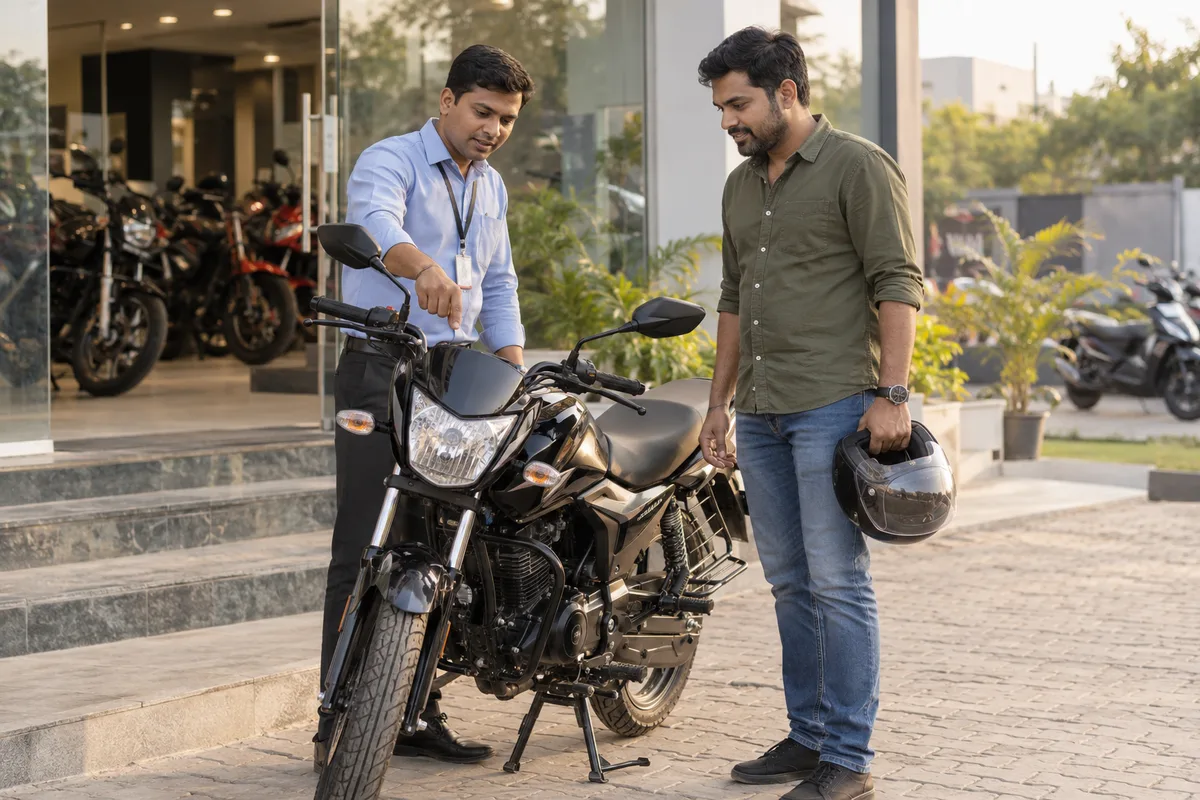
Social media is the ongoing posting your business does on platforms such as Instagram, Facebook and LinkedIn to stay visible to customers and prospects between purchases. GullySales plans a posting calendar, writes captions and designs the images so the page looks active and answers what a visitor would ask.
Also for two-wheeler dealers
- Video marketing for two-wheeler dealers
- Content marketing for two-wheeler dealers
- SEO for two-wheeler dealers
- Local SEO for two-wheeler dealers
- Pay per click advertising for two-wheeler dealers
- WhatsApp marketing for two-wheeler dealers
- Reputation management for two-wheeler dealers
- Lead generation for two-wheeler dealers
Sales and marketing for two-wheeler dealers, the overview.
Last updated 6 Oct 2026.
For two-wheeler dealers
Where it usually goes wrong, and what we would do.
“The brand's page already posts the film, so yours must show the showroom”
A riding clip from the manufacturer is seen by everyone. What only you can show is the bike on your floor, in the colour in stock, in your own town.
“The young buyer and the parent are on different platforms”
A college student watches reels while the father asks on WhatsApp. A post for each, with the same model and the finance explained in the parent's language, reaches the family.
“A comment asking the price gets a reply that says call us”
A rider asking the price under a post wants the on-road figure in their town and a way to book a test ride. A reply that sends the rider to a phone number loses the rider to the next showroom.
What we do
What we deliver for two-wheeler dealers.
Every deliverable, what it covers for you, and the result it is there to produce. Nothing here is an extra.
A content plan built around the models on the floor
A list of the models, colours and offers currently in the showroom, turned into posts and reels from the stock list.
Result: The page shows bikes you can actually deliver.
Reels for the first-time buyer, with the finance explained
Short videos for young buyers that show the model, the test ride desk and how the down payment and instalment are worked out.
Result: A first-time buyer understands the purchase before walking in.
Versions for the parent on WhatsApp
The same model and finance post written in the language the parent uses, sized for status and family groups.
Result: The person who signs sees the post too.
Delivery posts taken with permission
A consent question asked at the key handover and kept, and a rule on what stays out of the picture, such as the registration number.
Result: Owners appear on your page by choice.
A festival booking calendar
Dates for the posts that open bookings before each festival, with the models you can deliver and how a booking is made.
Result: The festival rush is addressed before it starts.
A routine for comments and messages
A named person who reads every comment and message in showroom hours and replies with the on-road figure and a test ride slot.
Result: A rider who asks on a post hears from the showroom.
How the result is measured
- Posts published
- Engagement rate
- Enquiries from social profiles
Recorded as a baseline before work starts, so every later report has an honest comparison.
Platform for this buyer
Where two-wheeler buyers look, and what a showroom can post for each.
- Instagram reels for the first-time buyer
- Show the model on your floor, how the down payment and EMI are worked out, and the test ride desk. The action wanted is a message to book a ride, so name the day.
- WhatsApp status and family groups
- Post the model and colour in stock with the on-road build-up. The action wanted is a reply from the parent, so write the post in the parent's language.
- A Facebook page for the town and nearby villages
- Post deliveries with permission, festival booking dates and the showroom's hours. The action wanted is a call, so pin the number at the top.
- YouTube walk-arounds in the local language
- A longer film of one model, with the features explained in plain words. The action wanted is a visit. Quote only the manufacturer's published figures, as such.
- What not to post
- Do not post stunts, riders without helmets or a customer's delivery without permission. Do not claim a mileage the manufacturer has not published or a finance offer you cannot honour.
Who it is for
This is written for these two-wheeler dealers.
- Single-brand two-wheeler dealerships
- Multi-brand two-wheeler showrooms
- Scooter-focused dealerships
- Dealers with a large service business
- Rural and semi-urban dealerships
- Dealers with multiple branches
Not for
It is not the right fit if.
- No one at the showroom can photograph a delivery and post it the same day, so the page would go quiet within a few weeks.
- Customers have not agreed to appear in delivery photographs, and posting them without asking creates a complaint.
How it works
How the social media work runs
The work itself, in order. How an engagement starts, from your brief to a written scope, is set out on our method page.
- 1
Confirm audience, platforms and access
We note which platforms your buyers use and check that the pages sit under your own business accounts, with you as owner and us as added roles.
- 2
Review the current presence
We read the existing pages, the posts that drew replies and the gaps in posting.
- 3
Build the calendar
Themes, formats and dates are set out for your approval, with space for offers and news.
- 4
Create, approve and publish
Posts are made, approved by you and scheduled. Replies to the public are handled in your voice.
- 5
Record enquiries and adjust
Enquiries are logged against the post or platform where they began, and the mix changes to follow what brings them.
Where this fits
Three pieces of sales work, in this order.
This work sits inside sales process design, at stage 0, foundation. The audit comes before it, and sales management keeps it running.
Step 1
Sales audit
Find where deals are being lost and what to fix first.
Start here if you cannot say where orders are lost.
Step 2 · you are here
Sales process design
One written way to sell, from first enquiry to repeat order.
Start here if every salesperson sells differently.
Step 3
Sales management
A target, a review routine and someone who owns the number.
Start here if the team has targets and no routine.
FAQ
Questions owners ask before they call.
Not here? More answers, or ask on WhatsApp.
Who should appear in the videos?
Can we post customers taking delivery?
Should we repost the manufacturer's posts?
How should we plan festival posts?
How much does it cost?
How long is the contract?
How soon will we see results?
Who will actually do the work?
What do you need from us?
What if we are not happy with the work?
From the blog
Further reading for two-wheeler dealers.
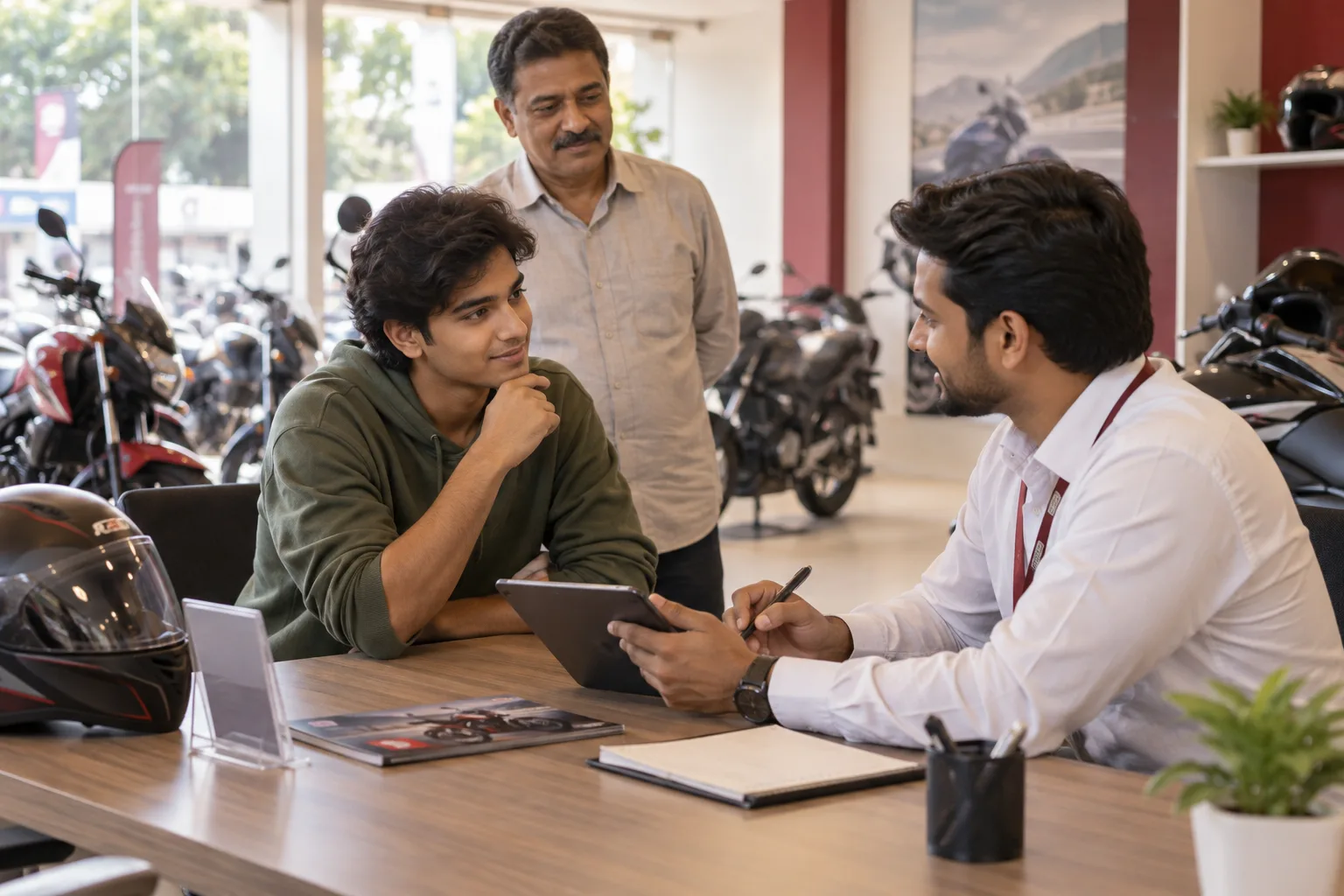 5 min read · 6 Oct 2026How two-wheeler dealers follow up a showroom walk-inA visitor who says he will come back with his father usually buys from whoever calls him first. Here is how to take his details properly and follow up without nagging.
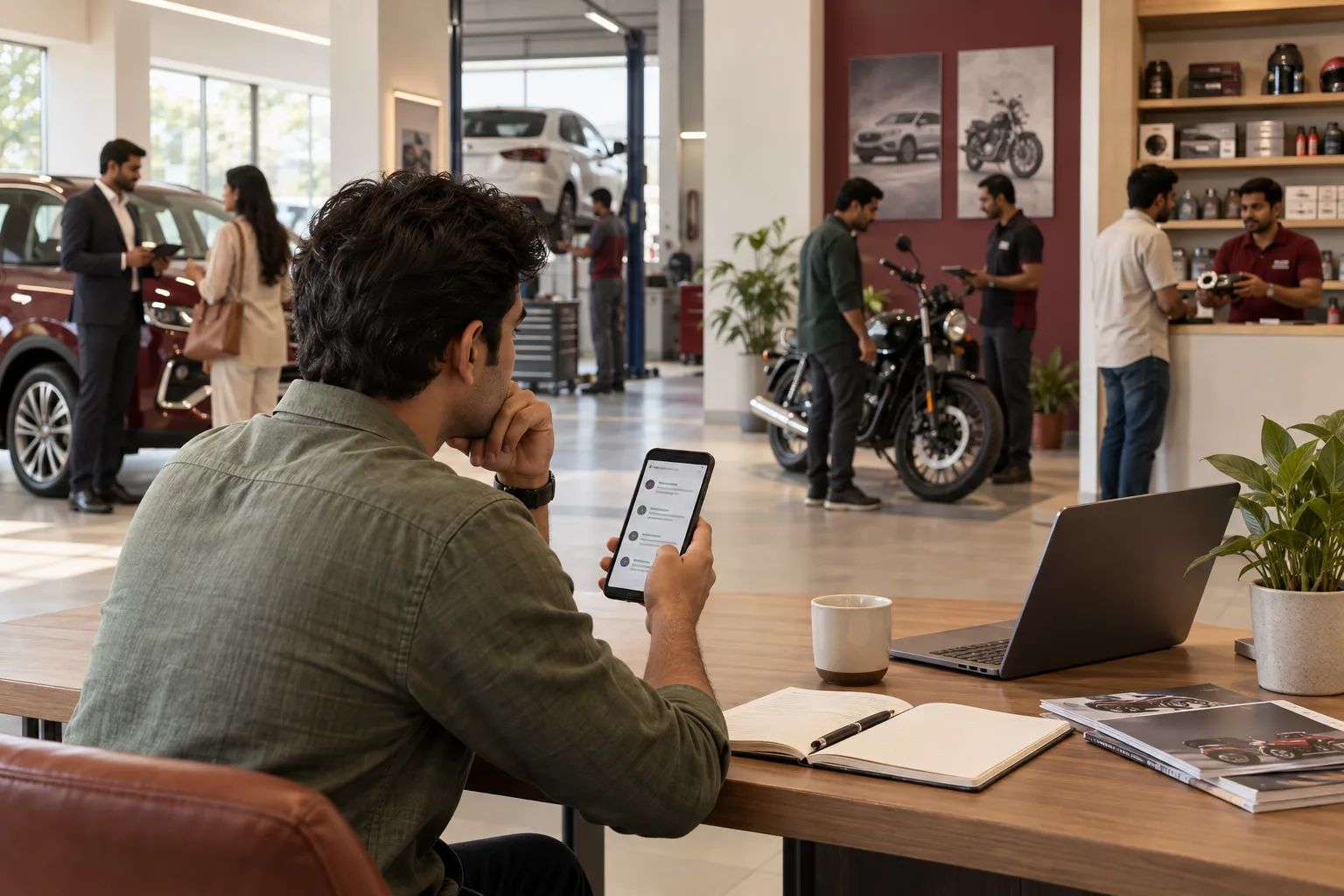 6 min read · 6 Oct 2026How buyers choose a showroom, workshop or parts counterCar, bike, repair and parts buyers send one enquiry to several sellers and pick the first clear answer. This post lists what each buyer checks, and where a dealer or workshop quietly loses them.
 6 min read · 5 Oct 2026Handling price negotiation in a vehicle showroomA give-and-get ladder for showroom price talks: what each salesperson may concede, in what order, and what to ask for in return, so buyers are treated alike and margin is kept.
More for two-wheeler dealers
Everything else we would do for you.
Closest to this: content and social
Also for two-wheeler dealers
Or start from the overview: sales and marketing for two-wheeler dealers.
Your next practical step
Tell us what you are trying to grow, and we will read it before we call.
Eight short steps, mostly taps. Skip anything you would rather answer on the call.