Two-wheeler dealers · Search engine optimisation
Rank for the on-road price and the showroom in your town, not for the brand's own pages.
SEO for a two-wheeler dealer decides whose page a rider opens when searching for a model's on-road price, a down payment or a showroom nearby. The manufacturer's site holds the brand; a dealer wins on the town, the finance and the delivery date. GullySales builds a page per model for your showroom and fixes what keeps the site out of search.
Scope, fee, reporting and term are agreed in writing after we have read your brief and spoken to you.
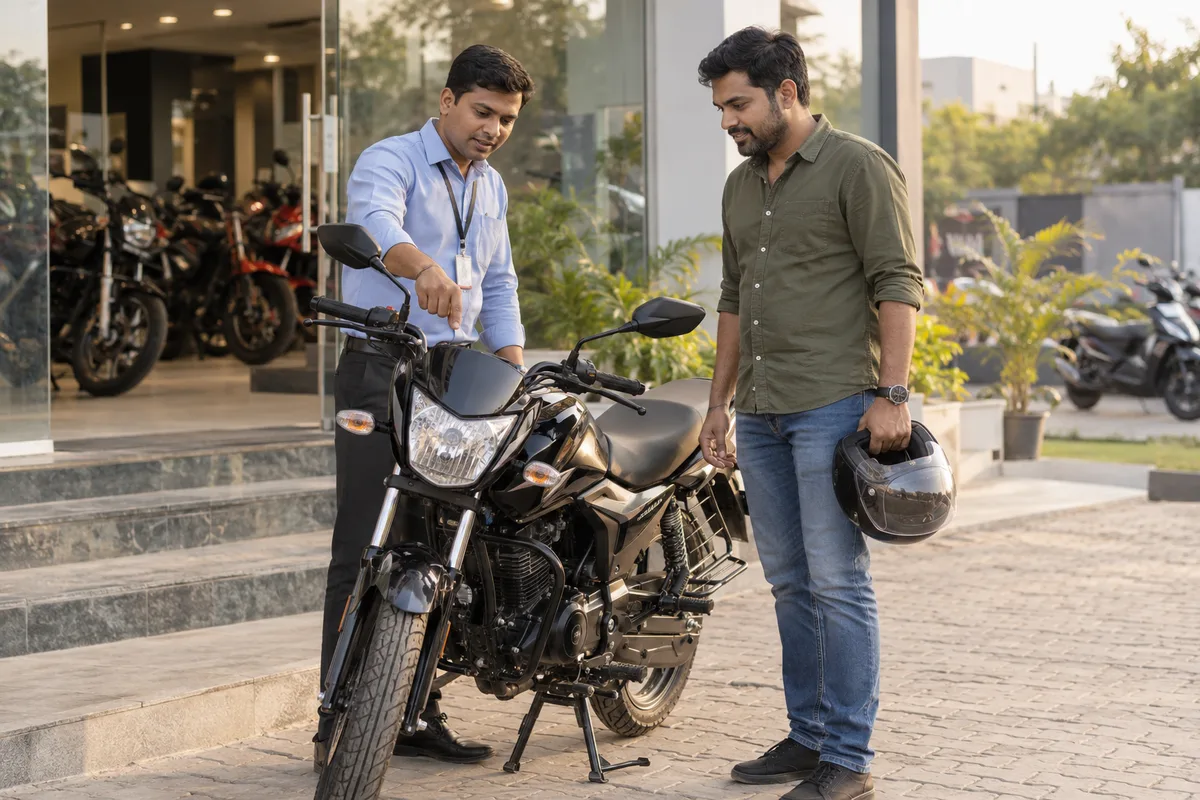
What search engine optimisation means
Search engine optimisation (SEO) is the work of getting your website to appear when a buyer searches Google for what you sell. GullySales builds pages around real search terms, fixes technical issues that block ranking, and tracks which searches actually bring enquiries.
Also for two-wheeler dealers
- Local SEO for two-wheeler dealers
- Websites for two-wheeler dealers
- Pay per click advertising for two-wheeler dealers
- Social media marketing for two-wheeler dealers
- WhatsApp marketing for two-wheeler dealers
- Reputation management for two-wheeler dealers
- Lead generation for two-wheeler dealers
- Follow-up systems for two-wheeler dealers
Sales and marketing for two-wheeler dealers, the overview.
Last updated 6 Oct 2026.
For two-wheeler dealers
Where it usually goes wrong, and what we would do.
“The brand's site answers the model, so your page must answer the town”
A rider can read the specification anywhere. What the rider cannot get from the manufacturer is the on-road price in their town, the wait for their colour and the name of the person to ask for.
“A price page has to be as honest as the invoice”
A page that shows the ex-showroom figure and hides registration, insurance and handling makes the buyer feel tricked at the counter. Put the build-up on the page and say that it changes.
“A branch with no page of its own is invisible”
A dealer with showrooms in three towns and one website ranks for none of them. Each showroom needs its own page naming the area and matching its map listing.
What we do
What we deliver for two-wheeler dealers.
Every deliverable, what it covers for you, and the result it is there to produce. Nothing here is an extra.
A page per model for your showroom
One page for each model you sell, with the colours in stock, the finance options and the town's on-road build-up, and no page for models you cannot get.
Result: A rider searching for that model in your town lands on your showroom.
An on-road price build-up in plain words
A layout that lists ex-showroom price, registration, insurance, handling and accessories as separate lines, filled in from your current invoice with a note that the figure changes.
Result: The price on the page matches the bill at the counter.
A page for every showroom
A page for each branch naming the area, the address, the hours and the models on display, matched word for word to its map listing.
Result: A search for a showroom in that area finds the right branch.
Finance and exchange pages
A page on how the down payment and instalment are worked out and what documents the financier asks for, and a page on exchanging an old bike.
Result: The two questions that decide the sale are answered before the visit.
A technical check of the site on mobile data
Page speed on an ordinary phone connection in smaller towns, broken links to models that were discontinued and two pages competing for one model.
Result: A good model page is not held back by a fault nobody noticed.
Searches and enquiries by page against the baseline
Search visits and enquiries for each model page, branch page and finance page, set against the baseline recorded before work starts.
Result: You see which pages bring a rider to the showroom.
How the result is measured
- Ranking positions
- Organic traffic
- Enquiries from organic search
Recorded as a baseline before work starts, so every later report has an honest comparison.
Searches your buyers type
What a rider types before visiting a two-wheeler showroom, and the page that answers it.
- Jupiter on road price in Mysuru
- A model page with the on-road build-up for your town: ex-showroom, registration, insurance and handling. Say that the figures change and invite a call for today's quote.
- bike down payment and EMI
- A finance page showing how down payment and instalment are worked out from the price, the loan period and the lender. Quote no rate. Say that it depends on the lender.
- bike showroom near me
- A branch page with the address, hours, models on display and a map pin. Name the area the way people in the town do, and match it to the map listing.
- waiting period for Splendor
- A delivery page for the models that run on a wait. Say what decides the wait, that colours and variants differ, and invite a call. Do not promise a date.
- best scooter for a woman rider
- A buying guide written by someone in the showroom. Compare seat height and weight across the models you stock, and invite a test ride. Claim no mileage the manufacturer has not published.
- old bike exchange offer
- An exchange page. Say what documents the seller brings, that the valuation is done on inspection, and that the offer is confirmed at the showroom.
Who it is for
This is written for these two-wheeler dealers.
- Single-brand two-wheeler dealerships
- Multi-brand two-wheeler showrooms
- Scooter-focused dealerships
- Dealers with a large service business
- Rural and semi-urban dealerships
- Dealers with multiple branches
Not for
It is not the right fit if.
- The showroom's own website is a single page with no model, price or stock details to rank.
- The manufacturer's portal already takes the model searches in your town and you have no local offer or service to add to the page.
How it works
How the search engine optimisation work runs
The work itself, in order. How an engagement starts, from your brief to a written scope, is set out on our method page.
- 1
Audit and baseline
We record where the site stands today: positions, traffic, technical faults and the enquiries search currently produces. Nothing starts until this number is written down.
- 2
Decide what to rank for
We map the searches your buyers use, in your words and theirs, and pick the ones worth the effort for your margin and your capacity.
- 3
Fix the foundations
Technical faults first, because the cheapest gains are there. Then the Business Profile and directory consistency.
- 4
Build the pages
A page for each thing you do, written to answer the question it is searched for, with a clear next step at the end.
- 5
Publish and earn mentions
Content goes out on the calendar. Links and mentions are earned from real relationships, not bought.
- 6
Measure, report, adjust
At an interval agreed in writing we report what moved and what did not, and change the plan when the numbers say so.
Where this fits
Three pieces of sales work, in this order.
This work sits inside sales process design, at stage 1, prospecting and lead generation. The audit comes before it, and sales management keeps it running.
Step 1
Sales audit
Find where deals are being lost and what to fix first.
Start here if you cannot say where orders are lost.
Step 2 · you are here
Sales process design
One written way to sell, from first enquiry to repeat order.
Start here if every salesperson sells differently.
Step 3
Sales management
A target, a review routine and someone who owns the number.
Start here if the team has targets and no routine.
FAQ
Questions owners ask before they call.
Not here? More answers, or ask on WhatsApp.
Should we write a page for every model we sell?
Can we use the manufacturer's photographs and specifications?
Is a blog worth the trouble for a bike showroom?
Who owns our website, the dealer or the manufacturer?
How much does it cost?
How long is the contract?
How soon will we see results?
Who will actually do the work?
What do you need from us?
What if we are not happy with the work?
From the blog
Further reading for two-wheeler dealers.
 5 min read · 6 Oct 2026How two-wheeler dealers follow up a showroom walk-inA visitor who says he will come back with his father usually buys from whoever calls him first. Here is how to take his details properly and follow up without nagging.
 6 min read · 6 Oct 2026How buyers choose a showroom, workshop or parts counterCar, bike, repair and parts buyers send one enquiry to several sellers and pick the first clear answer. This post lists what each buyer checks, and where a dealer or workshop quietly loses them.
 6 min read · 5 Oct 2026Handling price negotiation in a vehicle showroomA give-and-get ladder for showroom price talks: what each salesperson may concede, in what order, and what to ask for in return, so buyers are treated alike and margin is kept.
More for two-wheeler dealers
Everything else we would do for you.
Closest to this: search and visibility
Also for two-wheeler dealers
Or start from the overview: sales and marketing for two-wheeler dealers.
Your next practical step
Tell us what you are trying to grow, and we will read it before we call.
Eight short steps, mostly taps. Skip anything you would rather answer on the call.