Two-wheeler dealers · Website
Build a dealership website that lets a buyer book a test ride from a phone.
A website for a two-wheeler dealer is the page a buyer opens on a phone to check models, the showroom location and how to book a test ride. GullySales designs and builds it around those jobs, so the site works as an extra salesperson who answers the first questions.
Scope, fee, reporting and term are agreed in writing after we have read your brief and spoken to you.
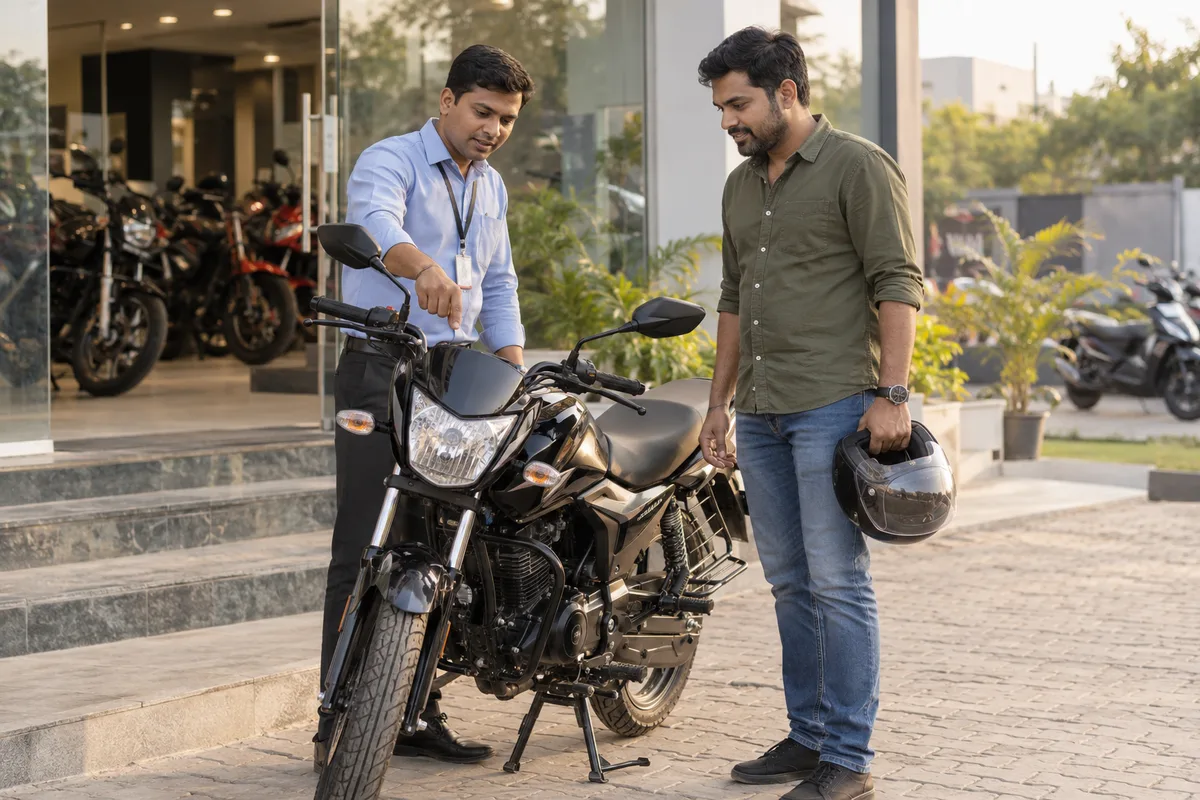
What website means
A website is the page a customer lands on after searching, clicking an advert or scanning a code, and it decides whether they call or leave. GullySales builds and maintains sites that load quickly, explain the offer plainly and make the enquiry form or phone number easy to find.
Also for two-wheeler dealers
- SEO for two-wheeler dealers
- Local SEO for two-wheeler dealers
- Pay per click advertising for two-wheeler dealers
- Social media marketing for two-wheeler dealers
- WhatsApp marketing for two-wheeler dealers
- Reputation management for two-wheeler dealers
- Lead generation for two-wheeler dealers
- Follow-up systems for two-wheeler dealers
Sales and marketing for two-wheeler dealers, the overview.
Last updated 6 Oct 2026.
For two-wheeler dealers
Where it usually goes wrong, and what we would do.
“The buyer is on a phone, standing somewhere else”
People checking a showroom are on mobile, between other tasks. A site that loads slowly, hides the address or buries the phone number loses the visit to the dealer whose details are one tap away. Phone, address and a booking button belong at the top of every page.
“A model list without ownership detail leaves the questions open”
Listing the bikes is the easy part. Buyers also want variants, colours, service location and what the first service involves, and a page that stops at the brochure sends them to ask elsewhere. Booking should be one clear step from every model page.
“A booking form must match what the showroom can honour”
A test ride request is a promise. If the demo bike is out or the slot is taken, the buyer arrives to a refusal. The form needs your team's real availability behind it. Show only the slots and models the floor can honour on that day.
“Finance questions need a place to be asked”
The monthly figure decides sales. A site that offers a way to ask for finance details, without quoting terms it cannot back, gets the conversation started on your terms. A short route to the finance desk, with the model already noted, keeps that buyer from drifting away.
What we do
What we deliver for two-wheeler dealers.
Every deliverable, what it covers for you, and the result it is there to produce. Nothing here is an extra.
Model pages for what you stock
A page per model with variants, colours and the manufacturer's published figures quoted as such, plus a clear booking button.
Result: Each stocked model has a page that links to a test ride request.
A test ride booking flow
A short form and a confirmation message, linked to the person at your showroom who handles the booking.
Result: A booked request reaches a named person with the model and time.
Showroom and service pages
Address, map, opening hours, brands, and a page for the service centre, matching your listings elsewhere.
Result: Details on the site match those on your maps listing.
Finance enquiry route
A form or chat link where a buyer asks about finance, which passes the request to your finance desk without stating terms on the page.
Result: Finance questions arrive with the model the buyer is considering.
Phone-first layout and speed
A design built and tested on common phones, with click-to-call and click-to-chat in view.
Result: The owner can open the site on a phone and reach the showroom in one tap.
Tracking built in
Forms, calls and chat clicks recorded with their source so enquiries can be matched to deliveries.
Result: Each enquiry arrives with a source noted.
How the result is measured
- Page load time
- Bounce rate
- Enquiries from the website
Recorded as a baseline before work starts, so every later report has an honest comparison.
Searches your buyers type
What a bike buyer wants to find on a dealership site, and the page that answers each question.
- What does this bike cost on the road
- A model page with the ex-showroom range and a note on what insurance, registration and accessories add, with a button to ask for the exact figure.
- Can I book a test ride
- A booking form asking for the model, a day and a time, that the showroom confirms by message and does not accept for slots it cannot honour.
- Where is the showroom and service centre
- A page for each, with the address, the map pin, the hours and a landmark photograph, since a first-time buyer may not know the road.
- How do I get finance
- A finance page listing the papers needed, who collects them and what the buyer should expect, without saying a file will be passed.
- Which bikes are in stock now
- A stock page of the models and colours on the floor, updated by the showroom staff when a bike is sold.
Who it is for
This is written for these two-wheeler dealers.
- Single-brand two-wheeler dealerships
- Multi-brand two-wheeler showrooms
- Scooter-focused dealerships
- Dealers with a large service business
- Rural and semi-urban dealerships
- Dealers with multiple branches
Not for
It is not the right fit if.
- No one at the showroom will keep the stock and the offers updated, so the site would show bikes and prices that are gone.
- Your maker already gives each dealer a page with a booking form, so a second site would split enquiries between two places.
How it works
How the website work runs
The work itself, in order. How an engagement starts, from your brief to a written scope, is set out on our method page.
- 1
Confirm structure and content
We agree the page list, what each page must answer, and who supplies the text and photographs, before any design starts.
- 2
Design the templates
The home page, a service page, a location page and the enquiry page are designed first, on phone and desktop, and shown to you.
- 3
Build and test
The site is built and checked on real phones and the common browsers. Every form, call button and WhatsApp link is tested end to end.
- 4
Load real content
Actual copy, images and information replace placeholders. Pages are read through once by you, since you spot wrong details we cannot.
- 5
Check before launch
Tracking, page titles, the sitemap and the privacy page are checked on the staging site. If an old site exists, its addresses are mapped so old links still land somewhere.
- 6
Launch and hand over access
The site goes live and we record the domain, hosting, content login and analytics in your name. The first live enquiry is traced to confirm tracking works.
Where this fits
Three pieces of sales work, in this order.
This work sits inside sales process design, at stage 1, prospecting and lead generation. The audit comes before it, and sales management keeps it running.
Step 1
Sales audit
Find where deals are being lost and what to fix first.
Start here if you cannot say where orders are lost.
Step 2 · you are here
Sales process design
One written way to sell, from first enquiry to repeat order.
Start here if every salesperson sells differently.
Step 3
Sales management
A target, a review routine and someone who owns the number.
Start here if the team has targets and no routine.
FAQ
Questions owners ask before they call.
Not here? More answers, or ask on WhatsApp.
Do we need a full website if we have a manufacturer page?
Who keeps it up to date?
Can we list prices on the site?
Who keeps the website up to date?
How long is the contract?
How soon will we see results?
Who will actually do the work?
What do you need from us?
What if we are not happy with the work?
From the blog
Further reading for two-wheeler dealers.
 5 min read · 6 Oct 2026How two-wheeler dealers follow up a showroom walk-inA visitor who says he will come back with his father usually buys from whoever calls him first. Here is how to take his details properly and follow up without nagging.
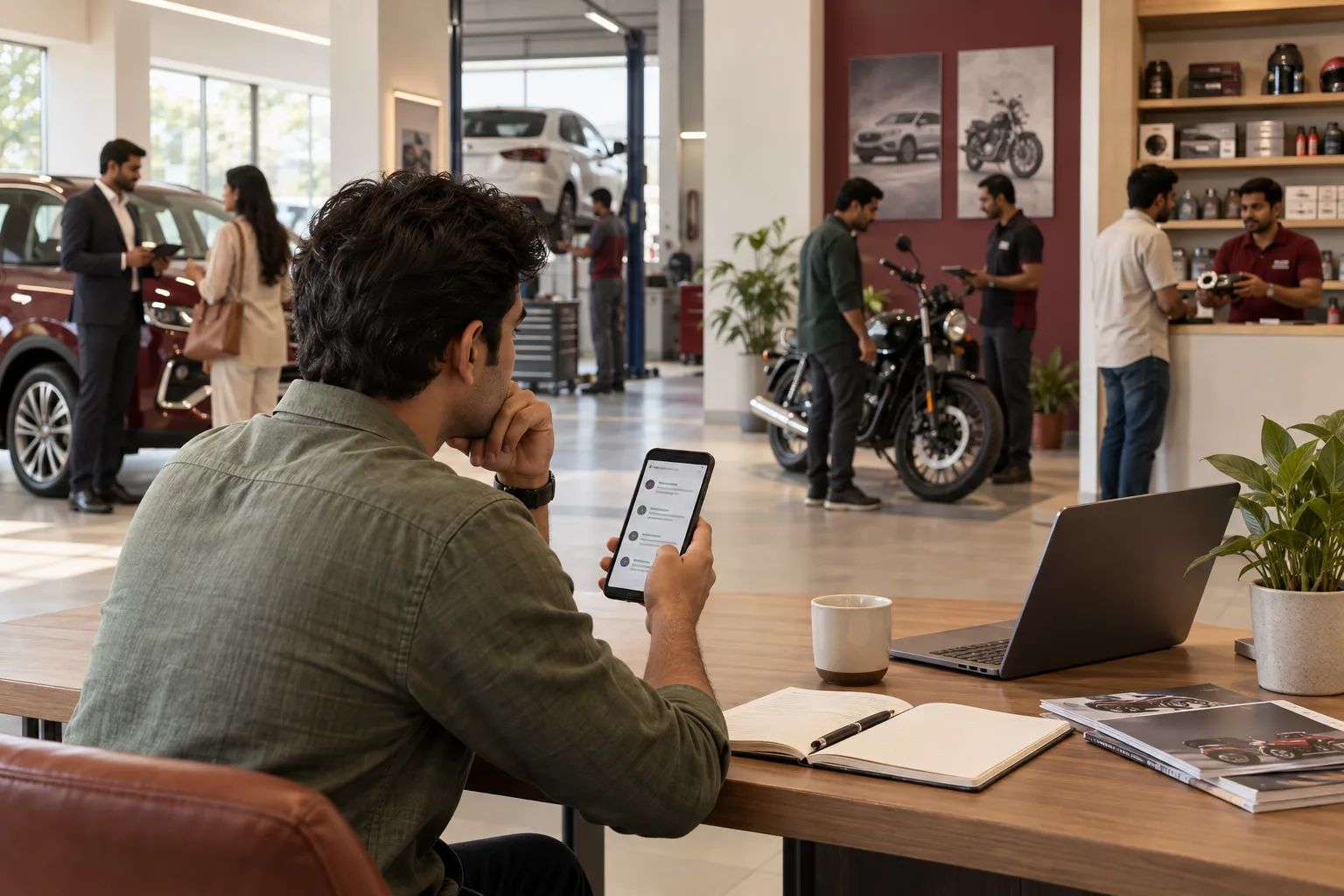 6 min read · 6 Oct 2026How buyers choose a showroom, workshop or parts counterCar, bike, repair and parts buyers send one enquiry to several sellers and pick the first clear answer. This post lists what each buyer checks, and where a dealer or workshop quietly loses them.
 6 min read · 5 Oct 2026Handling price negotiation in a vehicle showroomA give-and-get ladder for showroom price talks: what each salesperson may concede, in what order, and what to ask for in return, so buyers are treated alike and margin is kept.
More for two-wheeler dealers
Everything else we would do for you.
Closest to this: search and visibility
Also for two-wheeler dealers
Or start from the overview: sales and marketing for two-wheeler dealers.
Your next practical step
Tell us what you are trying to grow, and we will read it before we call.
Eight short steps, mostly taps. Skip anything you would rather answer on the call.