Two-wheeler dealers · Local SEO
Be the showroom the map shows when a rider searches bike showroom near me.
Local SEO for a two-wheeler dealer means appearing in the map result a rider checks when looking for a showroom, a service centre or a test ride nearby. The profile decides whether the rider walks in on Saturday. GullySales sets it up for the showroom, the service bay and each branch, and keeps hours and details the same everywhere.
Scope, fee, reporting and term are agreed in writing after we have read your brief and spoken to you.
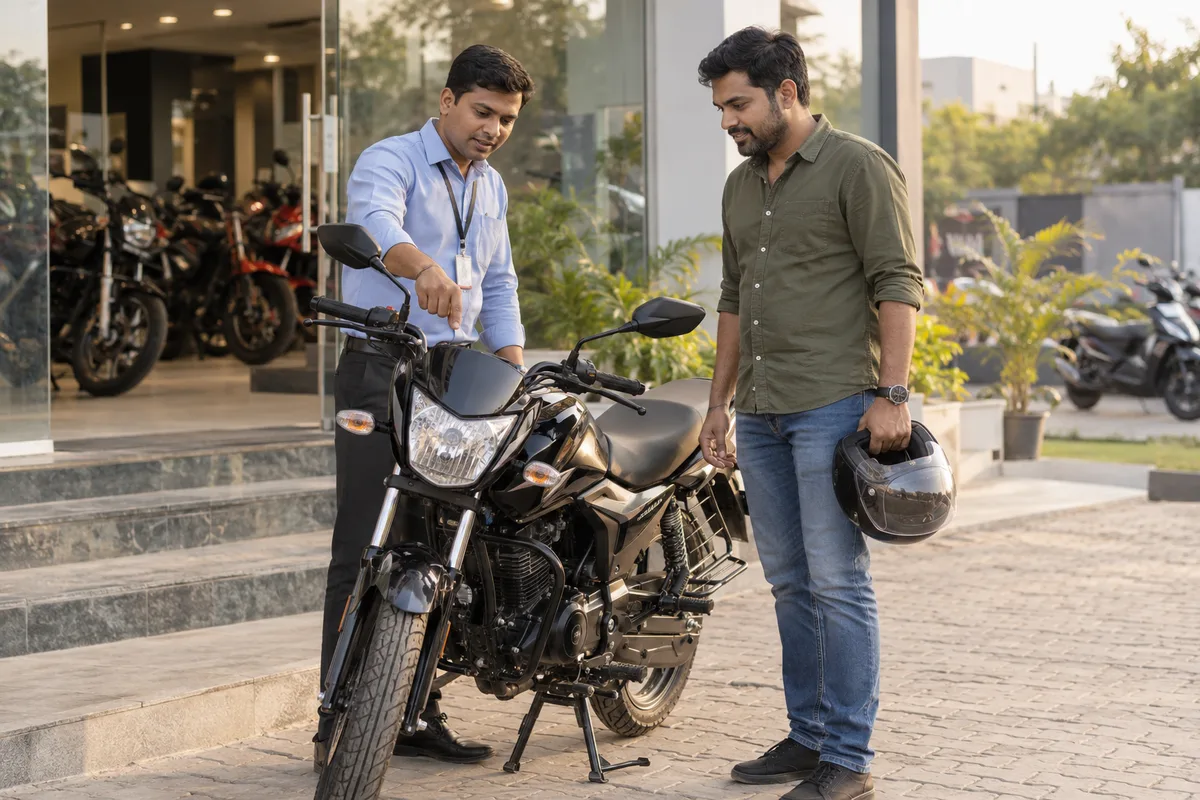
What local SEO means
Local SEO is the work of making your business show up for searches that name your town or locality, such as a service plus an area name. GullySales sets up locality pages, local citations and map listings so nearby customers find you before a competitor across town.
Also for two-wheeler dealers
- SEO for two-wheeler dealers
- Websites for two-wheeler dealers
- Pay per click advertising for two-wheeler dealers
- Social media marketing for two-wheeler dealers
- WhatsApp marketing for two-wheeler dealers
- Reputation management for two-wheeler dealers
- Lead generation for two-wheeler dealers
- Follow-up systems for two-wheeler dealers
Sales and marketing for two-wheeler dealers, the overview.
Last updated 6 Oct 2026.
For two-wheeler dealers
Where it usually goes wrong, and what we would do.
“The service bay and the showroom keep different hours”
A rider looking for service finds the sales counter's hours, or the reverse. The profile needs the right hours, phone and services for each, and Google's current guidelines decide whether they are one listing or two.
“The brand's dealer locator lists you with an old number”
The manufacturer's site lists every dealer, and the details were entered when you were appointed. A wrong phone number there sends the enquiry to the next town or nowhere.
“Buyers in smaller towns search in the local language”
A rider in a taluk town types the showroom name in Kannada, Telugu or Hindi, and listings in English alone are missed. Add the name in the local script as it appears on the signboard.
What we do
What we deliver for two-wheeler dealers.
Every deliverable, what it covers for you, and the result it is there to produce. Nothing here is an extra.
A verified profile for the showroom
The name, address, phone and category set up as on the signboard, with the website and the model pages linked.
Result: The profile is complete and checked against everything else about the showroom.
Sales and service hours and phones kept apart where they differ
Separate hours and numbers shown for the sales counter and the service bay, set up in the way Google's current guidelines allow.
Result: A rider with a puncture and a rider ready to buy each reach the right desk.
The manufacturer's dealer locator corrected
Your name, address and phone checked on the brand's locator and on the listing sites, so they all match the profile.
Result: The enquiry that starts at the brand's site arrives at your showroom.
Photographs of the floor, the service bay and the delivery area
Fresh pictures of the frontage, the bikes on display, the service bay and the corner where keys are handed over.
Result: A rider sees a real showroom before coming in.
A local-script name and description
The name as on the board in the local script, with a description written in the language people in the town use.
Result: A buyer who searches in their own language still finds you.
Calls, directions and reviews counted against the baseline
Calls, direction requests and reviews from the profile recorded before work starts and compared after.
Result: You see whether the map sends riders to the door.
How the result is measured
- Map pack ranking
- Local search visibility
- Enquiries by locality
Recorded as a baseline before work starts, so every later report has an honest comparison.
What Google weighs here
How a rider nearby finds a two-wheeler showroom, and what to fix first.
- Motorcycle dealer or scooter dealer as the category
- Choose the category that matches what you sell, and add Motorcycle repair shop only if the service bay takes walk-ins. Do not add categories for brands you do not hold.
- Models and services in the list
- List each model and the services: test ride, exchange, finance help, accessories and service booking. Say what the visit involves. Keep prices and offers out of the description.
- A pin on the showroom door
- Highway and town-edge showrooms often sit on the wrong side of the road or at the wrong crossing. Move the pin to the door, and name a landmark such as a petrol bunk or a bus stand.
- The brand's dealer locator and the listing sites
- Match the name, address and phone to the manufacturer's dealer locator, Justdial and the bike portals' dealer pages. One different number on one of them splits the calls.
- Hours for sales and for service
- State both sets of hours and the day the showroom is shut. Set special hours for festival days, when the showroom opens early. A rider at a closed shutter does not come back.
- Reviews from the delivery and from the service bay
- Ask at the key handover and at the service counter, and reply to each. Do not offer an accessory or a discount in return, and check the platform's current rules.
Who it is for
This is written for these two-wheeler dealers.
- Single-brand two-wheeler dealerships
- Multi-brand two-wheeler showrooms
- Scooter-focused dealerships
- Dealers with a large service business
- Rural and semi-urban dealerships
- Dealers with multiple branches
Not for
It is not the right fit if.
- Your showroom listing is claimed by someone who has left, and you cannot yet get into it to correct the timings.
- Several branches share one phone number, so the map would send a rider to the wrong counter.
How it works
How the local SEO work runs
The work itself, in order. How an engagement starts, from your brief to a written scope, is set out on our method page.
- 1
Write down what is true
Each branch's real address, signboard name, phone, hours and owning Google account go into one record you sign off. Every later listing is copied from it.
- 2
Search as your buyer does
We search each branch on a phone from points around it, in your buyers' words, and note who appears with what reviews and photos.
- 3
Fix the profile first
Ownership first, then name, address, pin, phone, hours and business type. Google can suspend a profile with extra words in its name or an address that is not a real premises.
- 4
Build the branch pages and match the listings
Each real branch gets its own page, and the other listings are changed to agree with it. We write none for towns without a branch, because Google treats near-identical pages as doorway pages.
- 5
Ask, reply and measure
We agree with each branch who asks for reviews, when and how. Results are set against the baseline recorded before work began, and the branch that is behind gets the next round.
Where this fits
Three pieces of sales work, in this order.
This work sits inside sales process design, at stage 1, prospecting and lead generation. The audit comes before it, and sales management keeps it running.
Step 1
Sales audit
Find where deals are being lost and what to fix first.
Start here if you cannot say where orders are lost.
Step 2 · you are here
Sales process design
One written way to sell, from first enquiry to repeat order.
Start here if every salesperson sells differently.
Step 3
Sales management
A target, a review routine and someone who owns the number.
Start here if the team has targets and no routine.
FAQ
Questions owners ask before they call.
Not here? More answers, or ask on WhatsApp.
Can we list the showroom and the service centre separately?
Should the profile carry the brand's name?
We have a main showroom and some smaller outlets. Which get profiles?
Another dealer of our brand shows above us on the map. Why?
How much does it cost?
How long is the contract?
How soon will we see results?
Who will actually do the work?
What do you need from us?
What if we are not happy with the work?
From the blog
Further reading for two-wheeler dealers.
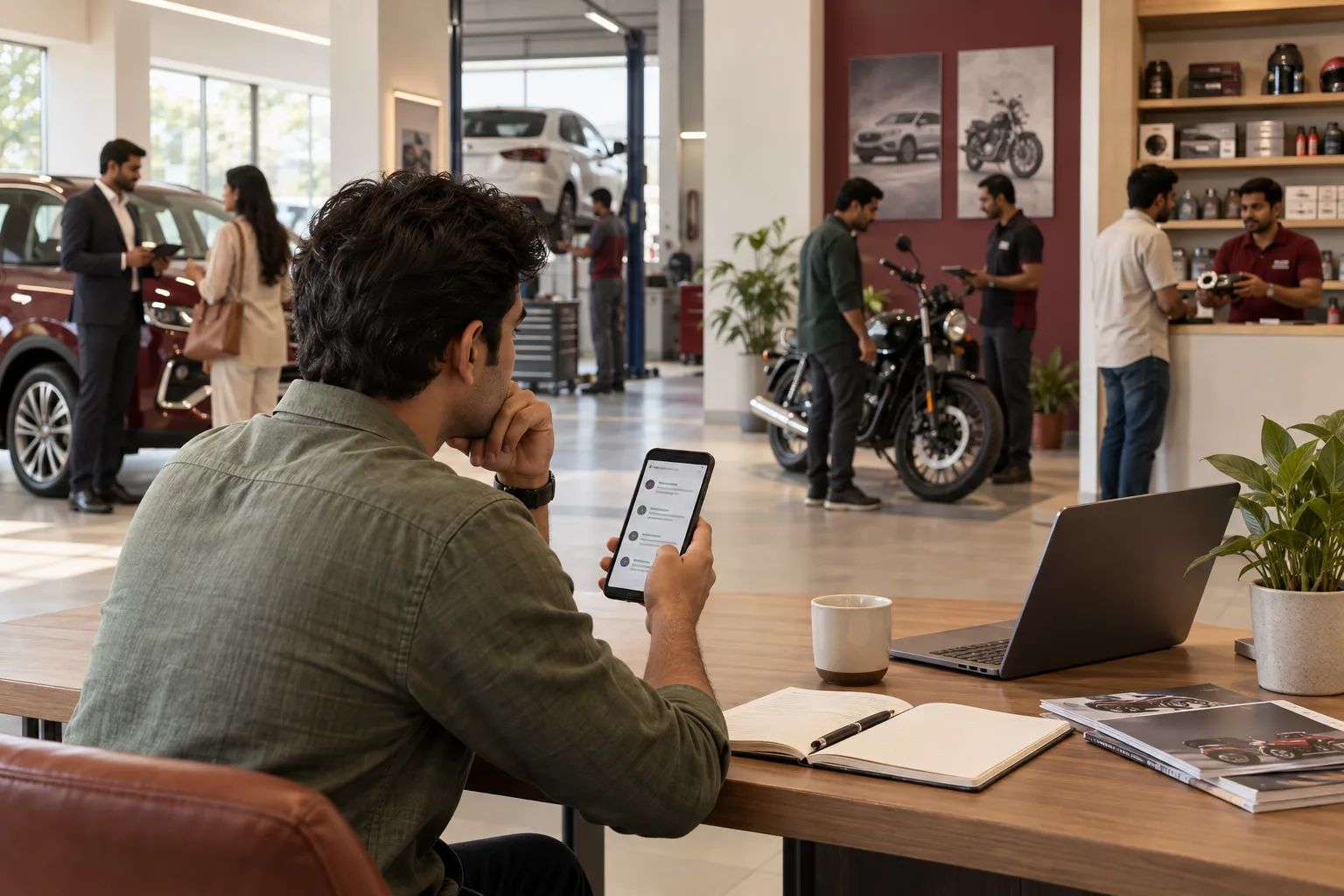 6 min read · 6 Oct 2026How buyers choose a showroom, workshop or parts counterCar, bike, repair and parts buyers send one enquiry to several sellers and pick the first clear answer. This post lists what each buyer checks, and where a dealer or workshop quietly loses them.
 5 min read · 6 Oct 2026How two-wheeler dealers follow up a showroom walk-inA visitor who says he will come back with his father usually buys from whoever calls him first. Here is how to take his details properly and follow up without nagging.
 6 min read · 5 Oct 2026Handling price negotiation in a vehicle showroomA give-and-get ladder for showroom price talks: what each salesperson may concede, in what order, and what to ask for in return, so buyers are treated alike and margin is kept.
More for two-wheeler dealers
Everything else we would do for you.
Closest to this: search and visibility
Also for two-wheeler dealers
Or start from the overview: sales and marketing for two-wheeler dealers.
Your next practical step
Tell us what you are trying to grow, and we will read it before we call.
Eight short steps, mostly taps. Skip anything you would rather answer on the call.