Two-wheeler dealers · Buyer persona
Know the different people who buy bikes from you, because each decides in a different way.
A buyer persona for a two-wheeler dealer is a written description of one type of buyer: what they want, who influences them and what stops them signing. GullySales builds these from your own sales records and staff conversations, then uses them to shape what is said, shown and sent.
Scope, fee, reporting and term are agreed in writing after we have read your brief and spoken to you.
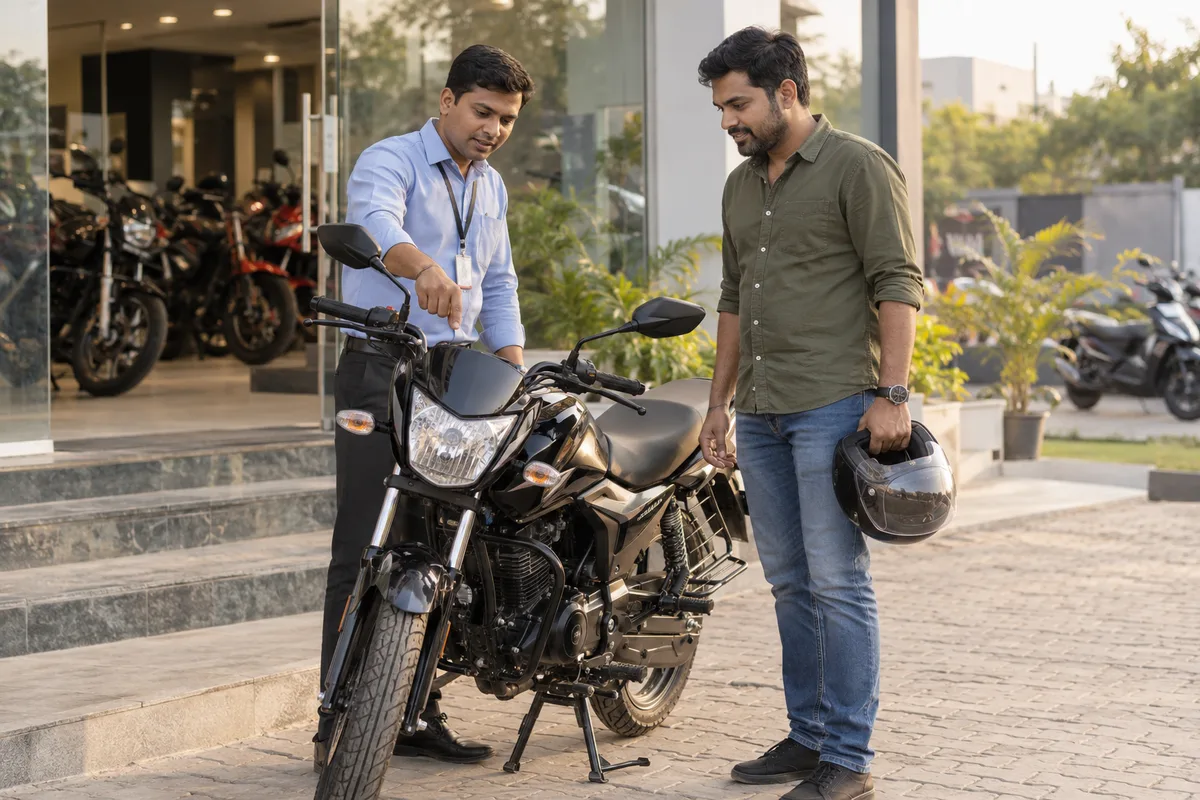
What buyer persona means
A buyer persona is a plain description of the kind of customer who actually buys from you. It includes what they search, what worries them and who else they ask before deciding. GullySales builds this from real enquiries and past sales rather than a generic template, then uses it to write every page and advert.
Also for two-wheeler dealers
- Digital marketing for two-wheeler dealers
- SEO for two-wheeler dealers
- Local SEO for two-wheeler dealers
- Pay per click advertising for two-wheeler dealers
- Social media marketing for two-wheeler dealers
- WhatsApp marketing for two-wheeler dealers
- Reputation management for two-wheeler dealers
- Lead generation for two-wheeler dealers
Sales and marketing for two-wheeler dealers, the overview.
Last updated 6 Oct 2026.
For two-wheeler dealers
Where it usually goes wrong, and what we would do.
“The first-bike buyer brings a parent”
A young buyer picks the model and the parent judges the dealer, the instalment and the safety. The salesperson who talks only to the rider loses the person holding the cheque, and the one who ignores the rider loses the rest.
“The commuter cares about running cost, not looks”
A daily rider to a workplace asks about fuel, service interval and spares. A showroom pitch built on styling answers a question that buyer did not ask. The service interval, spares cost and the distance to the workshop weigh more with this buyer than colour or styling does.
“The upgrade buyer is already in your service bay”
A customer on a five-year-old bike knows the product, trusts the workshop and may be waiting to be asked. This persona behaves nothing like the walk-in and is seldom written down. Because the contact and bike age are already in the job card, the approach can be specific rather than a cold call.
“The scooter buyer is a household decision”
A scooter may be bought for a family member who will ride it, with another person paying. The conversation covers ease of handling, seat height and storage, and the decision sits with more than one person.
What we do
What we deliver for two-wheeler dealers.
Every deliverable, what it covers for you, and the result it is there to produce. Nothing here is an extra.
Persona sheets for your main buyer types
A one-page description of each type, with the questions they ask, who joins the visit and what makes them hesitate, drawn from your own enquiries.
Result: The sales team can read a page on each buyer type and recognise the customer.
Interviews with your sales and service staff
Structured conversations that capture what the team has learned from years of handling walk-ins and service customers.
Result: The knowledge in staff heads is now written down.
A review of your past enquiries
A look through the enquiry and sale records you allow us to see, to find which buyer types actually bought and which model they chose.
Result: The owner sees which buyer types appear in the records.
Talk tracks for each persona
Short guides for the first conversation, the test ride and the finance discussion, written for each buyer type.
Result: A new salesperson has a starting script for each kind of visitor.
Message variants for each persona
Different follow-up wording for a parent, a commuter and an upgrader, ready to use on chat and call.
Result: Follow-up messages differ by buyer type rather than being one template.
How the result is measured
- Enquiry match to persona
- Conversion rate by persona
- Content aligned to persona
Recorded as a baseline before work starts, so every later report has an honest comparison.
Who is asking
The people who buy two-wheelers, and what each needs answered before the test ride.
- A first-bike buyer with a parent
- The parent asks about safety and service, the buyer about looks and speed. Both wait for finance, so the sales desk speaks to both.
- A commuter counting running cost
- They ask about mileage in town, the first service and parts cost, and compare two models on a single page.
- An owner ready to upgrade
- They are already in your service bay and ask about an exchange value and what their current bike will fetch.
- A household buying a scooter
- A woman or an older relative may ride, so they ask about weight, seat height and storage before they ask about price.
- A buyer from a nearby village
- They ask whether the dealer delivers, where the nearest service is and whether the paperwork is done at the showroom.
Who it is for
This is written for these two-wheeler dealers.
- Single-brand two-wheeler dealerships
- Multi-brand two-wheeler showrooms
- Scooter-focused dealerships
- Dealers with a large service business
- Rural and semi-urban dealerships
- Dealers with multiple branches
Not for
It is not the right fit if.
- You have only a few enquiries on record, so personas would describe the buyers you imagine and not those who came in.
- Your showroom sells a single model to a single kind of buyer, so more profiles would not change how you talk.
How it works
How the buyer persona work runs
The work itself, in order. How an engagement starts, from your brief to a written scope, is set out on our method page.
- 1
Understand the current view
We start with how your team currently describes the customer, since the gap between belief and reality is the finding itself.
- 2
Audit past enquiries and sales
We look at recent enquiries and closed deals to see who actually bought, not who was assumed to buy.
- 3
Interview customers and staff
Structured conversations with recent buyers, held as talk about the last purchase and not a questionnaire. We ask what happened before they called, who else was involved and what they compared. Customers agree before we contact them, and their answers are reported without names.
- 4
Build the personas
Findings are written into short, usable persona documents rather than a long report.
- 5
Apply to your marketing
We show where each persona should change a page, an ad or a script you already have. The sales team reads the drafts and says which ring true. A persona they do not recognise is rewritten.
Where this fits
Three pieces of sales work, in this order.
This work sits inside sales process design, at stage 0, foundation. The audit comes before it, and sales management keeps it running.
Step 1
Sales audit
Find where deals are being lost and what to fix first.
Start here if you cannot say where orders are lost.
Step 2 · you are here
Sales process design
One written way to sell, from first enquiry to repeat order.
Start here if every salesperson sells differently.
Step 3
Sales management
A target, a review routine and someone who owns the number.
Start here if the team has targets and no routine.
FAQ
Questions owners ask before they call.
Not here? More answers, or ask on WhatsApp.
How do you build a persona without invented data?
How big a set of personas does a dealership need?
Do personas change what we advertise?
How do we build a persona without invented data?
How much does it cost?
How long is the contract?
How soon will we see results?
Who will actually do the work?
What do you need from us?
What if we are not happy with the work?
From the blog
Further reading for two-wheeler dealers.
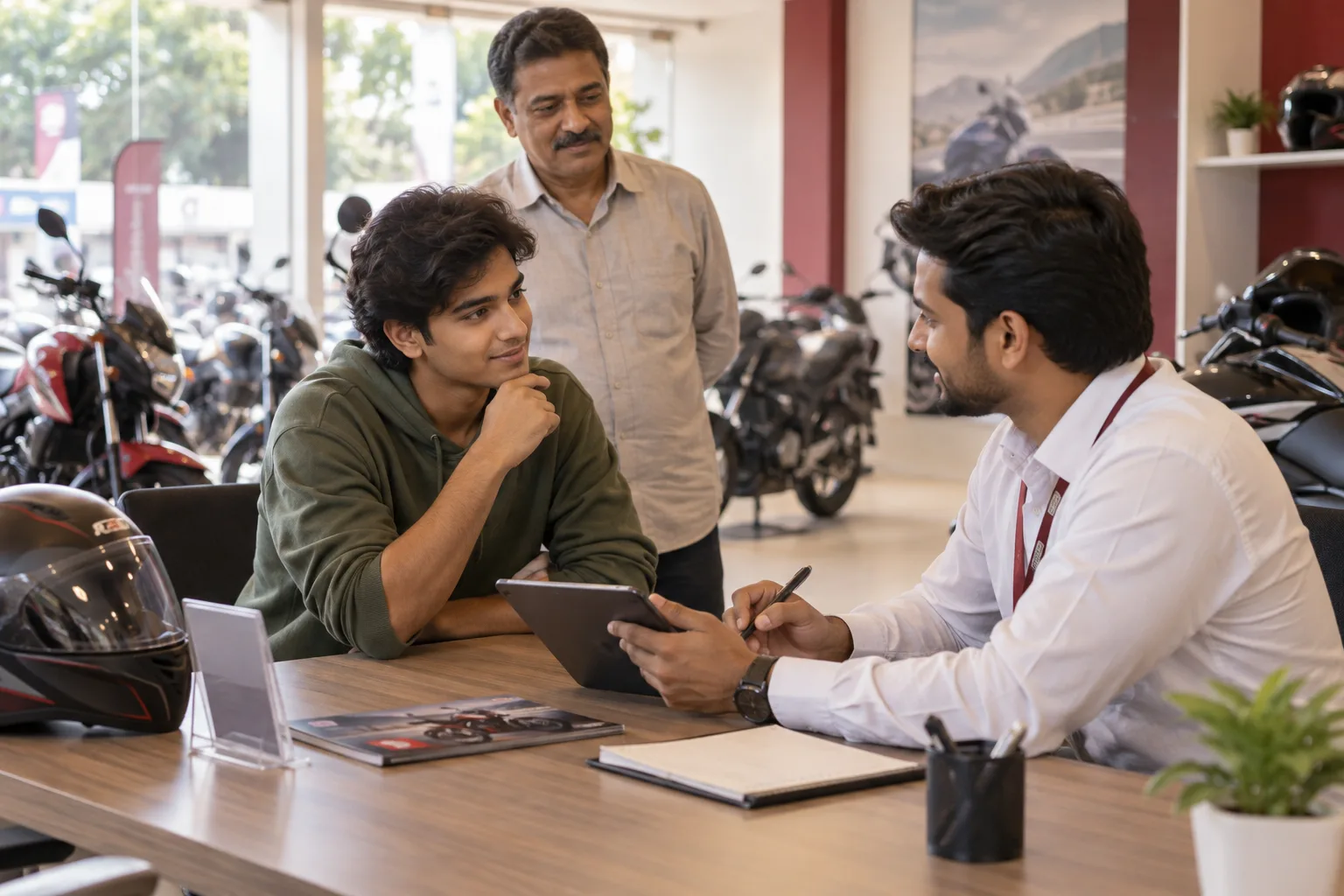 5 min read · 6 Oct 2026How two-wheeler dealers follow up a showroom walk-inA visitor who says he will come back with his father usually buys from whoever calls him first. Here is how to take his details properly and follow up without nagging.
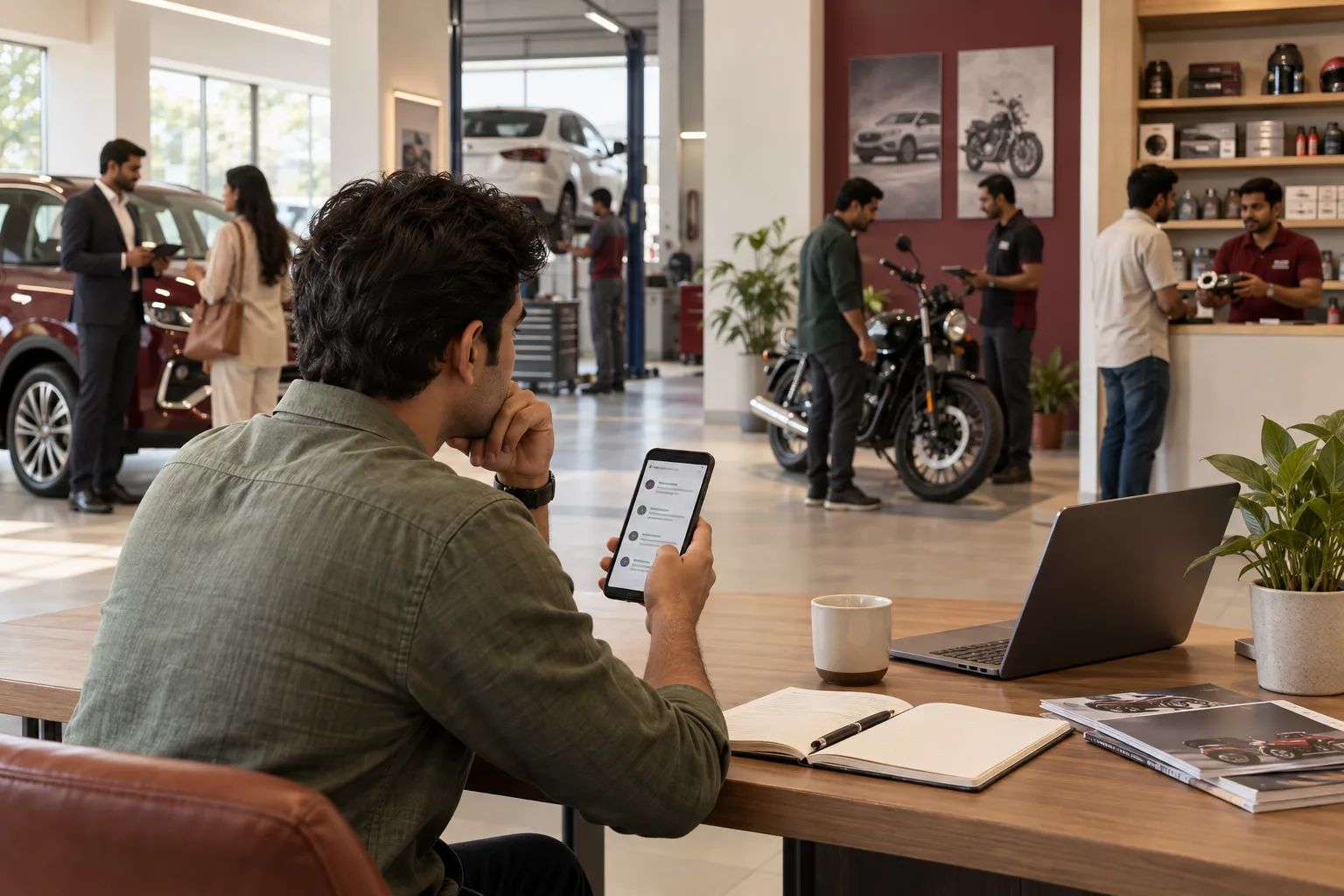 6 min read · 6 Oct 2026How buyers choose a showroom, workshop or parts counterCar, bike, repair and parts buyers send one enquiry to several sellers and pick the first clear answer. This post lists what each buyer checks, and where a dealer or workshop quietly loses them.
 6 min read · 5 Oct 2026Handling price negotiation in a vehicle showroomA give-and-get ladder for showroom price talks: what each salesperson may concede, in what order, and what to ask for in return, so buyers are treated alike and margin is kept.
More for two-wheeler dealers
Everything else we would do for you.
Closest to this: strategy and research
Also for two-wheeler dealers
Or start from the overview: sales and marketing for two-wheeler dealers.
Your next practical step
Tell us what you are trying to grow, and we will read it before we call.
Eight short steps, mostly taps. Skip anything you would rather answer on the call.