Two-wheeler dealers · Customer retention
Make the service bay the first place your owners think of for their next bike.
Retention in a two-wheeler dealership is the owner who keeps coming for service and, in time, buys the next bike and the family's second one from you. Most dealers keep the job cards and never read them for this. GullySales turns the service register into a list of owners due for a change, with the insurance renewals and the families behind them.
Scope, fee, reporting and term are agreed in writing after we have read your brief and spoken to you.
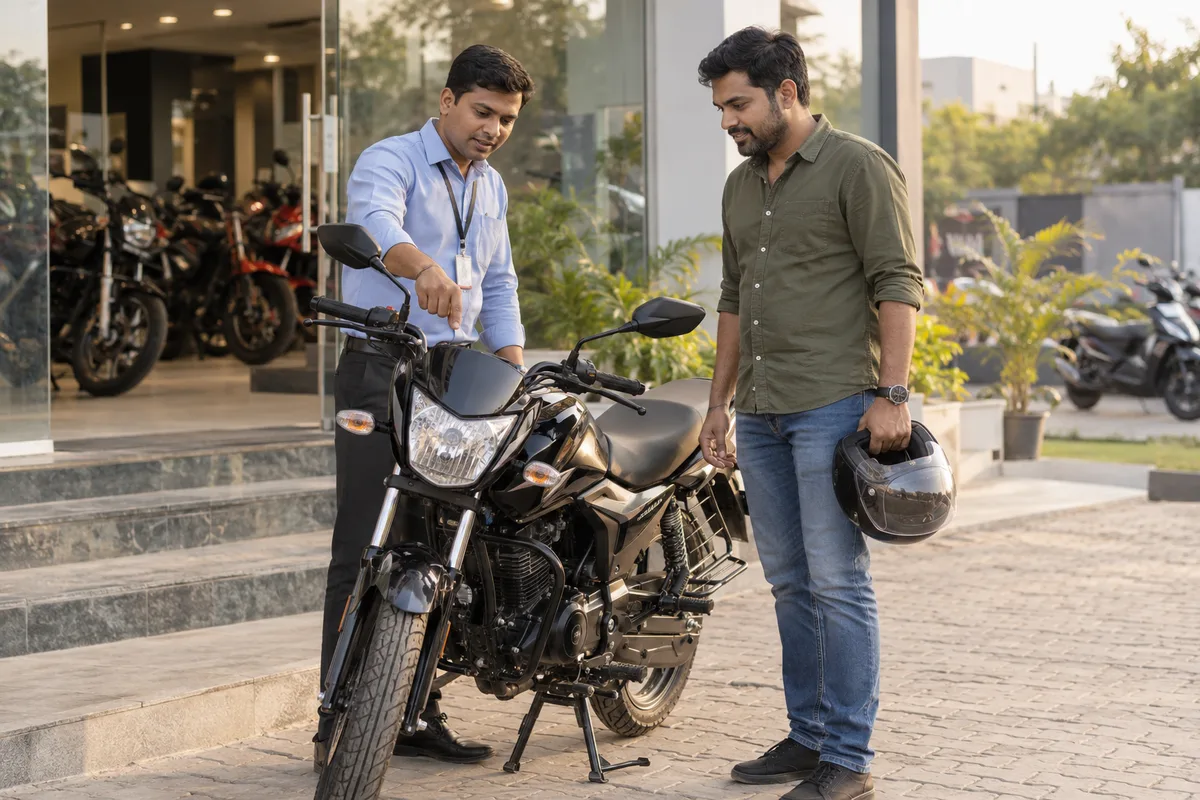
What customer retention means
Customer retention is keeping an existing customer buying again rather than losing them to a competitor after the first purchase, usually cheaper than winning a new customer. GullySales sets a routine of check-ins and renewal reminders aimed at customers before they show signs of leaving.
Also for two-wheeler dealers
- SEO for two-wheeler dealers
- Local SEO for two-wheeler dealers
- Pay per click advertising for two-wheeler dealers
- Social media marketing for two-wheeler dealers
- WhatsApp marketing for two-wheeler dealers
- Reputation management for two-wheeler dealers
- Lead generation for two-wheeler dealers
- Follow-up systems for two-wheeler dealers
Sales and marketing for two-wheeler dealers, the overview.
Last updated 6 Oct 2026.
For two-wheeler dealers
Where it usually goes wrong, and what we would do.
“The service register is the best sales list in the building”
Every owner's name, number, model and last visit are already written there. It tells you who rides an old scooter and who has stopped coming.
“Insurance renewal is the call left to the insurer”
The renewal date follows from your own invoice, and the policy lapses on it. A dealer who rings before that date stays in touch with the owner, and one who does not hears nothing.
“A stamp card does not hold a rider who buys one bike in many years”
What holds an owner is a call at the right moment, from a showroom that knows which bike the owner rides and for how long.
What we do
What we deliver for two-wheeler dealers.
Every deliverable, what it covers for you, and the result it is there to produce. Nothing here is an extra.
A list of owners due for a change, taken from the service register
Every owner with the model, the invoice date and the last service visit, sorted so the oldest bikes and the closed loans come first.
Result: The people most likely to buy again are on one list.
An insurance renewal call list built from the invoices
Policies due to lapse, worked out from the invoice date, with a call before the date and a note of who has renewed elsewhere.
Result: The owner hears from you before the policy lapses.
A call scripted around the bike the owner rides
What the advisor or executive says when an owner comes up on the list, naming the model, the age of the bike and the reason for the call.
Result: The owner hears a showroom that knows the bike.
Families linked in the register
Records joined by phone number or address, so the owner of one bike, a spouse's scooter and a son's first bike show up together.
Result: One conversation can open three sales.
A lapsed-owner list and the note written for it
Owners who serviced with you earlier and have stopped, separated out, with a short message that asks why and does not push.
Result: You learn who drifted to a garage, and why.
Repeat buyers counted against the baseline
The share of deliveries from existing owners and service customers, set against the figure recorded before the work started.
Result: Retention becomes a number you can read.
How the result is measured
- Retention rate
- Repeat purchase rate
- Customers won back
Recorded as a baseline before work starts, so every later report has an honest comparison.
Work it out from your records
Your invoice file and job cards give you the service list, the lapsed list and the upgrade list.
- Owners due for an upgrade
- List owners by model and the date of the invoice. Mark those with the oldest bikes in the register and those whose finance has ended. They are the first to ring about an exchange.
- Service visits kept and missed
- For each bike, note the service due date on the job card and whether the owner came. List those past the date, then count how many of the reminded owners booked.
- Insurance renewals due
- Take the invoice date and the policy period, and list policies about to lapse. Ring before the date. Ask whether the owner has already renewed elsewhere, and note the answer.
- Finance closing
- Ask the financier, or note on the invoice file, when a loan closes. An owner who has just paid the last instalment is thinking of the next bike, so mark the record.
- Families behind one bike
- Link records by phone number or address. Where the father has a bike, mark whether the wife or the son has a record. Each linked name is a possible sale.
- Owners who stopped servicing
- List those serviced with you before and not now. Ring and ask why. Write the reason in the owner's words: price, distance, a bad visit or a move to another town.
Who it is for
This is written for these two-wheeler dealers.
- Single-brand two-wheeler dealerships
- Multi-brand two-wheeler showrooms
- Scooter-focused dealerships
- Dealers with a large service business
- Rural and semi-urban dealerships
- Dealers with multiple branches
Not for
It is not the right fit if.
- The service bay runs behind and owners already wait for hours, so reminding them would add to the queue.
- Your billing system does not hold the owner's bike and last service date, so there is no list to send reminders from.
How it works
How the customer retention work runs
The work itself, in order. How an engagement starts, from your brief to a written scope, is set out on our method page.
- 1
Read the records
Your sales and billing records are read for repeat purchase, the normal gap between orders and the customers who have gone quiet. The record-keeping gaps found here are listed.
- 2
Ask why they stopped
A small set of lapsed and current customers is called with your team's consent, and asked plainly what changed. The reasons are sorted into price, service, competitor and circumstance.
- 3
Build the strategy
The written plan sets priority groups, touchpoints, offers, owners, consent rules and a target.
- 4
Align existing tactics
Each retention activity you already run is mapped against the plan, then kept, changed or dropped.
- 5
Start with one group
The plan goes live for the most valuable at-risk group first, with a held-back comparison group, before it widens.
- 6
Review against the baseline
Retention is compared with the baseline recorded before work began. How often you are reported to is agreed in writing.
Where this fits
Three pieces of sales work, in this order.
This work sits inside sales process design, at stage 7, after the sale. The audit comes before it, and sales management keeps it running.
Step 1
Sales audit
Find where deals are being lost and what to fix first.
Start here if you cannot say where orders are lost.
Step 2 · you are here
Sales process design
One written way to sell, from first enquiry to repeat order.
Start here if every salesperson sells differently.
Step 3
Sales management
A target, a review routine and someone who owns the number.
Start here if the team has targets and no routine.
FAQ
Questions owners ask before they call.
Not here? More answers, or ask on WhatsApp.
When do we count a service customer as lapsed?
How do we win back a customer who now services at a roadside garage?
Who should make the retention calls?
Is a referral reward for owners worth running?
How much does it cost?
How long is the contract?
How soon will we see results?
Who will actually do the work?
What do you need from us?
What if we are not happy with the work?
From the blog
Further reading for two-wheeler dealers.
 5 min read · 6 Oct 2026How two-wheeler dealers follow up a showroom walk-inA visitor who says he will come back with his father usually buys from whoever calls him first. Here is how to take his details properly and follow up without nagging.
 6 min read · 6 Oct 2026How buyers choose a showroom, workshop or parts counterCar, bike, repair and parts buyers send one enquiry to several sellers and pick the first clear answer. This post lists what each buyer checks, and where a dealer or workshop quietly loses them.
 6 min read · 5 Oct 2026Handling price negotiation in a vehicle showroomA give-and-get ladder for showroom price talks: what each salesperson may concede, in what order, and what to ask for in return, so buyers are treated alike and margin is kept.
More for two-wheeler dealers
Everything else we would do for you.
Or start from the overview: sales and marketing for two-wheeler dealers.
Your next practical step
Tell us what you are trying to grow, and we will read it before we call.
Eight short steps, mostly taps. Skip anything you would rather answer on the call.