Auto parts and accessories dealers · Lead generation
Answer the part photo before the mechanic sends it to the next counter.
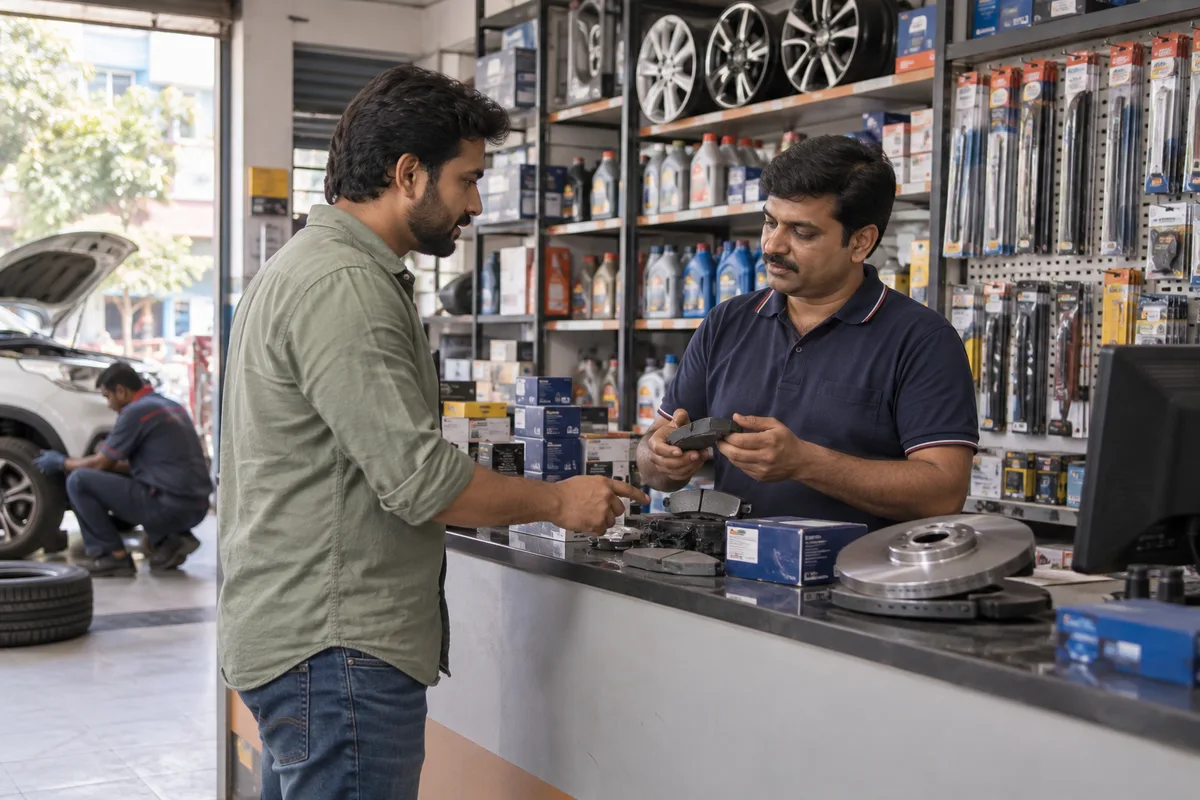
For a parts dealer the enquiry is a photograph on WhatsApp and the answer is a race. GullySales names who holds the parts phone each shift, sets the questions asked before a price is quoted, and builds the visit plan for garages that do not buy from you yet.
Scope, fee, reporting and term are agreed in writing after we have read your brief and spoken to you.
What lead generation means
Lead generation is the combined work of every channel that brings in a new enquiry, whether from search, adverts, referrals or a stall at an exhibition. GullySales runs these channels together and reports the number of enquiries each one produced, not the activity behind it.
Also for auto parts and accessories dealers
- SEO for auto parts and accessories dealers
- PPC ads for auto parts and accessories dealers
- Digital marketing for auto parts and accessories dealers
- Reputation management for auto parts and accessories dealers
- Branding and identity for auto parts and accessories dealers
- Social media marketing for auto parts and accessories dealers
- Content marketing for auto parts and accessories dealers
- Email marketing for auto parts and accessories dealers
Sales and marketing for auto parts and accessories dealers, the overview.
Last updated 5 Oct 2026.
For auto parts and accessories dealers
Where it usually goes wrong, and what we would do.
“The order goes to whoever replies in two minutes”
The mechanic is standing under a lifted car with three chats open. Second place is worth nothing here.
“A photograph of a worn part is not a part number”
Model, year and variant have to be asked before a price is quoted, or the wrong box goes out and the garage tries somebody else next time.
“Silence on an out-of-stock part loses the whole account”
Say when it can be there, or offer the brand you do hold. No reply reads as no interest.
What we do
What we deliver for auto parts and accessories dealers.
Every deliverable, what it covers for you, and the result it is there to produce. Nothing here is an extra.
A named person on the parts phone in every shift
Who answers between opening and lunch, and who takes it after, written on the board, so the phone is never everybody's job and nobody's.
Result: Messages stop sitting unread during the busy hour.
Three questions asked before any price goes out
Model, year and variant, with the chassis number asked for the parts where it matters, written as a saved reply the counter can send in one tap.
Result: Fewer wrong parts come back and fewer garages drift away.
A written reply for the part you do not have
A saved message giving the arrival time, the alternative brand you stock and the price for each, instead of the silence most counters give.
Result: The garage waits for you instead of calling around.
A street-by-street plan for garages you do not supply
A list of workshops inside your delivery radius, the route to cover them, what to leave behind and when to call after the first order.
Result: New accounts open in a pattern rather than by luck.
A fleet proposal for cab and transport operators
A written offer covering tyre and battery rates, monthly billing with GST invoices, on-site checks and the person they call, aimed at operators nearby.
Result: Larger repeat orders land on a schedule.
An enquiry register with reply times in it
Every call and message noted with the source, the part asked for, what was quoted and how long the reply took, reviewed together afterwards.
Result: You can see the orders lost to a slow phone.
How the result is measured
- Enquiries generated
- Cost per enquiry
- Enquiries by source
Recorded as a baseline before work starts, so every later report has an honest comparison.
Where enquiries come from
The places a parts or tyre enquiry reaches a dealer, and what to record at each.
- A garage mechanic's phone call
- Record the garage, the vehicle model, year and the part asked for. Answer with availability and the price for that garage, and note whether the part was bought.
- A WhatsApp message with a photo of the part
- Ask for the registration or chassis number and write the part number found in the record. Reply with brand options so the mechanic can choose in one message.
- A walk-in customer at the counter
- Write the vehicle, the part and the phone number on the enquiry sheet even if they buy at once. A tyre buyer is a future alignment and battery customer.
- A call from the Google Maps listing
- Ask the tyre size or the part and write 'Maps' in the source column. Check that the listing shows your correct hours and the brands you stock.
- An IndiaMART or other directory enquiry
- Reply with stock and price and record the directory name. Note whether the buyer is a trade customer who may place a regular order.
- A fleet or taxi operator's order
- Record the vehicle count, parts used regularly and their payment terms. Agree a price list for repeat parts and note who at the fleet places the order.
Who it is for
This is written for these auto parts and accessories dealers.
- Multi-brand spare parts dealers serving garages
- Authorised parts distributors for a vehicle manufacturer
- Two-wheeler spare parts shops
- Tyre dealers and tyre showrooms for major brands
- Tyre, alignment and wheel care centres
- Car accessories and fitment shops
- Commercial vehicle parts and tyre suppliers
- Battery, lubricant and filter dealers
- Online-first auto parts sellers
How it works
From your first message to the first report.
No open-ended retainer. Every step gives you something in writing.
First
Your brief
You tell us what you need in a few short steps: your business, what you want, where enquiries come from and how they are handled.
After the brief
A conversation and a written scope
We read it, then talk with whoever handles your enquiries. If you want our help, the scope, the fee and the reporting come in writing, and nothing starts before you have read them.
Before work starts
Baseline recorded
The numbers this work is meant to move, such as enquiries, quotations, orders, visits or renewals, written down so every later report has an honest comparison.
After the baseline
The first fix goes live
The fix we agreed to start with is put in place and measured against the baseline, whether that is a reply, a follow-up, a page, a listing or the handover between marketing and sales.
As agreed
Report against the baseline
What moved, what did not, and what changes next, in plain words. How often you get it is set in writing before work starts.
At renewal
Renew on the numbers
The term ends and you decide whether to continue from the results. The length is agreed in writing before anything starts.
How the lead generation work runs
- 1
Understand your capacity
We agree how many enquiries your sales team can actually handle well, so the system is not built to overwhelm it.
- 2
Audit current sources
We check what already brings in enquiries today, even informally, before adding anything new.
- 3
Strategise the channel mix
Content, search and paid channels are chosen based on where your buyers already look.
- 4
Implement capture and follow-up
Pages, forms and a follow-up process are built and connected end to end.
- 5
Measure and optimise
We track enquiry volume and quality and adjust the channel mix to match.
Why us
Why owners pick GullySales over an agency.
Marketing and sales, as one job
Most agencies stop at the enquiry. We also fix what happens after it: the reply, the follow-up, the quote and the CRM.
The person on the first call does the work
No account managers in between. You are never handed to someone you have not met.
A baseline before anything starts
Your numbers are written down on day one, so every later report compares against something honest.
The fee in writing, split three ways
Our time, your media spend and production on separate lines. You always see what goes to us.
No guarantees we cannot keep
The term is agreed in writing and never a default twelve months. We never promise a ranking or a lead count, because nobody controls those.
One office, and we say so
Nagarbhavi, Bengaluru. We work across India by call and WhatsApp and travel when a session needs to be in person.
#257, 3rd floor, Sri Nanjundeshwara Complex, Nagarbhavi 8th Block, Outer Ring Road. How we work.
Your brief
Tell us what you need, and we will read it before we call.
Eight short steps about your business, what you want and who decides. Most questions are a tap, and you can skip any you would rather answer on the call.
FAQ
Questions owners ask before they call.
Not here? More answers, or ask on WhatsApp.
Our counter is busiest exactly when messages come in. What do we do?
Is it worth quoting to a garage that only ever checks prices?
How do we know which garages are worth a better rate?
Should the counter staff write down walk-in buyers who pay cash?
How long is the contract?
How soon will we see results?
Who will actually do the work?
What do you need from us?
What if we are not happy with the work?
From the blog
Further reading for auto parts and accessories dealers.
 6 min read · 6 Oct 2026How buyers choose a showroom, workshop or parts counterCar, bike, repair and parts buyers send one enquiry to several sellers and pick the first clear answer. This post lists what each buyer checks, and where a dealer or workshop quietly loses them.
 8 min read · 21 Sept 2026How to advertise to dealersA dealer is buying an investment, not a product. The advertisement has to answer margin, credit, stock rotation and territory, or the enquiries will all be from people with no shop.
More for auto parts and accessories dealers
Everything else we would do for you.
- SEO for auto parts and accessories dealers
- PPC ads for auto parts and accessories dealers
- Digital marketing for auto parts and accessories dealers
- Reputation management for auto parts and accessories dealers
- Branding and identity for auto parts and accessories dealers
- Social media marketing for auto parts and accessories dealers
Or start from the overview: sales and marketing for auto parts and accessories dealers.
Your next practical step
Tell us what you are trying to grow, and we will read it before we call.
Eight short steps, mostly taps. Skip anything you would rather answer on the call.