Hospitals · Sales metrics
Track admissions against enquiries by department, not total footfall.
Sales metrics for a hospital are the small set of numbers that show whether enquiries turn into admissions, by department and by source. Reply time and the ratio of OPD visits to admissions are two of them. GullySales sets these up once and reports them.
Scope, fee, reporting and term are agreed in writing after we have read your brief and spoken to you.

What sales metrics means
Sales metrics are the specific numbers, such as call volume, conversion rate and average deal size, that show whether a sales team is actually improving. GullySales reports these by enquiry outcome rather than activity, the same enquiry-based reporting used across every engagement.
Last updated 5 Oct 2026. Rules for this trade differ by state and professional body, and they change. We describe restrictions in general terms, so check the current position with your own council or adviser before you publish anything.
For hospitals
Where it usually goes wrong, and what we would do.
“Footfall is not the number that matters”
A hospital busy with OPD visits can still be losing money if few of those visits become admissions.
“Reply time predicts lost enquiries”
Tracking how long a call waits before a reply shows almost exactly where enquiries are lost to another hospital.
“TPA turnaround is felt but rarely tracked”
The time between requesting cashless approval and getting it decides whether an anxious family stays or looks elsewhere.
What we do
What we deliver for hospitals.
Every deliverable, what it covers for you, and the result it is there to produce. Nothing here is an extra.
An enquiry-to-admission ratio by department
A tracked ratio of enquiries against admissions for each department, showing the real drop-off footfall numbers hide.
Result: A busy-looking department that is actually losing patients gets noticed.
Reply time tracking
A record of how long a call waits before a reply, since this predicts almost exactly where enquiries go to another hospital.
Result: A slow reply gets fixed before it costs another admission.
TPA turnaround tracking
A record of the time between requesting cashless approval and receiving it, since this decides whether an anxious family waits or leaves.
Result: A slow approval process becomes visible instead of just felt.
A review with department heads
A recurring review of these numbers with the administrator and department heads, using the enquiry record rather than memory.
Result: Every department head sees their own real numbers instead of a combined total.
How the result is measured
- Conversion rate
- Average deal size
- Sales cycle length
Recorded as a baseline before work starts, so every later report has an honest comparison.
Numbers worth tracking
The numbers a hospital can work out from its call log, admission register and referral book.
- After-hours calls answered or returned
- From the phone system or call log, list calls received after the day desk closes and mark which were answered or called back. Missed night calls about emergencies or admissions are the first gap to close.
- Admissions by referring doctor or lab
- Add a referral field to the admission form and fill it from the patient or the referral slip. Count by doctor, clinic or diagnostic lab. A referrer who has gone quiet deserves a visit from the relations team.
- Surgery advised in OPD but admitted elsewhere
- From the OPD record, count patients advised a procedure and check how many were admitted here. With the consultant's agreement, call some to ask what held them back. Cost and insurance doubts usually surface first.
- Cost estimates given against admissions
- Log every written estimate given at the billing desk with the package and the insurer or TPA. Check which led to an admission. A package estimated often but rarely admitted needs its estimate explained better.
- Health check packages and later consultations
- Count preventive health check bookings by corporate tie-up, walk-in, website and camp, then check how many of those people later booked a specialist consultation. It shows which channel brings patients back.
Who it is for
This is written for these hospitals.
- Multi-speciality hospitals
- Single-speciality hospitals, maternity, orthopaedic or eye
- Nursing homes
- Day-care surgery centres
- Corporate hospital chains with several branches
- Diagnostic-centre-led hospitals
- Hospitals attached to medical colleges
- Government-empanelled private hospitals
Not for
It is not the right fit if.
- Enquiries are logged on paper and admissions in the hospital system, with no shared reference to match one to the other.
- You want the numbers to compare your hospital with a neighbour, when each hospital's mix of departments differs.
- No one will own the figures, so a dashboard would be built and then left unopened.
How it works
How the sales metrics work runs
The work itself, in order. How an engagement starts, from your brief to a written scope, is set out on our method page.
- 1
Review current metrics
We open the enquiry register, quotation file or CRM your figures come from and check how each person counts the same number. Different definitions of one word are the usual finding.
- 2
Pick the few that matter
We list the decisions you make in a review and keep only the metrics that inform one. A metric nobody acts on is dropped.
- 3
Write the definitions
Each metric gets a formula, inclusion rules, a source record and a named owner. You sign these off before anything is built.
- 4
Build the scorecard
A simple report is built from those records, with the definition printed beside each figure. We spot-check it against the source records.
- 5
Train the team
We run your first review with you on the scorecard, so the habit of reading it starts with real numbers.
Proof
What happened when owners fixed this.
Real clients, the work we did, and the result as it was recorded. Where no number was recorded, none is claimed.
Chord Road Hospital
- Situation
- Patients who knew the hospital trusted it. Patients who searched for a department or a treatment in the area did not find it.
- What we did
- Website rebuilt around patient needs
- Search visibility
- Social media on a schedule
- Review management
- Result
- Organic traffic increased 60% within six months
- Online appointment bookings increased 40%
- Social following grew 45%, and engagement on it rose 70%
Nanda Arthritis and Rheumatology Center
- Situation
- There was no website, so a patient looking for a rheumatologist had no way to learn about the centre. Enquiries were few, and the ones that arrived came by word of mouth.
- What we did
- A website for patients
- Search work
- Google Business and reviews
- Lead capture and advertising
- Result
- No numbers were recorded for this engagement. The work is described in full in the case study.
Also worked with
Curtain Label · Difesa Security Services · Felicity Inn · Hands On CSR · Implevista · Kambar Group · Kalessi · Kerur Pain Clinic · LL Trust · Lucky Deals · Natural Gases · NavaShakthi Souhardha · NewCom Logistics · Proton Technical Services · SB Engineering · Shakthi Foundation · Shakthi Group · Urbanest · Insyde Studio · Venkateshwara Laser Tech · Vivara Studios
Where this fits
Three pieces of sales work, in this order.
This work sits inside sales process design, at stage 1, prospecting and lead generation. The audit comes before it, and sales management keeps it running.
Step 1
Sales audit
Find where deals are being lost and what to fix first.
Start here if you cannot say where orders are lost.
Step 2 · you are here
Sales process design
One written way to sell, from first enquiry to repeat order.
Start here if every salesperson sells differently.
Step 3
Sales management
A target, a review routine and someone who owns the number.
Start here if the team has targets and no routine.
FAQ
Questions owners ask before they call.
Not here? More answers, or ask on WhatsApp.
Our OPD is full, so why are admissions down?
How often should metrics be reviewed?
Our admissions are in the hospital system but enquiries are on paper. Can the two be matched?
Our numbers swing with the fever season and festival holidays. How do we read a quiet period?
How much does it cost?
How long is the contract?
How soon will we see results?
Who will actually do the work?
What do you need from us?
What if we are not happy with the work?
From the blog
Further reading for hospitals.
 6 min read · 6 Oct 2026What healthcare buyers check before they choose youA patient, a referring doctor and a hospital purchase team each check something different before choosing a provider. This post lists what each one looks at and where a clinic, lab or supplier loses them.
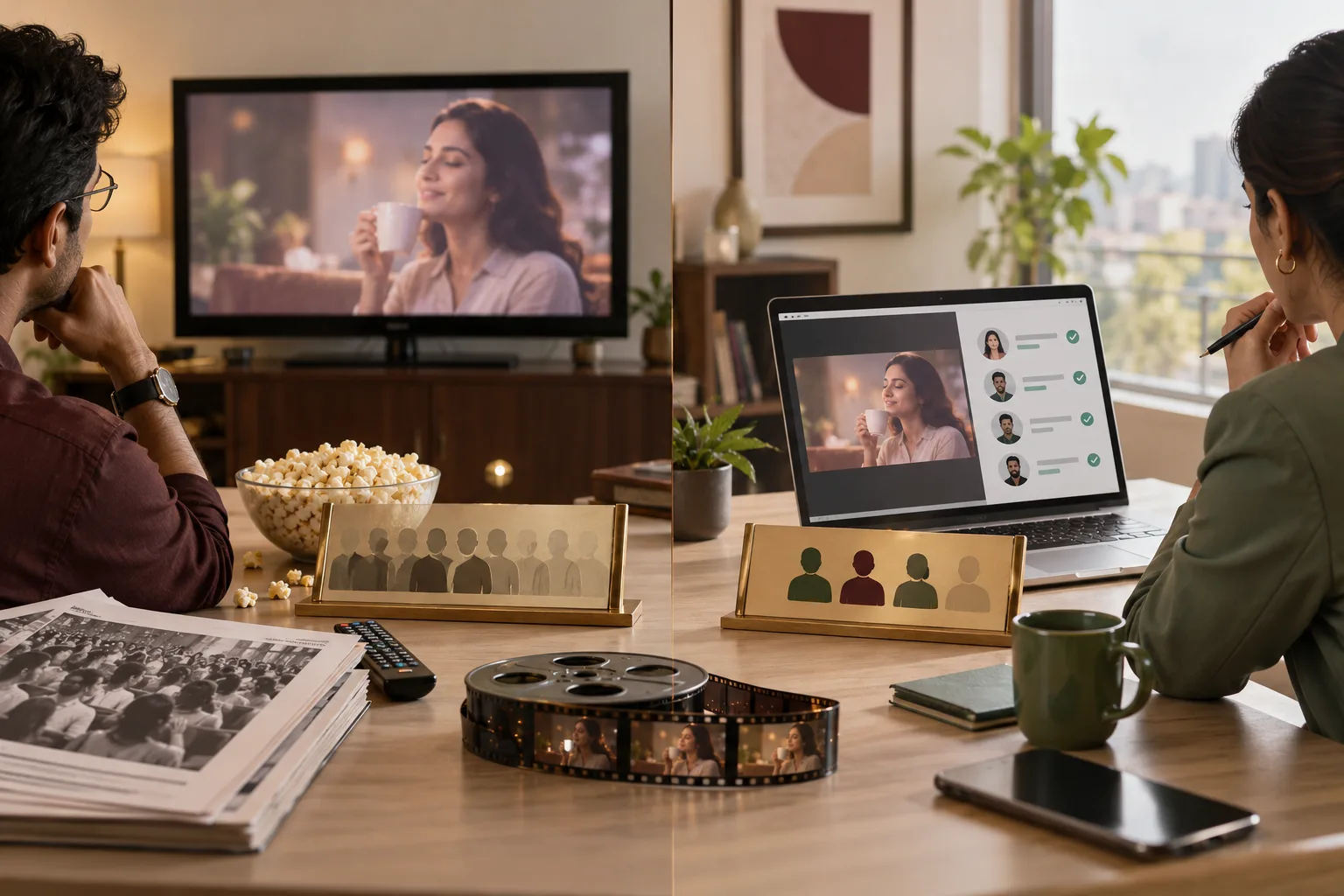 6 min read · 21 Sept 2026TV advertising vs OTT advertising: what are you actually buying?Television sells slots against ratings and prices the wastage in. OTT sells impressions to chosen people and charges for the choosing. Same film, two shops.
 8 min read · 21 Sept 2026Tamil advertising creative: what actually changesTamil is written one way and spoken another, and its script cannot tell b from p. What that means for your line, voice artist and brand spelling.
More for hospitals
Everything else we would do for you.
Closest to this: sales craft
Also for hospitals
Or start from the overview: sales and marketing for hospitals.
Your next practical step
Tell us what you are trying to grow, and we will read it before we call.
Eight short steps, mostly taps. Skip anything you would rather answer on the call.