Hospitals · Sales strategy
Decide how each department converts an enquiry before training anyone on it.
A sales strategy for a hospital sets out, department by department, how an enquiry should be handled and who owns the TPA relationship, before any training or script is written. GullySales builds this with the administrator and department heads.
Scope, fee, reporting and term are agreed in writing after we have read your brief and spoken to you.

What sales strategy means
Sales strategy is deciding which customers to chase, through which channel and at what price, instead of every salesperson working their own way. GullySales sets this plan against your actual pipeline and the deals you have won and lost so far.
Last updated 5 Oct 2026. Rules for this trade differ by state and professional body, and they change. We describe restrictions in general terms, so check the current position with your own council or adviser before you publish anything.
For hospitals
Where it usually goes wrong, and what we would do.
“Emergency, planned and diagnostic enquiries need separate strategies”
The right response to a trauma call is speed, to a surgery enquiry is trust, and to a diagnostic enquiry is a clear price.
“The strategy assigns ownership, not just a script”
A written approach means little if it is unclear whether the front desk or the TPA desk owns the next step.
“Referral partners are part of the sales strategy”
GPs and labs that refer patients need a plan for the hospital to keep and grow that relationship.
What we do
What we deliver for hospitals.
Every deliverable, what it covers for you, and the result it is there to produce. Nothing here is an extra.
A department-by-department approach
A written approach for how each department should handle an enquiry, agreed with the administrator and department heads.
Result: Every department knows how it is expected to handle its enquiries.
Clear ownership across desks
A written decision on which desk owns each step, so a script is backed by clear responsibility, not ambiguity.
Result: Nobody is left unsure whose job the next step is.
A referral partner growth plan
A plan for keeping and growing relationships with GPs and labs that already refer patients, built with the administrator.
Result: Referral relationships are actively maintained, not left to chance.
A joint strategy session
A working session bringing in the administrator, department heads and the TPA desk lead to set the strategy together.
Result: The strategy reflects what each department actually needs, not one guess.
How the result is measured
- Win rate
- Average deal size
- Pipeline coverage against target
Recorded as a baseline before work starts, so every later report has an honest comparison.
Choices a sales strategy makes
Make these choices department by department from your OPD and admission records.
- Which department to fill first
- Compare free beds and theatre time in each department with the enquiries it got last season. Put effort behind a department with spare capacity and specialists in place, not the ward that is already full.
- How OPD advice becomes an admission
- Write the path: OPD consultation, surgery advised, estimate given, insurance or TPA check, date fixed. Pull recent patients advised surgery who never returned and see which step they left at.
- Who calls the family after an estimate
- Name a patient coordinator for each department who calls back after an estimate and answers package and insurance questions. Doctors keep the clinical questions; the coordinator handles cost and dates.
- Which referring doctors to visit first
- From admission records, list the GPs, nursing homes and labs that sent patients last year and to which departments. Visit the active ones first with the department head, before courting new names.
- Which packages to stop promoting
- If a package draws enquiries but rarely becomes an admission, or the department cannot staff it, stop promoting it publicly. Check any public package wording with your compliance team before it goes out.
Who it is for
This is written for these hospitals.
- Multi-speciality hospitals
- Single-speciality hospitals, maternity, orthopaedic or eye
- Nursing homes
- Day-care surgery centres
- Corporate hospital chains with several branches
- Diagnostic-centre-led hospitals
- Hospitals attached to medical colleges
- Government-empanelled private hospitals
Not for
It is not the right fit if.
- The hospital has not yet decided which departments it wants to grow, so there is no direction to build a strategy around.
- You want a script for the desk to read, which is a smaller task than deciding who owns each type of enquiry.
- The department heads will not take part, and a strategy they did not shape will not be followed.
How it works
How the sales strategy work runs
The work itself, in order. How an engagement starts, from your brief to a written scope, is set out on our method page.
- 1
Agree the question
We read your requirements brief and fix the decision the strategy has to answer, so the review does not drift.
- 2
Read your records
We go through sales data, quotations, lost deals and enquiry sources, and talk to the people who sell and the people who deliver.
- 3
Test the findings in the market
Segments, channels and competitors are checked against buyers outside your current customer list, including a few conversations with buyers and with those who did not buy.
- 4
Draft the direction with you
Choices are put to the owner and sales leaders before they are written up, because they hold the knowledge and have to carry it out.
- 5
Write, present and hand over
The strategy and roadmap are written, presented with the reasoning, and left with a named owner for each first action.
Proof
What happened when owners fixed this.
Real clients, the work we did, and the result as it was recorded. Where no number was recorded, none is claimed.
Chord Road Hospital
- Situation
- Patients who knew the hospital trusted it. Patients who searched for a department or a treatment in the area did not find it.
- What we did
- Website rebuilt around patient needs
- Search visibility
- Social media on a schedule
- Review management
- Result
- Organic traffic increased 60% within six months
- Online appointment bookings increased 40%
- Social following grew 45%, and engagement on it rose 70%
Nanda Arthritis and Rheumatology Center
- Situation
- There was no website, so a patient looking for a rheumatologist had no way to learn about the centre. Enquiries were few, and the ones that arrived came by word of mouth.
- What we did
- A website for patients
- Search work
- Google Business and reviews
- Lead capture and advertising
- Result
- No numbers were recorded for this engagement. The work is described in full in the case study.
Also worked with
Curtain Label · Difesa Security Services · Felicity Inn · Hands On CSR · Implevista · Kambar Group · Kalessi · Kerur Pain Clinic · LL Trust · Lucky Deals · Natural Gases · NavaShakthi Souhardha · NewCom Logistics · Proton Technical Services · SB Engineering · Shakthi Foundation · Shakthi Group · Urbanest · Insyde Studio · Venkateshwara Laser Tech · Vivara Studios
Where this fits
Three pieces of sales work, in this order.
This work sits inside sales process design, at stage 1, prospecting and lead generation. The audit comes before it, and sales management keeps it running.
Step 1
Sales audit
Find where deals are being lost and what to fix first.
Start here if you cannot say where orders are lost.
Step 2 · you are here
Sales process design
One written way to sell, from first enquiry to repeat order.
Start here if every salesperson sells differently.
Step 3
Sales management
A target, a review routine and someone who owns the number.
Start here if the team has targets and no routine.
FAQ
Questions owners ask before they call.
Not here? More answers, or ask on WhatsApp.
We already run campaigns for the departments. What does this add?
Do the department heads have to sit in when this is written?
Should we hire a field team to visit referring doctors?
Admissions dip in some seasons. Can the strategy smooth that out?
How much does it cost?
How long is the contract?
How soon will we see results?
Who will actually do the work?
What do you need from us?
What if we are not happy with the work?
From the blog
Further reading for hospitals.
 6 min read · 6 Oct 2026What healthcare buyers check before they choose youA patient, a referring doctor and a hospital purchase team each check something different before choosing a provider. This post lists what each one looks at and where a clinic, lab or supplier loses them.
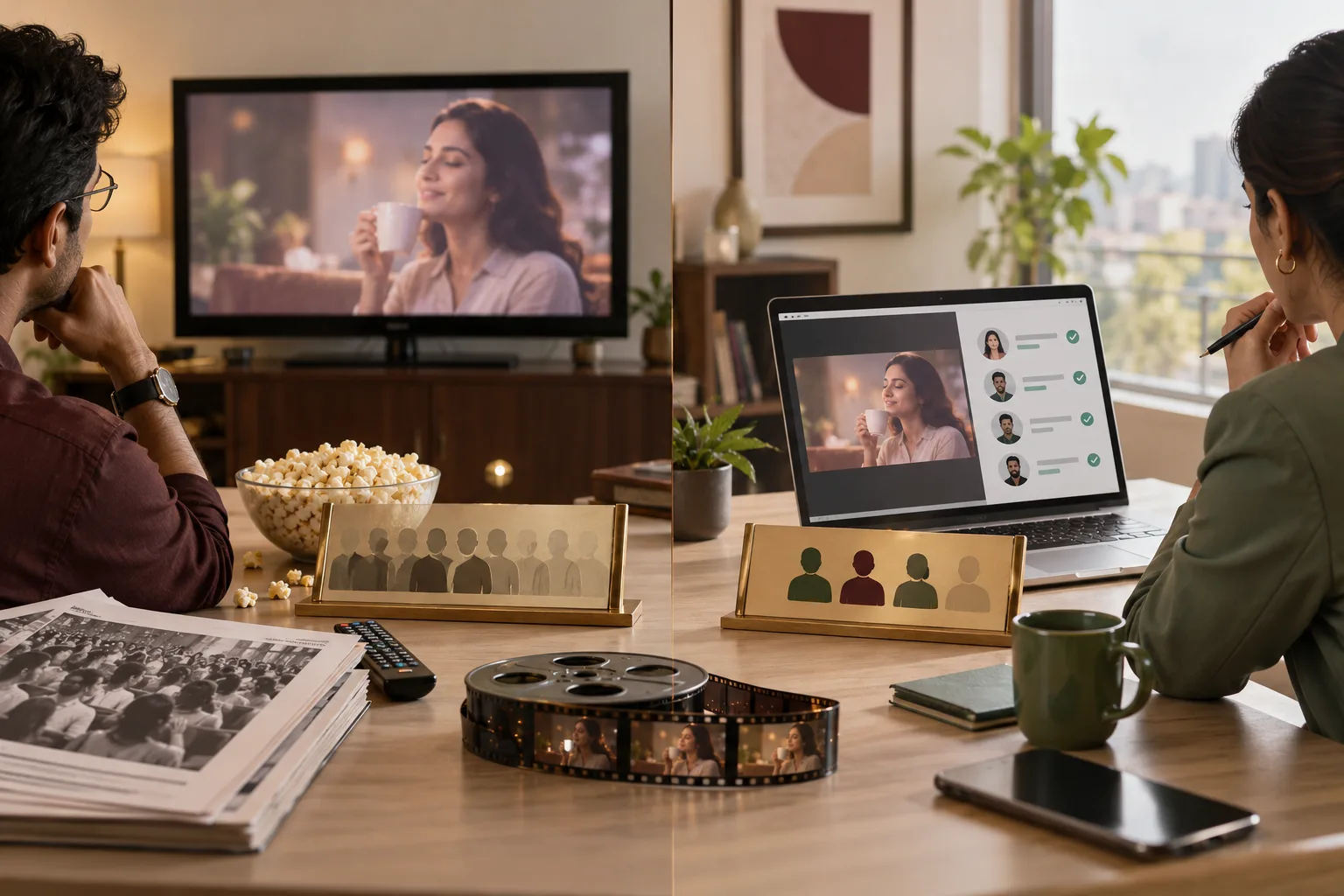 6 min read · 21 Sept 2026TV advertising vs OTT advertising: what are you actually buying?Television sells slots against ratings and prices the wastage in. OTT sells impressions to chosen people and charges for the choosing. Same film, two shops.
 8 min read · 21 Sept 2026Tamil advertising creative: what actually changesTamil is written one way and spoken another, and its script cannot tell b from p. What that means for your line, voice artist and brand spelling.
More for hospitals
Everything else we would do for you.
Closest to this: sales craft
Also for hospitals
Or start from the overview: sales and marketing for hospitals.
Your next practical step
Tell us what you are trying to grow, and we will read it before we call.
Eight short steps, mostly taps. Skip anything you would rather answer on the call.