Cafes and coffee shops · Instagram influencer marketing
Pay a local creator to show the room, then count who walked in.
Instagram influencer marketing for a cafe is a paid or hosted arrangement in which a local creator shows the room, the drinks and the plates to followers who live close enough to visit. GullySales checks the creator's audience, writes the deliverables and usage rights into an agreement, and sets up a visit code so the counter can tell who arrived because of the post.
Scope, fee, reporting and term are agreed in writing after we have read your brief and spoken to you.
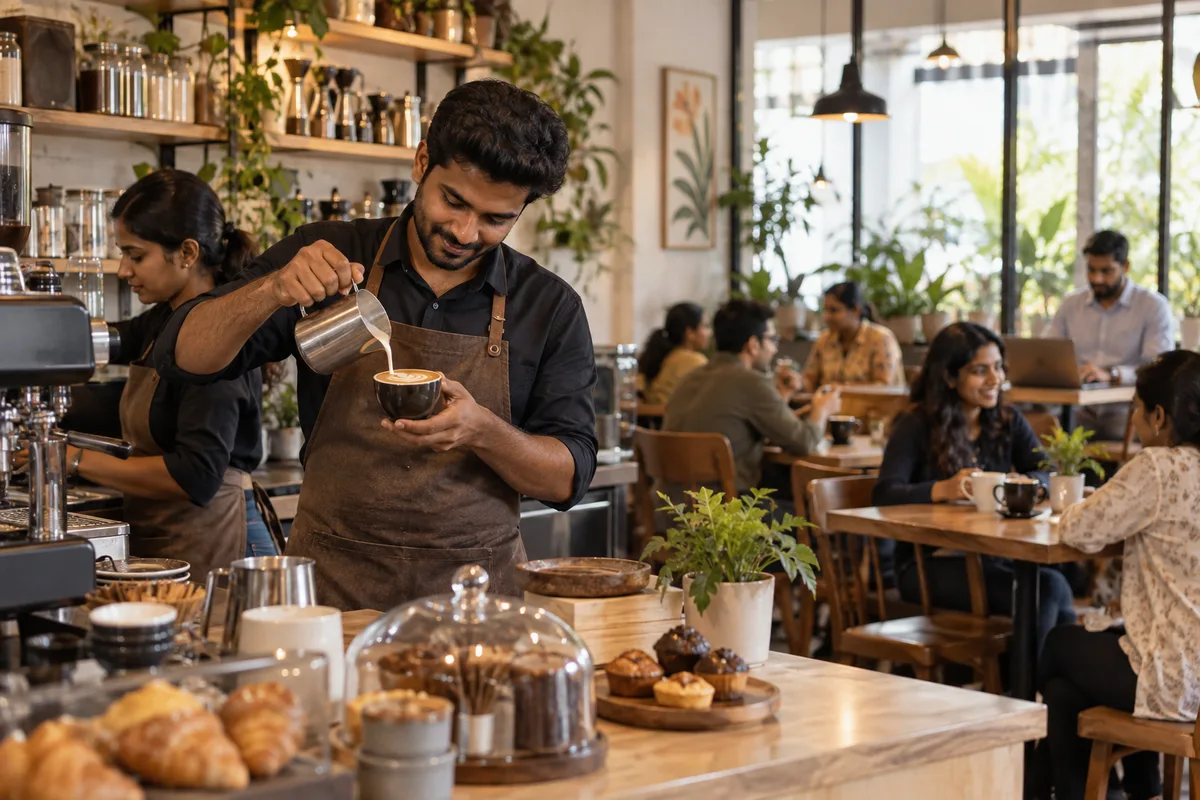
What Instagram influencer marketing means
Instagram influencer marketing pays creators to feature your product or service through agreed posts on their accounts. GullySales checks audience fit, negotiates deliverables and content usage rights, and plans how viewers will enquire, so you can assess each creator against relevant responses rather than follower count alone.
Also for cafes and coffee shops
- Content marketing for cafes and coffee shops
- Influencer marketing for cafes and coffee shops
- Social media for cafes and coffee shops
- Video marketing for cafes and coffee shops
- Community marketing for cafes and coffee shops
- Short-form video and reels production for cafes and coffee shops
- Branding for cafes and coffee shops
- Buyer journey for cafes and coffee shops
Sales and marketing for cafes and coffee shops, the overview.
Last updated 14 Nov 2026. Rules for this trade differ by state and professional body, and they change. We describe restrictions in general terms, so check the current position with your own council or adviser before you publish anything.
For cafes and coffee shops
Where it usually goes wrong, and what we would do.
“Followers who cannot reach the counter”
A creator with a large following can still be useless to a single outlet if the bulk of the followers live in another city or country. A cafe only serves people who can walk, ride or drive to it. The audience location in the creator's own insights, the neighbourhoods they tag and the comments from real locals matter more than the follower total, and they are checked before any fee or free meal is discussed.
“A tasting visit that overwhelms the counter”
The shoot happens on a busy Saturday, the creator brings a crew of friends, and the barista is filming instead of serving the regulars. A creator visit needs a quiet slot, a table that is held, a short list of items to be shown, and a staff member who is assigned to the creator and no one else. Without this, the visit damages the experience the post is meant to advertise.
“A reel the cafe cannot use again”
A paid post lives on the creator's account. The cafe may want the same video on its own page, in its own paid advertising or on a table card, and the agreement has to say so in writing. Usage rights, the period of use and whether the creator can work with the cafe next door are separate terms, and each is named before the creator is booked.
“Views without a single new face”
A post can be watched by thousands and still bring nobody through the door, because the viewer was given no reason to come. The reel needs one offer or one occasion, a way for the counter to recognise a visitor who arrived because of it, and a record kept at the till. Without that, the owner has a number of views and no way to read it against the footfall.
What we do
What we deliver for cafes and coffee shops.
The work available for this need. We agree the deliverables and responsibilities for your engagement in writing.
Creator brief and audience checklist
A written brief names the occasion, the neighbourhood to be reached, the items to be shown and what the creator should avoid, such as health claims about coffee or comparisons with other cafes. A checklist records the audience location and recent content that justify the choice.
Result: You can see why each creator was shortlisted, from their own audience data.
Shortlist with insight screenshots
Creators are listed with the screenshots they supply of audience location, age spread and recent reach, along with samples of posts that show a similar room or a similar menu. The owner chooses and may reject any name.
Result: Every creator on the list has supplied evidence you can read yourself.
Itemised deliverable and fee schedule
Each reel, story set or carousel is listed with its fee, the planned publication date, the number of revisions and the approval step. Free hosting, such as a meal in exchange for a post, is written out as a trade with its value stated, and the creator's own invoice is kept on file.
Result: Each deliverable has a price or trade value, a date and an approver written beside it.
Agreement with usage rights and disclosure wording
The agreement covers where the content may be reused, for how long, whether the creator may feature a competing cafe, and the disclosure of the paid relationship in line with the platform's current rules and local advertising rules. The owner's own adviser reviews it before signature.
Result: The agreement names the permitted uses and the paid-partnership disclosure the creator will show.
Visit plan and staff briefing
A one-page plan sets the time slot, the held table, the items to be served, the person who looks after the creator and what the team may and may not say about ingredients or allergens. The briefing is read at the counter before the visit.
Result: A named staff member knew the visit plan before the creator arrived.
Visit code and creator comparison sheet
A phrase to say at the counter, a code on a table card or a story link connects the post to a visit. The sheet puts each creator's views and saves beside the visits and orders counted at the till, so a post that was watched widely is not mistaken for one that filled tables.
Result: Visits traced to each creator are listed next to that creator's own platform figures.
How the result is measured
- Views, saves, and shares, reported separately from buying intent
- Campaign page visits and message responses by creator
- Relevant enquiries and qualified opportunities recorded by your team
Recorded as a baseline before work starts, so every later report has an honest comparison.
Who it is for
This is written for these cafes and coffee shops.
- Independent single-outlet cafes
- Specialty coffee roasters with a cafe
- Cafes inside co-working spaces
- Bakery cafes
- Cafe chains opening new outlets
- Cloud kitchen and delivery-only cafes
- Cafes attached to bookstores or art spaces
- Late-night and student-area cafes
Before you decide
Agree the work. Know how to judge it.
Instagram influencer marketing for cafes and coffee shops: use these checks to prepare, choose the scope, and review what changes.
Bring the right evidence
Define whose attention matters and what they need to understand about the offer. Review the creator's relevant work and audience fit rather than choosing from follower counts alone.
Make the scope clear
Agree the deliverables, approval rights, usage period, and any paid reuse of the material. Record who supplies product information and checks disclosure requirements before publication.
Check the work in use
Check the published work against the brief and trace the response through a distinct link or enquiry route where possible. Separate distribution figures from actual buying interest.
Know when to change course
If the audience does not fit the offer, a lower fee does not make the placement useful. Do not ask a creator to describe an experience they have not had.
These are discussion points, not a fixed package. GullySales confirms the deliverables, responsibilities, fee, and term in writing after reading your brief and speaking with you.
Before we start
What to have ready before the work starts.
The records, access and decisions this work needs from cafes and coffee shops. Anything missing is noted in the written scope, with who will supply it.
- The one offer or occasion
- Decide what the post invites people to do, such as try the work-from-cafe table on a weekday afternoon or book the garden seating. A creator without a clear invitation makes a pretty video that asks for nothing. Pick the offer, write the terms at the counter and decide how long it lasts.
- A quiet slot the cafe can hold
- The visit needs a table and a staff member released from other work. Choose a slot when regulars will not be pushed aside. If the counter has no spare capacity at any time, a creator visit is the wrong tool, and a plan for the room should come first.
- A person for the creator on the day
- One named team member greets the creator, serves the tasting items and answers questions about ingredients. Without this person, the barista is pulled between customers and camera, the creator guesses at the menu, and the video carries a wrong description of a dish.
- Allergen and ingredient notes
- The kitchen should write down what is in each item to be shown, including milk alternatives, nuts and gluten. The creator may repeat what they are told on camera, so the notes need to be correct. Health or wellness claims about coffee are not made, and the cafe's own adviser decides any wording on ingredients.
- A way to count visits at the till
- A notebook, a code on the receipt or a simple tally by the staff member on shift lets the cafe record who arrived because of the post. If nobody can count at the till, the campaign can only be read in views, and the owner has no way to tell whether the creator was worth another booking.
How it works
How the instagram influencer marketing work runs
The work itself, in order. How an engagement starts, from your brief to a written scope, is set out on our method page.
- 1
Deciding the occasion for the post
We start with the owner and the shift lead by choosing one reason to visit, such as a new weekday offer, a work-from-cafe corner or a seasonal drink. A creator can only show one idea well. The occasion is written in a sentence the barista can repeat to a guest, and the owner approves it before creators are contacted.
- 2
Checking creators against your catchment
We shortlist local creators whose audience lives within reach and whose earlier food posts show the same kind of room. Each one is asked for their audience insights and examples of posts that carried a paid partnership label. Nothing is bought from a creator who will not share their own audience location.
- 3
Agreeing deliverables and rights on paper
The owner receives the itemised schedule and the agreement draft, with the usage rights, the exclusivity question and the disclosure wording flagged for decision. The cafe's own adviser reads the agreement before it is signed. We prepare and negotiate; the owner signs and pays, and the creator's invoice is attached to the record.
- 4
Preparing the counter for the visit
The visit plan, the held table and the briefing for the assigned staff member are completed before the creator arrives. The kitchen confirms what can be served at the time and what must be flagged for allergens. If the cafe is full on the proposed day, the date moves, because a rushed shoot is worse than a late one.
- 5
Reviewing the cut before it is posted
The creator sends the draft reel or carousel, and the owner checks facts: opening hours, the offer, the address and anything said about ingredients. Taste and style stay the creator's choice. Corrections are limited to factual errors and the agreed disclosure, and the approval is recorded with the date it was given.
- 6
Reading visits against the record kept before
Before the first post we note the usual counter footfall for the slot and the number of tables booked through each channel. After publication, the visit code tally, the creator's own figures and the till record are read together. Views and saves are activity; visits and orders are the evidence, and each creator is judged on the second.
Where this fits
Three pieces of sales work, in this order.
This work sits inside sales process design, at stage 0, foundation. The audit comes before it, and sales management keeps it running.
Step 1
Sales audit
Find where deals are being lost and what to fix first.
Start here if you cannot say where orders are lost.
Step 2 · you are here
Sales process design
One written way to sell, from first enquiry to repeat order.
Start here if every salesperson sells differently.
Step 3
Sales management
A target, a review routine and someone who owns the number.
Start here if the team has targets and no routine.
FAQ
Questions owners ask before they call.
Not here? More answers, or ask on WhatsApp.
Do I have to pay a creator, or is a free meal enough?
How do I know a creator's followers are real and local?
Does the creator have to say the post is paid?
Can I reuse the reel on my own page and in ads?
Will a post bring a crowd on the first weekend?
What if the creator says something wrong about the menu?
How much does it cost?
How long is the contract?
How soon will we see results?
Who will actually do the work?
From the blog
Further reading for cafes and coffee shops.
 8 min read · 21 Sept 2026How to advertise to college studentsHow would you promote a brand in a college setting? A direct answer, a sample interview reply and the fest, ambassador and reel plan behind it.
 7 min read · 18 Nov 2025How to promote a new restaurantOpening week is about being found, not discounted. The first month is about repeat visits and honest reviews. Most launch offers end by week three.
 7 min read · 21 Sept 2026How to design metro and transit advertisingA commuter stands still in front of a platform panel for four minutes and passes the same one twice a day for a month. Design for the sixth viewing.
More for cafes and coffee shops
Related work to consider.
Closest to this: content and social
Also for cafes and coffee shops
Or start from the overview: sales and marketing for cafes and coffee shops.
Your next practical step
Tell us what you are trying to grow, and we will read it before we call.
Eight short steps, mostly taps. Skip anything you would rather answer on the call.