Manufacturing · Rubber Products
Nobody phones to ask if a hose is nice. They phone because a line burst and they need another by morning.
A hose is bought by length, bore and what it carries. Buyers include automotive workshops, farm equipment makers, compressor and pump companies, and plants with water, air and oil lines.
Scope, fee, reporting and term are agreed in writing after we have read your brief and spoken to you.
In one paragraph
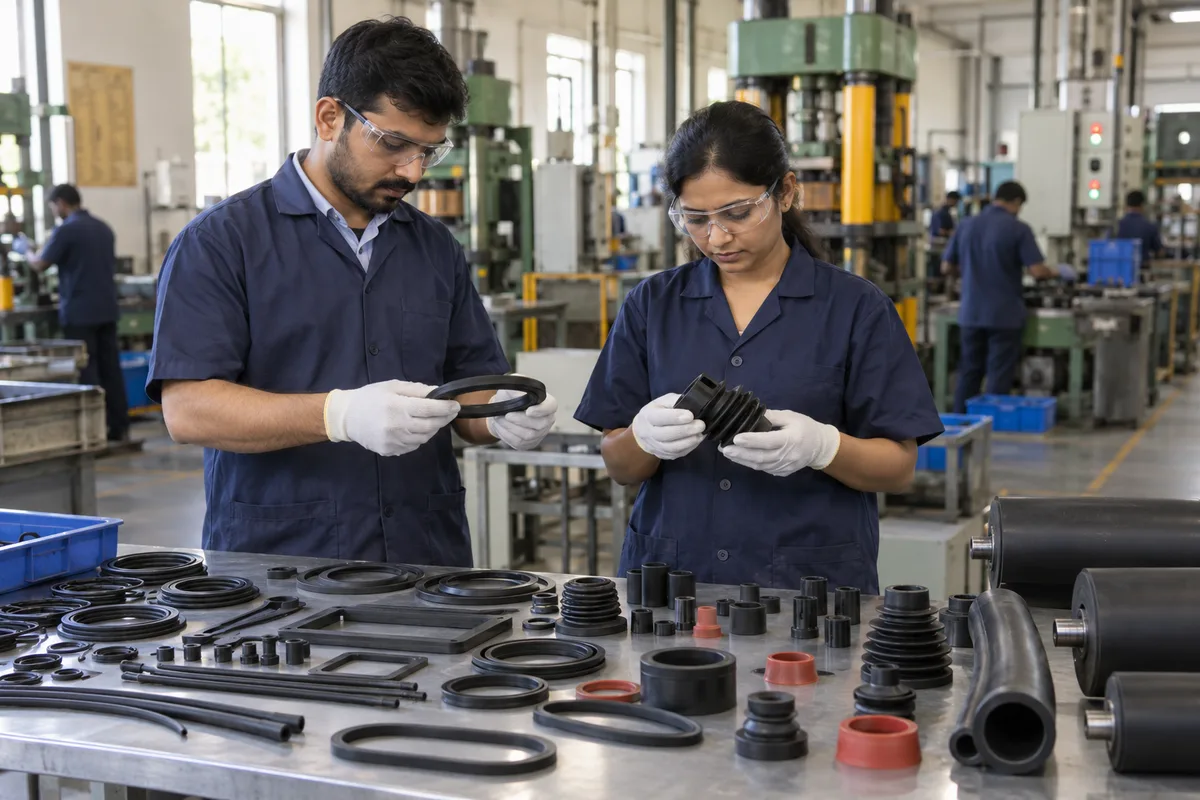
Rubber hoses are flexible tubes of rubber, often reinforced with fabric or wire, that carry water, air, oil, fuel or other fluids. GullySales helps a hose maker be found by the plants, workshops and OEMs that buy them, and makes fitting, length and pressure questions easy to answer.
A hose that bursts can injure a worker or stop a line, so the buyer cares who made it and what it was meant for. They also care whether it comes with the right fittings, cut to length.
Last updated 16 Oct 2026.
Who it is for
This is written for you if rubber hoses is what you make or sell.
- Makers of fabric-reinforced and braided rubber hoses
- Makers of hydraulic hoses assembled with fittings
- Units making automotive coolant, fuel and air hoses
- Makers of industrial water, air and suction hoses for plants and farms
- Hose makers who sell to dealers and want more OEM accounts
Not for
It is not the right fit if.
- A maker who does not know the pressure rating or the intended use of the hoses they sell
- A unit that cannot cut to length or fit ends, if the buyer base expects ready-to-fit hose assemblies
How buyers choose
What decides the sale of rubber hoses.
Bore, length and what it carries
The buyer gives the inside diameter, the length and the fluid. A page that asks for these, and for the working pressure, gets a usable enquiry.
Hose alone or assembled with fittings
Many buyers want the hose cut and crimped with ends fitted. A maker who offers the assembly saves the buyer a second vendor.
Pressure rating and application
A plant asks whether the hose suits the pressure and the fluid. Your technical person's answer decides whether they trust the order.
Dealer recommendation
Farm, truck and workshop buyers often buy from a local dealer who recommends one maker. Winning the dealer wins the town.
Where orders are lost
What usually goes wrong when you sell rubber hoses.
In the words owners use on the first call.
“A hose enquiry arrives without the pressure”
Without the fluid, bore and working pressure, a quotation is a guess. The enquiry form is not asking for them.
“Dealers stock the brand that visits them”
Dealers carry whichever maker calls, supplies fast and is easy to reach. If nobody visits, you are the second choice.
“The OEM wanted assemblies and we sold hose”
The buyer needed ready-to-fit hoses with ends. A competitor who offered the assembly took the order.
The scope
The work we would propose for rubber hoses.
Measured on qualified enquiries, quotation requests, follow-up on each quotation, trial orders won and repeat orders. Anything here that needs a platform, directory or tool we have not used with you is confirmed with you before it goes in the scope.
- Pages by hose type and usePages for water, air, oil, coolant and hydraulic hoses, each describing the bore range, reinforcement and uses.
- Dealer development in industrial and farm townsA plan to recruit hose dealers and workshop suppliers in towns with farms, trucks and small plants, with a price and stock arrangement.
- A hose enquiry form that asks the key questionsA form for bore, length, fluid, pressure and whether ends are wanted, so the estimator can price in one pass.
- OEM and plant prospectingA list of equipment makers and plants that use hoses, with the purchase or maintenance contact.
A hose assembly offer
Work specific to hoses: a clear page and price structure for cut-and-fitted assemblies, if your plant can do them.
What we do
What you get for rubber hoses.
Each deliverable and what it is there to change.
A hose range chart by type, bore and use
A buyer can see at once whether you make what they need.
An enquiry form with pressure and fluid fields
Saves a call to ask the basics and keeps unclear enquiries out.
A dealer onboarding page
Gives a local dealer your terms, your range and what support they get.
An OEM prospect list by equipment type
Names makers of pumps, compressors, tractors and trucks that use hoses, with their purchase contacts.
How the result is measured
- Qualified hose enquiries
- Enquiries with bore, length and pressure supplied
- Quotations followed up
- Dealer enquiries and dealers onboarded
- Trial orders from OEMs
- Repeat orders
Recorded as a baseline before work starts, so every later report has an honest comparison.
How it works
From your first message to the first report.
No open-ended retainer. Every step gives you something in writing.
First
Your brief
You tell us what you need in a few short steps: your business, what you want, where enquiries come from and how they are handled.
After the brief
A conversation and a written scope
We read it, then talk with whoever handles your enquiries. If you want our help, the scope, the fee and the reporting come in writing, and nothing starts before you have read them.
Before work starts
Baseline recorded
The numbers this work is meant to move, such as enquiries, quotations, orders, visits or renewals, written down so every later report has an honest comparison.
After the baseline
The first fix goes live
The fix we agreed to start with is put in place and measured against the baseline, whether that is a reply, a follow-up, a page, a listing or the handover between marketing and sales.
As agreed
Report against the baseline
What moved, what did not, and what changes next, in plain words. How often you get it is set in writing before work starts.
At renewal
Renew on the numbers
The term ends and you decide whether to continue from the results. The length is agreed in writing before anything starts.
What we need from you
What to have ready before we talk.
None of it has to be tidy. We read what you have.
- Your hose types with bore ranges and reinforcement
- Whether you supply assemblies with fittings
- Photographs of hoses and finished assemblies
- Dealers and OEMs you supply now
- Rated pressures, as stated by your technical person
Export and new regions
Selling rubber hoses beyond your home market.
Where you sell decides standards, documents, payment terms and freight. We work from Bengaluru and have no overseas office, so for a new region we start from your own enquiries, your existing buyers and the directories you already use.
Distributors and equipment makers abroad
Overseas hose distributors and equipment makers are possible buyers. Existing export enquiries tell you which regions to start with.
Test data and ratings
Foreign buyers want pressure ratings and test records for hoses. Which tests and standards apply is for your technical person and certifying body to confirm.
FAQ
Questions about selling rubber hoses.
Not here? More answers, or ask on WhatsApp.
Should I sell hose or assemblies?
How do I get dealers to carry my hose?
What do I say about pressure ratings?
How much does it cost?
How long is the contract?
How soon will we see results?
Who will actually do the work?
What do you need from us?
What if we are not happy with the work?
More in Rubber Products
Makers of rubber hoses also need
Looking for the wider industry page? See rubber manufacturers.
This page is part of the manufacturing section. The hub also lists every manufacturing industry we write for.
Why us
Why owners pick GullySales over an agency.
Marketing and sales, as one job
Most agencies stop at the enquiry. We also fix what happens after it: the reply, the follow-up, the quote and the CRM.
The person on the first call does the work
No account managers in between. You are never handed to someone you have not met.
A baseline before anything starts
Your numbers are written down on day one, so every later report compares against something honest.
The fee in writing, split three ways
Our time, your media spend and production on separate lines. You always see what goes to us.
No guarantees we cannot keep
The term is agreed in writing and never a default twelve months. We never promise a ranking or a lead count, because nobody controls those.
One office, and we say so
Nagarbhavi, Bengaluru. We work across India by call and WhatsApp and travel when a session needs to be in person.
#257, 3rd floor, Sri Nanjundeshwara Complex, Nagarbhavi 8th Block, Outer Ring Road. How we work.
Engagement options
Ways to work with us.
Pick the size of commitment that fits. Every option starts with your brief and a conversation.
Option 1
The conversation on its own
A call after you send your brief. It says honestly whether you need outside help, and many fixes are ones your own team can make.
Option 2
One fix, scoped
Start with the fix that matters most, such as reply time or follow-up. The fee is in writing before anything starts.
Option 3
An ongoing programme
We run the work, report against the baseline, and you renew on the numbers. The term and the reporting are agreed in writing first.
Option 4
Guidance for your own team or agency
We plan, brief and check the work of your in-house team or current agency, instead of replacing them.
Your brief
Tell us what you need, and we will read it before we call.
Eight short steps about your business, what you want and who decides. Most questions are a tap, and you can skip any you would rather answer on the call.
Your next practical step
Tell us what you are trying to grow, and we will read it before we call.
Eight short steps, mostly taps. Skip anything you would rather answer on the call.