Retailers · Buyer persona
A shop sells to five different shoppers and talks to all of them the same way.
A buyer persona for a retail store is a written description of one type of shopper: why they walk in, what they compare, what makes them leave without buying. GullySales builds yours from your own billing records and counter conversations, so each message and each shelf is aimed at a shopper who exists.
Scope, fee, reporting and term are agreed in writing after we have read your brief and spoken to you.
What buyer persona means
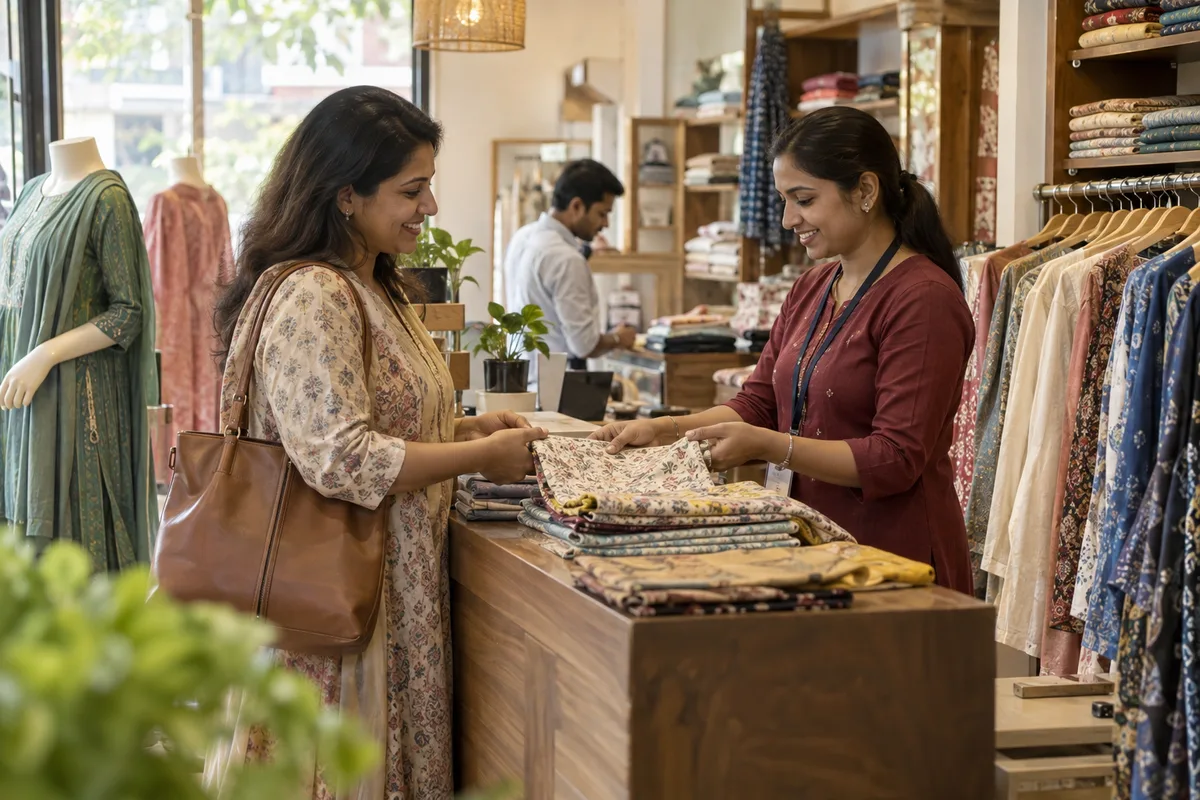
A buyer persona is a plain description of the kind of customer who actually buys from you. It includes what they search, what worries them and who else they ask before deciding. GullySales builds this from real enquiries and past sales rather than a generic template, then uses it to write every page and advert.
Last updated 5 Oct 2026.
For retailers
Where it usually goes wrong, and what we would do.
“The festival shopper and the regular are not one customer”
The person who appears before Diwali, buys one big basket and disappears wants a reason to choose your shop this year. The regular who comes in every few weeks wants to be recognised. A single broadcast insults one of them and bores the other.
“The family buying for a wedding decides together”
Parents, the couple and an uncle with opinions all sit in one conversation, and the person paying is rarely the person choosing. A persona that names every voice in the room tells the floor staff whom to address and what each of them needs to hear.
“The comparison shopper has already looked at your price”
They arrive with a phone showing a rival's rate or an online listing. Treating them as a fresh walk-in wastes the visit. The persona records what they have seen, what trust they still want from a counter, and which answer closes the gap.
“Your best customers are visible in the bills”
The shopper with the biggest basket is not always the one who talks the longest. Billing records show who returns, what they pair together and which month they vanish. That pattern describes a real person far better than a guess made at the owner's desk.
What we do
What we deliver for retailers.
Every deliverable, what it covers for you, and the result it is there to produce. Nothing here is an extra.
Shopper types written from your own bills
Three to five named shopper types, each built from what customers actually bought, when they came and how they paid.
Result: You can describe your customers without guessing.
A one-page card per shopper type
The reason they visit, the question they ask first, the objection they raise and the answer that settles it, written for floor staff to read.
Result: A new salesperson can serve each type on the first day.
Questions to ask at the counter
Two or three natural questions that tell staff which shopper type is standing in front of them without sounding like a form.
Result: The right card gets picked at the right time.
Message wording matched to each type
The words for a WhatsApp note, a festive offer and a reminder, written differently for the occasional buyer and the regular.
Result: Each shopper receives something that fits them.
A shelf and display review against the personas
A walk through the store with the persona cards, noting what each shopper cannot find, cannot compare or cannot afford at a glance.
Result: You get a short list of layout changes tied to real shoppers.
A list of who to leave out
The customers whose basket does not repay the discount or the effort, named so that offers stop going to them.
Result: Your offers reach fewer wrong people.
How the result is measured
- Enquiry match to persona
- Conversion rate by persona
- Content aligned to persona
Recorded as a baseline before work starts, so every later report has an honest comparison.
Who it is for
This is written for these retailers.
- Apparel and footwear stores
- Electronics and appliance retailers
- Grocery and kirana stores
- Home decor and furnishing stores
- Jewellery and gifting retailers
- Multi-brand outlet stores
How it works
From your first message to the first report.
No open-ended retainer. Every step gives you something in writing.
First
Your brief
You tell us what you need in a few short steps: your business, what you want, where enquiries come from and how they are handled.
After the brief
A conversation and a written scope
We read it, then talk with whoever handles your enquiries. If you want our help, the scope, the fee and the reporting come in writing, and nothing starts before you have read them.
Before work starts
Baseline recorded
The numbers this work is meant to move, such as enquiries, quotations, orders, visits or renewals, written down so every later report has an honest comparison.
After the baseline
The first fix goes live
The fix we agreed to start with is put in place and measured against the baseline, whether that is a reply, a follow-up, a page, a listing or the handover between marketing and sales.
As agreed
Report against the baseline
What moved, what did not, and what changes next, in plain words. How often you get it is set in writing before work starts.
At renewal
Renew on the numbers
The term ends and you decide whether to continue from the results. The length is agreed in writing before anything starts.
How the buyer persona work runs
- 1
Understand the current view
We start with how your team currently describes the customer, since the gap between belief and reality is often the finding itself.
- 2
Audit past enquiries and sales
We look at recent enquiries and closed deals to see who actually bought, not who was assumed to buy.
- 3
Interview customers and staff
Short, structured conversations surface the real language, worries and triggers behind a purchase.
- 4
Build the personas
Findings are written into short, usable persona documents rather than a long report.
- 5
Apply to your marketing
We show exactly where each persona should change a page, an ad or a script you already have.
Proof
What happened when owners fixed this.
Real clients, the work we did, and the result as it was recorded. Where no number was recorded, none is claimed.
Bon Millette
- Situation
- A new food brand has to look trustworthy before anyone will try it, and Bon Millette had nothing online for a first-time buyer to weigh up.
- What we did
- A site that matches the food
- The story in a trust-building order
- Product sections with full disclosure
- A short path from reading to buying
- Result
- No numbers were recorded for this engagement. The work is described in full in the case study.
Also worked with
Chord Road Hospital · Curtain Label · Difesa Security Services · Felicity Inn · Hands On CSR · Implevista · Kambar Group · Kalessi · Kerur Pain Clinic · LL Trust · Lucky Deals · Natural Gases · NavaShakthi Souhardha · NewCom Logistics · Proton Technical Services · SB Engineering · Shakthi Foundation · Shakthi Group · Urbanest · Insyde Studio · Venkateshwara Laser Tech · Vivara Studios
Why us
Why owners pick GullySales over an agency.
Marketing and sales, as one job
Most agencies stop at the enquiry. We also fix what happens after it: the reply, the follow-up, the quote and the CRM.
The person on the first call does the work
No account managers in between. You are never handed to someone you have not met.
A baseline before anything starts
Your numbers are written down on day one, so every later report compares against something honest.
The fee in writing, split three ways
Our time, your media spend and production on separate lines. You always see what goes to us.
No guarantees we cannot keep
The term is agreed in writing and never a default twelve months. We never promise a ranking or a lead count, because nobody controls those.
One office, and we say so
Nagarbhavi, Bengaluru. We work across India by call and WhatsApp and travel when a session needs to be in person.
#257, 3rd floor, Sri Nanjundeshwara Complex, Nagarbhavi 8th Block, Outer Ring Road. How we work.
Your brief
Tell us what you need, and we will read it before we call.
Eight short steps about your business, what you want and who decides. Most questions are a tap, and you can skip any you would rather answer on the call.
FAQ
Questions owners ask before they call.
Not here? More answers, or ask on WhatsApp.
We sell everything. Can one persona cover the store?
Where does the information come from if we have no customer records?
Do personas change with the seasons?
How much does it cost?
How long is the contract?
How soon will we see results?
Who will actually do the work?
What do you need from us?
What if we are not happy with the work?
From the blog
Further reading for retailers.
 7 min read · 21 Sept 2026NRI jewellery advertisingAn NRI buyer is two customers: the one flying in for a wedding, and the one paying from abroad for a mother who collects it. The campaigns, the timings and the payment flows differ.
 7 min read · 21 Sept 2026Local audience targeting strategyThree different people are local to you: the one who lives near you, the one who works near you, and the one searching near you. The settings that reach each are different.
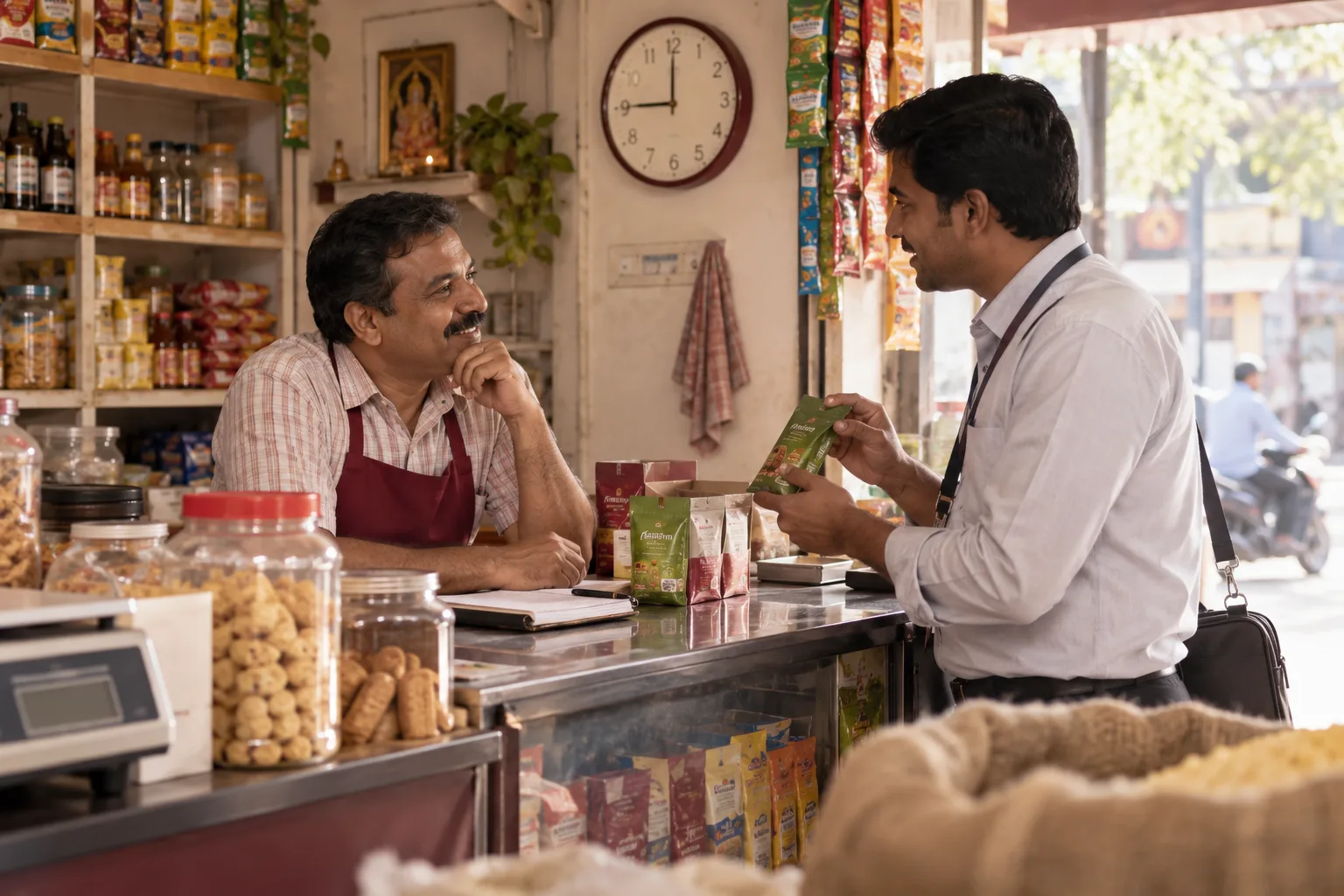 8 min read · 21 Sept 2026How to advertise to retail business ownersA shop owner is behind the counter from ten to nine and cannot leave it. That single fact rules out most media, and it makes the lean afternoon hour and the distributor's salesman worth more than any campaign.
More for retailers
Everything else we would do for you.
Closest to this: strategy and research
Also for retailers
Or start from the overview: sales and marketing for retailers.
Your next practical step
Tell us what you are trying to grow, and we will read it before we call.
Eight short steps, mostly taps. Skip anything you would rather answer on the call.