Dermatology clinics · Public relations
Be the dermatologist a health reporter rings when the monsoon rash story runs.
Public relations for a dermatology clinic is earned coverage: the newspaper health page, a television panel, the doctor quoted on a seasonal skin story. It is not posting on social media and it is not a paid feature. GullySales prepares the material, makes the approaches and keeps every claim inside what applies to you.
Scope, fee, reporting and term are agreed in writing after we have read your brief and spoken to you.
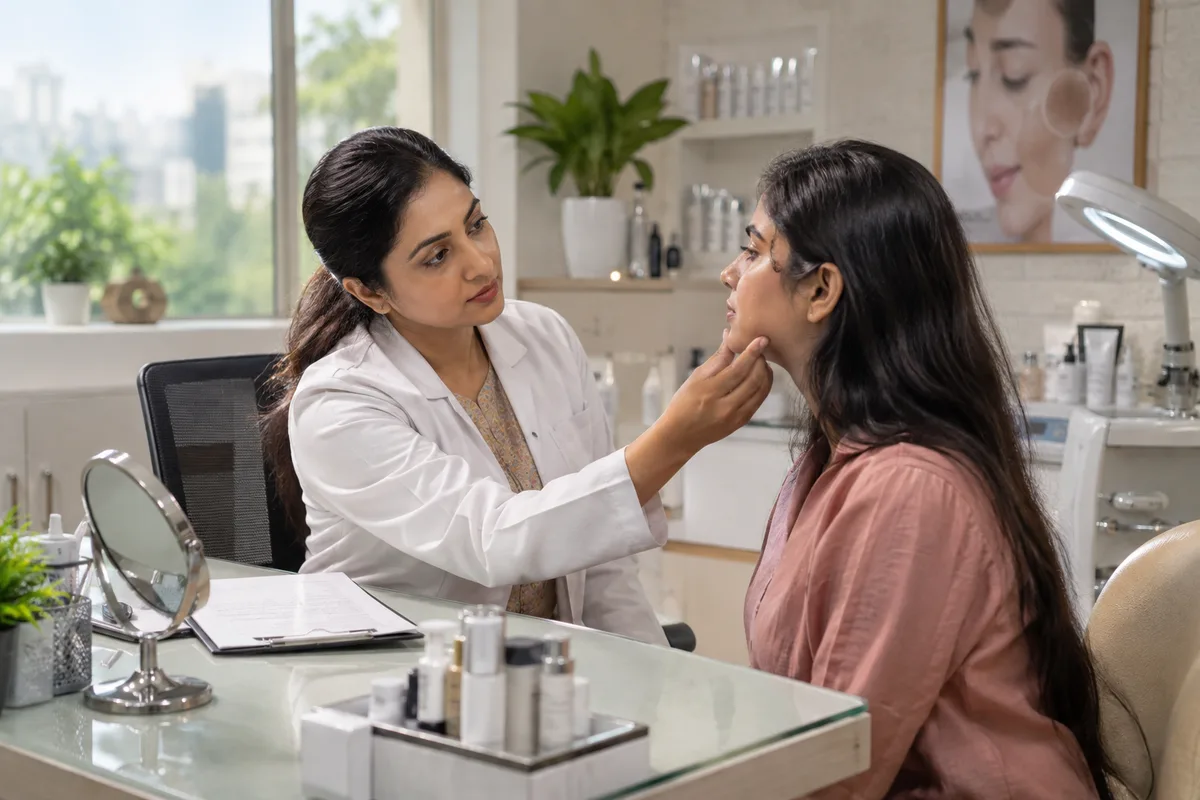
What public relations means
Public relations is getting your business covered by journalists, trade publications or local news, which carries more trust than an advert because a third party is saying it. GullySales pitches your story to the right publications and prepares your team for interviews when coverage is offered.
Also for dermatology clinics
- Reputation management for dermatology clinics
- Review generation for dermatology clinics
- AEO for dermatology clinics
- Branding for dermatology clinics
- Content marketing for dermatology clinics
- Digital marketing for dermatology clinics
- Email campaigns for dermatology clinics
- Google Business Profile for dermatology clinics
Sales and marketing for dermatology clinics, the overview.
Last updated 5 Oct 2026. Rules for this trade differ by state and professional body, and they change. We describe restrictions in general terms, so check the current position with your own council or adviser before you publish anything.
For dermatology clinics
Where it usually goes wrong, and what we would do.
“Journalists write the season's skin story and need a doctor today”
The monsoon fungal infection piece, the summer tanning piece, the burns that follow Deepavali. A dermatologist who answers while the reporter is still writing becomes the one they ring for the next one.
“A paid feature is advertising, whatever the supplement calls it”
A bought page carrying your treatment list and a price is an advertisement, and the claims in it are yours to defend. Earned coverage quotes you on a condition and carries no offer. The two are worth different money and different care.
“A skin camp at an apartment association is a local news story”
A morning spent checking moles and scalps at a resident welfare association gives the neighbourhood paper something to cover and the association something to circulate, provided consent for photographs is taken on the day.
What we do
What we deliver for dermatology clinics.
Every deliverable, what it covers for you, and the result it is there to produce. Nothing here is an extra.
A press kit for each dermatologist
A short and a long biography, a current photograph, the qualification and registration, the subjects the doctor will speak on, and a number a reporter can actually reach.
Result: A journalist on deadline has everything without sending a second email.
A story list built around the skin year
The conditions that arrive with the monsoon, the summer and the dry months, plus the festival weeks, each written up as a pitch for a health desk.
Result: You offer the story the desk is already planning to run.
Approaches to the health desks that cover your city
The English and Kannada papers, the regional television health slot and the health websites your patients read, approached by name rather than through a general address.
Result: The pitch lands with a person who can commission it.
A claims check before anything is published
Every line offered to a journalist read against what applies to your registration, with anything unclear sent to your own adviser before it goes out.
Result: Nothing appears in print that you would have to defend later.
Camps and community work written up for the press
A skin camp with an association or a school arranged with a note and photographs prepared for the local paper, consent taken before anybody is photographed.
Result: A morning in the neighbourhood turns into coverage that lasts.
Coverage collected and put to work
Clippings and links kept in one place and added to the doctor's page where the rules permit it, so a patient checking the name finds them.
Result: Your press mentions stop disappearing a week after they run.
How the result is measured
- Coverage secured
- Publication reach
- Enquiries after coverage
Recorded as a baseline before work starts, so every later report has an honest comparison.
What a doctor can tell press
Skin stories a health desk can use, and what the doctor must leave out.
- The skin season list
- Keep a short list of what desks run each year: monsoon fungal infections, winter dryness, summer sun damage. Offer the doctor's comment on one before the desk plans it.
- A comment on care, not on treatment
- Quote the doctor on how to look after skin and when to see a dermatologist. Do not quote what a procedure will do for the patient.
- A skin camp at a society or school
- Tell the desk the date and venue of a screening camp at a housing society or school. Collect consent before anyone is photographed.
- Paid or editorial
- Ask any health page whether the feature is editorial or paid. A paid piece should be marked as advertising and carries the same restrictions as any advertisement.
- What a doctor must not say
- No cure claims, no before and after pictures of treatments and no promised results. Advertising rules for doctors differ by state and body and change, so check with your own medical council.
- A one-page profile for each doctor
- Keep one page per doctor with the registration as the council lists it, qualifications, training and clinic address. A reporter should be able to verify you without calling.
Who it is for
This is written for these dermatology clinics.
- Solo dermatologist clinics
- Multi-doctor dermatology and cosmetology centres
- Dermatology hospitals with in-patient procedures
- Cosmetic and aesthetic dermatology clinics
- Hair transplant and trichology centres
- Skin and laser clinics inside malls or commercial complexes
- Paediatric and family dermatology practices
- Multi-branch dermatology chains
Not for
It is not the right fit if.
- You want a guaranteed Google ranking or a guaranteed number of leads. Nobody honest can promise either.
- You need enquiries by next week and have nobody to answer them.
- You want posts and reach reported, not enquiries and orders.
How it works
From your first message to the first report.
No open-ended retainer. Every step gives you something in writing.
First
Your brief
You tell us what you need in a few short steps: your business, what you want, where enquiries come from and how they are handled.
After the brief
A conversation and a written scope
We read it, then talk with whoever handles your enquiries. If you want our help, the scope, the fee and the reporting come in writing, and nothing starts before you have read them.
Before work starts
Baseline recorded
Enquiries by source, reply time, conversion and cost per order, written down so every later report has an honest comparison.
After the baseline
The first fix goes live
The fix we agreed to start with is put in place and measured against the baseline, whether that is reply time, a follow-up sequence, the page buyers land on or the handover between marketing and sales.
As agreed
Report against the baseline
What moved, what did not, and what changes next, in plain words. How often you get it is set in writing before work starts.
At renewal
Renew on the numbers
The term ends and you decide whether to continue from the results. The length is agreed in writing before anything starts.
How the public relations work runs
- 1
Understand what is newsworthy
We identify genuine stories in your business, since manufactured news rarely earns real coverage.
- 2
Audit relevant press
We research which journalists and publications actually cover your industry or locality.
- 3
Prepare the pitch
A release or pitch is written specifically for the target publication, not sent as a mass broadcast.
- 4
Approach and follow up
Journalists are approached directly, with a reasonable follow-up rather than a single unanswered email.
- 5
Measure and prepare ahead
Coverage is tracked, and a communications plan is kept ready for any significant matter that may need a public response.
Why us
Why owners pick GullySales over an agency.
Marketing and sales, as one job
Most agencies stop at the enquiry. We also fix what happens after it: the reply, the follow-up, the quote and the CRM.
The person on the first call does the work
No account managers in between. You are never handed to someone you have not met.
A baseline before anything starts
Your numbers are written down on day one, so every later report compares against something honest.
The fee in writing, split three ways
Our time, your media spend and production on separate lines. You always see what goes to us.
No guarantees we cannot keep
The term is agreed in writing and never a default twelve months. We never promise a ranking or a lead count, because nobody controls those.
One office, and we say so
Nagarbhavi, Bengaluru. We work across India by call and WhatsApp and travel when a session needs to be in person.
#257, 3rd floor, Sri Nanjundeshwara Complex, Nagarbhavi 8th Block, Outer Ring Road. How we work.
Your brief
Tell us what you need, and we will read it before we call.
Eight short steps about your business, what you want and who decides. Most questions are a tap, and you can skip any you would rather answer on the call.
FAQ
Questions owners ask before they call.
Not here? More answers, or ask on WhatsApp.
Is PR worth it when Instagram already brings us bookings?
What is a dermatologist allowed to say in the press?
Who should answer when a reporter calls about a patient's complaint?
A paper quoted me wrongly on a treatment. What can I do?
How is marketing for a dermatology clinic different from a general hospital?
Do we need ads or SEO for a dermatology clinic?
How much does it cost?
How long is the contract?
How soon will we see results?
Who will actually do the work?
From the blog
Further reading for dermatology clinics.
 8 min read · 21 Sept 2026How to advertise to hospital administratorsThe administrator scopes the purchase, the head of department asks for it and the trust signs it. Three quotations are compulsory, so your job is to be one of the three and to write the specification.
 7 min read · 21 Jan 2026Keyword research for dermatology clinics: the words patients typeThe keywords for dermatologists that bring appointments are the ones patients type: skin doctor near me, acne treatment cost, hair fall treatment. How to group them, and which page each belongs on.
 8 min read · 12 Aug 2025Local SEO checklist for clinicsA five-part checklist for clinics: a complete Google Business Profile, consistent details, treatment pages, a review routine and enquiry tracking.
More for dermatology clinics
Everything else we would do for you.
Closest to this: reputation
Also for dermatology clinics
- AEO for dermatology clinics
- Branding for dermatology clinics
- Content marketing for dermatology clinics
- Digital marketing for dermatology clinics
- Email campaigns for dermatology clinics
- Google Business Profile for dermatology clinics
- Influencer marketing for dermatology clinics
- Lead generation for dermatology clinics
- Marketing strategy for dermatology clinics
- PPC ads for dermatology clinics
- Sales management for dermatology clinics
- Sales metrics for dermatology clinics
- Sales strategy for dermatology clinics
- Sales training for dermatology clinics
- SEO for dermatology clinics
- Social media marketing for dermatology clinics
- Website development for dermatology clinics
- WhatsApp marketing for dermatology clinics
- Local SEO for dermatology clinics
- CRM for dermatology clinics
- Buyer journey for dermatology clinics
- Follow-up systems for dermatology clinics
- Customer retention for dermatology clinics
- Referral marketing for dermatology clinics
Or start from the overview: sales and marketing for dermatology clinics.
Your next practical step
Tell us what you are trying to grow, and we will read it before we call.
Eight short steps, mostly taps. Skip anything you would rather answer on the call.