Hospitals · Consultative selling implementation
Teach the admissions desk to ask about the family's worry before quoting a package.
Consultative selling implementation for a hospital means the counsellor, the front desk and the corporate team ask what the patient and family are facing before they recite a package or a price list. GullySales writes the question sets, a conversation guide and a note template for your counselling team, with clinical content left to your doctors.
Scope, fee, reporting and term are agreed in writing after we have read your brief and spoken to you.

What consultative selling implementation means
Consultative selling implementation moves a sales team from presenting products to diagnosing the buyer's problem before recommending anything. GullySales writes the discovery questions for each offer, a call or visit guide and a note template, runs practice on your past deals, and gives your managers a way to listen and score.
Last updated 14 Nov 2026. Rules for this trade differ by state and professional body, and they change. We describe restrictions in general terms, so check the current position with your own council or adviser before you publish anything.
For hospitals
Where it usually goes wrong, and what we would do.
“The family arrives with a worry, and the desk answers with a rate card”
A relative asking about a knee replacement is really asking whether a parent will walk again, who will stay at the bedside and how the bill will be met. A desk that opens with package rates answers a question nobody asked, and the family walks to the next hospital.
“Counsellors differ, so enquiries are handled differently”
One counsellor asks about the insurer and the surgeon's availability, another only takes the name and number. Admissions then depend on who picked up the phone. The administrator cannot coach what nobody has written down, so every conversation stays a private habit.
“Clinical advice and sales talk get mixed up”
Front-desk staff sometimes drift into describing a procedure or a likely recovery, which belongs to the doctor. A guide that stops at the family's situation and hands over to the consultation protects the hospital as well as the patient.
“Corporate buyers need a different set of questions”
An HR head arranging health checkups for a factory cares about shift planning, report privacy and billing contacts. The counsellor who handles walk-in patients cannot reuse the same script, so the corporate desk needs its own discovery questions.
What we do
What we deliver for hospitals.
The work available for this need. We agree the deliverables and responsibilities for your engagement in writing.
Discovery questions per department
A written set for maternity, orthopaedics, cardiology and each other department you choose, ordered from the family's situation to what a decision needs. Your own doctors check every question before it is used.
Result: A counsellor can open any enquiry with questions your clinicians have approved.
A call and walk-in guide
A short page the counsellor keeps beside the phone or the desk: the opening, the order of questions, when to summarise back and when to book the consultation.
Result: Two counsellors handling the same enquiry follow the same order.
An enquiry note template
Fields for the family's own words about the problem, the insurer or TPA, who else decides, and what the counsellor promised. It lives in your CRM or a shared sheet.
Result: The administrator reads the same fields for every enquiry in the register.
Practice cases from past enquiries
Admissions that were booked, lost or left hanging, rewritten with names removed so the team can replay the first conversation with a manager playing the family.
Result: The team has real situations to rehearse, not an invented script.
A listening checklist for managers
A scoring sheet for sitting in on calls or reading notes, with room for one correction per counsellor per review.
Result: A manager can name the single skill each counsellor is practising.
A hand-over boundary note
A plain line between what the desk may say and what only a doctor may say, agreed with your medical lead and your own compliance adviser.
Result: Nobody at the desk is left guessing where the clinical conversation begins.
How the result is measured
- Meetings where the buyer's problem is recorded in the buyer's words
- Quotations sent with a completed discovery note
- Checklist scores per rep, and the skill each rep is practising
Recorded as a baseline before work starts, so every later report has an honest comparison.
Who it is for
This is written for these hospitals.
- Multi-speciality hospitals
- Single-speciality hospitals, maternity, orthopaedic or eye
- Nursing homes
- Day-care surgery centres
- Corporate hospital chains with several branches
- Diagnostic-centre-led hospitals
- Hospitals attached to medical colleges
- Government-empanelled private hospitals
Before you decide
Agree the work. Know how to judge it.
Consultative selling implementation for hospitals: use these checks to prepare, choose the scope, and review what changes.
Bring the right evidence
Bring real questions, objections, and call examples that the team finds difficult. Agree which selling behaviour needs to change and how it will be observed at work.
Make the scope clear
Choose the roles and situations to practise. Separate a training session from coaching, manager follow-up, and any scripts or reference material to be produced.
Check the work in use
Use a realistic practice conversation, then review the same skill in live work with appropriate permission. Look for a change in behaviour before attributing a sales result to training.
Know when to change course
If the problem is an unclear offer, missing product knowledge, or no permission to make a decision, fix that first. A communication workshop cannot remove those barriers.
These are discussion points, not a fixed package. GullySales confirms the deliverables, responsibilities, fee, and term in writing after reading your brief and speaking with you.
Before we start
What to have ready before the work starts.
The records, access and decisions this work needs from hospitals. Anything missing is noted in the written scope, with who will supply it.
- Package sheets, rate cards and estimate forms
- Bring what the team shows to families, as it exists. We read it for gaps, not to rewrite it. If billing has not approved what may be quoted, the guide leaves the figure to the billing desk. Mark anything on the sheets that is out of date.
- Notes from the last season of enquiries
- Bring whatever the counsellors write after an enquiry, with names removed. It shows what they notice. If nothing is written, we begin with the template and the first notes are thin.
- A few counsellors who will be candid
- Name the counsellors and desk staff who will tell us what really happens. Chosen only for compliance, they will say what you wish to hear. We ask you to include one sceptic.
- The medical director's line on clinical talk
- Bring your medical director's rule on what a counsellor may say about treatment. The boundary note is built on it. Without it, we write the boundary to the narrowest reading and ask the director to widen it. Also bring the rule on when a counsellor may mention a doctor by name.
- Corporate account notes, if you have them
- Bring any record of corporate buyers you have met, with what they asked. Their questions differ from families'. If none exists, we draft questions from common practice and test them in the first corporate meeting.
How it works
How the consultative selling implementation work runs
The work itself, in order. How an engagement starts, from your brief to a written scope, is set out on our method page.
- 1
Sit with the counsellors through a day of enquiries
We begin on the floor, listening beside the counsellors, the front desk and the corporate team as families and employers ask about treatment and checkups. We note what is asked first and how it is answered. You tell us which conversations you worry about. What exists is a record of how enquiries are really handled, before anything is changed. We note which questions a counsellor asks of their own accord, because the habit we want already exists in someone and can be copied from them.
- 2
Collect the offers and the records the team uses
We gather the package sheets, rate cards, estimate forms and the notes counsellors keep. We see which answers the team reaches for first and where it improvises. Your billing office tells us what may be quoted. The pile shows what the team has and what it lacks. We also ask whether the same package is quoted differently by different counsellors, and we write down the differences without naming anyone.
- 3
Write the questions for each department
For each department we draft the questions a counsellor asks before reciting a package: what is the family facing, who will decide, what worries them about the stay. Clinical content stays with the doctors, and the medical director reads each list. The questions are in plain words the family would use. For corporate buyers the questions ask about the workforce, the shifts and what the employer already provides, which the family questions do not.
- 4
Draft the guide, the note and the boundary
We write a short guide for calls and walk-ins, a note template the counsellor fills after each enquiry, and a boundary note on where a counsellor stops and the doctor begins. The administrator approves the boundary. A counsellor never gives clinical advice, and the guide says so plainly. The note template has few fields, so a counsellor can finish it before the next family arrives, and it records what the family said in their own words.
- 5
Practise on enquiries from the last season
In a session with the counsellors, we replay real past enquiries, with names removed, and let them try the new questions. Staff say what feels false and we change it. A counsellor who finds the questions awkward is asked for better wording, not blamed. Practice cases include a family angry about waiting and an employer who wants a lower rate, because those are the cases staff dread.
- 6
Teach managers to listen, then step back
We show the managers how to listen to a call or a counselling session against the listening checklist and how to give the counsellor one point of feedback. We leave the guide, the template and the checklist. You decide how the notes are reviewed and who owns them. We also agree how a counsellor who struggles is supported, with a second listening and a chosen point to work on, not a warning.
Proof
Published examples of our work.
Real clients and the work recorded for each engagement. These examples may cover related services or industries. They show the method, not a guaranteed result.
Chord Road Hospital
- Situation
- Patients who knew the hospital trusted it. Patients who searched for a department or a treatment in the area did not find it.
- What we did
- Website rebuilt around patient needs
- Search visibility
- Social media on a schedule
- Review management
- Result
- Organic traffic increased 60% within six months
- Online appointment bookings increased 40%
- Social following grew 45%, and engagement on it rose 70%
Nanda Arthritis and Rheumatology Center
- Situation
- There was no website, so a patient looking for a rheumatologist had no way to learn about the centre. Enquiries were few, and the ones that arrived came by word of mouth.
- What we did
- A website for patients
- Search work
- Google Business and reviews
- Lead capture and advertising
- Result
- No numbers were recorded for this engagement. The work is described in full in the case study.
Also worked with
Curtain Label · Difesa Security Services · Felicity Inn · Hands On CSR · Implevista · Kambar Group · Kalessi · Kerur Pain Clinic · LL Trust · Lucky Deals · Natural Gases · NavaShakthi Souhardha · NewCom Logistics · Proton Technical Services · SB Engineering · Shakthi Foundation · Shakthi Group · Urbanest · Insyde Studio · Venkateshwara Laser Tech · Vivara Studios
Where this fits
Three pieces of sales work, in this order.
This work sits inside sales process design, at stage 1, prospecting and lead generation. The audit comes before it, and sales management keeps it running.
Step 1
Sales audit
Find where deals are being lost and what to fix first.
Start here if you cannot say where orders are lost.
Step 2 · you are here
Sales process design
One written way to sell, from first enquiry to repeat order.
Start here if every salesperson sells differently.
Step 3
Sales management
A target, a review routine and someone who owns the number.
Start here if the team has targets and no routine.
FAQ
Questions owners ask before they call.
Not here? More answers, or ask on WhatsApp.
Will this change what our counsellors say about treatment?
Is this only for the admissions desk?
Do we need to record calls to use the guide?
Will counsellors need to learn new medical knowledge?
What if our counsellors already have their own question lists?
How much does it cost?
How long is the contract?
How soon will we see results?
Who will actually do the work?
What do you need from us?
From the blog
Further reading for hospitals.
 6 min read · 6 Oct 2026What healthcare buyers check before they choose youA patient, a referring doctor and a hospital purchase team each check different things before choosing a provider. See what each looks at.
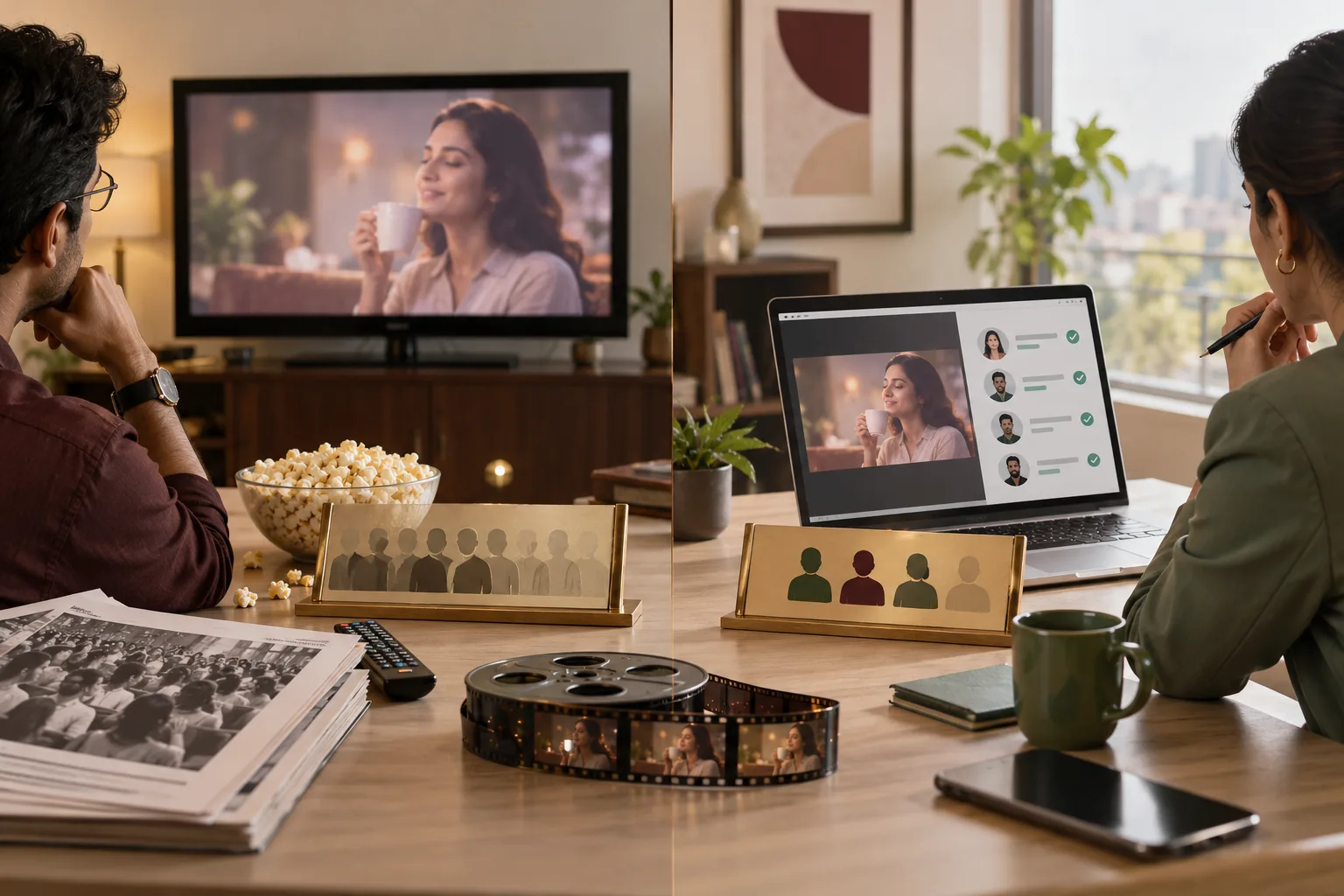 6 min read · 21 Sept 2026TV advertising vs OTT advertising: what are you actually buying?Television sells slots against ratings and prices in the wastage. OTT sells impressions to chosen people and charges for the choosing.
 8 min read · 21 Sept 2026Tamil advertising creative: what actually changesTamil is written one way and spoken another, and its script cannot tell b from p. What that means for your line, voice artist and brand spelling.
More for hospitals
Related work to consider.
Closest to this: sales craft
Also for hospitals
Or start from the overview: sales and marketing for hospitals.
Your next practical step
Tell us what you are trying to grow, and we will read it before we call.
Eight short steps, mostly taps. Skip anything you would rather answer on the call.