Clothing stores and boutiques · Digital out-of-home advertising
Show the boutique on screens in the malls and lobbies your shoppers pass.
For a clothing shop, digital out-of-home advertising buys timed appearances on shared screens near shoppers, such as mall displays, office lobbies and lift screens close to the shop. GullySales picks sites around your catchment, agrees the rotation and booking terms, prepares silent creative that works at a glance, and checks playback records against the schedule.
Scope, fee, reporting and term are agreed in writing after we have read your brief and spoken to you.
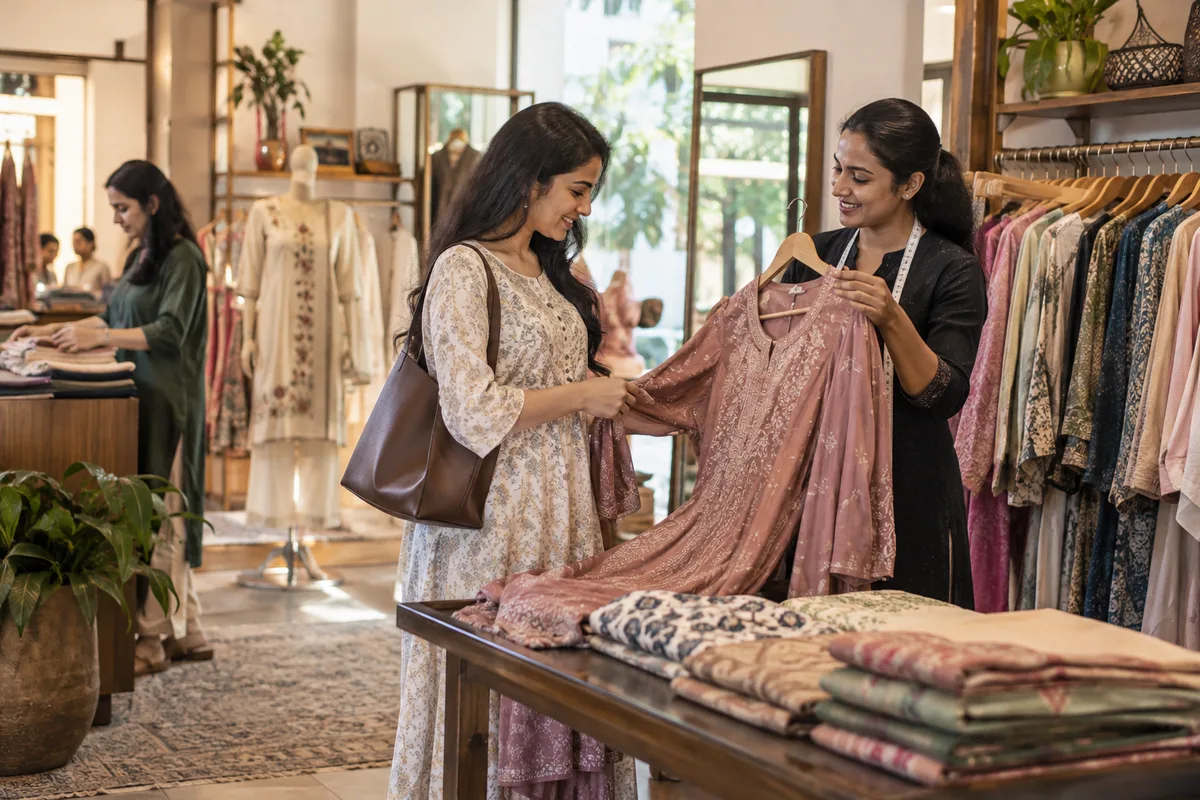
What digital out-of-home advertising means
Digital out-of-home advertising (DOOH) buys timed appearances on shared screens in places such as office lobbies, malls, airports, and roadside locations. GullySales selects sites around your buyers, agrees the screen rotation and booking terms, prepares suitable creative, and checks playback records against the schedule, with response recorded separately from media delivery.
Also for clothing stores and boutiques
- PPC ads for clothing stores and boutiques
- Bus advertising for clothing stores and boutiques
- Cricket advertising for clothing stores and boutiques
- Festive and seasonal advertising for clothing stores and boutiques
- Google Shopping and product feed management for clothing stores and boutiques
- Grand opening and store launch advertising for clothing stores and boutiques
- Mall advertising for clothing stores and boutiques
- Meta catalogue and dynamic product ads for clothing stores and boutiques
Sales and marketing for clothing stores and boutiques, the overview.
Last updated 14 Nov 2026.
For clothing stores and boutiques
Where it usually goes wrong, and what we would do.
“The screen has to be near the shop”
A boutique sells to people who can reach it. A network bundle of screens across a city holds screens that are too far for a shopper to cross for a blouse or a kurta. The useful screens are in the mall that holds or faces the shop, the lobbies of offices and residences nearby, and a lift or waiting area within the walking catchment. An address-level list decides whether the booking is worth anything.
“You buy a share of a loop, not a screen”
Your spot is one of several advertisements in a repeating playlist. The length of your spot, the length of the whole loop and the hours the screen operates decide how much time the shop actually gets. Two quotes with the same spot length can sit in very different loops. A photograph of the screen shows that it exists; it does not show how frequently the shop appears.
“Garments need a short, silent, readable film”
Lobby and mall screens play without sound, and a shopper has a few seconds. A fashion film built on music and a voiceover loses its message. The creative needs the shop name, a clear view of two or three garments, one line on what the shop is known for and the location, in a layout that fits the screen's shape. A wide film squeezed onto a tall lift screen cuts off the garments.
“Offers on a screen go out of date”
A festival offer or a new collection has a start and an end, and a screen that still shows last season's offer makes a shop look careless. The network's notice rules for replacing a file decide how soon a change can happen. The booking should name the file for each stage of the season and the notice the network needs, before the shop commits to anything with a date in it.
What we do
What we deliver for clothing stores and boutiques.
The work available for this need. We agree the deliverables and responsibilities for your engagement in writing.
Address-level site shortlist
A list of proposed malls, lobbies and lift screens with the address and position of each, and the unsuitable ones removed. You check every address against the area the shop draws shoppers from before approving the buy.
Result: Every screen you pay for has an address you have checked against your catchment.
Comparable booking terms
A comparison covering spot duration, loop length, rotation share, operating hours and available dayparts. The approved terms are written into the release order rather than left as a verbal promise from a sales call.
Result: Quotes from different networks are laid out on the same terms.
Screen environment brief
A brief linking the message to how each screen is watched: a shopper waiting at a mall entrance, a lift passenger, a person in an office lobby. You review whether the message can be read in the time that viewer has and whether it should differ by screen.
Result: Each screen type has a stated viewing situation and a matching layout.
Screen-ready silent creative
Creative prepared to the network's current file specification for each booked screen format, without reliance on sound. You approve the proofs, the shop name, the garments shown, the location and the response route before any file reaches the operator.
Result: You hold approved proofs for every screen shape you booked.
File change schedule
A version list for the season: the file for the collection launch, the festival offer and the close of the offer, with the notice the network requires. You check which file runs at each stage before booking, and the list is sent to the operator with the order.
Result: Each date-bound offer has a file name and an agreed replacement date.
Playback reconciliation and response record
A proof-of-play record is checked against the booked schedule, with gaps raised with the network. A code, short link or counter question is agreed so the shop team records visits separately from playback totals, and both are read against the figures noted before.
Result: You hold a playback record and a visit tally that are kept apart.
How the result is measured
- Plays delivered against the booked schedule
- Screens reporting playback against the approved site list
- Delivered rotation share and cost per play where records support comparison
Recorded as a baseline before work starts, so every later report has an honest comparison.
Who it is for
This is written for these clothing stores and boutiques.
- Women's ethnic wear and saree boutiques
- Designer and occasion wear studios
- Multi-brand clothing and accessories stores
- Men's wear and ethnic wear stores
- Custom tailoring and blouse stitching studios
- Kids' wear stores
- School uniform retailers and suppliers
- Corporate, hospital and hospitality uniform suppliers
- Fashion accessories and jewellery boutiques
Before you decide
Agree the work. Know how to judge it.
Digital out-of-home advertising for clothing stores and boutiques: use these checks to prepare, choose the scope, and review what changes.
Bring the right evidence
State the buyer group, catchment, and dates that matter to the offer. Ask for the proposed inventory and available evidence about its audience, with the source and date shown.
Make the scope clear
Agree the exact placements, formats, booking period, and proof of delivery. Separate media charges from design, production, permissions, and installation where these apply.
Check the work in use
Compare delivery evidence with the agreed booking and record enquiries through a distinct response route where practical. Treat audience estimates separately from measured responses.
Know when to change course
Do not buy a placement only because it is discounted. If the location or audience does not fit the buyer, revisit the plan before committing production costs.
These are discussion points, not a fixed package. GullySales confirms the deliverables, responsibilities, fee, and term in writing after reading your brief and speaking with you.
Before we start
What to have ready before the work starts.
The records, access and decisions this work needs from clothing stores and boutiques. Anything missing is noted in the written scope, with who will supply it.
- Areas your shoppers come from
- The malls, offices, residential areas and colleges that bring people to the shop. Screen sites are chosen from this list. Without it, a network can fill the booking with sites that look busy and sit outside the area a shopper will travel from.
- Photographs of the shop and the garments
- Clear photographs of the shop front and of the garments you want shown, taken in good light. A screen shows a few garments for a few seconds. If the photographs are poor or cluttered, the film will not carry the collection, however good the location.
- Offer dates and collection launches
- The dates of the launch, the festival offer and its end. The file change schedule is built from these. If the dates are not fixed before booking, a screen can keep showing an offer that has ended, which costs the shop credibility with the shopper.
- Shop logo and brand files
- The logo in a usable file, with the colours and fonts the shop uses. Screens vary in shape and brightness, so the logo must stay readable at different sizes. A logo that exists only as a photograph will be redrawn, and you will review the new version.
- Person to record visits and response
- One person who writes down the code, short link answer or counter reply from a shopper who mentions the screen. The response record is only useful if it is kept. If nobody owns it, the shop has playback figures and no way to link them to visits.
How it works
How the digital out-of-home advertising work runs
The work itself, in order. How an engagement starts, from your brief to a written scope, is set out on our method page.
- 1
Catchment and shopper brief
You describe the shopper you want, whether the bride's family, a college crowd, the people who work in nearby offices or the parents of school children, and the area they come from. We agree whether the screen supports a footfall goal, a launch or a festival offer, and put the scope, fee and term in writing.
- 2
Site check and spend decision
We obtain availability from the network or its agency and compare the sites on the same booking terms. You approve the screens that are inside your catchment and the costs for each before the booking is confirmed; screens that only add reach elsewhere are removed.
- 3
Creative and response sign-off
The network supplies its current file specification and we prepare silent creative to it. You approve the proofs and the response route. If the film shows any claim you have to stand behind, such as a sale or a price, your own reviewer clears it before release.
- 4
Operator handoff
Approved files go to the network with version names and the agreed schedule. We confirm that the operator accepted them, and agree how proof-of-play records will be supplied and how the replacement of a dated file will be handled.
- 5
Playback watch and visit recording
While the booking runs, the shop team records visits from the agreed code or question. We request the playback records the network has said it can supply, compare them with the booking, and raise any screen that was offline or any file that was not replaced on the agreed date.
- 6
Reading the result against the baseline
At the close, we compare documented playback with the order and the recorded visits with the footfall and enquiry figures noted before the booking. The review states what the screen delivered, what the shop can attribute and what remains unknown, so the next buying decision is made on evidence.
Where this fits
Three pieces of sales work, in this order.
This work sits inside sales process design, at stage 1, prospecting and lead generation. The audit comes before it, and sales management keeps it running.
Step 1
Sales audit
Find where deals are being lost and what to fix first.
Start here if you cannot say where orders are lost.
Step 2 · you are here
Sales process design
One written way to sell, from first enquiry to repeat order.
Start here if every salesperson sells differently.
Step 3
Sales management
A target, a review routine and someone who owns the number.
Start here if the team has targets and no routine.
FAQ
Questions owners ask before they call.
Not here? More answers, or ask on WhatsApp.
What is digital out-of-home advertising for a clothing store?
Do mall screens suit a boutique better than a bus panel?
Should the film have sound or music?
Can I change the offer during the booking?
How do I know the advertisement actually played?
Will you tell me how many shoppers came because of the screen?
How much does it cost?
How long is the contract?
How soon will we see results?
Who will actually do the work?
From the blog
Further reading for clothing stores and boutiques.
 5 min read · 29 Sept 2026Festival and wedding-season stock and promotion timing for retailersHow a retailer lines up promotion with the stock cycle in festival and wedding season: what to announce before, during and after, and when to stop.
 6 min read · 21 Sept 2026Influencer marketing vs social media advertising: which one should you pay for?An ad is a message you control, shown to people you choose. A creator post is a recommendation you do not control, shown to people who chose the creator.
 8 min read · 21 Sept 2026How to write an influencer briefA brief fixes the claim, the offer and the disclosure, then leaves the creator alone. Hand over a script and you pay for a bad advertisement.
More for clothing stores and boutiques
Related work to consider.
Closest to this: paid and media
- PPC ads for clothing stores and boutiques
- Bus advertising for clothing stores and boutiques
- Cricket advertising for clothing stores and boutiques
- Festive and seasonal advertising for clothing stores and boutiques
- Google Shopping and product feed management for clothing stores and boutiques
- Grand opening and store launch advertising for clothing stores and boutiques
- Mall advertising for clothing stores and boutiques
- Meta catalogue and dynamic product ads for clothing stores and boutiques
Also for clothing stores and boutiques
Or start from the overview: sales and marketing for clothing stores and boutiques.
Your next practical step
Tell us what you are trying to grow, and we will read it before we call.
Eight short steps, mostly taps. Skip anything you would rather answer on the call.