Clothing stores and boutiques · E-commerce product ad and promotional banner design
Make the outfit stop the scroll, then say why it is worth a visit.
Product ad and banner design for a clothing boutique is the artwork that shows one outfit, one collection or one occasion offer to a shopper in an advertisement or on your online store. GullySales designs the advertisements and banners from your own garment photographs and offer, sets them for each placement, and hands over finished files with editable sources.
Scope, fee, reporting and term are agreed in writing after we have read your brief and spoken to you.
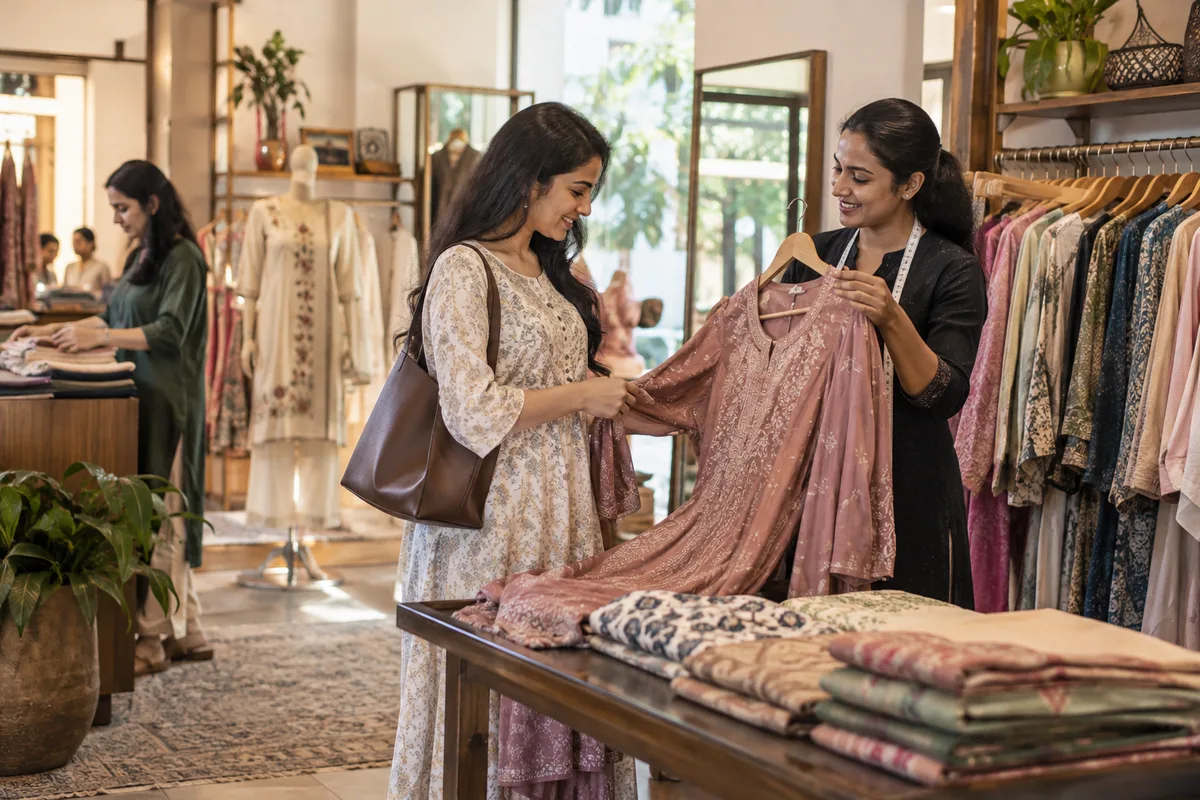
What E-commerce product ad and promotional banner design means
E-commerce product ad creative and promotional banners are the artwork that shows one product, or one sale, to a shopper in an advertisement or on your store. GullySales designs the product advertisements and the banners from your product pictures and offer, sets them for each placement, and hands over finished files with editable sources and a placement list.
Also for clothing stores and boutiques
- PPC ads for clothing stores and boutiques
- Bus advertising for clothing stores and boutiques
- Cricket advertising for clothing stores and boutiques
- Digital out-of-home advertising for clothing stores and boutiques
- Festive and seasonal advertising for clothing stores and boutiques
- Google Shopping and product feed management for clothing stores and boutiques
- Grand opening and store launch advertising for clothing stores and boutiques
- Mall advertising for clothing stores and boutiques
Sales and marketing for clothing stores and boutiques, the overview.
Last updated 14 Nov 2026.
For clothing stores and boutiques
Where it usually goes wrong, and what we would do.
“A garment on a hanger does not look like an occasion”
A shopper does not buy a saree or a kurta set as a piece of cloth. The shopper buys the wedding, the festival or the engagement it is for. An advertisement that shows only the garment, flat on a plain background, gives no picture of where it will be worn. The creative has to carry the occasion, the drape and the finish in one frame, without crowding the product.
“The same outfit has to work in several shapes”
A feed advertisement is square or tall, a story is full height, a banner on the store home page is wide and a mobile banner is short. A boutique has one good photograph of an outfit. Cropping it blindly cuts off the border of a saree or the hem of a lehenga. Each shape needs its own composition, built so the important part of the garment stays inside the frame.
“Colour on screen has to match the cloth in the shop”
Clothing is bought by colour and fabric, and a returned order starts with the words that is not the shade I saw. Ad artwork can brighten, warm or flatten a colour without anyone noticing. Creative for clothing needs a colour check against the real garment, a consistent treatment across a collection, and no filter that makes a maroon look red.
“Sale banners that look like every other shop's sale”
A clearance or festival banner with a shouting red tag and a slashed price tells the shopper the stock is old. A boutique that sells occasion wear and custom stitching depends on looking considered. The banner has to announce the offer and still look like the same shop that made the blouse a bride wore, with the offer text readable at a glance on a phone.
What we do
What we deliver for clothing stores and boutiques.
The work available for this need. We agree the deliverables and responsibilities for your engagement in writing.
Single-outfit advertisement set
One outfit is designed as a feed advertisement, a story frame and a short banner from the same photograph. The garment sits where each placement keeps it clear of the platform's buttons and captions. Type is kept to the name of the outfit and one line of reason, so the picture does the work.
Result: You can open each size and see the whole garment, the border and the hem inside the frame.
Collection and occasion banner pack
A bridal, festive, school-reopening or new-arrivals banner is designed as a family of pieces: the home page hero, a collection strip, a mobile banner and an email header. They share one layout and palette, so a shopper moving from an advertisement to the store feels they have arrived at the same place.
Result: A shopper can see the same look in the advertisement, the home page and the email header.
Offer and sale banner templates
Offers are designed as editable templates with a clear zone for the offer line, the dates and the condition, in the boutique's own style rather than a generic sale design. Your team changes the words and dates without redrawing the layout, and the template keeps the type size readable on a phone.
Result: Your team can change the offer line and dates in the template without asking for a redesign.
Carousel and look-book advertisement
A swipeable advertisement shows an outfit, then its blouse, its dupatta, its accessories and finally the price or enquiry card. Each frame leads into the next by colour or border. The carousel suits a shopper assembling a full occasion outfit, and the last frame tells the shopper what to do next.
Result: You can swipe through a carousel that ends on a clear enquiry or visit frame.
Colour-matched artwork guide
A short guide records how each colour in a collection is treated in the artwork: the background shade, the lighting direction, the permitted edits and the colours that need a physical check. It stops later advertisements drifting from the cloth, and it gives a new designer a rule instead of a guess.
Result: A second person can produce a matching advertisement by following the guide.
Editable files and a placement sheet
You receive the finished files in the sizes each placement asks for, the editable sources and a sheet listing which file goes where, with the safe zone for each. The sheet is written against the platform's current specifications, which your team should check before each campaign, since placements change.
Result: Your team can upload each file to the right placement from the sheet alone.
How the result is measured
- Products with advertisement artwork drawn for their placement
- Banners produced from the reusable frame without redrawing
- Artwork pieces that match their destination page exactly
Recorded as a baseline before work starts, so every later report has an honest comparison.
Who it is for
This is written for these clothing stores and boutiques.
- Women's ethnic wear and saree boutiques
- Designer and occasion wear studios
- Multi-brand clothing and accessories stores
- Men's wear and ethnic wear stores
- Custom tailoring and blouse stitching studios
- Kids' wear stores
- School uniform retailers and suppliers
- Corporate, hospital and hospitality uniform suppliers
- Fashion accessories and jewellery boutiques
Before you decide
Agree the work. Know how to judge it.
E-commerce product ad and promotional banner design for clothing stores and boutiques: use these checks to prepare, choose the scope, and review what changes.
Bring the right evidence
Choose a product group and follow its journey from the product page to delivery. Review cancelled orders and returns alongside completed purchases, with customer details removed.
Make the scope clear
Agree which catalogue items, payment steps, and sales channels are included. Account for fulfilment costs and returns when deciding what acquisition spend the order can support.
Check the work in use
Test a purchase on mobile, including the address, delivery charge, payment failure, and confirmation. For trade orders, test quotation requests and minimum-order information as well.
Know when to change course
If stock or delivery promises are unreliable, resolve those first. Increasing paid traffic to unavailable products wastes budget and creates avoidable complaints.
These are discussion points, not a fixed package. GullySales confirms the deliverables, responsibilities, fee, and term in writing after reading your brief and speaking with you.
Before we start
What to have ready before the work starts.
The records, access and decisions this work needs from clothing stores and boutiques. Anything missing is noted in the written scope, with who will supply it.
- Photographs of the outfits
- The advertisement is built from your garment photographs, so their quality sets the ceiling. Send the originals, not copies saved from a messaging app. Without a clear photograph of the border, the drape or the fabric, the advertisement shows a flat shape that gives the shopper nothing to want.
- The offer and its conditions
- Tell us the offer, the dates, the items covered and anything excluded, such as custom stitching or school uniforms. A banner that promises more than the shop will honour sends a shopper to the counter in a bad mood, so the wording needs your decision before it is designed.
- Your current store and advertisement figures
- Share the platform reports, the store banner positions and the order or enquiry record. They are the baseline for reading the result. When they are missing, nobody can say whether a new banner changed anything, and the next round is guesswork.
- A decision on the occasion
- Choose which occasion or collection leads the next advertisements: a wedding line, a festival range, children's wear or a school uniform reopening. A single lead idea makes a sharper advertisement than a mix. Without a decision, the artwork tries to show everything and persuades nobody.
- Access to the store and ad accounts
- Where we need to read specifications or reports, you keep the logins and share view access or exports. GullySales prepares the files and you upload them. This keeps the account in your hands and avoids a missed banner slot caused by a change nobody told you about.
How it works
How the e-commerce product ad and promotional banner design work runs
The work itself, in order. How an engagement starts, from your brief to a written scope, is set out on our method page.
- 1
Reading your garments and your shop
We start with the garments you want to promote, the photographs you already hold and the way your shop speaks to its shopper. Occasion wear, custom stitching, children's wear and uniforms each need a different tone. We note what the advertisement has to do: bring a visit, an enquiry or an online order.
- 2
Recording the figures before design begins
Before any artwork is made we note your current advertisement results, the enquiries and orders that reach you from advertisements, and the banner positions on your store. The platform's own reports and your order record are the source. Later results are read against these, never against a guess.
- 3
Choosing the hero frame for each outfit
From your photographs we select the frame that shows the drape, the border and the fabric best, and mark the part that must never be cropped. Where no good photograph exists, we say so and ask for one rather than building the advertisement on a weak picture, because the garment is the whole argument.
- 4
Designing sizes from one idea
We design the feed, story, banner and mobile shapes together, not one after another, so the idea holds across them. Each shape is composed for its own proportions, the garment kept clear of platform overlays, and the offer line given room. You see the set together before any single piece is polished.
- 5
Checking colour and offer against the shop
We compare the artwork colours with the physical garments and with your price and offer sheet. The offer wording, dates and conditions are read back to you for approval, since you own the commercial terms. Where the platform has a current rule on text or claims, your team checks it before the files go live.
- 6
Handover and reading the result
We hand over finished files, editable sources and the placement sheet, then read the later advertisement and store figures against those recorded at the start. Where a piece underperformed, the figures show which size, frame or offer line to change, and we say what remains unproven.
Where this fits
Three pieces of sales work, in this order.
This work sits inside sales process design, at stage 1, prospecting and lead generation. The audit comes before it, and sales management keeps it running.
Step 1
Sales audit
Find where deals are being lost and what to fix first.
Start here if you cannot say where orders are lost.
Step 2 · you are here
Sales process design
One written way to sell, from first enquiry to repeat order.
Start here if every salesperson sells differently.
Step 3
Sales management
A target, a review routine and someone who owns the number.
Start here if the team has targets and no routine.
FAQ
Questions owners ask before they call.
Not here? More answers, or ask on WhatsApp.
Can you design advertisements from phone photographs of our outfits?
Will the advertisement show the real colour of the cloth?
Do you write the offer text and the captions?
Can one design serve the store banner and the social advertisement?
Do you run the advertisements and the budget?
Can we reuse the templates for next season's sale?
How long is the contract?
How soon will we see results?
Who will actually do the work?
What do you need from us?
From the blog
Further reading for clothing stores and boutiques.
 5 min read · 29 Sept 2026Festival and wedding-season stock and promotion timing for retailersHow a retailer lines up promotion with the stock cycle in festival and wedding season: what to announce before, during and after, and when to stop.
 6 min read · 21 Sept 2026Influencer marketing vs social media advertising: which one should you pay for?An ad is a message you control, shown to people you choose. A creator post is a recommendation you do not control, shown to people who chose the creator.
 8 min read · 21 Sept 2026How to write an influencer briefA brief fixes the claim, the offer and the disclosure, then leaves the creator alone. Hand over a script and you pay for a bad advertisement.
More for clothing stores and boutiques
Related work to consider.
Closest to this: paid and media
- PPC ads for clothing stores and boutiques
- Bus advertising for clothing stores and boutiques
- Cricket advertising for clothing stores and boutiques
- Digital out-of-home advertising for clothing stores and boutiques
- Festive and seasonal advertising for clothing stores and boutiques
- Google Shopping and product feed management for clothing stores and boutiques
- Grand opening and store launch advertising for clothing stores and boutiques
- Mall advertising for clothing stores and boutiques
Also for clothing stores and boutiques
Or start from the overview: sales and marketing for clothing stores and boutiques.
Your next practical step
Tell us what you are trying to grow, and we will read it before we call.
Eight short steps, mostly taps. Skip anything you would rather answer on the call.