Clothing stores and boutiques · Wedding season advertising
Advertise to the family while the outfits are still unchosen.
Wedding season advertising for a clothing store or boutique plans paid media around when families buy wedding outfits and when your tailors can still deliver them. GullySales uses your order book and stitching capacity to set the campaign window, compare media options, coordinate bookings and record which enquiries became orders.
Scope, fee, reporting and term are agreed in writing after we have read your brief and spoken to you.
What wedding season advertising means
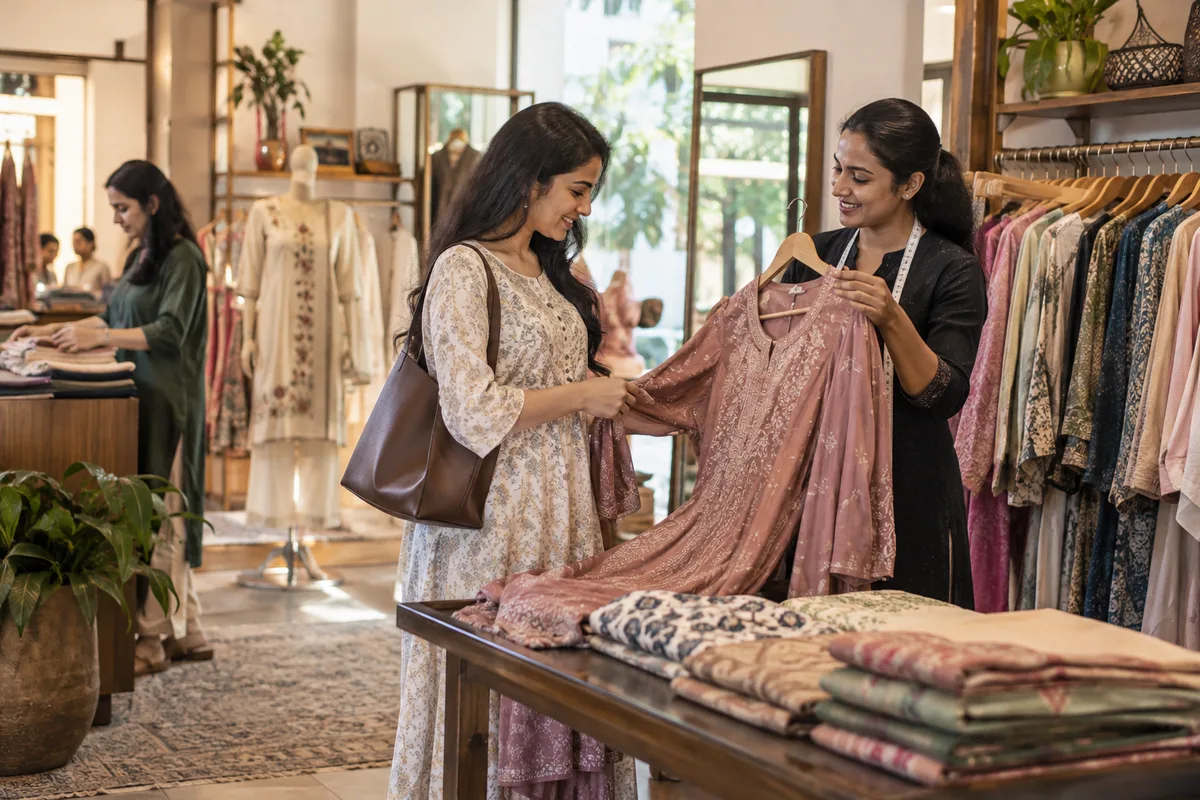
Wedding season advertising plans paid media around when families choose wedding suppliers, rather than only around the wedding dates themselves. GullySales uses your booking records and available capacity to set the campaign window, compare media options, coordinate bookings, and record which enquiries become confirmed business.
Also for clothing stores and boutiques
- PPC ads for clothing stores and boutiques
- Bus advertising for clothing stores and boutiques
- Cricket advertising for clothing stores and boutiques
- Digital out-of-home advertising for clothing stores and boutiques
- Festive and seasonal advertising for clothing stores and boutiques
- Google Shopping and product feed management for clothing stores and boutiques
- Grand opening and store launch advertising for clothing stores and boutiques
- Mall advertising for clothing stores and boutiques
Sales and marketing for clothing stores and boutiques, the overview.
Last updated 14 Nov 2026.
For clothing stores and boutiques
Where it usually goes wrong, and what we would do.
“The wedding date is the end, not the start”
Families buy a trousseau backwards from the wedding: first the bride's outfits, then the family's, then the guests'. The advertisement that matters runs when they are still choosing, which is well before the date. Your own order book shows how far ahead families first visited and when they paid an advance. That gap sets the campaign window, not the festival calendar.
“One wedding means several different buyers”
A bride, the bride's mother, the groom's family, sisters and guests each want something different, and each reads a different advertisement. A message about bridal sarees does not speak to a mother buying for the whole family or a guest looking for a single outfit. The plan names who each placement is for and what that person needs to see before visiting.
“Stitching capacity is the product you are selling”
A blouse that cannot be finished before the wedding is a lost customer, not a late order. Advertising that fills the shop while the tailors are already full brings orders the shop cannot deliver in time. The plan therefore starts from a stitching cut-off date and the number of fittings your team can handle, and the campaign stops promoting made-to-measure when the queue is full.
“Good media is booked before the season starts”
Supplement pages, hoardings on shopping roads and mall panels are in demand when wedding shopping begins, and a late request meets a full sheet. Placements bought in a rush may not even reach the families who can visit. Asking early and checking the catchment before agreeing is cheaper than buying whatever remains.
What we do
What we deliver for clothing stores and boutiques.
The work available for this need. We agree the deliverables and responsibilities for your engagement in writing.
Wedding order calendar
A calendar built from your previous orders, mapping each wedding date to the day the family first visited, the advance date and the delivery date. You check it against memory and the order book. It shows how far ahead of a wedding your customers actually start shopping.
Result: The calendar shows the gap between first visit and wedding for your own shop.
Stitching cut-off and capacity sheet
A sheet recording the last date for each type of order, such as blouses, kurtas, lehengas and alterations, and how many fittings the team can take each time. Your tailoring lead confirms it. The campaign promotes made-to-measure only while the sheet shows capacity.
Result: Each type of order has a cut-off date your tailoring lead has signed.
Buyer-by-buyer message brief
A short brief saying what the bride, the mother of the bride, the groom's family and a wedding guest each need to see. It lists the outfits to feature, the stock that is available and the offers you may stand behind. You approve it before any artwork is drawn.
Result: Every placement is written for one named buyer and one named range.
Media comparison and booking sheet
Placements compared within the catchment: newspaper supplements, hoardings, mall panels, search and map advertising, and your own WhatsApp list. Each shows run dates, quoted terms and who it will reach. The negotiated offer reaches you before anything is booked.
Result: Each booking carries the quote you approved, with run dates in writing.
Enquiry route and counter script
A response route through a dedicated number or code, and a short script for the counter and the WhatsApp reply. It asks for the wedding date, who the outfit is for and the date needed, before quoting. The answers go into a single sheet.
Result: Each enquiry record shows the wedding date, the buyer type and the source placement.
Season record
A record of what ran, with dated photographs of physical placements and proof of publication, set beside the order book. Confirmed orders are recorded separately from enquiries that went no further. The next season starts with what sold and what stayed unsold.
Result: You can match each placement to confirmed orders without relying on memory.
How the result is measured
- Enquiries by recorded source against the pre-campaign baseline
- Enquiries matching available dates and service capacity
- Reply time and enquiry-to-booking conversion
Recorded as a baseline before work starts, so every later report has an honest comparison.
Who it is for
This is written for these clothing stores and boutiques.
- Women's ethnic wear and saree boutiques
- Designer and occasion wear studios
- Multi-brand clothing and accessories stores
- Men's wear and ethnic wear stores
- Custom tailoring and blouse stitching studios
- Kids' wear stores
- School uniform retailers and suppliers
- Corporate, hospital and hospitality uniform suppliers
- Fashion accessories and jewellery boutiques
Before you decide
Agree the work. Know how to judge it.
Wedding season advertising for clothing stores and boutiques: use these checks to prepare, choose the scope, and review what changes.
Bring the right evidence
State the buyer group, catchment, and dates that matter to the offer. Ask for the proposed inventory and available evidence about its audience, with the source and date shown.
Make the scope clear
Agree the exact placements, formats, booking period, and proof of delivery. Separate media charges from design, production, permissions, and installation where these apply.
Check the work in use
Compare delivery evidence with the agreed booking and record enquiries through a distinct response route where practical. Treat audience estimates separately from measured responses.
Know when to change course
Do not buy a placement only because it is discounted. If the location or audience does not fit the buyer, revisit the plan before committing production costs.
These are discussion points, not a fixed package. GullySales confirms the deliverables, responsibilities, fee, and term in writing after reading your brief and speaking with you.
Before we start
What to have ready before the work starts.
The records, access and decisions this work needs from clothing stores and boutiques. Anything missing is noted in the written scope, with who will supply it.
- Last season's order book
- Orders with the wedding date, the day of the first visit, the advance date and the delivery date. These show when your customers really shop. Without them the window is set by guesswork, and the campaign may run after the families have chosen.
- Stitching and alteration capacity
- The number of tailors, the fittings each can handle and the last practical date for each kind of order. This sets how much the campaign should promise. If it is missing, advertising can sell more than the shop can deliver, and one late outfit travels through every family group.
- Stock and outfits to feature
- The ranges you want to sell in the season, with prices you are willing to advertise and the sizes in hand. Without a stock decision, the artwork shows an outfit that has sold out by the time the family visits.
- Past media quotes and rate cards
- Quotes, rate cards or invoices from earlier placements, and any relationship with local publications. They help us compare offers and avoid paying more than before. If there are none, we ask the media owners from scratch and you see all quotes.
- Photographs and a named responder
- Clear outfit photographs, with the written consent of any person shown, and one person who answers the advertising number and WhatsApp. Without a named responder, the first enquiries wait, and the family moves on to the shop that replied.
How it works
How the wedding season advertising work runs
The work itself, in order. How an engagement starts, from your brief to a written scope, is set out on our method page.
- 1
Read the previous season's wedding orders
You share the order book and delivery records. We build the wedding order calendar from it and show how far ahead families began shopping. You confirm or correct it, and the advertising window is proposed from that record, not from a general belief about the season.
- 2
Set the stitching cut-off dates
Your tailoring lead gives the last practical date for each order type and the number of fittings per sitting. We write the cut-offs into the plan. Where the queue is already near full, we advise promoting ready-made outfits and alterations instead of made-to-measure.
- 3
Choose where families will see it
We map the localities your customers come from and compare placements within reach of them. You see which options fit the families who can visit, and which we advise leaving out. You choose the spend after seeing availability and booking conditions.
- 4
Book media and approve artwork
With your approval, GullySales coordinates with the publication, media owner or their agency. An early enquiry does not hold space, so nothing is reserved until you authorise it. You check the artwork against the booked format and approve each claim about stock and offers.
- 5
Brief the counter and WhatsApp team
The staff who answer calls, messages and visits receive the buyer brief, the script and the cut-off sheet. They ask the wedding date first. The enquiry sheet is tested with a sample message before the campaign starts.
- 6
Compare orders with the earlier record
While the campaign runs we compare enquiries and orders with the figures recorded before it began. Changes need your approval and depend on remaining space and production time. At the end we reconcile what ran with confirmed orders and hand the record to your team.
Where this fits
Three pieces of sales work, in this order.
This work sits inside sales process design, at stage 1, prospecting and lead generation. The audit comes before it, and sales management keeps it running.
Step 1
Sales audit
Find where deals are being lost and what to fix first.
Start here if you cannot say where orders are lost.
Step 2 · you are here
Sales process design
One written way to sell, from first enquiry to repeat order.
Start here if every salesperson sells differently.
Step 3
Sales management
A target, a review routine and someone who owns the number.
Start here if the team has targets and no routine.
FAQ
Questions owners ask before they call.
Not here? More answers, or ask on WhatsApp.
When should we start advertising for the wedding season?
Should the advertising feature bridal wear or guest wear?
What if the tailors are already full?
Is a creator or influencer part of this service?
Can you reserve newspaper or hoarding space for us?
Will wedding season advertising fill the shop?
How much does it cost?
How long is the contract?
How soon will we see results?
Who will actually do the work?
From the blog
Further reading for clothing stores and boutiques.
 5 min read · 29 Sept 2026Festival and wedding-season stock and promotion timing for retailersHow a retailer lines up promotion with the stock cycle in festival and wedding season: what to announce before, during and after, and when to stop.
 6 min read · 6 Feb 2025How to increase jewellery store footfallJewellery footfall follows a calendar you already own. Plan against the buying seasons and the wedding dates, and sell to the family that decides together.
 6 min read · 21 Sept 2026Influencer marketing vs social media advertising: which one should you pay for?An ad is a message you control, shown to people you choose. A creator post is a recommendation you do not control, shown to people who chose the creator.
More for clothing stores and boutiques
Related work to consider.
Closest to this: paid and media
- PPC ads for clothing stores and boutiques
- Bus advertising for clothing stores and boutiques
- Cricket advertising for clothing stores and boutiques
- Digital out-of-home advertising for clothing stores and boutiques
- Festive and seasonal advertising for clothing stores and boutiques
- Google Shopping and product feed management for clothing stores and boutiques
- Grand opening and store launch advertising for clothing stores and boutiques
- Mall advertising for clothing stores and boutiques
Also for clothing stores and boutiques
Or start from the overview: sales and marketing for clothing stores and boutiques.
Your next practical step
Tell us what you are trying to grow, and we will read it before we call.
Eight short steps, mostly taps. Skip anything you would rather answer on the call.