Business automation and RPA companies · Sales process
Never quote a bot you have not watched a person do first.
The sales process for an automation firm is the sequence from first enquiry to a signed pilot and a support contract, with a watched process walk and a written pass mark in the middle. GullySales names the steps, the questions at each and what to record, so that no quote rests on a description.
A 90-minute audit call and a written, scored report. Turnaround, reporting and term are agreed in writing after the audit.
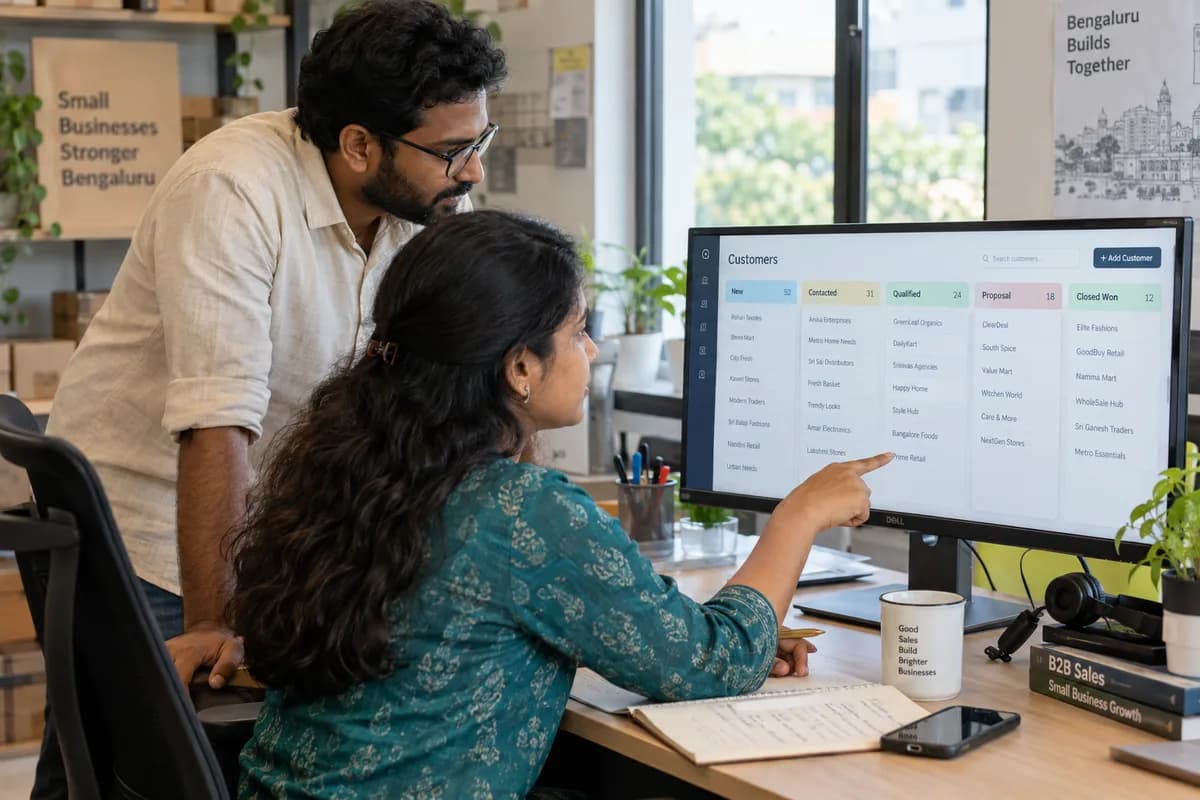
What sales process means
A sales process is the fixed sequence of steps, such as enquiry, site visit, quote and order, that every deal is expected to pass through in the same order. GullySales writes this sequence down for your business and checks that every salesperson actually follows it.
Also for business automation and RPA companies
- SEO for business automation and RPA companies
- Content marketing for business automation and RPA companies
- Lead generation for business automation and RPA companies
- PPC ads for business automation and RPA companies
- Email marketing for business automation and RPA companies
- Buyer journey for business automation and RPA companies
- Website development for business automation and RPA companies
- Referral marketing for business automation and RPA companies
Sales and marketing for business automation and RPA companies, the overview.
Last updated 6 Oct 2026.
For business automation and RPA companies
Where it usually goes wrong, and what we would do.
“A quote built on a phone description”
We key invoices from emails hides the supplier who sends photographs, the credit note and the manager's handwriting. The quote is wrong the day the process is watched.
“The proof of concept has no end”
A free pilot with no written pass mark runs on until the buyer has had the work for nothing. Without an agreed finish line the proof of concept becomes the project.
“Licence, build and support are priced as one”
The buyer sees a single number and cannot compare it with a freelancer or a module. Split into three parts, each part can be questioned, accepted or declined.
What we do
What we deliver for business automation and RPA companies.
Every deliverable, what it covers for you, and the result it is there to produce. Nothing here is an extra.
A discovery call sheet
The questions asked and the answers kept: process, systems, owner, who does it today, what triggers it and what the buyer has already tried.
Result: The next person to speak to the buyer starts from the notes.
A process walk record
What was watched on the screen share, the exceptions seen, the systems touched and the volume as the owner counts it, marked as the owner's own estimate.
Result: The scope is written from the work as it is done.
A proof of concept scope with a pass mark
What the pilot will do, on which data, what counts as a pass and who on the client's side decides it, signed before work starts.
Result: A pilot ends in a yes or a no.
A proposal in three parts
Licence, build and support set out separately, with what each covers and what is excluded, so each can be discussed on its own.
Result: Price is argued part by part, not as one number.
A go-live handover and support offer
What is handed over, who watches the bot, what an alert looks like and who rings whom when a portal changes.
Result: The pilot becomes a support contract and not an orphan.
A lost-deal reason list
A short fixed list of why deals ended, filled in at the close, such as no budget, built in-house, chose a module, or pilot failed.
Result: You can see which loss to fix first.
How the result is measured
- Deals following the process
- Time spent at each step
- Drop-off rate by step
Recorded as a baseline before work starts, so every later report has an honest comparison.
Steps of a sale
The steps from first enquiry to a bot in production, with what to ask and record at each.
- Enquiry and first call
- Ask which process, which systems and who owns it. Record the answers and the source, and book a screen share instead of sending a brochure or a figure.
- Process walk
- Watch the work done, on a real day, with real files. Write down every exception and every system touched, and ask who decides when the rules do not apply.
- Feasibility and rule check
- Decide whether the rules can be written down. A process that depends on one person's judgement is not ready, and saying so early saves a failed pilot.
- Proof of concept
- Agree the scope, the data and the pass mark in writing. Name the client's person who signs the verdict, and record what was and was not automated.
- Proposal and business case
- Send licence, build and support as three parts. Give the champion a one-page case built from the team's own records, with their hours marked as their estimate.
- Go-live and handover
- Hand over the process document, the alert routine and the support contact. Record the go-live date and ask the process owner what else the team retypes.
Who it is for
This is written for these business automation and RPA companies.
- UiPath, Automation Anywhere and Blue Prism implementation partners
- Power Automate and Microsoft 365 consultancies
- Workflow studios building on Zoho, n8n, Make and Zapier
- Document processing and OCR specialists for invoices, KYC and claims
- Finance back-office automation firms covering GST, TDS and bank reconciliation
- Software houses adding an automation practice
- Shared-service and BPO teams turning their own bots into a product
- Freelancer-led teams becoming a registered company
Not for
It is not the right fit if.
- You want a guaranteed Google ranking or a guaranteed number of leads. Nobody honest can promise either.
- You need enquiries by next week and have nobody to answer them.
- You want posts and reach reported, not enquiries and orders.
How it works
From your first message to the first report.
No open-ended retainer. Every step gives you something in writing.
First
Free audit call
90 minutes with whoever handles your enquiries: how they arrive, how fast they are answered, where they are lost.
After the call
Written, scored report
Six areas scored, fixes ranked by return and cost. If you want our help, the scope, the fee and the reporting come with it, in writing.
Before work starts
Baseline recorded
Enquiries by source, reply time, conversion and cost per order, written down so every later report has an honest comparison.
After the baseline
The first fix goes live
Usually the cheapest one on the report: reply time, a follow-up sequence or the marketing-to-sales handover.
As agreed
Report against the baseline
What moved, what did not, and what changes next, in plain words. How often you get it is set in writing before work starts.
At renewal
Renew on the numbers
The term ends and you decide whether to continue from the results. The length is agreed in writing before anything starts.
How the work runs for business automation and RPA companies
- 1
Trace the enquiry trail
In the free audit we follow your last pilots back to the first contact, whether platform vendor, ERP partner, search or an old client, and see where the calls went quiet.
- 2
Fix the discovery call
The questions, the process walk and the record kept, so that no quote is built on a description.
- 3
Publish the proof
A page per process, a support page and a security page, written from what your developers actually built and fixed.
- 4
Open the routes in
Search, partner referrals, outreach to ERP partners and the replies to each, with every source recorded.
- 5
Report from call to contract
Discovery calls held, proofs passed, pilots signed and support contracts attached, against the baseline.
Proof
What happened when owners fixed this.
Real clients, the work we did, and the result as it was recorded. Where no number was recorded, none is claimed.
Sentence Labs
- Situation
- Almost nothing of Sentence Labs was online, so a technically credible company was more or less invisible to the buyers who needed it.
- What we did
- Research first
- The website rebuilt
- Search work across the board
- Google Business Profile
- Result
- No numbers were recorded for this engagement. The work is described in full in the case study.
Chord Road Hospital
- Situation
- Patients who knew the hospital trusted it. Patients who searched for a department or a treatment in the area did not find it.
- What we did
- Website rebuilt around patient needs
- Search visibility
- Social media on a schedule
- Review management
- Result
- Organic traffic increased 60% within six months
- Online appointment bookings increased 40%
- Social following grew 45%, and engagement on it rose 70%
Also worked with
Curtain Label · Difesa Security Services · Felicity Inn · Hands On CSR · Implevista · Kambar Group · Kalessi · Kerur Pain Clinic · LL Trust · Lucky Deals · Natural Gases · NavaShakthi Souhardha · NewCom Logistics · Proton Technical Services · SB Engineering · Shakthi Foundation · Shakthi Group · Urbanest · Insyde Studio · Venkateshwara Laser Tech · Vivara Studios
Why us
Why owners pick GullySales over an agency.
Marketing and sales, as one job
Most agencies stop at the enquiry. We also fix what happens after it: the reply, the follow-up, the quote and the CRM.
The person on the first call does the work
No account managers in between. You are never handed to someone you have not met.
A baseline before anything starts
Your numbers are written down on day one, so every later report compares against something honest.
The fee in writing, split three ways
Our time, your media spend and production on separate lines. You always see what goes to us.
No guarantees we cannot keep
The term is agreed in writing and never a default twelve months. We never promise a ranking or a lead count, because nobody controls those.
One office, and we say so
Nagarbhavi, Bengaluru. We work across India by call and WhatsApp and travel when a session needs to be in person.
#257, 3rd floor, Sri Nanjundeshwara Complex, Nagarbhavi 8th Block, Outer Ring Road. How we work.
The offer
Start with a free audit of how you sell.
It is useful on its own, whether or not you hire us.
What you receive
- A 90-minute call with the person who will do the work
- A written, scored report on the six places orders leak
- Every fix ranked by what it returns and what it costs
- The one thing to do first, and why
- An honest line on whether you need outside help at all
- If you do, the scope and the fee in writing
No invoice. No obligation. No sales script.
FAQ
Questions owners ask before they call.
Not here? More answers, or ask on WhatsApp.
Should the proof of concept be free?
When should we send a quote?
A buyer only asks for the price per bot. What do we say?
Which step should we add if deals keep stalling?
Should we call it RPA or automation?
The platform vendor already lists us as a partner. Why more?
How long is the contract?
How soon will we see results?
Who will actually do the work?
What do you need from us?
From the blog
Further reading for business automation and RPA companies.
- 6 min read · 6 Oct 2026Why companies hesitate to hand payroll to an outside firmOwners do not hold back from outsourced payroll over the fee. They hold back over errors, confidential salary data and who answers when an employee complains. Answer these before the proposal.
- 5 min read · 6 Oct 2026How energy auditors qualify a plant before visitingBefore an energy auditor spends a day on site, five answers decide whether the enquiry is an audit or a favour: the bills, the trigger, the approver, the scope and the data access.
- 5 min read · 6 Oct 2026How electronic components distributors answer a BOM enquiryAnswer a BOM in the buyer's own line order, saying for each part whether you hold it, how many, from which source and by what date, and send the firm lines before the open ones.
More for business automation and RPA companies
Everything else we would do for you.
- SEO for business automation and RPA companies
- Content marketing for business automation and RPA companies
- Lead generation for business automation and RPA companies
- PPC ads for business automation and RPA companies
- Email marketing for business automation and RPA companies
- Buyer journey for business automation and RPA companies
- Website development for business automation and RPA companies
- Referral marketing for business automation and RPA companies
- CRM for business automation and RPA companies
Or start from the overview: sales and marketing for business automation and RPA companies.
Your next practical step
Get a free audit of how you sell, and a scored report of where the work is.
90 minutes. A written, scored report. No invoice and no obligation.