Hospitals · Product and service brochure copywriting
Write the brochure a family or a corporate buyer can read without a doctor beside them.
Brochure copywriting for a hospital is the writing of the words inside the printed or downloadable piece that describes a department, a health-check arrangement or the hospital itself. GullySales reads your departments and your desk's questions, writes a section-by-section manuscript, and marks every factual line for your medical director to approve before a designer lays it out.
Scope, fee, reporting and term are agreed in writing after we have read your brief and spoken to you.

What product and service brochure copywriting means
Product and service brochure copywriting is the writing of the words inside a brochure: the cover line, section headings, descriptions, specifications, steps and the closing call to action. GullySales reads your range and your buyers' questions, writes a section-by-section manuscript, and hands over copy a designer can lay out, with every claim marked for your approval.
Last updated 14 Nov 2026. Rules for this trade differ by state and professional body, and they change. We describe restrictions in general terms, so check the current position with your own council or adviser before you publish anything.
For hospitals
Where it usually goes wrong, and what we would do.
“The brochure lists doctors and equipment, not questions”
A typical hospital brochure names the departments, shows a building and prints a list of machines. A family or an HR head wants to know what happens on the first visit, what a package covers, how admission works and who to call. Features without their plain meaning leave the reader no wiser. The manuscript has to be built from the questions the desks hear, in the order the reader asks them.
“One document, several readers”
The patient, the relative who pays, the referring doctor and the corporate buyer pick up the same leaflet and want different pages. Trying to serve all of them gives each a little and answers none. A hospital needs a clear decision: one brochure per department for families, a separate piece for corporate arrangements, and a short sheet for referrers.
“Every fact in print can be checked by someone”
Bed counts, accreditations, doctor qualifications, equipment and package contents are facts a family or a regulator can test. A brochure printed with an old figure or a former doctor's name stays in circulation long after the change. Each line has to be confirmed by a named person, and the manuscript should avoid facts that change faster than a print run.
“Advertising rules apply to paper as well”
A printed piece is advertising. Superlatives, outcome claims, comparisons with another hospital and patient photographs or stories can breach the rules of your medical council. The brochure also lasts for a long time on a waiting-room table. Wording has to be reviewed by your medical director and checked by your own adviser before it goes to print, not after it has been distributed.
What we do
What we deliver for hospitals.
The work available for this need. We agree the deliverables and responsibilities for your engagement in writing.
Reader and purpose brief
One page agreeing who opens each brochure, where it is picked up and what the reader should do next. For a hospital this may be the family in the waiting area, the HR head after a presentation, or the referring doctor. Each later choice is tested against this page.
Result: Every brochure has one named reader and one next step.
Panel-by-panel outline
A plan showing the job of each page or panel: what the department treats in general terms, how a first visit works, how admission and approval run, what to bring, and who to call. You approve the order before full copy is written.
Result: You can see the whole brochure on one page before any wording is final.
Department and package descriptions
For each department or package, a description of what it is, who it suits, what the visit involves and what the family should check before choosing. Specifications and inclusions are set in a reader-friendly order, with exclusions stated as plainly as inclusions.
Result: A family can tell what a package covers and what it leaves out.
Corporate arrangement section
Where a brochure serves companies, a section describing how a health-check or care arrangement works: who enrols, what is covered, who handles paperwork and how an HR contact reaches the desk. Prices are left for your desk to fill.
Result: An HR reader can describe the arrangement to a colleague after one read.
Fact and claim sheet
Every claim, accreditation, equipment mention, doctor name and qualification in the manuscript, listed with the source your medical director must confirm. Outcome claims and rankings are flagged for removal, and your adviser reviews the sheet.
Result: No printed fact lacks a named person who confirmed it.
Cover lines and short versions
Options for the cover line, back-panel line and the short text used in emails or on a download page. They are written to match the inside, so the outside never promises more than the pages contain.
Result: The cover line can be defended page by page.
How the result is measured
- Enquiries that mention the brochure
- Brochures requested after a sales call
- Calls opened with a question the brochure answers
Recorded as a baseline before work starts, so every later report has an honest comparison.
Who it is for
This is written for these hospitals.
- Multi-speciality hospitals
- Single-speciality hospitals, maternity, orthopaedic or eye
- Nursing homes
- Day-care surgery centres
- Corporate hospital chains with several branches
- Diagnostic-centre-led hospitals
- Hospitals attached to medical colleges
- Government-empanelled private hospitals
Before you decide
Agree the work. Know how to judge it.
Product and service brochure copywriting for hospitals: use these checks to prepare, choose the scope, and review what changes.
Bring the right evidence
Bring questions from sales calls and examples of objections that delay a decision. Choose a subject expert who can check the substance, and identify evidence that can be published.
Make the scope clear
Agree the reader, buying question, format, and distribution route for each piece. Set the approval process and distinguish new research from rewriting material you already have.
Check the work in use
Ask a colleague to use the draft in a real buyer conversation. It should answer the question, support its claims, and make the next step clear without requiring a sales pitch to explain it.
Know when to change course
If the same unanswered question appears in several articles, improve the strongest page before commissioning another. More words are not a substitute for missing evidence.
These are discussion points, not a fixed package. GullySales confirms the deliverables, responsibilities, fee, and term in writing after reading your brief and speaking with you.
Before we start
What to have ready before the work starts.
The records, access and decisions this work needs from hospitals. Anything missing is noted in the written scope, with who will supply it.
- Current brochures, leaflets and package sheets
- We start from what the hospital already prints and hands out. Bring every version, including old ones still in circulation. Without them we cannot see which facts have changed, and the new manuscript may contradict a sheet that the desk keeps giving out.
- Department details confirmed by each head
- Each department head should confirm services offered, hours and equipment in writing. Without that confirmation, the brochure describes what the marketing office believes is available, and the family arrives expecting a service the department does not run.
- Doctor names, qualifications and consent
- Naming a doctor needs the doctor's agreement and exact qualifications as registered. Bring them as the doctor approves them. Anything unconfirmed is left out, so a brochure never prints a title that a council or a colleague can question.
- Accreditation and facility facts
- Certificates, bed numbers and facility details change. Bring the current documents and the name of the person who keeps them. Without proof, those lines are removed, because an accreditation printed after it has lapsed is a risk for the whole piece.
- Your decision on photographs
- Photographs of wards and staff raise consent and privacy questions, and patient photographs are a matter for your adviser. Tell us what images exist and who approved them. Without a decision, the manuscript uses captions for places and equipment only, with no patient shown.
How it works
How the product and service brochure copywriting work runs
The work itself, in order. How an engagement starts, from your brief to a written scope, is set out on our method page.
- 1
Read the present brochure and the desk's questions
We read the current leaflets, the website pages and the sheets your desks hand out. We also collect the questions the admissions, corporate and outpatient desks hear again and again, since a brochure should answer them. Where two documents give different figures, we list the differences for you to settle.
- 2
Choose the reader and the next step
With your business development lead we decide who each brochure is for and what the reader does after reading it: call a desk, bring a document, ask for a visit. If two readers matter equally, we plan two pieces, and you choose which comes first.
- 3
Outline the panels around the reader's questions
For a family the order follows the path from first visit to discharge. For a corporate buyer it follows enrolment, coverage and contact. Each page gets one job, and anything that does not serve that job moves to another piece or is cut. You approve the outline before we write.
- 4
Write the manuscript in plain language
Headings, descriptions, captions and closing section are drafted so that a person outside medicine can follow them. Technical terms are explained once. Figures and claims are flagged and never invented, and the text avoids promises of results or comparisons with other hospitals.
- 5
Medical director and adviser review
The fact sheet goes to the medical director for each clinical and factual line, and to your own council or adviser for advertising rules. Unverified lines are removed or reworded. Their decisions are recorded, and we revise as the written scope sets out.
- 6
Hand over for layout and read the result
You receive the manuscript, notes for the designer and the fact sheet. Your designer or a brochure design service takes it from there. Later we read desk enquiries against the figures recorded before the work began, noting which questions the brochure now answers.
Proof
Published examples of our work.
Real clients and the work recorded for each engagement. These examples may cover related services or industries. They show the method, not a guaranteed result.
Chord Road Hospital
- Situation
- Patients who knew the hospital trusted it. Patients who searched for a department or a treatment in the area did not find it.
- What we did
- Website rebuilt around patient needs
- Search visibility
- Social media on a schedule
- Review management
- Result
- Organic traffic increased 60% within six months
- Online appointment bookings increased 40%
- Social following grew 45%, and engagement on it rose 70%
Nanda Arthritis and Rheumatology Center
- Situation
- There was no website, so a patient looking for a rheumatologist had no way to learn about the centre. Enquiries were few, and the ones that arrived came by word of mouth.
- What we did
- A website for patients
- Search work
- Google Business and reviews
- Lead capture and advertising
- Result
- No numbers were recorded for this engagement. The work is described in full in the case study.
Also worked with
Curtain Label · Difesa Security Services · Felicity Inn · Hands On CSR · Implevista · Kambar Group · Kalessi · Kerur Pain Clinic · LL Trust · Lucky Deals · Natural Gases · NavaShakthi Souhardha · NewCom Logistics · Proton Technical Services · SB Engineering · Shakthi Foundation · Shakthi Group · Urbanest · Insyde Studio · Venkateshwara Laser Tech · Vivara Studios
Where this fits
Three pieces of sales work, in this order.
This work sits inside sales process design, at stage 4, presentation and proposal. The audit comes before it, and sales management keeps it running.
Step 1
Sales audit
Find where deals are being lost and what to fix first.
Start here if you cannot say where orders are lost.
Step 2 · you are here
Sales process design
One written way to sell, from first enquiry to repeat order.
Start here if every salesperson sells differently.
Step 3
Sales management
A target, a review routine and someone who owns the number.
Start here if the team has targets and no routine.
FAQ
Questions owners ask before they call.
Not here? More answers, or ask on WhatsApp.
Can the brochure say we have the best doctors?
Do you need patient stories for the brochure?
Will you write one brochure or several?
Can you put package prices in the brochure?
Do you design the brochure as well?
How do we keep the brochure from going out of date?
How long is the contract?
How soon will we see results?
Who will actually do the work?
What do you need from us?
From the blog
Further reading for hospitals.
 6 min read · 6 Oct 2026What healthcare buyers check before they choose youA patient, a referring doctor and a hospital purchase team each check different things before choosing a provider. See what each looks at.
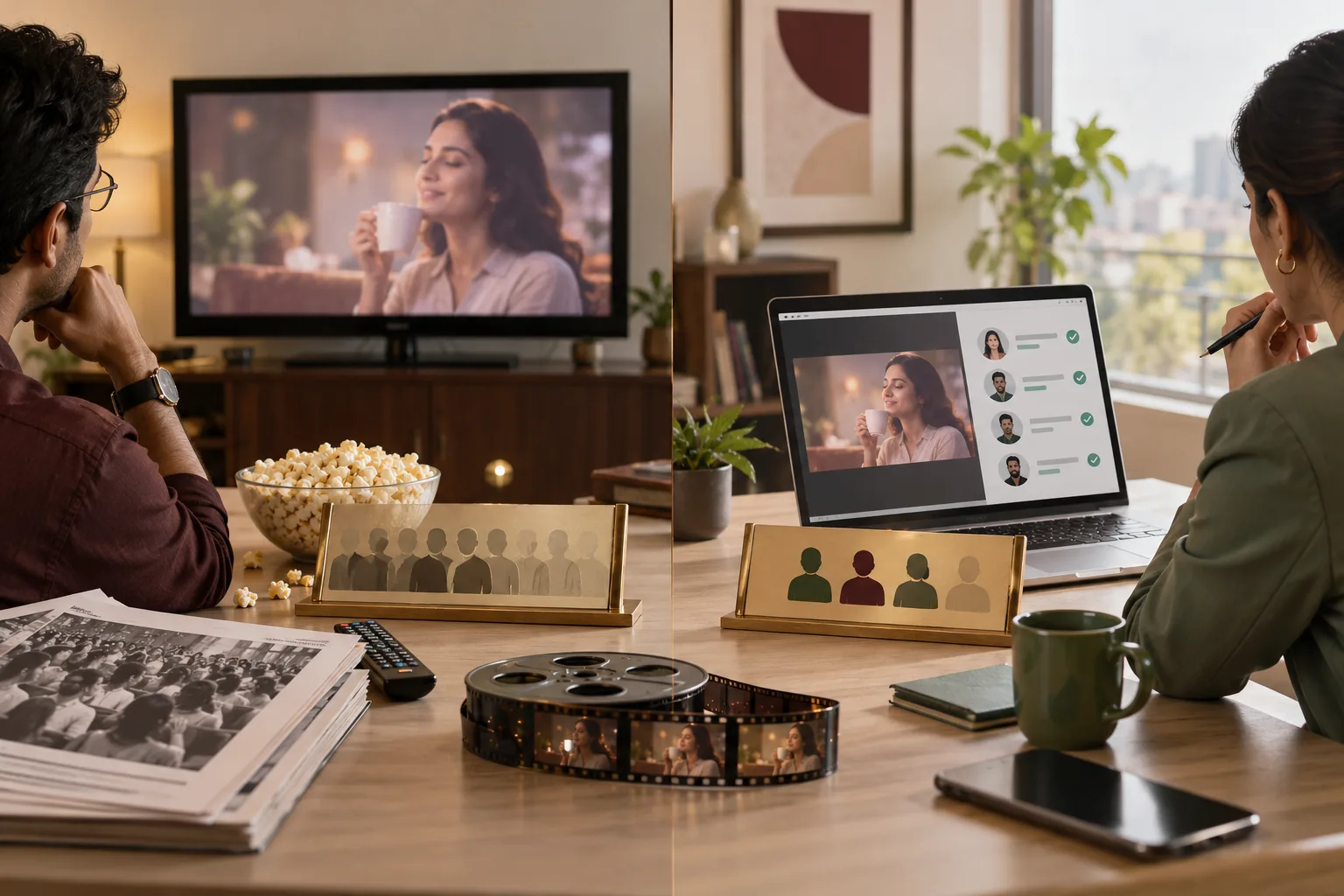 6 min read · 21 Sept 2026TV advertising vs OTT advertising: what are you actually buying?Television sells slots against ratings and prices in the wastage. OTT sells impressions to chosen people and charges for the choosing.
 8 min read · 21 Sept 2026Tamil advertising creative: what actually changesTamil is written one way and spoken another, and its script cannot tell b from p. What that means for your line, voice artist and brand spelling.
More for hospitals
Related work to consider.
Closest to this: sales craft
Also for hospitals
Or start from the overview: sales and marketing for hospitals.
Your next practical step
Tell us what you are trying to grow, and we will read it before we call.
Eight short steps, mostly taps. Skip anything you would rather answer on the call.