Industries · Manufacturing & Industrial
Buyers return to the unit that states plainly what it makes and answers specifically.
A buyer in a plant or on a project has a requirement and a date. The buyer types the need into a search box or a trade listing, or sends a photograph and a line of text, and waits for the first sensible answer. The unit that comes back with a question showing it understood the requirement is the one the buyer remembers when a quote, a sample or an order is needed. The rest sit in the same inbox with no reply.
Scope, fee, reporting and term are agreed in writing after we have read your brief and spoken to you.
In one paragraph
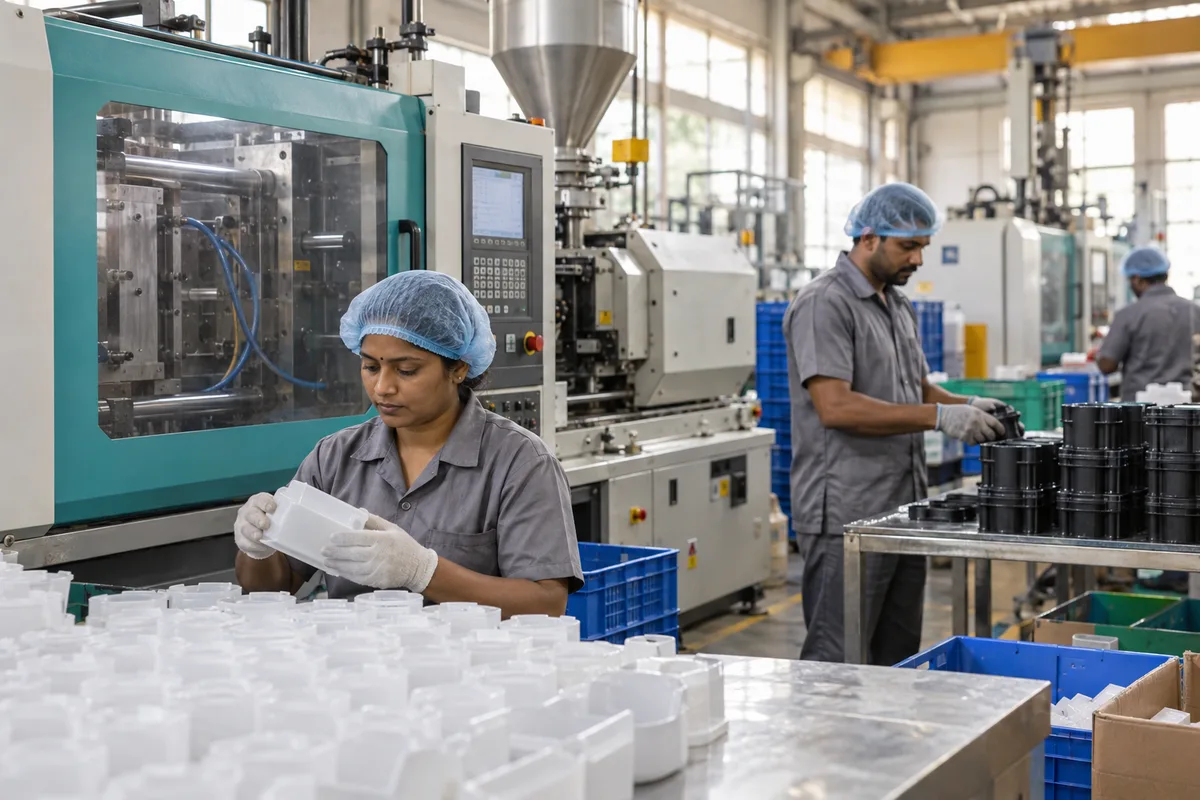
Plastics, rubber and polymer manufacturing is the making of moulded, extruded, formed, cast and recycled parts and products from plastic, rubber, polyurethane and composite materials for other businesses to use. GullySales looks at how buyers find a unit by process and material, how a request for a quote, a sample or a lot gets answered, and what proof of quality a procurement team can check.
The fourteen trades on this page make different things, from moulded and extruded parts to cast, laminated and recycled material, and reach their buyers by different routes. What they share is a buyer who judges a supplier against a stated requirement, a sale that rests on proof, and a market where a request left unanswered goes to the next supplier.
Last updated 18 Oct 2026. Rules on what you may advertise differ by trade and change. This page describes them in general terms only, so check the current position with your own adviser or regulator.
14 kinds of business
Each kind of business in plastics, rubber & polymer manufacturing sells a little differently.
Open the page closest to yours for how its buyers choose and what we would fix first.
Plastic injection moulding companies
A procurement engineer sends a drawing and a material and wants a tooling and part quote. The RFQ reply, the sample approval and a capability document stating the tonnage you actually run do the selling.
Read the page for plastic injection moulding unitsPlastic extrusion companies
Pipe, profile and sheet are bought by the size and colour a dealer, fabricator or contractor names, so being found by size matters more than any single quote.
Read the page for plastic extrusion companiesBlow moulding companies
A brand filling oil, lubricant, syrup or home-care product looks for a bottle that already exists before paying for a custom mould. A stock bottle catalogue and a plain mould-quote explainer carry the trade.
Read the page for blow moulding companiesRotational moulding companies
Tank dealers stock the brand they met first, and buyers cannot easily tell a layered tank from a thin one. Custom parts begin as a rough sketch, so a dealer pack and an enquiry sheet for odd shapes matter.
Read the page for rotational moulding companiesThermoforming companies
Buyers of trays, blisters and panels assume a mould is costly and never ask. Sample-led product pages, and an enquiry route that starts from a photograph rather than a drawing, open the conversation.
Read the page for thermoforming companiesPlastic component manufacturers
Bushes, gears, housings and spares go to OEM vendor development teams and plant maintenance heads. Half-filled registration forms and a website that names only one of your processes are what lose them.
Read the page for plastic component manufacturersPlastic packaging manufacturers
Food, pharma, agri and consumer brands look only when the current supplier fails, and cylinder and mould costs put small brands off. A cost explainer and a record of how the pack ran on the filling line help.
Read the page for plastic packaging manufacturersRubber moulding companies
Bushes, grommets, bellows and diaphragms are made to a purchase engineer's drawing. Drawings go unanswered and tool quotes go quiet after the first reply, so the enquiry inbox and approved vendor lists decide the trade.
Read the page for rubber moulding companiesRubber gasket manufacturers
A plant store calls when a shutdown or breakdown is near, sending a size, a fluid and a pressure as a WhatsApp photograph. A quoting sheet that turns those three into a costed offer suits it, with food-line papers kept ready.
Read the page for rubber gasket manufacturersRubber seal manufacturers
O-rings, oil seals and profile seals are asked for by part number, groove size and duty. Design engineers, OEM buyers and aftermarket dealers are reached in different ways, and the compound range needs explaining.
Read the page for rubber seal manufacturersPolyurethane component manufacturers
Wheels, rollers, liners and cast parts are bought by maintenance and purchase heads in mines, mills and plants who take polyurethane for dearer rubber. A recorded trial result shows what the part did in their duty.
Read the page for polyurethane component manufacturersComposite material manufacturers
Laminates, prepregs and tubes reach design engineers through the datasheet, which has to be written for the reader. A sample request then goes through testing and qualification, a long path worth tracking.
Read the page for composite material manufacturersFRP product manufacturers
Contractors and consultants list tanks, ducts, gratings and cable trays for corrosive sites. Tender and GeM papers, a drawing-to-offer routine and a steel comparison fit this trade.
Read the page for frp product manufacturersPlastic recycling companies
Two customers at once: those who supply scrap and those who buy flakes or granules. Lot-to-lot variation, producers' document requests and a tidy yard are the points buyers and auditors raise.
Read the page for plastic recycling companiesWhat they share
What usually goes wrong across plastics, rubber & polymer manufacturing.
Whichever of these you run, you will probably recognise most of them.
“A new request waits until the owner reaches it”
Whatever form it takes, a message, a call, a trade-listing lead or a document, it is answered when the owner finds time. The buyer has put the same request to other suppliers by then.
“Buyers cannot tell from our listing what we actually make or supply”
A general description matches nobody’s search. Buyers look for the specific product, process, material or grade and the size range, and move on when they cannot find them. A description that no longer matches the plant costs trust the moment a buyer finds the gap.
“Quotes, samples and trial lots go out and nobody follows them”
Once something has been sent, no one holds the next step. It goes quiet, and the buyer’s attention moves to a supplier who asked how it went.
“Orders rest on a few known buyers and nobody has listed the others”
The same names reorder, while other buyers who use what we make or supply have never been written to. Nobody keeps a list of who they are or what has been said to them.
“Material prices move and our quote is out of date”
Raw material and scrap rates shift between the request and the order. Buyers want a rate that holds long enough to decide, and an explanation when it changes.
“Buyers ask for proof and we gather it one request at a time”
A registration form, a test certificate, a declaration, a trial result or a tender document is asked for, and the search starts from nothing each time. The slow reply reads as a weak unit.
“Our best work is not shown anywhere”
What the unit has made, supplied or processed, and how it performed, stays inside the unit. Prospects see none of it, so they compare on price alone.
Where to start
What to fix first in plastics, rubber & polymer manufacturing.
In the order we would look at them. Your own enquiry records may change the order, and we would say so.
- Write down every product, process, material or grade, size range and machine you run, and make that the first thing a buyer reads on each listing and on your site.
- Name one person to open every new request and reply with a clarifying question or a price, so nothing waits for the owner.
- Keep one capability document or product list that matches the plant as it stands, and correct it whenever a machine, grade or size is added or dropped.
- Keep a simple list of every quote, sample or trial lot sent, who received it and the next step, and call on each one that has gone quiet.
- Keep the certificates, registration papers and declarations buyers ask for in one place, so a request for proof is answered the same day it arrives.
- Turn two or three jobs or lots into short case notes with results, the buyer unnamed where needed, and list the buyers who use what you make but have never ordered from you.
Related services
The work that usually comes up.
Which of these you need is decided after we have read your brief.
- IndiaMART and marketplace lead managementTurn IndiaMART leads into orders, and find out whether the package is paying for itself.
- Lead response and follow-upMore enquiries turned into orders, for teams that reply late and follow up once.
- Quotation and proposal follow-upThe quotation went out three weeks ago and nobody has called them since.
- Capability presentationsAnswer what can you actually do before the buyer has to ask.
- Customer case studiesDocument the whole story of a customer's problem and result, not just a one-line quote.
- Dealer developmentGet more out of the dealers you already have before you sign a single new one.
- Outbound sales prospectingReach the buyers who would fit but have never heard of you.
- RFP and tender managementTenders are won or lost on the paperwork long before the price is compared.
FAQ
Questions about plastics, rubber & polymer manufacturing.
Not here? More answers, or ask on WhatsApp.
Is a trade listing such as IndiaMART enough?
How do we sell to a buyer who already has a supplier?
Should we publish prices online?
How can a small unit show quality to a large buyer?
How do we handle a buyer who compares only price?
What should a capability document for a plastics, rubber or polymer unit contain?
How long is the contract?
How soon will we see results?
Who will actually do the work?
What do you need from us?
More in Manufacturing & Industrial
- Machining & Precision Components
- Cutting & Metal Fabrication
- Casting, Forging & Tooling
- Metal Finishing & Surface Treatment
- Machine Tools & Factory Automation
- Industry-Specific Machinery
- Pumps, Drives & Thermal Equipment
- Power Equipment & Panels
- Cables, Electronics & Instrumentation
- Cement, Concrete & Masonry
- Tiles, Stone & Glass
- Wood, Doors & Windows
- Roofing, Paints & Bath Fittings
- Furniture & Interior Product Manufacturing
- Textile Mills & Fabric
- Garments & Home Textiles
- Footwear, Leather & Accessories
- Packaged Foods, Snacks & Sweets
- Dairy & Beverage Manufacturing
- Staples, Oils & Feed
- Industrial Chemicals & Coatings
- Pharma & Personal Care Manufacturing
- Paper & Packaging Materials
Looking for a single trade? See every industry.
Your brief
Tell us what you need, and we will read it before we call.
Eight short steps about your business, what you want and who decides. Most questions are a tap, and you can skip any you would rather answer on the call.
Your next practical step
Tell us what you are trying to grow, and we will read it before we call.
Eight short steps, mostly taps. Skip anything you would rather answer on the call.