Industries · Manufacturing & Industrial
Buyers book the mill whose count, construction, GSM or shade is already written down.
A merchandiser at a garment factory needs a knitted fabric in 180 GSM and sends one WhatsApp message to five units. Three reply with a rate. One replies with a swatch card, the yarn it runs and the smallest lot it will cut. That unit gets the sample request, and the other four never learn why.
Scope, fee, reporting and term are agreed in writing after we have read your brief and spoken to you.
In one paragraph
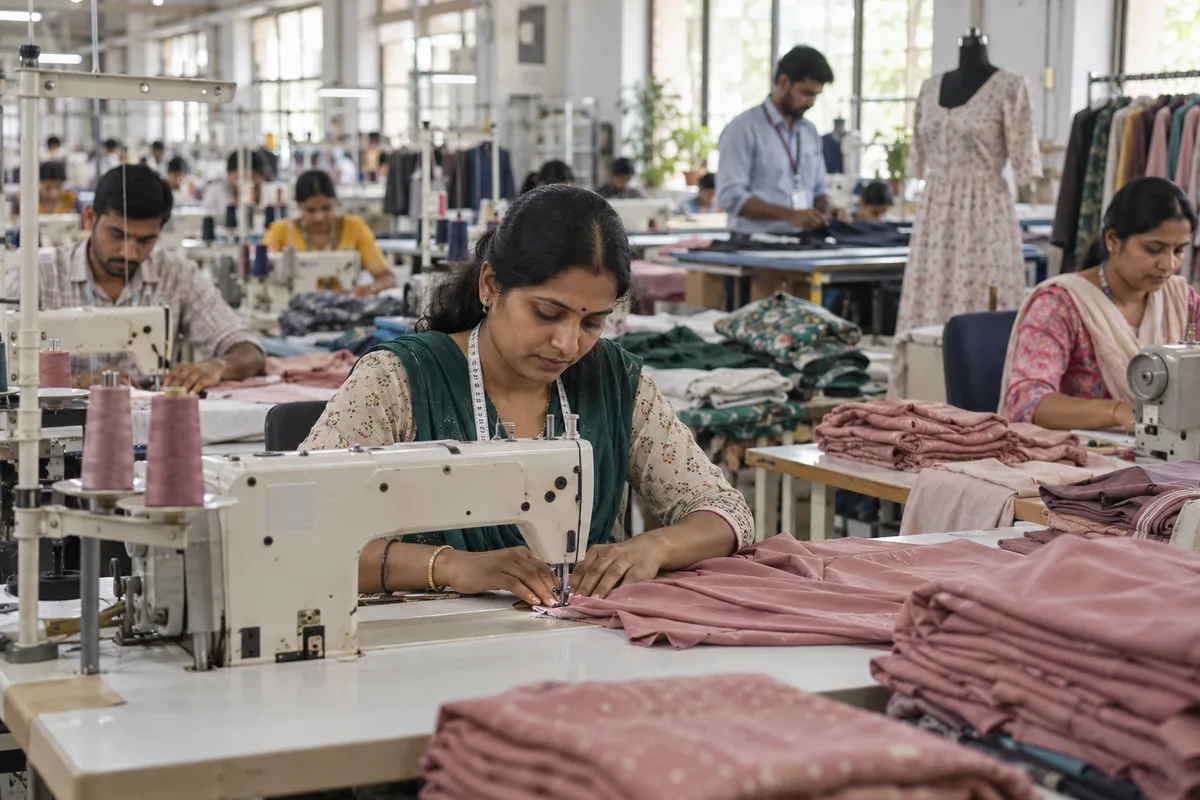
Textile mill and fabric marketing covers the spinning, weaving, knitting, dyeing and general textile units that sell yarn, cloth or processing to weavers, knitters, processors, garment makers and traders. GullySales looks at whether a buyer outside your circle can find your counts, constructions or processes, and whether every rate query, swatch and trial lot is recorded and followed up.
The five trades here sell to other makers and not to the public: yarn to weavers and knitters, cloth to processors and garment makers, and dyeing and finishing as job work on cloth the buyer owns. The language is technical, with count, construction, GSM and shade doing the talking, and the first order is a sample before it is a lot. The differences are real. A spinning mill quotes against a cotton price that keeps moving, a processor is paid for work done and not for goods sold, and a general textile mill has to explain both yarn and cloth.
Last updated 18 Oct 2026. Rules on what you may advertise differ by trade and change. This page describes them in general terms only, so check the current position with your own adviser or regulator.
5 kinds of business
Each kind of business in textile mills & fabric sells a little differently.
Open the page closest to yours for how its buyers choose and what we would fix first.
Textile mills
Garment makers, traders and processors book cloth and yarn in bulk. Product pages, a sample register and a reorder list replace what now sits in one salesman's memory.
Read the page for textile millsCotton spinning mills
Yarn is bought on count, blend and rate per kilo, and cotton prices keep moving. A page for each count and a record of who asked for which count do more than a brochure.
Read the page for cotton spinning millsFabric weaving mills
Construction, width and finish come first, then a sample length. Quality pages, a sample card and a buyer record reach processors and garment makers beyond the brokers who sell the cloth.
Read the page for fabric weaving millsKnitting units
Garment makers look for knitted fabric by GSM, yarn and construction. Putting those on a fabric page, with a swatch card to go with them, lets them find the unit before they send a quotation request.
Read the page for knitting unitsDyeing and processing units
This is job work for weavers, knitters and garment makers. A lab-dip request, a compliance paper and a reprocessing dispute each need a written record, and a process page shows what the unit can handle.
Read the page for dyeing and processing unitsWhat they share
What usually goes wrong across textile mills & fabric.
Whichever of these you run, you will probably recognise most of them.
“Buyers outside our circle cannot search for what we make”
Our quality sits in codes the trade knows: a count, a construction, a GSM, a shade card. The website lists machines and a founding year, so a weaver, knitter or garment maker who has not met us has nothing to find.
“Rate queries are answered and not recorded”
A rate goes out by phone or WhatsApp and the buyer goes quiet. Nobody has written down who asked, for which count, construction, fabric or process, or whether to ask again.
“Swatches, sample lengths and lab dips leave without a follow-up”
Each one costs yarn, fabric, dye and a person's time. If nobody notes who received it and what the buyer did with it, a trial lot never gets asked for.
“Our regular buyers are a small circle and the next buyer does not know us”
Brokers, agents and a handful of long-standing accounts bring most of the bookings we can name. Our idle looms, spindles or dyeing lots show the gap when one of them slows down.
“A buyer compares us on rate because nothing else is on paper”
Lot-to-lot consistency, finish, the shades we match and the papers we hold are the real differences. None of them is written where the buyer looks first, so the cheapest quote wins the call.
“Specifications are agreed by phone and live in someone's head”
The count, the width, the GSM or the shade a buyer approved is agreed in a call or a chat. When the lot comes out different, the dispute is settled by whose memory is better.
Where to start
What to fix first in textile mills & fabric.
In the order we would look at them. Your own enquiry records may change the order, and we would say so.
- A page for each main count, construction, GSM or process, with the details a buyer searches by, the smallest lot you run and a way to ask for a sample.
- One register for rate queries, swatch requests, lab dips and trial lots, with the buyer's name, what was asked, what was quoted and what is still open.
- After every sample, ask what the buyer made with it and what quantity they would book, and write the answer down.
- A folder of test reports, compliance papers and unit details ready to go out in one reply when a new buyer asks.
- A short list of weavers, knitters, processors or garment makers outside your present circle who could use what you make, each approached by a named person on your side.
Related services
The work that usually comes up.
Which of these you need is decided after we have read your brief.
- IndiaMART and marketplace lead managementTurn IndiaMART leads into orders, and find out whether the package is paying for itself.
- Quotation and proposal follow-upThe quotation went out three weeks ago and nobody has called them since.
- Sales collateral developmentEvery rep builds their own version of the pitch because there is no approved one.
- Sampling and product demonstrationFour hundred samples went out on Sunday and nobody wrote down a single name.
- Lead response and follow-upMore enquiries turned into orders, for teams that reply late and follow up once.
- Website design and developmentBuild the site that turns a visit into an enquiry.
FAQ
Questions about textile mills & fabric.
Not here? More answers, or ask on WhatsApp.
How should a mill or processing unit list its products online?
Should we sell through brokers and agents?
What do we do with swatch and lab-dip requests that never turn into orders?
Is IndiaMART worth using for a yarn, fabric or processing unit?
Which test and compliance papers will a new buyer ask for?
How much does it cost?
How long is the contract?
How soon will we see results?
Who will actually do the work?
What do you need from us?
More in Manufacturing & Industrial
- Machining & Precision Components
- Cutting & Metal Fabrication
- Casting, Forging & Tooling
- Metal Finishing & Surface Treatment
- Machine Tools & Factory Automation
- Industry-Specific Machinery
- Pumps, Drives & Thermal Equipment
- Power Equipment & Panels
- Cables, Electronics & Instrumentation
- Plastics, Rubber & Polymer Manufacturing
- Cement, Concrete & Masonry
- Tiles, Stone & Glass
- Wood, Doors & Windows
- Roofing, Paints & Bath Fittings
- Furniture & Interior Product Manufacturing
- Garments & Home Textiles
- Footwear, Leather & Accessories
- Packaged Foods, Snacks & Sweets
- Dairy & Beverage Manufacturing
- Staples, Oils & Feed
- Industrial Chemicals & Coatings
- Pharma & Personal Care Manufacturing
- Paper & Packaging Materials
Looking for a single trade? See every industry.
Your brief
Tell us what you need, and we will read it before we call.
Eight short steps about your business, what you want and who decides. Most questions are a tap, and you can skip any you would rather answer on the call.
Your next practical step
Tell us what you are trying to grow, and we will read it before we call.
Eight short steps, mostly taps. Skip anything you would rather answer on the call.