Industries · Manufacturing & Industrial
Staples sell on trust in the trader, so earn it where the order is placed.
A rice mill owner gets a rate request on WhatsApp and answers an hour later. The trader has already bought from the mill that replied first. An oil maker sees a restaurant drop the tin when the price moves, and a feed maker finds that the dealer holding the brand also pushes a rival's sack. In each case, the buyer is known by a trader, not by the maker.
Scope, fee, reporting and term are agreed in writing after we have read your brief and spoken to you.
In one paragraph
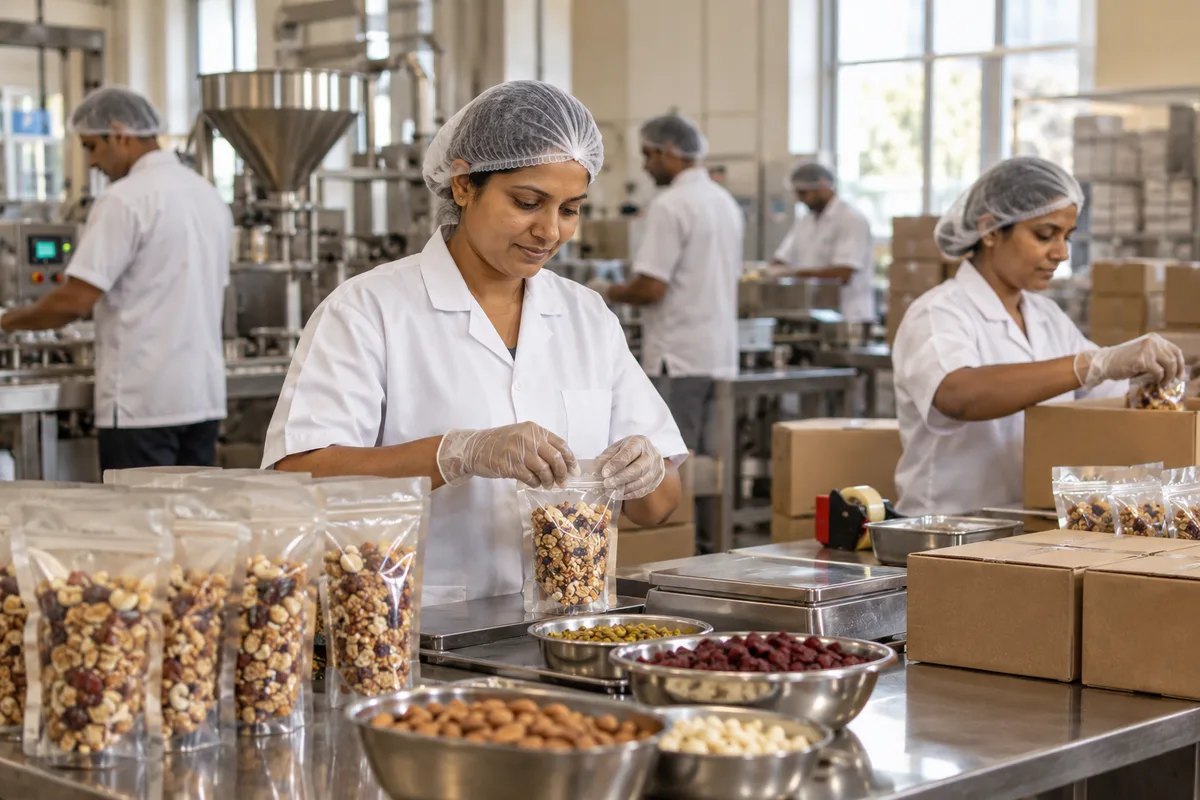
Spice, flour, rice, edible oil, nutraceutical food and animal feed manufacturing is the milling, refining, blending and packing of everyday staples and feed, sold in bags, tins and sacks through traders, dealers, stockists and bulk buyers. GullySales looks at who holds your customer, how rate and sample enquiries are answered, and which buyers reorder.
A spice maker, a flour mill, an edible oil unit, a nutraceutical food maker and a feed plant do not sell the same thing. They share a middle party who holds the customer, a product whose purity, grade or batch cannot be judged by looking at the pack, bulk buyers who could be sold to directly, and orders that arrive as phone calls and notebook entries.
Last updated 18 Oct 2026. Rules on what you may advertise differ by trade and change. This page describes them in general terms only, so check the current position with your own adviser or regulator.
6 kinds of business
Each kind of business in staples, oils & feed sells a little differently.
Open the page closest to yours for how its buyers choose and what we would fix first.
Spices manufacturers
The wholesaler sets the price and holds the customer. Caterers taste a sample and go quiet, and a lot that differs in colour or heat reaches the shop long before the maker hears of it.
Read the page for spices manufacturersFlour mills
Walk-in grinding fills the day and leaves little time for the packed atta brand. Moving to a household name means shops, delivery and apartment orders, while hostels and bakeries choose on rate.
Read the page for flour millsRice mills
Traders ask for the rate on WhatsApp and buy from whoever answers first, and two agents can hold the buyer list. Raw, parboiled and steamed rice go to different buyers, so a grade sheet and an enquiry record do the selling.
Read the page for rice millsEdible oil manufacturers
Restaurants switch tins the moment the rate moves, and households ask whether an oil is truly pure. Distributors push the brand with the best margin, so the dealer pitch has to give them a reason to stock yours.
Read the page for edible oil manufacturersNutraceutical food manufacturers
Buyers read the label before the price, and food law limits what can be claimed while rivals post bold promises. Trainers and doctors can influence the sale, and pharmacy stockists complain about slow movers and expired stock.
Read the page for nutraceutical food manufacturersAnimal feed manufacturers
Sales go through dealers to dairy farmers and poultry owners, who buy on trust in the dealer. Credit ties up cash, a dealer who holds your brand may push a rival's, and cooperative tenders take paperwork.
Read the page for animal feed manufacturersWhat they share
What usually goes wrong across staples, oils & feed.
Whichever of these you run, you will probably recognise most of them.
“A trader, wholesaler or dealer holds our customer”
The party between us and the kitchen, shop or shed sets the price and knows the buyer's name. We do not, so we cannot sell to that buyer or learn why the order moved.
“The buyer cannot see purity, grade or freshness on the pack”
Colour, heat, grain, press, protein or batch consistency decide the sale, and none of it shows in a packet. Without a sample, a sheet or a test result, the buyer chooses on rate or on the trader's word.
“One bad lot is heard about before we hear of it”
A batch that differs in colour, taste or performance reaches a shop, a kitchen or a farm. The story travels through the trader, and we learn of it from a lost order.
“Direct bulk buyers are open and nobody works them”
Caterers, bakeries, hostels, restaurants, brand owners, cooperatives and integrators buy in volume. We reach them only when one of them calls, because the week is full of milling, packing and dispatch.
“Orders and enquiries live in phones and notebooks”
A rate request, a repeat order or a dealer visit goes into one person's phone. When that person is away, nothing is followed up and nobody can tell which buyers have gone quiet.
“Our label and pack carry rules we do not explain”
Weight, purity, nutrition and use claims are covered by food, feed and labelling law. Competitors post bold lines, while we say little because we are unsure of the rule, and the buyer hears nothing from us.
Where to start
What to fix first in staples, oils & feed.
In the order we would look at them. Your own enquiry records may change the order, and we would say so.
- Record every buyer who calls or orders, with the rate quoted, the date and the reply, so that no enquiry depends on whoever picked up the phone.
- Find out who your real end buyers are behind each trader or dealer, and visit or call the largest few directly.
- Make a grade or specification sheet with sample details for each product, so a buyer can compare lots on paper and not only on the trader's word.
- Pick one group of direct bulk buyers, such as caterers, bakeries, hostels or cooperatives, and write the offer and the sample routine for that group.
- Send rate replies on the same day, in one standard format that carries grade, pack size and payment terms.
- Agree with your food-safety or regulatory adviser what the label and pages may say, and write the rest in plain words about origin, process and use.
Related services
The work that usually comes up.
Which of these you need is decided after we have read your brief.
- Dealer and distributor programmeYou sell through dealers but have no steady way to find and back them.
- Distributor developmentFix the stocking, credit and coverage gaps that stop a distributor ordering more.
- Dealer developmentGet more out of the dealers you already have before you sign a single new one.
- Trade and dealer marketingHelp your dealers sell more without doing all the work of demand generation for them.
- Lead response and follow-upMore enquiries turned into orders, for teams that reply late and follow up once.
- Sampling and product demonstrationFour hundred samples went out on Sunday and nobody wrote down a single name.
- Institutional and government sales strategySell to a tender board the way it buys, not the way you sell a private customer.
- RFP and tender managementTenders are won or lost on the paperwork long before the price is compared.
FAQ
Questions about staples, oils & feed.
Not here? More answers, or ask on WhatsApp.
How do we reach the end buyer when a trader holds the customer?
Should we cut the rate when a buyer says a rival is cheaper?
How do we show quality when buyers cannot see it?
What can the label and our pages say about health or purity?
How do we win large buyers such as cooperatives or brand owners?
How much does it cost?
How long is the contract?
How soon will we see results?
Who will actually do the work?
What do you need from us?
More in Manufacturing & Industrial
- Machining & Precision Components
- Cutting & Metal Fabrication
- Casting, Forging & Tooling
- Metal Finishing & Surface Treatment
- Machine Tools & Factory Automation
- Industry-Specific Machinery
- Pumps, Drives & Thermal Equipment
- Power Equipment & Panels
- Cables, Electronics & Instrumentation
- Plastics, Rubber & Polymer Manufacturing
- Cement, Concrete & Masonry
- Tiles, Stone & Glass
- Wood, Doors & Windows
- Roofing, Paints & Bath Fittings
- Furniture & Interior Product Manufacturing
- Textile Mills & Fabric
- Garments & Home Textiles
- Footwear, Leather & Accessories
- Packaged Foods, Snacks & Sweets
- Dairy & Beverage Manufacturing
- Industrial Chemicals & Coatings
- Pharma & Personal Care Manufacturing
- Paper & Packaging Materials
Looking for a single trade? See every industry.
Your brief
Tell us what you need, and we will read it before we call.
Eight short steps about your business, what you want and who decides. Most questions are a tap, and you can skip any you would rather answer on the call.
Your next practical step
Tell us what you are trying to grow, and we will read it before we call.
Eight short steps, mostly taps. Skip anything you would rather answer on the call.