Industries · Manufacturing & Industrial
Buyers order made-to-spec goods from the maker whose past work they can see.
A purchase manager at a hospital wants uniforms for the next year, a hotel buyer wants towels at a stated weight, and a brand's merchandiser wants a costed quote for a jersey. Each sends a message to a few factories and waits. The factory that replies with a sample route, a lot size and a clear costing is the one the buyer speaks to again.
Scope, fee, reporting and term are agreed in writing after we have read your brief and spoken to you.
In one paragraph
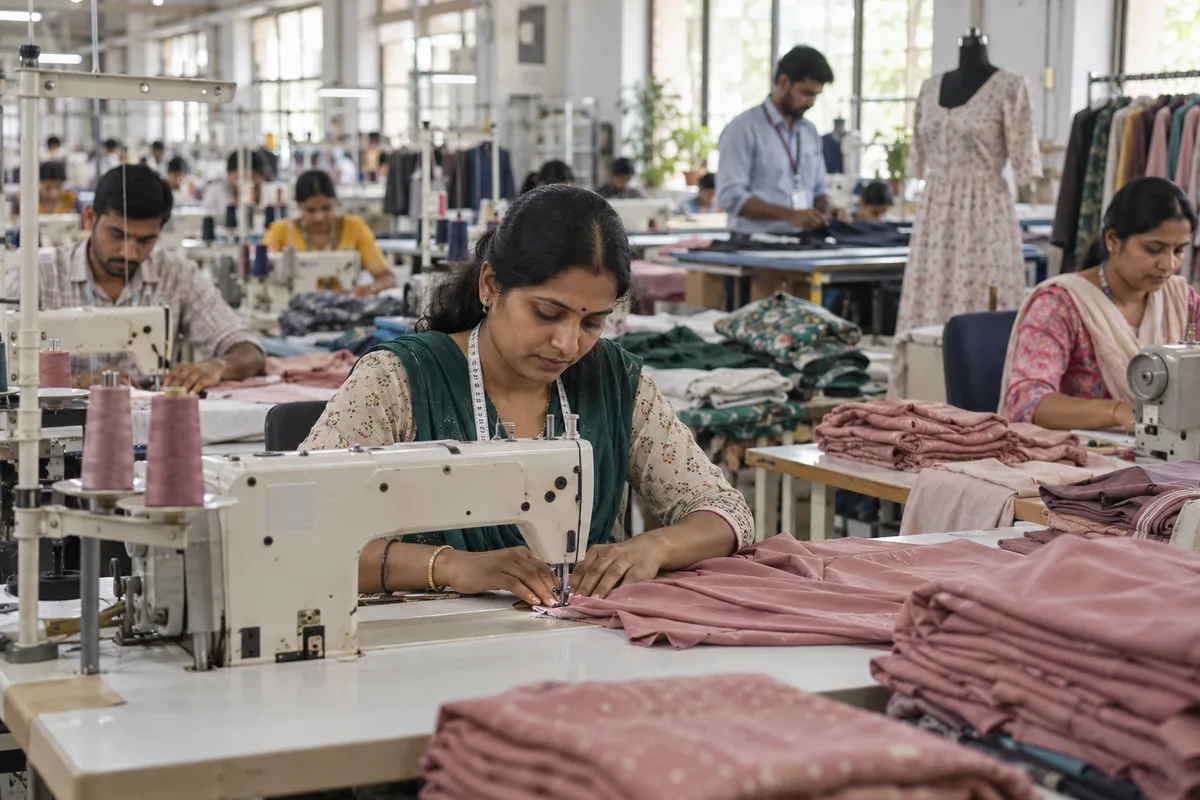
Garment and home textile manufacturing covers the factories that make garments, uniforms, sportswear, innerwear, bedsheets, towels, carpets and soft furnishings for brands, institutions, wholesalers, distributors and exporters. GullySales looks at what a buyer can see of your past work, how costing and sample requests are recorded, and whether a reorder waits for the buyer to call first.
The eight trades here share one shape of order: a product made to a size, shade, design or specification, a sample before the lot, and a buyer who can place the next order elsewhere. The buyer is what differs. It is a brand or buying house for garments and sportswear, a purchase desk for uniforms and towels, a distributor for innerwear, a wholesaler for bedsheets, and a designer or importer for home textiles and carpets. Settling who decides in your trade comes before anything else.
Last updated 18 Oct 2026. Rules on what you may advertise differ by trade and change. This page describes them in general terms only, so check the current position with your own adviser or regulator.
8 kinds of business
Each kind of business in garments & home textiles sells a little differently.
Open the page closest to yours for how its buyers choose and what we would fix first.
Garment manufacturers
Brands, exporters and D2C labels shortlist a factory on its past styles and compliance. A capability profile they can check carries more weight than a price list, and every costed tech pack gets an answer on record.
Read the page for garment manufacturersUniform manufacturers
Schools, hospitals, hotels, factories and security agencies buy uniforms in bulk, on a yearly round. The purchase manager's name, the sample sets sent and a tender pack kept ready are the working papers.
Read the page for uniform manufacturersSportswear manufacturers
Kits for clubs, schools, brands and corporate buyers go out against a costed tech pack and a signed-off sample. A rough rate and a WhatsApp approval leave the lot open to dispute.
Read the page for sportswear manufacturersInnerwear manufacturers
The wearer buys from a hosiery shop or a marketplace, supplied by a distributor. Which distributor holds the shelf, how scheme claims are settled and which towns sell are the questions to answer.
Read the page for innerwear manufacturersHome textile manufacturers
Designers and hotel buyers specify curtains, cushion covers and soft furnishings from swatches. A swatch log that shows who took which, and a plain account of shade variation between lots, are the working tools.
Read the page for home textile manufacturersBedsheet manufacturers
Wholesalers compare bedsheets on rate alone unless the design and the set are put in front of them. A sample set and a design-wise listing give them something else to weigh.
Read the page for bedsheet manufacturersTowel manufacturers
Hotels, spas and export buyers ask for towels by GSM and fibre, so quality has to be explained in those words. A sample and the export documents sit ready to go out with it.
Read the page for towel manufacturersCarpet manufacturers
Importers, designers and project buyers decide what goes on the floor. A design library they can browse, and a list of the buyers met at fairs, keep a long sale from being forgotten.
Read the page for carpet manufacturersWhat they share
What usually goes wrong across garments & home textiles.
Whichever of these you run, you will probably recognise most of them.
“A few buyers carry our orders”
One brand, one buying house, one agent or one purchase manager brings the work, and that buyer sets the rate. When the buyer moves production or changes a contact, our lines go quiet.
“Costing requests get a rough rate and no record”
A tech pack, a design brief or a logo request arrives and we answer with a number on the phone. Nobody writes down what was asked, what was quoted or whether to chase.
“Samples and swatches go out and nothing comes back”
A sample set, a swatch or a sample piece costs cloth and time. If we do not note who took it and ask what happened, it is a gift.
“The approved sample and the bulk lot are not matched on paper”
Sign-off happens on a call or in a chat. Size, shade, weight or design is then argued from memory when the lot comes out different.
“Our range and past work are not laid out for a buyer to browse”
The site shows products and not who we supply or what we have made. A buyer sees a few items from a wide range and cannot judge whether we fit the order.
“We are compared on rate when design, fit and finish are the difference”
The price is the first thing a buyer sees, so a price shopper and a serious buyer take the same effort to answer. Proof of our work is not where the buyer looks.
“Reorders wait for the buyer to call”
Without a record of who bought what and when, we do not know who is due. The quiet weeks go on looking for work instead of calling buyers who have already bought.
Where to start
What to fix first in garments & home textiles.
In the order we would look at them. Your own enquiry records may change the order, and we would say so.
- A capability profile for each main product, with past work, sizes or designs offered, lot size and a plain way to ask for a sample.
- A costing register for tech packs, design briefs and logo requests, with the buyer, the spec, the quote and what is still open.
- A sign-off sheet for every approved sample, with the buyer's name, the date and the size, shade, weight or design agreed, kept with the sample itself.
- A reorder list showing who bought what and when, so you call the buyer before the next order is placed.
- The papers your buyers ask for at a first serious enquiry, such as tender documents, test reports or export documents, kept ready in one folder.
Related services
The work that usually comes up.
Which of these you need is decided after we have read your brief.
- Quotation and proposal follow-upThe quotation went out three weeks ago and nobody has called them since.
- Sampling and product demonstrationFour hundred samples went out on Sunday and nobody wrote down a single name.
- Sales collateral developmentEvery rep builds their own version of the pitch because there is no approved one.
- Website design and developmentBuild the site that turns a visit into an enquiry.
- Lead response and follow-upMore enquiries turned into orders, for teams that reply late and follow up once.
- Trade and dealer marketingHelp your dealers sell more without doing all the work of demand generation for them.
- Export and international market developmentFind the overseas distributor who can get your product past customs and onto a shelf.
- IndiaMART and marketplace lead managementTurn IndiaMART leads into orders, and find out whether the package is paying for itself.
FAQ
Questions about garments & home textiles.
Not here? More answers, or ask on WhatsApp.
What should a capability profile show a buyer?
How do we stop a sample request from being only a price check?
How should we record an approved sample?
Is it worth selling through an agent or buying house?
How does a small factory get onto a brand's or purchase manager's list?
How long is the contract?
How soon will we see results?
Who will actually do the work?
What do you need from us?
More in Manufacturing & Industrial
- Machining & Precision Components
- Cutting & Metal Fabrication
- Casting, Forging & Tooling
- Metal Finishing & Surface Treatment
- Machine Tools & Factory Automation
- Industry-Specific Machinery
- Pumps, Drives & Thermal Equipment
- Power Equipment & Panels
- Cables, Electronics & Instrumentation
- Plastics, Rubber & Polymer Manufacturing
- Cement, Concrete & Masonry
- Tiles, Stone & Glass
- Wood, Doors & Windows
- Roofing, Paints & Bath Fittings
- Furniture & Interior Product Manufacturing
- Textile Mills & Fabric
- Footwear, Leather & Accessories
- Packaged Foods, Snacks & Sweets
- Dairy & Beverage Manufacturing
- Staples, Oils & Feed
- Industrial Chemicals & Coatings
- Pharma & Personal Care Manufacturing
- Paper & Packaging Materials
Looking for a single trade? See every industry.
Your brief
Tell us what you need, and we will read it before we call.
Eight short steps about your business, what you want and who decides. Most questions are a tap, and you can skip any you would rather answer on the call.
Your next practical step
Tell us what you are trying to grow, and we will read it before we call.
Eight short steps, mostly taps. Skip anything you would rather answer on the call.