Industries · Manufacturing & Industrial
Someone else sizes the job, and the maker they already know gets the quote.
A consultant drafts the bill of quantities for a new plant and writes in the makes the firm has used before. An installer sizes an inverter and battery for a shop and names the brand whose dealer picks up the phone. A housing society secretary asks three charger companies for a price and hears back from one the same day. In each room the maker is judged before the quote is read.
Scope, fee, reporting and term are agreed in writing after we have read your brief and spoken to you.
In one paragraph
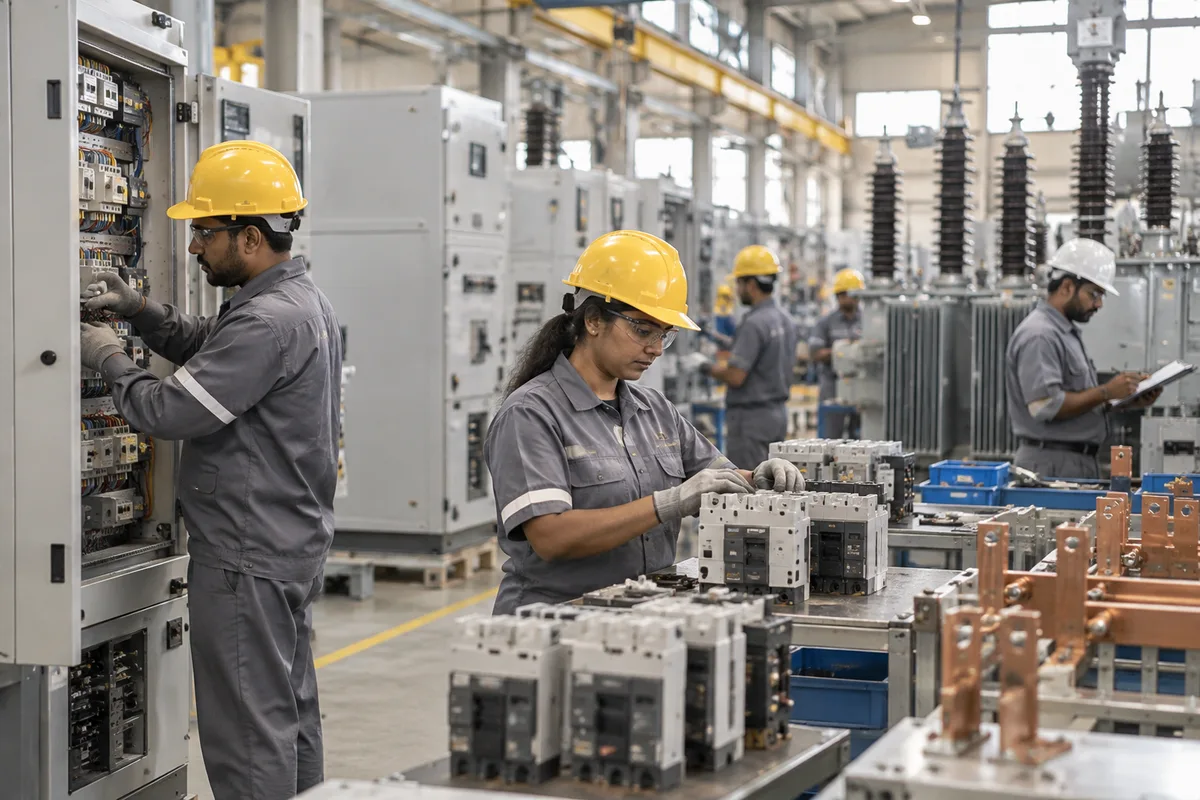
Power equipment and panel manufacturing covers the makers of panels, switchgear, transformers, inverters, UPS, batteries, EV chargers and solar equipment, each built to a rating and fitted on someone else's site. GullySales looks at whether the people who size and specify the job know your name, whether an enquiry carries enough detail to quote, and whether every open quote is followed.
The nine trades differ in who sizes the job. Panel, switchgear and transformer makers answer to consultants, EPC firms and tender desks. Control panel makers answer to machine builders and integrators. Inverter, UPS, battery and solar makers answer to dealers and installers, and EV charger makers to operators and housing committees. What they share is a rated product, a person standing between the maker and the end user, and an enquiry that arrives without the load, drawing or site detail needed to price it.
Last updated 18 Oct 2026. Rules on what you may advertise differ by trade and change. This page describes them in general terms only, so check the current position with your own adviser or regulator.
9 kinds of business
Each kind of business in power equipment & panels sells a little differently.
Open the page closest to yours for how its buyers choose and what we would fix first.
Electrical panel manufacturers
The consultant's drawing and a priced BOQ set the job. The sale begins with a place on the approved make list and a quick answer to each drawing query.
Read the page for electrical panel manufacturersControl panel manufacturers
Machine builders and integrators know one or two panel shops and miss the rest. Enquiries arrive as half-finished drawings, so past installations and a clear route for the first drawing carry the introduction.
Read the page for control panel manufacturersTransformer manufacturers
Tender desks, EPC firms and private plant engineers each need a different approach. A register of bids, a technical page and a marketed repair and rewinding service cover them.
Read the page for transformer manufacturersSwitchgear manufacturers
Consultants specify a few familiar brands and contractors buy against them. An introduction pack, a technical offer and a finished vendor registration file get the maker into that conversation.
Read the page for switchgear manufacturersInverter manufacturers
The homeowner follows the installer's or dealer's recommendation. A programme for those two, a clear warranty route and a service network shown as it really is give them reasons to name the brand.
Read the page for inverter manufacturersUPS manufacturers
Dealers, integrators and facility heads buy for server rooms and branches. A sizing enquiry form, a dealer kit and a ready tender folder deal with the vague 'need UPS' enquiry.
Read the page for ups manufacturersBattery manufacturers
Dealers want a clear old-battery exchange scheme, OEMs want an approval pack, and fleet buyers want service. Each asks a different question, so each needs its own answer.
Read the page for battery manufacturersEV charging equipment manufacturers
The buyer is new to chargers: an operator asking about software compatibility, or a housing society deciding in committee. A site checklist, pages by buyer type and a society decision pack answer them.
Read the page for ev charging equipment manufacturersSolar equipment manufacturers
Lots are bought against a bill of materials. A sheet that takes that bill, a dealer kit, a vendor pack for large EPC buyers and a list of repeat installers suit this buying.
Read the page for solar equipment manufacturersWhat they share
What usually goes wrong across power equipment & panels.
Whichever of these you run, you will probably recognise most of them.
“The person who sizes the job has never heard of us”
A consultant, integrator, installer, dealer or committee settles the make before the end buyer is involved. Our name is missing when that choice is made, so we quote only where the list is still open.
“The enquiry arrives without the detail we need to price it”
It comes as half a drawing, a bill of materials, a one-line message or a request for a charger and a price. The load, rating or site detail is missing, and a day goes on finding it out.
“Quotes go quiet after the first price”
The buyer waits for a client, a committee or a drawing approval, and nobody on our side knows when to call. Open quotes sit in an email folder until the order has gone elsewhere.
“Our ratings and test data are not where a buyer can see them”
Standards, test reports, compatibility notes and photographs of finished work are in an engineer's head or a shared drive. A buyer who has to justify the choice to a client cannot find them.
“After delivery, nobody calls”
The next need goes to whoever the buyer already knows: a spare, a repair, a replacement battery, a second site. Nobody on our side keeps that contact warm.
“Our price is compared before our difference is seen”
The buyer puts our figure beside a lower one for a product that looks the same on paper. The thicker material, the tested batch or the service route we offer is not written anywhere the buyer reads.
Where to start
What to fix first in power equipment & panels.
In the order we would look at them. Your own enquiry records may change the order, and we would say so.
- For each product line, write down who sizes or specifies the job (consultant, EPC firm, integrator, installer, dealer or committee) and list the ones in your territory by name.
- Make an enquiry sheet per product that asks for the load, rating, drawing or site detail you need, and send it at the first contact instead of after two calls.
- Put ratings, standards, test reports, compatibility notes and photographs of finished work on one page a buyer can forward to a client.
- Give every open quote a named owner and a recorded next call, and write down the buyer's reason whenever an order goes elsewhere.
- Keep a register of past buyers with what each bought and where it was fitted, so a spare, a replacement or a second site starts with your call.
Related services
The work that usually comes up.
Which of these you need is decided after we have read your brief.
- RFP and tender managementTenders are won or lost on the paperwork long before the price is compared.
- Quotation and proposal follow-upThe quotation went out three weeks ago and nobody has called them since.
- Dealer and distributor programmeYou sell through dealers but have no steady way to find and back them.
- Sales collateral developmentEvery rep builds their own version of the pitch because there is no approved one.
- Capability presentationsAnswer what can you actually do before the buyer has to ask.
- Website design and developmentBuild the site that turns a visit into an enquiry.
- LinkedIn outreach and social sellingStart a real conversation with a named buyer instead of paying to be shown to them.
FAQ
Questions about power equipment & panels.
Not here? More answers, or ask on WhatsApp.
How do we get onto a consultant's or installer's list?
Does a website matter when someone else chooses the make?
What should our enquiry sheet ask for?
A buyer says a rival is cheaper. What do we send?
How do we keep track of quotes that have gone quiet?
How much does it cost?
How long is the contract?
How soon will we see results?
Who will actually do the work?
What do you need from us?
More in Manufacturing & Industrial
- Machining & Precision Components
- Cutting & Metal Fabrication
- Casting, Forging & Tooling
- Metal Finishing & Surface Treatment
- Machine Tools & Factory Automation
- Industry-Specific Machinery
- Pumps, Drives & Thermal Equipment
- Cables, Electronics & Instrumentation
- Plastics, Rubber & Polymer Manufacturing
- Cement, Concrete & Masonry
- Tiles, Stone & Glass
- Wood, Doors & Windows
- Roofing, Paints & Bath Fittings
- Furniture & Interior Product Manufacturing
- Textile Mills & Fabric
- Garments & Home Textiles
- Footwear, Leather & Accessories
- Packaged Foods, Snacks & Sweets
- Dairy & Beverage Manufacturing
- Staples, Oils & Feed
- Industrial Chemicals & Coatings
- Pharma & Personal Care Manufacturing
- Paper & Packaging Materials
Looking for a single trade? See every industry.
Your brief
Tell us what you need, and we will read it before we call.
Eight short steps about your business, what you want and who decides. Most questions are a tap, and you can skip any you would rather answer on the call.
Your next practical step
Tell us what you are trying to grow, and we will read it before we call.
Eight short steps, mostly taps. Skip anything you would rather answer on the call.