Clothing stores and boutiques · Metro advertising
Reach shoppers on their way to the market, with a reason to stop at your shop.
Metro advertising for a boutique is paid space in stations or trains, such as pillar wraps, platform panels and screens near the gates, that points a commuter to your shop. GullySales picks stations along your shoppers' routes, checks availability with the appointed advertising agency, coordinates artwork approval and puts a response route on the advertisement.
Scope, fee, reporting and term are agreed in writing after we have read your brief and spoken to you.
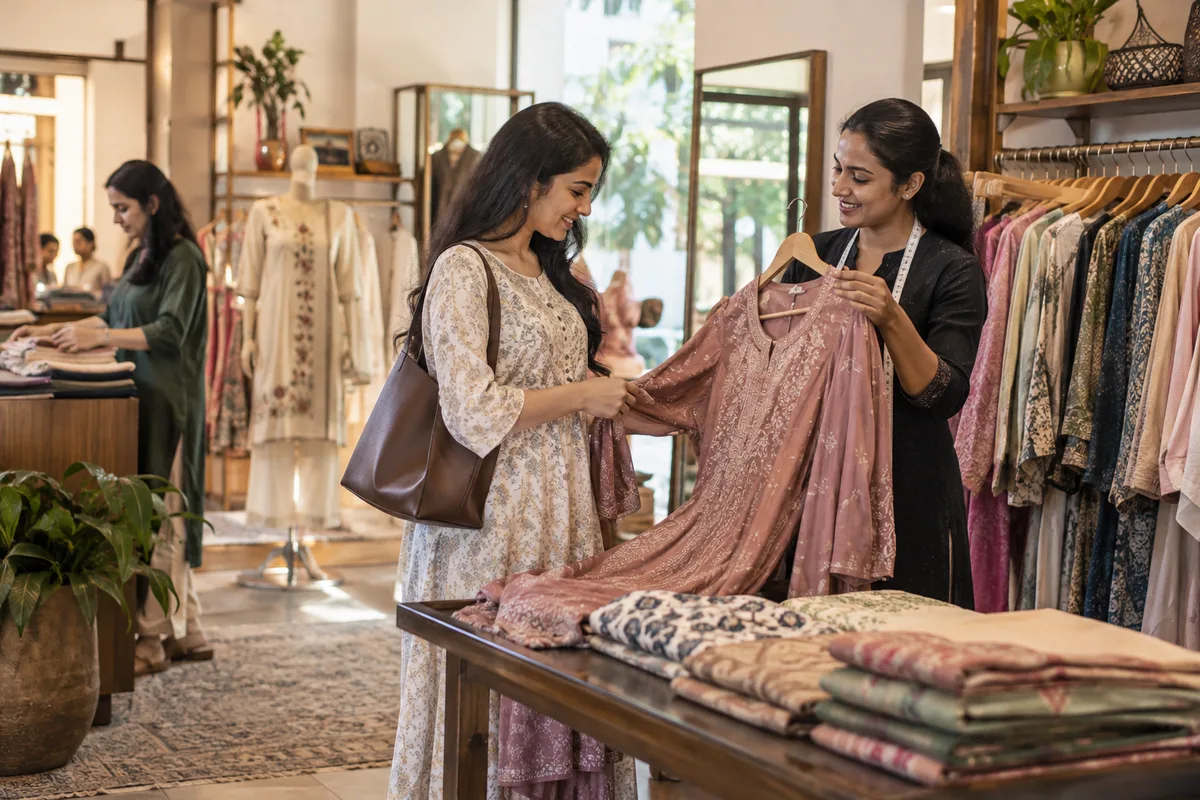
What metro advertising means
Metro advertising buys space in metro stations or trains, including pillar wraps, platform panels, and screens near the gates. GullySales selects stations around your buyers' journeys, checks availability with the appointed advertising agency, coordinates booking and artwork approval, and puts a response route on the advertisement so your team can record enquiries.
Also for clothing stores and boutiques
- PPC ads for clothing stores and boutiques
- Bus advertising for clothing stores and boutiques
- Cricket advertising for clothing stores and boutiques
- Digital out-of-home advertising for clothing stores and boutiques
- Festive and seasonal advertising for clothing stores and boutiques
- Google Shopping and product feed management for clothing stores and boutiques
- Grand opening and store launch advertising for clothing stores and boutiques
- Mall advertising for clothing stores and boutiques
Sales and marketing for clothing stores and boutiques, the overview.
Last updated 14 Nov 2026.
For clothing stores and boutiques
Where it usually goes wrong, and what we would do.
“The commuter is rarely the buyer for the outfit”
A person reading a panel on the way to work may be choosing a wedding outfit for a sister or a school uniform for a child, but they will not buy it today. The advertisement has to plant the name of your shop and one reason to visit, and leave a way to ask later. Expecting a sale from the platform is the wrong measure.
“Which station is closest to the shopping street”
Stations near offices carry different people from stations beside a textile market or a boutique street. The exit also matters: a panel at the gate nearest your area is read by shoppers heading to you, and a panel at another exit is read by people going elsewhere. Passenger volume at the interchange says little about either.
“A garment cannot be shown in a few seconds”
A passenger reads a pillar wrap while walking and a platform panel while waiting. Neither gives time for a collection. A single outfit or a single message, such as blouse stitching or a bridal fitting, reads better than a crowded sheet. The picture must also survive the glare and distance of a station.
“Fashion wording meets approval rules”
The appointed agency passes artwork through the metro authority's approval, and a claim about price, sale or comparison may be queried. A late revision can miss the installation slot. Wording about discounts and offers should be settled with the agency's current rules before the files go to print.
What we do
What we deliver for clothing stores and boutiques.
The work available for this need. We agree the deliverables and responsibilities for your engagement in writing.
Station and exit shortlist
A written recommendation that links each proposed station to the market, mall or boutique street where your shoppers go, and names the exit that matters. It also records stations left out and the reason, so you can check the logic against your own knowledge of the area.
Result: Each station on the list has a stated reason tied to your shoppers.
Placement and format comparison
Pillar wraps, concourse panels, platform positions and screens offered by the agency compared by where the reader stands and how long the message can be. In-train panels are assessed separately, as they reach shoppers beyond one station's catchment.
Result: You can compare available formats on viewing position and message length.
Rights and appointed agency check
A record of who holds the advertising rights for each position you are considering, which assets they cover and when the rights run to. The booking names the party supplying the space, so you know who you are paying and who answers for installation.
Result: The booking names the party supplying each position.
Booking and production record
The agreed site, format, rate and display period written down with deadlines for artwork and materials. You approve the purchase against that record, and the installation arrangements supplied by the agency are attached.
Result: One page holds the sites, rates, dates and deadlines you approved.
One-outfit artwork and approval pack
A proof and production files made to the agency's dimensions, built around a single outfit or a single service such as blouse stitching, with the shop name, location line and response route readable from distance. Your sign-off and the agency's approval are recorded before printing.
Result: Printing starts only after a recorded approval from you and the agency.
Installation photographs and response record
Dated photographs of the advertisement in its station at the start and during the display, with a campaign number, QR code or short code that gives shoppers a next step. The record separates scans and calls from enquiries that became fittings.
Result: Photographs and enquiries are kept against the booking you approved.
How the result is measured
- Booked positions and creative verified through dated photographs
- Display days delivered against display days purchased
- Campaign calls and scans, reported as responses rather than sales
Recorded as a baseline before work starts, so every later report has an honest comparison.
Who it is for
This is written for these clothing stores and boutiques.
- Women's ethnic wear and saree boutiques
- Designer and occasion wear studios
- Multi-brand clothing and accessories stores
- Men's wear and ethnic wear stores
- Custom tailoring and blouse stitching studios
- Kids' wear stores
- School uniform retailers and suppliers
- Corporate, hospital and hospitality uniform suppliers
- Fashion accessories and jewellery boutiques
Before you decide
Agree the work. Know how to judge it.
Metro advertising for clothing stores and boutiques: use these checks to prepare, choose the scope, and review what changes.
Bring the right evidence
State the buyer group, catchment, and dates that matter to the offer. Ask for the proposed inventory and available evidence about its audience, with the source and date shown.
Make the scope clear
Agree the exact placements, formats, booking period, and proof of delivery. Separate media charges from design, production, permissions, and installation where these apply.
Check the work in use
Compare delivery evidence with the agreed booking and record enquiries through a distinct response route where practical. Treat audience estimates separately from measured responses.
Know when to change course
Do not buy a placement only because it is discounted. If the location or audience does not fit the buyer, revisit the plan before committing production costs.
These are discussion points, not a fixed package. GullySales confirms the deliverables, responsibilities, fee, and term in writing after reading your brief and speaking with you.
Before we start
What to have ready before the work starts.
The records, access and decisions this work needs from clothing stores and boutiques. Anything missing is noted in the written scope, with who will supply it.
- Where your shoppers come from
- Note the areas, markets and offices from which your customers travel, and which stations or exits they use. We cannot choose a station from a map alone. Without this, the shortlist rests on passenger volume, which says little about people looking for a boutique.
- One outfit or one service
- Choose the single thing the advertisement will say: a bridal collection, blouse stitching, school uniforms or a festival range. A station panel works with one message. A page that tries to show the whole shop becomes unreadable at the distance a passenger reads from.
- Clear photograph and shop details
- Supply a large, sharp photograph of the chosen outfit and the shop name, address line and landmark exactly as shoppers know them. Print magnifies poor images, and a vague address wastes the visit. Missing details hold up the proof and the installation slot.
- A person to take the enquiries
- Name who answers the phone, WhatsApp or campaign number and what they say. A passenger who responds and meets silence is lost. Tell your staff what the advertisement offers, so the answer matches the panel on the wall.
- Sign-off authority and dates
- Decide who approves the proof and spend, and give the dates the display must cover, for example the weeks before a festival. The agency's schedule is fixed, and an approval that waits for the owner's return can push the display past the occasion.
How it works
How the metro advertising work runs
The work itself, in order. How an engagement starts, from your brief to a written scope, is set out on our method page.
- 1
Agreeing the shopper's journey
After your requirements brief and conversation, we agree scope, fee and term in writing. The first decision is which shoppers use which stations on the way to your shop, and what you want them to do: visit, message or save the name for a coming occasion.
- 2
Availability and site comparison
The appointed agency supplies the available positions and their specifications. You receive a recommendation comparing the sites actually on offer, not a commitment to a full line of stations. We state plainly where a position is weak for a boutique.
- 3
Booking authorisation
You approve the placement and commercial terms before the booking is made. Installation timing and production deadlines are confirmed with the agency, so the artwork handover follows the booked schedule and does not fall into the weeks you wanted covered.
- 4
Artwork and wording sign-off
You approve the proof, the offer wording and the shop address line. The agency passes it through its own approval, and any requested change returns to you for sign-off before production. We keep the single-outfit rule in view while the proof is revised.
- 5
Installation check
Dated photographs show the advertisement installed in the station, and you compare the position and artwork against the booking. A fault, such as a panel placed away from the booked spot or a damaged print, is raised with the agency while the display is still running.
- 6
Reading enquiries against the baseline
We read the recorded scans, calls and messages against the figures taken before the display began, and separate casual contacts from fitting bookings. The notes say whether the stations suited your shoppers and what to change before another booking is considered.
Where this fits
Three pieces of sales work, in this order.
This work sits inside sales process design, at stage 1, prospecting and lead generation. The audit comes before it, and sales management keeps it running.
Step 1
Sales audit
Find where deals are being lost and what to fix first.
Start here if you cannot say where orders are lost.
Step 2 · you are here
Sales process design
One written way to sell, from first enquiry to repeat order.
Start here if every salesperson sells differently.
Step 3
Sales management
A target, a review routine and someone who owns the number.
Start here if the team has targets and no routine.
FAQ
Questions owners ask before they call.
Not here? More answers, or ask on WhatsApp.
Is metro advertising too big for a single boutique?
Which is better for a boutique, a station panel or an in-train panel?
Can I advertise a sale or discount on a panel?
How will I know whether the advertisement worked?
Do you own the metro advertising space?
What if the agency rejects my artwork?
How much does it cost?
How long is the contract?
How soon will we see results?
Who will actually do the work?
From the blog
Further reading for clothing stores and boutiques.
 5 min read · 29 Sept 2026Festival and wedding-season stock and promotion timing for retailersHow a retailer lines up promotion with the stock cycle in festival and wedding season: what to announce before, during and after, and when to stop.
 6 min read · 21 Sept 2026Influencer marketing vs social media advertising: which one should you pay for?An ad is a message you control, shown to people you choose. A creator post is a recommendation you do not control, shown to people who chose the creator.
 8 min read · 21 Sept 2026How to write an influencer briefA brief fixes the claim, the offer and the disclosure, then leaves the creator alone. Hand over a script and you pay for a bad advertisement.
More for clothing stores and boutiques
Related work to consider.
Closest to this: paid and media
- PPC ads for clothing stores and boutiques
- Bus advertising for clothing stores and boutiques
- Cricket advertising for clothing stores and boutiques
- Digital out-of-home advertising for clothing stores and boutiques
- Festive and seasonal advertising for clothing stores and boutiques
- Google Shopping and product feed management for clothing stores and boutiques
- Grand opening and store launch advertising for clothing stores and boutiques
- Mall advertising for clothing stores and boutiques
Also for clothing stores and boutiques
Or start from the overview: sales and marketing for clothing stores and boutiques.
Your next practical step
Tell us what you are trying to grow, and we will read it before we call.
Eight short steps, mostly taps. Skip anything you would rather answer on the call.