Clothing stores and boutiques · Retail store signage design
Guide the shopper from the doorway to the fitting room without a word from staff.
Retail signage design for a clothing boutique is the artwork for the signs that guide and inform a shopper inside and outside the shop: the fascia, the section boards, the size and price signs, the fitting room and the alteration counter. GullySales designs each sign to the shop's layout and brand and hands over measured artwork and files for the sign maker.
Scope, fee, reporting and term are agreed in writing after we have read your brief and spoken to you.
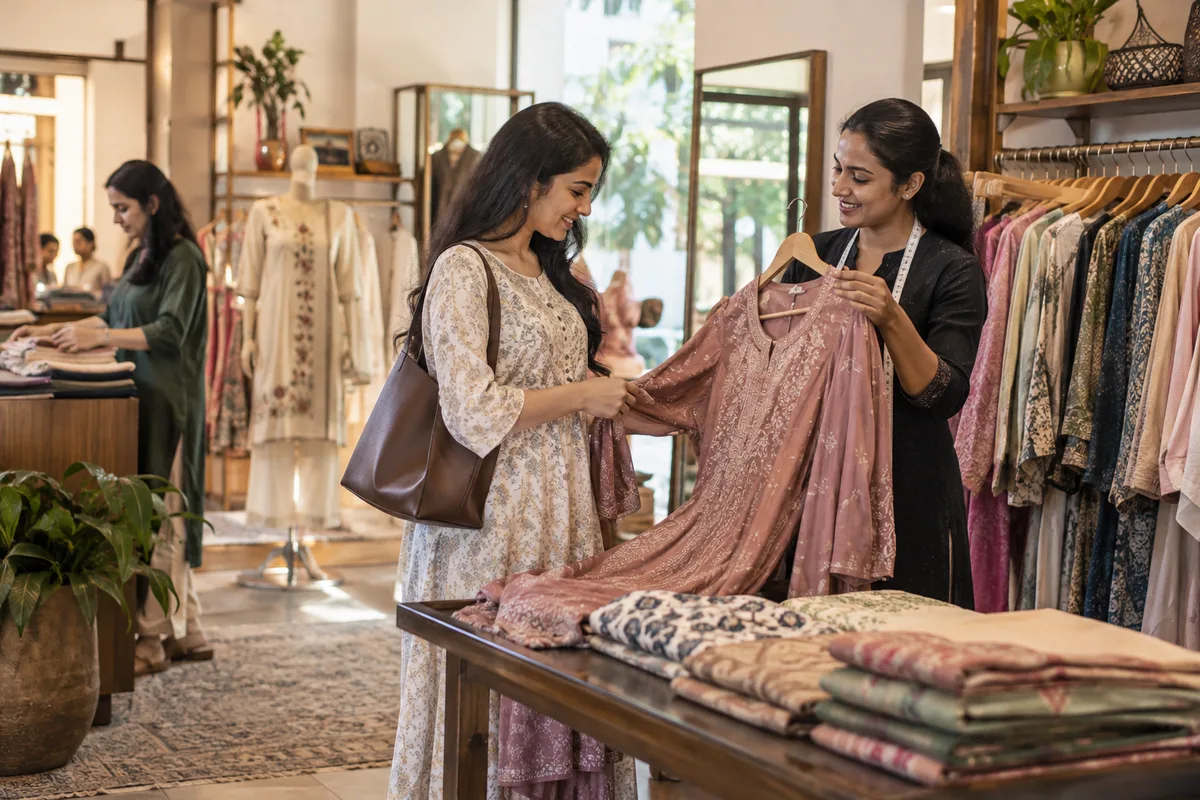
What retail store signage design means
Retail store signage design is the artwork for the signs that guide, inform and sell inside and outside a shop, from the fascia and entrance to aisle markers, section boards and price signs. GullySales designs each sign to the store's layout and brand and hands over measured artwork and files for the sign maker.
Also for clothing stores and boutiques
- PPC ads for clothing stores and boutiques
- Bus advertising for clothing stores and boutiques
- Cricket advertising for clothing stores and boutiques
- Digital out-of-home advertising for clothing stores and boutiques
- Festive and seasonal advertising for clothing stores and boutiques
- Google Shopping and product feed management for clothing stores and boutiques
- Grand opening and store launch advertising for clothing stores and boutiques
- Mall advertising for clothing stores and boutiques
Sales and marketing for clothing stores and boutiques, the overview.
Last updated 14 Nov 2026.
For clothing stores and boutiques
Where it usually goes wrong, and what we would do.
“Shoppers decide at the door”
A passer-by looks at the fascia and the window for a second and decides whether this is a shop for a wedding outfit, a child's school wear or a quick blouse. The fascia has to say what the shop sells, in plain words, and look like the Instagram page the shopper saw. A fascia that shows only a name and a logo leaves the shopper guessing.
“A rack of outfits needs an order the shopper can read”
Sarees, lehengas, kurtas, blouses and children's wear sit in different parts of the shop, and a family arrives with an occasion in mind. Section boards hung too high, in small type, or hidden by hanging garments make the family ask staff, and staff leave the customer at the counter. Section signs need the right height, a size readable from the entrance and a consistent name.
“Size, price and care signs are small but decisive”
A shopper holds a garment and looks for the size, the price and whether it can be altered. A hand-written slip, or a tag in a different style on each rack, makes the shop look uncertain and invites bargaining over a price the tag never made clear. Rail signs, size dividers and price cards need one clear style, so the shopper trusts the number.
“Fitting room and alteration signs carry the service”
Made-to-measure work depends on a customer finding the measurement counter, the fitting room and the pickup point, and knowing the order. Signs here set the rules gently: how many garments may go in, where to wait, how to book a fitting. A shop with clear service signs looks organised, and organised is what a bride's family wants before an event.
What we do
What we deliver for clothing stores and boutiques.
The work available for this need. We agree the deliverables and responsibilities for your engagement in writing.
Fascia and entrance sign artwork
The fascia, the door sign, the window lettering and the opening-hours board are designed together at their real sizes, with letter heights worked out for the viewing distance. The words tell the passer-by what the shop sells, in the shopper's own terms, beside the name and the brand mark.
Result: A passer-by can read what the shop sells from the pavement.
Wayfinding and section boards
Section boards for each part of the shop are designed in one family: bridal, festive, everyday, children's, uniforms and accessories. Each has a size, a hanging height and a position marked on the shop plan. A shopper can see the next section from the last, so the route is clear without staff.
Result: A shopper can find each section from the entrance using the boards alone.
Rail, size and price signs
Rail headers, size dividers and price cards are designed as editable templates with space for the item, the size range and the price. Your team prints or writes into them in the same style on every rack. A tag in the wrong format becomes visibly wrong, because the style is fixed.
Result: Every rail carries a sign in the same style, with price and size where the shopper expects.
Fitting room and alteration signs
Signs for the fitting room, the waiting area, the measurement counter, the alteration drop-off and the pickup point are designed to be calm and clear, with the rules your shop wants to state, such as how many garments go in. Wording is yours; we set it so a nervous first-time customer can follow it.
Result: A customer can find the fitting room, the measurement counter and the pickup point by sign.
Offer and festival sign frames
A sign frame with replaceable inserts holds the current offer, the festival collection or the new arrivals. The frame stays and the insert changes, so the shop does not rebuild a sign for each season. Insert templates keep type size and contrast within what a shopper can read at the counter.
Result: Your team can change an offer by printing a new insert and leaving the frame.
Sign maker files and a plan
You receive artwork drawn to the real size, material and fixing of each sign, the colour references, outlined lettering and a plan marking where each sign hangs. The sign maker works from one document, and a sign installed in the wrong place or at the wrong size is visible on the plan.
Result: A sign maker can fabricate from the files, and an installer can place each sign from the plan.
How the result is measured
- Questions staff are asked about where a product or section is
- Customers reaching a section without asking, noticed by counter staff
- Signs the sign maker returned for a query on the artwork
Recorded as a baseline before work starts, so every later report has an honest comparison.
Who it is for
This is written for these clothing stores and boutiques.
- Women's ethnic wear and saree boutiques
- Designer and occasion wear studios
- Multi-brand clothing and accessories stores
- Men's wear and ethnic wear stores
- Custom tailoring and blouse stitching studios
- Kids' wear stores
- School uniform retailers and suppliers
- Corporate, hospital and hospitality uniform suppliers
- Fashion accessories and jewellery boutiques
Before you decide
Agree the work. Know how to judge it.
Retail store signage design for clothing stores and boutiques: use these checks to prepare, choose the scope, and review what changes.
Bring the right evidence
State the buyer group, catchment, and dates that matter to the offer. Ask for the proposed inventory and available evidence about its audience, with the source and date shown.
Make the scope clear
Agree the exact placements, formats, booking period, and proof of delivery. Separate media charges from design, production, permissions, and installation where these apply.
Check the work in use
Compare delivery evidence with the agreed booking and record enquiries through a distinct response route where practical. Treat audience estimates separately from measured responses.
Know when to change course
Do not buy a placement only because it is discounted. If the location or audience does not fit the buyer, revisit the plan before committing production costs.
These are discussion points, not a fixed package. GullySales confirms the deliverables, responsibilities, fee, and term in writing after reading your brief and speaking with you.
Before we start
What to have ready before the work starts.
The records, access and decisions this work needs from clothing stores and boutiques. Anything missing is noted in the written scope, with who will supply it.
- The shop plan and photographs
- Send a plan or a sketch with measurements, plus photographs of the entrance and each section. The plan decides where signs hang and how large they can be. Without it, the artwork is drawn to guessed sizes and the sign maker finds a clash on the day of fixing.
- Your logo and brand files
- Send the logo in its original vector form, the brand colours and the typefaces. A logo copied from a screenshot is drawn again, and the new version may differ from the one on your cards and bags. Without the files, the fascia and the shopping bag can end up with two different logos.
- The list of sections and services
- Write down every section, counter and service the shop has: bridal, children's, uniforms, alterations, fitting rooms, billing. Each needs a sign with a name. If the names differ between staff, the signs inherit the confusion, so settle the words before they are lettered.
- Permissions and landlord rules
- Check what the landlord, the mall or the local authority allows for the fascia and the outdoor signs. Rules differ by place and change, so ask the people who set them and share their requirements. Without that, a sign can be made and then ordered down.
- A sign maker and a fitter
- Name the sign maker and the person who will install, so we can draw to their materials and their method. A sign designed in a material the maker does not work with is redrawn. If you have not chosen, we can list what to ask for in a quote.
How it works
How the retail store signage design work runs
The work itself, in order. How an engagement starts, from your brief to a written scope, is set out on our method page.
- 1
Walking the shop and the street
We begin with the shop plan, photographs of the entrance and every section, and a note of how shoppers approach the door: on foot, from a car park, from a mall corridor. We list every sign the shop has, needs or wants, and who reads each one at what distance.
- 2
Recording the figures before design
Before design, we note the number of times shoppers ask staff for directions, the walk-in and enquiry record, and the questions heard at the counter. Your own counts and notes are the source. Later, a repeated question about where a section is will tell us whether the new signs worked.
- 3
Drawing the sign plan
We draw the plan marking each sign, its type, its height and its position. The plan is checked against the fit-out and the lighting, since a good sign in a shadow fails. You approve the plan before any artwork, because moving a sign after fabrication costs far more than moving it on paper.
- 4
Designing the sign family
We design the fascia first, then the section boards, rail signs and service signs in the same style, using the colours and type of your brand. We test the type size and contrast at the real viewing distance. Words for each sign come from you, and we check they fit without shrinking the lettering.
- 5
Preparing files for the sign maker
Each sign is drawn at its real size, with material, thickness, fixing and colour references noted. We talk through the file with your sign maker where needed, because a maker who must guess changes the letter height. Mounting heights and a position for each sign go on the plan.
- 6
Checking the installed signs and the result
After installation we compare the signs on site with the artwork, noting colour, spelling and position. Later we read the counter questions and walk-in figures against those recorded at the start, and list the signs that did not do their job. We say which findings the figures cannot settle.
Where this fits
Three pieces of sales work, in this order.
This work sits inside sales process design, at stage 1, prospecting and lead generation. The audit comes before it, and sales management keeps it running.
Step 1
Sales audit
Find where deals are being lost and what to fix first.
Start here if you cannot say where orders are lost.
Step 2 · you are here
Sales process design
One written way to sell, from first enquiry to repeat order.
Start here if every salesperson sells differently.
Step 3
Sales management
A target, a review routine and someone who owns the number.
Start here if the team has targets and no routine.
FAQ
Questions owners ask before they call.
Not here? More answers, or ask on WhatsApp.
Do you make and fit the signs?
Do we need planning permission for a boutique fascia?
Can the signs change when we change the offer?
Will you write the words for each sign?
Do uniform sections need different signs?
Will new signs bring more customers?
How much does it cost?
How long is the contract?
How soon will we see results?
Who will actually do the work?
From the blog
Further reading for clothing stores and boutiques.
 5 min read · 29 Sept 2026Festival and wedding-season stock and promotion timing for retailersHow a retailer lines up promotion with the stock cycle in festival and wedding season: what to announce before, during and after, and when to stop.
 6 min read · 21 Sept 2026Influencer marketing vs social media advertising: which one should you pay for?An ad is a message you control, shown to people you choose. A creator post is a recommendation you do not control, shown to people who chose the creator.
 8 min read · 21 Sept 2026How to write an influencer briefA brief fixes the claim, the offer and the disclosure, then leaves the creator alone. Hand over a script and you pay for a bad advertisement.
More for clothing stores and boutiques
Related work to consider.
Closest to this: paid and media
- PPC ads for clothing stores and boutiques
- Bus advertising for clothing stores and boutiques
- Cricket advertising for clothing stores and boutiques
- Digital out-of-home advertising for clothing stores and boutiques
- Festive and seasonal advertising for clothing stores and boutiques
- Google Shopping and product feed management for clothing stores and boutiques
- Grand opening and store launch advertising for clothing stores and boutiques
- Mall advertising for clothing stores and boutiques
Also for clothing stores and boutiques
Or start from the overview: sales and marketing for clothing stores and boutiques.
Your next practical step
Tell us what you are trying to grow, and we will read it before we call.
Eight short steps, mostly taps. Skip anything you would rather answer on the call.