Clothing stores and boutiques · Store footfall campaigns
Give a family a dated reason to visit the shop before the wedding shopping is done.
A footfall campaign for a clothing shop uses local advertising and a dated offer to bring shoppers through the door, whether for a wedding trousseau, a festival collection or the school uniform rush. GullySales plans the catchment, prepares the counter team and links visit records to bills, so response can be read against your starting position.
Scope, fee, reporting and term are agreed in writing after we have read your brief and spoken to you.
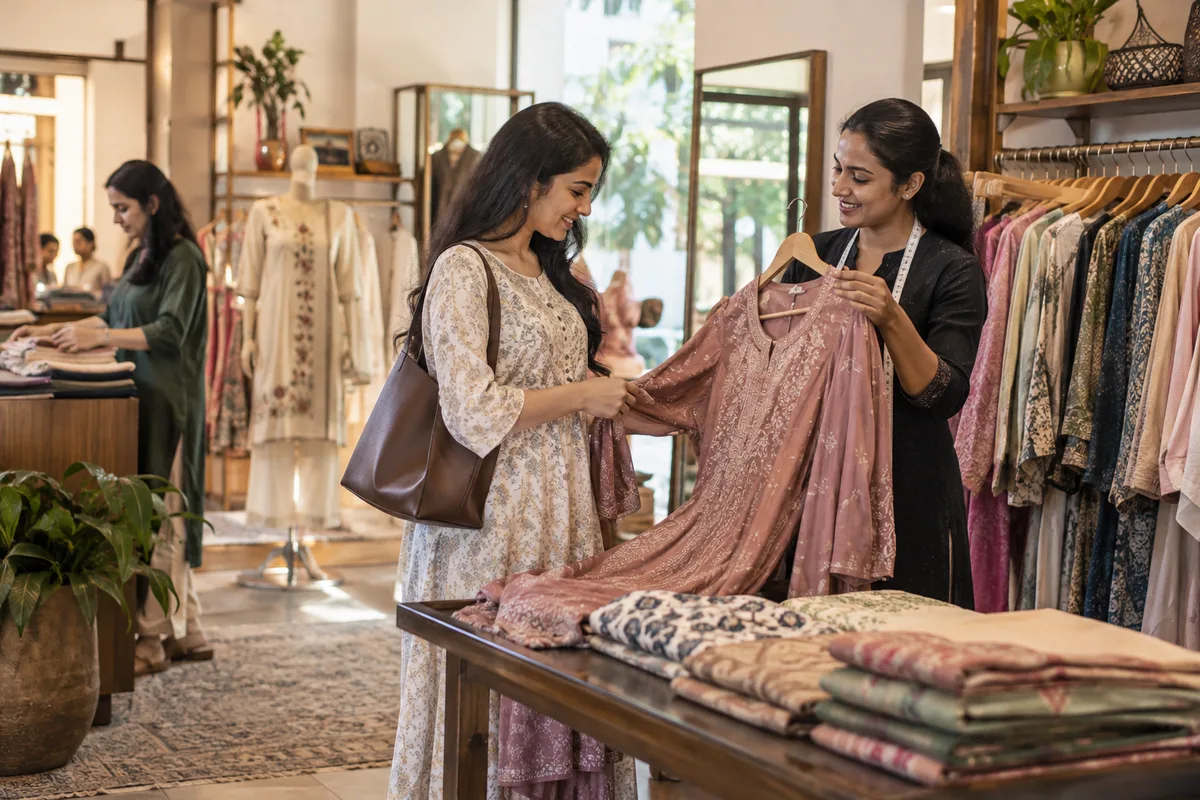
What store footfall campaigns means
Store footfall campaigns use local advertising and a dated offer to bring buyers into a shop, showroom, or branch. GullySales plans the catchment and media, prepares the counter team, and connects campaign codes with visit records and bills so you can compare the response with your store's starting position.
Also for clothing stores and boutiques
- PPC ads for clothing stores and boutiques
- Bus advertising for clothing stores and boutiques
- Cricket advertising for clothing stores and boutiques
- Digital out-of-home advertising for clothing stores and boutiques
- Festive and seasonal advertising for clothing stores and boutiques
- Google Shopping and product feed management for clothing stores and boutiques
- Grand opening and store launch advertising for clothing stores and boutiques
- Mall advertising for clothing stores and boutiques
Sales and marketing for clothing stores and boutiques, the overview.
Last updated 14 Nov 2026.
For clothing stores and boutiques
Where it usually goes wrong, and what we would do.
“Shoppers visit in groups, and on a schedule”
A bride arrives with a mother and a sister, and the family may visit several shops across a few weekends before deciding. The campaign has to give that group a reason to choose your door on a particular day, such as a new collection arriving or a fitting slot for a stitched outfit. A general discount on a banner gives no such reason and leaves the visit to chance.
“The offer must match the counter”
A leaflet that promises an exchange or a stitching slot creates an argument if the salesperson at the counter has not heard of it. Boutique staff change during festival weeks, and a new helper may quote different terms. The offer sheet has to be short enough to explain in a sentence, and the counter team needs a briefing before the first leaflet reaches a household.
“Festivals flatter every result”
Footfall rises in the weeks before a major festival or a wedding season whether or not any advertising runs. A boutique that advertises in that window and then reads the rise as the campaign's work will spend again with nothing learned. The record needs the festival dates marked, and the comparison needs the same selling window from earlier seasons where the boutique has the bills.
“Visits that end without a bill”
A family tries three outfits, takes a photograph and leaves to think. Without a record of who came, which garment they liked and what was promised, that visit disappears. A follow-up can only happen if the counter noted a name and a date. Footfall that is never written down cannot be linked to the campaign or turned into a later order.
What we do
What we deliver for clothing stores and boutiques.
The work available for this need. We agree the deliverables and responsibilities for your engagement in writing.
Catchment map from your own customers
A proposed visit area drawn from the pin codes on your bills and the routes shoppers take to reach you. You check it against where your wedding and festival buyers actually live before any media is chosen.
Result: The map lists the pin codes covered and the ones left out, with a reason for each.
Offer sheet with dates and terms
A one-page statement of the reason to visit, the dates, who can claim it and what the counter will honour. Your manager approves it against stock, tailor capacity and the staff on the floor.
Result: A salesperson can explain the offer in one sentence from the sheet alone.
Local media plan
A selection of placements such as apartment notice boards, wedding-hall noticeboards, local newspaper inserts and radius ads, with cost and a response code for each. You approve the placements before bookings are made.
Result: Every placement has a code, a cost line and an approval from you.
Campaign artwork with the visit instruction
The offer adapted to each placement, with the shop address, the dates and a plain instruction on what to bring or say at the counter. Proofs are checked by you for dates and terms before printing or release.
Result: Printed and digital pieces show the same dates, terms and address.
Visit register and counter briefing
A sheet for walk-ins, quotations, fitting slots and bills, with the festival periods marked. The briefing explains how to ask where a visitor heard about the offer, and who follows up the family that leaves without buying.
Result: Each visit entry has a date, a source code or a note that the source is unknown.
Campaign comparison
Visits, quotations and bills read against the starting position and the same selling window from earlier seasons, where your records allow. Where records are too thin, the comparison says so and names the figure that needs to be kept next time.
Result: The comparison separates visits from bills and states which figures were missing.
How the result is measured
- Recorded walk-ins against the baseline, with known seasonal differences noted
- Media-specific code redemptions and visits with no confirmed source
- Qualified enquiries and quotations awaiting a purchase decision
Recorded as a baseline before work starts, so every later report has an honest comparison.
Who it is for
This is written for these clothing stores and boutiques.
- Women's ethnic wear and saree boutiques
- Designer and occasion wear studios
- Multi-brand clothing and accessories stores
- Men's wear and ethnic wear stores
- Custom tailoring and blouse stitching studios
- Kids' wear stores
- School uniform retailers and suppliers
- Corporate, hospital and hospitality uniform suppliers
- Fashion accessories and jewellery boutiques
Before you decide
Agree the work. Know how to judge it.
Store footfall campaigns for clothing stores and boutiques: use these checks to prepare, choose the scope, and review what changes.
Bring the right evidence
State the buyer group, catchment, and dates that matter to the offer. Ask for the proposed inventory and available evidence about its audience, with the source and date shown.
Make the scope clear
Agree the exact placements, formats, booking period, and proof of delivery. Separate media charges from design, production, permissions, and installation where these apply.
Check the work in use
Compare delivery evidence with the agreed booking and record enquiries through a distinct response route where practical. Treat audience estimates separately from measured responses.
Know when to change course
Do not buy a placement only because it is discounted. If the location or audience does not fit the buyer, revisit the plan before committing production costs.
These are discussion points, not a fixed package. GullySales confirms the deliverables, responsibilities, fee, and term in writing after reading your brief and speaking with you.
Before we start
What to have ready before the work starts.
The records, access and decisions this work needs from clothing stores and boutiques. Anything missing is noted in the written scope, with who will supply it.
- Recent bills with pin codes
- A sample of recent bills or customer records showing where buyers live. They shape the catchment. Without them the map is built from guesswork about distance, and you may pay to reach households that would not travel to your door.
- Dates of the selling windows
- Festival dates, wedding season periods, school reopening and any sale you already plan. We mark them in the record so a busy week is not mistaken for campaign response, and so material is ready before the shopping begins.
- Stock and tailor capacity
- What you can show and deliver during the campaign, including stitching and alteration slots. An offer promising a stitched outfit when the tailor is full ends with a late delivery before an event, which costs more than the advertising did.
- A counter person for the register
- One named person who writes down visits, quotations and sources, and who is present at the counter for the campaign dates. If nobody owns the register, the campaign cannot be read afterwards and the next decision rests on memory.
- Permissions for local placements
- Contact details for housing society offices, wedding-hall managers or local print distributors, and any permission already held. Placements without permission get removed, and the campaign loses its dates while the shop is still paying for the material.
How it works
How the store footfall campaigns work runs
The work itself, in order. How an engagement starts, from your brief to a written scope, is set out on our method page.
- 1
Choosing the shop and the selling window
We start with the branch or shop, and the window the campaign is meant to serve, such as a wedding season, a festival collection or school reopening. You approve scope in writing. For a chain, we agree which branches run the campaign and which act as comparison.
- 2
Agreeing the starting counts
Your manager shares recent bills, walk-in estimates and quotation records. We write down how visits will be counted from now on, including families who leave without buying. These starting figures are what the campaign is read against.
- 3
Offer, media and spend approval
You approve the offer terms, the placements and the spend before anything is booked. Stock limits, tailor capacity and fitting slots are settled at this point, so the offer is one the shop can keep for every family who arrives.
- 4
Artwork and counter handoff
Approved artwork goes to the placements once permissions are confirmed, for example from housing societies or hall managers. The briefing sheet and the codes are taken through with the counter team, and one person is named to keep the visit register.
- 5
Running the campaign and reading the register
The campaign runs against the agreed dates while the register is filled in. Changes to dates, offer or spend need your approval. If a placement brings visits and another brings none, that is noted and you decide whether to move spend.
- 6
Matching visits to bills and deciding the repeat
Visits are matched with quotations and bills, and the result is read against the starting figures and the festival marking. You see which placements brought visits that became bills, which brought only visits, and what should change before the next window.
Where this fits
Three pieces of sales work, in this order.
This work sits inside sales process design, at stage 1, prospecting and lead generation. The audit comes before it, and sales management keeps it running.
Step 1
Sales audit
Find where deals are being lost and what to fix first.
Start here if you cannot say where orders are lost.
Step 2 · you are here
Sales process design
One written way to sell, from first enquiry to repeat order.
Start here if every salesperson sells differently.
Step 3
Sales management
A target, a review routine and someone who owns the number.
Start here if the team has targets and no routine.
FAQ
Questions owners ask before they call.
Not here? More answers, or ask on WhatsApp.
What is a good offer for a clothing shop campaign?
Does a footfall campaign suit a small boutique with one shop?
How do we know which placement brought a shopper?
Can the campaign help with school uniforms?
Will you handle the printing and the distribution?
What happens to visitors who do not buy?
How much does it cost?
How long is the contract?
How soon will we see results?
What do you need from us?
From the blog
Further reading for clothing stores and boutiques.
 8 min read · 21 Sept 2026How to advertise to mall shoppersThe shopper is already inside. Your landlord sells the media that reaches them, and the decision falls in the last thirty metres.
 5 min read · 18 Jun 2026Reading your footfall-to-bill ratio: a simple counter for small shopsCount entries, bills and walk-outs for one week to see whether your shop has a traffic problem or a conversion problem, and what to do about each.
 6 min read · 6 Feb 2025How to increase jewellery store footfallJewellery footfall follows a calendar you already own. Plan against the buying seasons and the wedding dates, and sell to the family that decides together.
More for clothing stores and boutiques
Related work to consider.
Closest to this: paid and media
- PPC ads for clothing stores and boutiques
- Bus advertising for clothing stores and boutiques
- Cricket advertising for clothing stores and boutiques
- Digital out-of-home advertising for clothing stores and boutiques
- Festive and seasonal advertising for clothing stores and boutiques
- Google Shopping and product feed management for clothing stores and boutiques
- Grand opening and store launch advertising for clothing stores and boutiques
- Mall advertising for clothing stores and boutiques
Also for clothing stores and boutiques
Or start from the overview: sales and marketing for clothing stores and boutiques.
Your next practical step
Tell us what you are trying to grow, and we will read it before we call.
Eight short steps, mostly taps. Skip anything you would rather answer on the call.