Real estate developers and brokers · Outdoor advertising
Buy the approach road to the site, not the arterial everybody names first.
Outdoor advertising for a project is bought one site at a time: the hoarding on the road buyers use to reach you, small boards at the last turns, the barricade around the plot. GullySales picks sites by the direction weekend traffic moves, and gives the outdoor campaign a number the sales office logs.
Scope, fee, reporting and term are agreed in writing after we have read your brief and spoken to you.
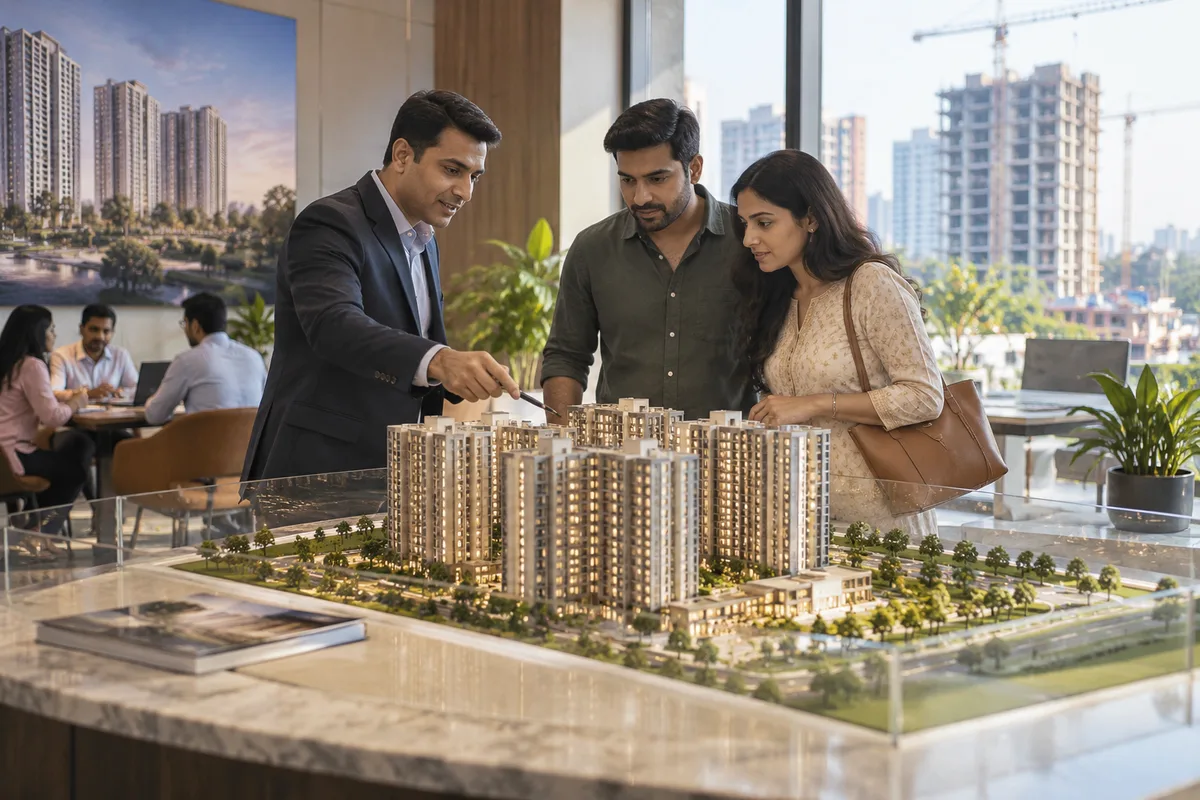
What outdoor advertising means
Outdoor advertising is the hoarding, billboard, bus shelter or digital screen on a road your buyers already use. GullySales picks the sites from where your customers actually come from, coordinates the booking with the media owner, and gives the campaign a traceable route so it is not judged on guesswork.
Also for real estate developers and brokers
- Cinema advertising for real estate developers and brokers
- Newspaper advertising for real estate developers and brokers
- Radio advertising for real estate developers and brokers
- PPC ads for real estate developers and brokers
- SEO for real estate developers and brokers
- Lead generation for real estate developers and brokers
- Digital marketing for real estate developers and brokers
- Reputation management for real estate developers and brokers
Sales and marketing for real estate developers and brokers, the overview.
Last updated 5 Oct 2026. Rules for this trade differ by state and professional body, and they change. We describe restrictions in general terms, so check the current position with your own council or adviser before you publish anything.
For real estate developers and brokers
Where it usually goes wrong, and what we would do.
“The last two kilometres”
A family that saw the portal listing turns off the main road on a Sunday and then cannot find the gate. Boards at each turn are worth more than the landmark site that photographs well in a deck.
“Inbound traffic on a Saturday morning”
Buyers drive to a site visit before lunch and drive home tired. A panel on the far carriageway reaches them after the sales office has shut.
“The barricade is media you are already paying for”
Sheeting around the plot faces the road for the whole build. The configuration, the possession quarter and a number on it work harder than a rented panel for a month.
“What the board has to state is a legal question”
Advertising a registered project brings obligations under RERA, and which of them apply to a hoarding is for your own legal adviser to settle. Those lines take space on a panel read at speed, so the layout allows for them from the first draft.
What we do
What we deliver for real estate developers and brokers.
Every deliverable, what it covers for you, and the result it is there to produce. Nothing here is an extra.
Micro-market and route map
The roads a buyer in this budget band uses to reach the site, drawn before anybody opens a list of available hoardings.
Result: The buy covers the approach, not a city.
Site survey from the driver's seat
Every option photographed standing where a driver sits, with the facing, the reading distance and whatever has gone up in front of it since the last picture was taken.
Result: You book the board a buyer sees rather than the one in the presentation.
Directional boards to the gate
Small boards at each turn between the main road and the sales office, up before the weekends when site visits happen.
Result: A family that set out to see the project arrives at it.
Barricade and site board artwork
One line, the configuration, the possession quarter, a QR code and the registration wording your legal adviser has cleared.
Result: The plot advertises itself for the whole build.
Which board did you see, asked at the desk
A number used on outdoor alone, and one question at the sales office recorded against every walk-in before the site visit form is filled.
Result: Visits are traced to the board that sent them.
Mounted photographs and reporting
Dated pictures at the start and middle of each display cycle, then walk-ins and calls by board against the baseline recorded before the campaign.
Result: A torn flex is caught while the cycle is still running.
How the result is measured
- Sites booked
- Proof of display received
- Enquiries quoting the campaign route
Recorded as a baseline before work starts, so every later report has an honest comparison.
How it is bought, and approved
A developer buys outdoor site by site, and the land owner, the civic body and RERA rules clear it first.
- What your state RERA authority requires
- Check your state authority's current rules on what an advertisement for a registered project must carry. Have your legal team approve the artwork before printing.
- Licence and land owner consent
- Each structure needs the civic body's licence and the owner's consent. Ask to see both. Panels beside a highway often fall under separate rules.
- Directional boards on private plots
- A board at the last turn sits on someone's plot. Get a signed consent from the owner and note who removes it when the project is sold out.
- The barricade of your own plot
- The board on your own barricade is on your land, but may still need the local body's permission. Check the conditions of your sanctioned plan.
- A Saturday visit from the driver's seat
- Drive the road on a Saturday morning and note which direction the traffic moves. Buy the face that looks at traffic heading to your gate.
- A line on the site-visit form
- Add the board's name to the site-visit form, such as the junction it stands at, and ask the visitor which one they saw.
Who it is for
This is written for these real estate developers and brokers.
- Residential apartment developers
- Villa and plotted development builders
- Commercial and office space developers
- Independent brokers and channel partner networks
- Redevelopment and rehabilitation projects
- Plot and land aggregators
- NRI-focused residential projects
- Affordable and mid-income housing developers
- Luxury and premium residential developers
Not for
It is not the right fit if.
- You want a guaranteed Google ranking or a guaranteed number of leads. Nobody honest can promise either.
- You need enquiries by next week and have nobody to answer them.
- You want posts and reach reported, not enquiries and orders.
How it works
From your first message to the first report.
No open-ended retainer. Every step gives you something in writing.
First
Your brief
You tell us what you need in a few short steps: your business, what you want, where enquiries come from and how they are handled.
After the brief
A conversation and a written scope
We read it, then talk with whoever handles your enquiries. If you want our help, the scope, the fee and the reporting come in writing, and nothing starts before you have read them.
Before work starts
Baseline recorded
Enquiries by source, reply time, conversion and cost per order, written down so every later report has an honest comparison.
After the baseline
The first fix goes live
The fix we agreed to start with is put in place and measured against the baseline, whether that is reply time, a follow-up sequence, the page buyers land on or the handover between marketing and sales.
As agreed
Report against the baseline
What moved, what did not, and what changes next, in plain words. How often you get it is set in writing before work starts.
At renewal
Renew on the numbers
The term ends and you decide whether to continue from the results. The length is agreed in writing before anything starts.
How the outdoor advertising work runs
- 1
Draw the catchment
We agree the roads, junctions and neighbourhoods your buyer moves through. It is almost always a smaller area than an owner first says, and a clinic in Nagarbhavi does not need the whole of west Bengaluru.
- 2
Survey what is available
We work through the sites on offer inside that catchment and go and stand in front of the ones worth looking at.
- 3
Compare and book
Sites are compared on facing, visibility, illumination and cycle length, then booked through the media owner or their agency at a negotiated rate.
- 4
Print to specification
Artwork is made to the exact panel size and delivered ahead of mounting day, with a proof you approve before printing.
- 5
Monitor the cycle
We collect mounting and mid-cycle photographs, and take up anything late, torn or unlit with the media owner while the cycle is still running.
Why us
Why owners pick GullySales over an agency.
Marketing and sales, as one job
Most agencies stop at the enquiry. We also fix what happens after it: the reply, the follow-up, the quote and the CRM.
The person on the first call does the work
No account managers in between. You are never handed to someone you have not met.
A baseline before anything starts
Your numbers are written down on day one, so every later report compares against something honest.
The fee in writing, split three ways
Our time, your media spend and production on separate lines. You always see what goes to us.
No guarantees we cannot keep
The term is agreed in writing and never a default twelve months. We never promise a ranking or a lead count, because nobody controls those.
One office, and we say so
Nagarbhavi, Bengaluru. We work across India by call and WhatsApp and travel when a session needs to be in person.
#257, 3rd floor, Sri Nanjundeshwara Complex, Nagarbhavi 8th Block, Outer Ring Road. How we work.
Your brief
Tell us what you need, and we will read it before we call.
Eight short steps about your business, what you want and who decides. Most questions are a tap, and you can skip any you would rather answer on the call.
FAQ
Questions owners ask before they call.
Not here? More answers, or ask on WhatsApp.
Where should the first hoarding go?
Can you tell us how many bookings the hoardings produced?
What do we have to print on the board?
Should we hoard on the city arterial when the project is on the outskirts?
Can channel partners put up their own boards for our project?
Do you work with individual brokers or only developers?
Can you help us track broker performance?
How much does it cost?
How long is the contract?
How soon will we see results?
From the blog
Further reading for real estate developers and brokers.
 6 min read · 21 Sept 2026Billboard vs digital billboard advertising: is a rotating slot worth it?A printed hoarding is yours every minute of the month. An LED screen gives you one slot in a shared loop. Work out your share before you compare prices.
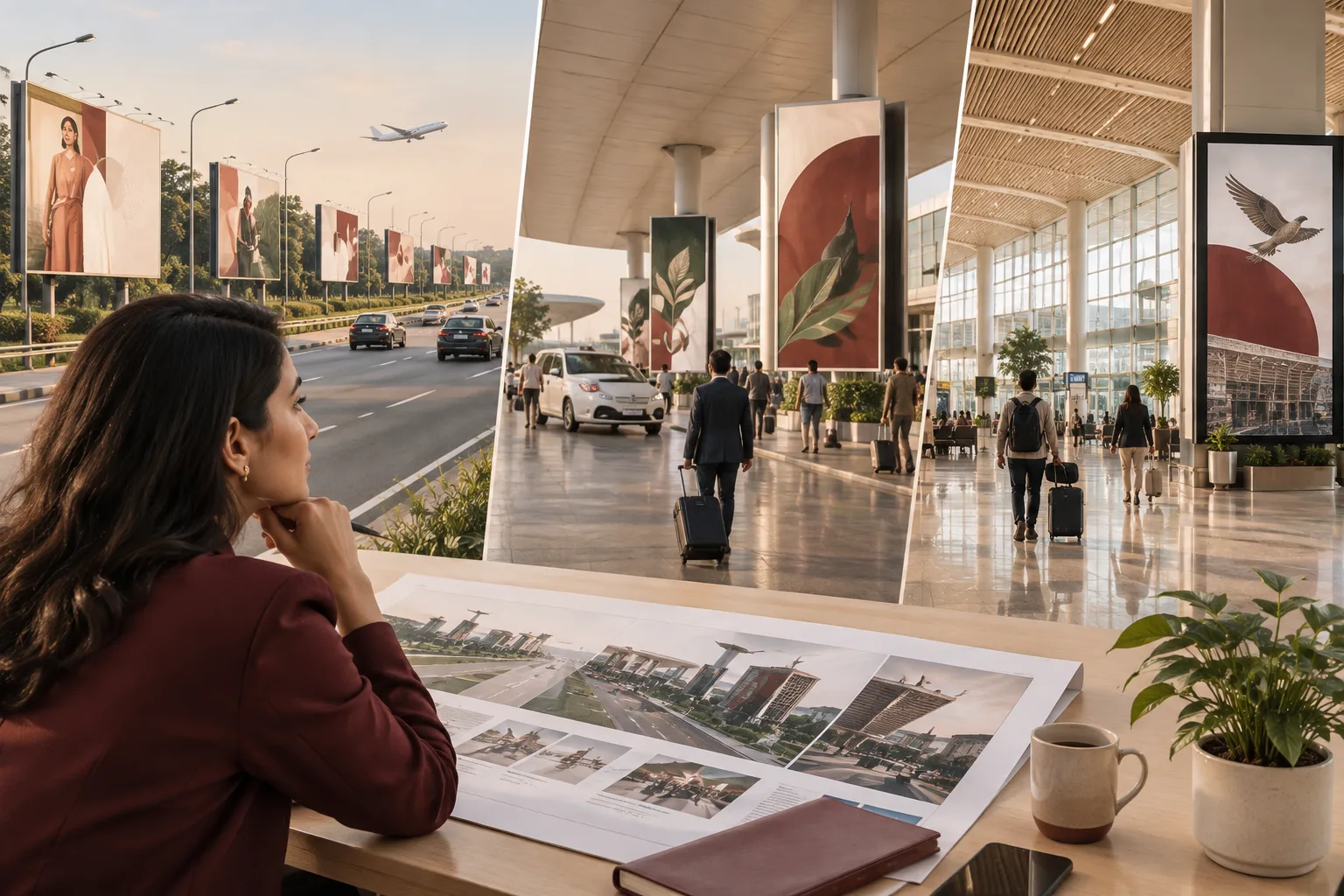 8 min read · 21 Sept 2026Airport advertising in BengaluruKempegowda International is forty kilometres of media in three parts: the Bellary Road drive, the forecourt, and a terminal sold by the airport's own concessionaire on its own rules.
 7 min read · 30 Jun 2026How to combine offline and digital advertisingSomebody sees your hoarding, forgets the number and searches your name at a traffic signal. Build that route on purpose, with a search term, a page and a number that only the offline campaign uses.
More for real estate developers and brokers
Everything else we would do for you.
Closest to this: paid and media
Also for real estate developers and brokers
- SEO for real estate developers and brokers
- Lead generation for real estate developers and brokers
- Digital marketing for real estate developers and brokers
- Reputation management for real estate developers and brokers
- Local SEO for real estate developers and brokers
- Branding and identity for real estate developers and brokers
- Social media marketing for real estate developers and brokers
- Content marketing for real estate developers and brokers
- Email marketing for real estate developers and brokers
- Buyer journey for real estate developers and brokers
- Follow-up systems for real estate developers and brokers
- CRM for real estate developers and brokers
- Review generation for real estate developers and brokers
- Customer retention for real estate developers and brokers
- Referral marketing for real estate developers and brokers
- WhatsApp marketing for real estate developers and brokers
Or start from the overview: sales and marketing for real estate developers and brokers.
Your next practical step
Tell us what you are trying to grow, and we will read it before we call.
Eight short steps, mostly taps. Skip anything you would rather answer on the call.